Parallel Shifts In The Yield Curve: Impact On Bond Portfolios
Understanding how parallel shifts in yield curves affect bond portfolios and investment strategies.
Understanding Parallel Shifts in the Yield Curve
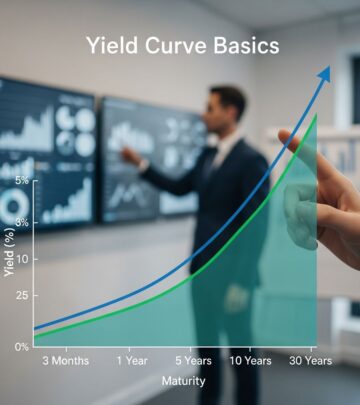
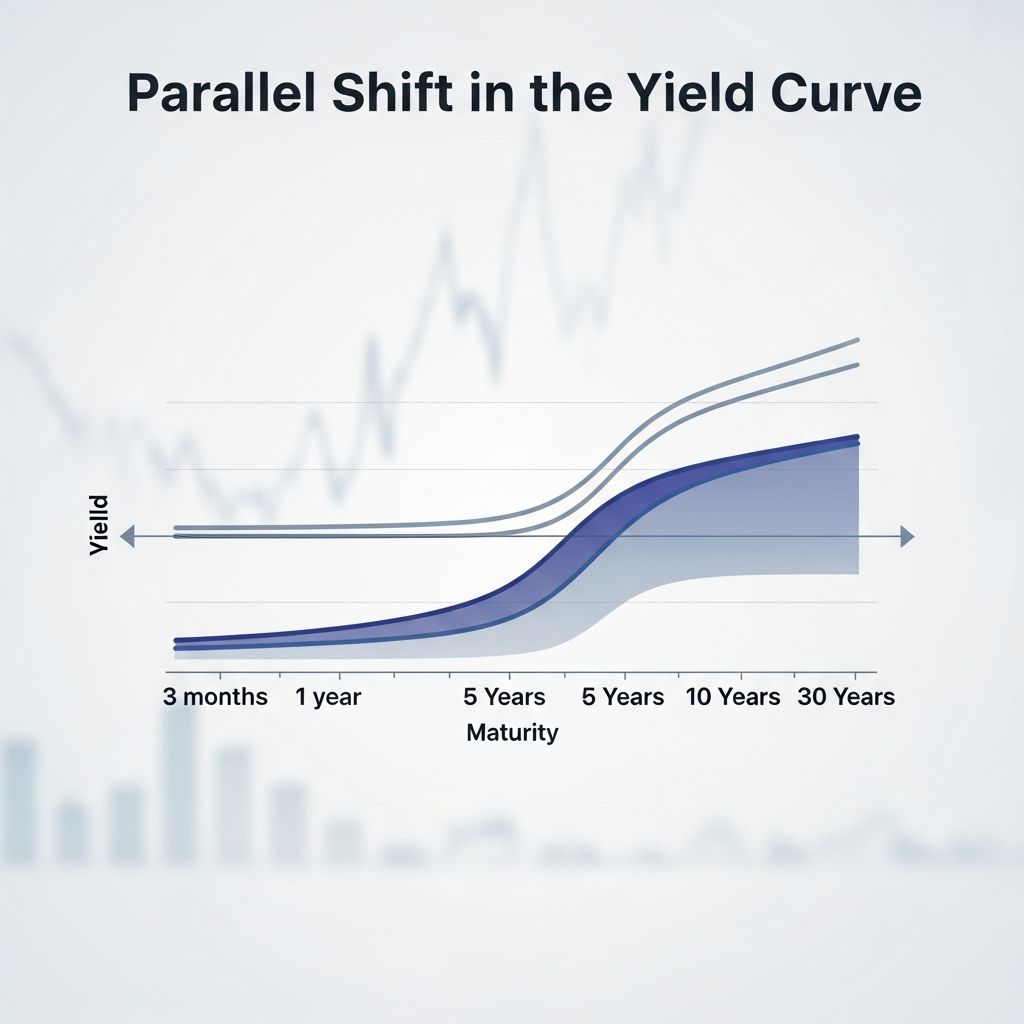
A parallel shift in the yield curve represents a fundamental concept in fixed-income investing and portfolio management. This occurs when all yields-to-maturity across different maturities change by the same number of basis points, creating a uniform upward or downward movement along the entire curve. Whether yields rise or fall, a parallel shift maintains the relative spacing between different maturity points, preserving the curve’s overall shape while adjusting its vertical position in the market.
The yield curve itself shows the relationship between yields and time to maturity for comparable debt securities, typically depicted as government bonds or treasury instruments. When market conditions shift and all maturities experience identical yield changes, this uniform movement is referred to as a parallel shift. Understanding this concept is essential for portfolio managers and fixed-income investors seeking to anticipate market movements and manage their investment strategies effectively.
Types of Yield Curve Movements
Portfolio managers and financial analysts recognize that yield curves do not move in isolation. Rather, they experience several distinct types of movements, each with different implications for bond portfolios and investment returns.
Parallel Shifts
A parallel shift represents the most straightforward yield curve movement. All yields change uniformly across the maturity spectrum, whether the curve moves higher or lower. This type of movement affects all bonds similarly based on their duration characteristics, making it relatively predictable for portfolio analysis using standard duration measures.
Slope Changes or Twists
The slope of the yield curve is typically defined as the difference in basis points between the yield-to-maturity on a long-maturity bond and the yield-to-maturity on a shorter-maturity bond. When this spread widens, the yield curve steepens; when it narrows, the curve flattens. A steepening curve occurs when long-term yields increase more than short-term yields, or when short-term yields decrease more than long-term yields. Conversely, flattening happens when the spread between short and long-term yields compresses. Understanding these movements helps investors anticipate differential returns across the maturity spectrum.
Curvature Changes or Butterfly Movements
The shape or curvature of the yield curve describes the relationship between yields at different points along the curve—specifically comparing short-end yields, belly yields (intermediate maturities), and long-end yields. A common measure of curvature is the butterfly spread, which indicates the difference between medium-term yields and a linear interpolation between short-term and long-term yields. A positive butterfly spread indicates a humped or concave shape, while a negative spread suggests a saucer or convex shape. These curvature changes can significantly impact certain bond positions while leaving others relatively unaffected.
Impact of Parallel Shifts on Bond Portfolios
Parallel shifts in the yield curve have predictable effects on bond portfolios, making them among the easiest yield curve movements to analyze and forecast. However, their impact varies significantly based on portfolio composition and duration characteristics.
Duration and Portfolio Value Changes
Portfolio managers typically use duration statistics to estimate the impact of expected yield curve changes on portfolio value. Duration measures the linear relationship between bond prices and yield-to-maturity, representing the weighted average time to receive a bond’s cash flows. When a parallel shift occurs, the expected percentage change in bond prices can be approximated by multiplying the portfolio’s duration by the magnitude of the yield change. For example, a portfolio with a duration of 5 years would experience approximately a 5% price decline for every 1% increase in yields across all maturities.
First-Order Approximations
For smaller yield changes and modest portfolio adjustments, duration provides a reliable first-order approximation of how portfolio values respond to parallel shifts. This linear relationship assumes that the relationship between yield changes and price changes remains constant, which generally holds true for relatively small movements in the yield curve. Most traditional portfolio analysis relies on these duration-based calculations for quick and efficient risk assessment.
Limitations of Duration Analysis
However, the first-order duration method assumes that yield curve changes occur only in parallel shifts, which is not reliable when the yield curve’s slope and curvature also change simultaneously. In real market conditions, yield curves rarely move in perfect parallel shifts. Instead, they typically experience combinations of level, slope, and curvature changes. When this occurs, duration analysis alone becomes insufficient for accurately predicting portfolio returns.
For larger yield curve changes, second-order effects including convexity should be included to better measure changes in portfolio value. Convexity is a second-order effect describing a bond’s price behavior for larger rate movements and is affected by cash flow dispersion. This measure captures the non-linear relationship between yield changes and price changes, becoming increasingly important as yield movements grow larger.
Yield Curve Risk Factors
Financial professionals identify three primary yield curve risk factors that drive portfolio returns and losses: level changes (parallel shifts), slope changes (flattening or steepening), and curvature or shape changes (butterfly movements). Each factor presents distinct risks and opportunities for fixed-income investors.
Level Risk
Level risk, also called duration risk or interest rate risk, arises from changes in the overall yield level affecting all maturities uniformly. This represents the most fundamental risk in fixed-income investing, as it impacts all bonds regardless of maturity. Investors exposed to level risk seek compensation through higher yields on longer-maturity securities, as the expectations hypothesis and term premium theories suggest.
Slope Risk
Slope risk emerges from changes in the spread between short-term and long-term yields. Portfolio managers who intentionally position their portfolios to benefit from expected slope changes engage in curve steepening or flattening trades. These trades involve taking offsetting positions in different maturity segments, designed to profit if the curve’s slope changes as anticipated while minimizing exposure to parallel shifts.
Curvature Risk
Curvature or butterfly risk relates to changes in the curve’s shape or convexity. This risk manifests when the relationship between short-, intermediate-, and long-term yields shifts, creating opportunities or losses for portfolios with specific maturity concentrations. Portfolio managers can construct butterfly trades to isolate and profit from anticipated curvature changes while hedging against level and slope risks.
Portfolio Management Strategies
Understanding parallel shifts enables portfolio managers to develop sophisticated strategies for managing yield curve risks and capturing excess returns.
Passive Duration Matching
One fundamental strategy involves matching portfolio duration to a benchmark duration target. This approach minimizes the impact of parallel shifts by ensuring that the portfolio responds similarly to the benchmark in level-change scenarios. Investors using this strategy focus on credit selection and carry opportunities rather than yield curve positioning.
Active Yield Curve Positioning
Active portfolio managers take deliberately different positions relative to benchmarks to profit from anticipated yield curve movements. This might involve extending duration if managers expect parallel downward shifts (yield declines), or shortening duration if they anticipate upward shifts (yield increases). These tactical adjustments require accurate forecasts of yield curve movements and carry implementation risk if market movements differ from expectations.
Spread Trading and Decomposition
More sophisticated strategies involve decomposing yield curve moves into their level, slope, and curvature components. Portfolio managers construct spread trades designed to isolate exposure to specific risk factors while hedging others. A properly constructed slope trade, for example, should produce minimal results during parallel shifts while capturing profits if the curve steepens or flattens as anticipated.
Market Dynamics and Yield Curve Movements
Yield curves continually move during trading hours, reflecting market reactions to economic news, policy decisions, and shifting expectations. Understanding what drives these movements helps investors interpret market signals and anticipate portfolio impacts.
Expectations and Compensation
Two common explanations account for upward-sloping yield curves. First, the market may anticipate future increases in the risk-free rate. Investors who would prefer to invest later when rates potentially improve must be compensated for locking in current rates now. This compensation appears as the term premium—the additional yield offered on longer-maturity securities to attract investors who prefer short-term liquidity.
Second, and more relevant to parallel shifts, changes in overall market rate expectations cause yield curve shifts. When the Federal Reserve signals policy changes or inflation expectations shift, the entire curve may move upward or downward in a parallel fashion. These level changes reflect revised collective expectations about future short-term interest rates across all maturity horizons.
Stylized Fact of Parallel Movement
A well-established market phenomenon is that yield curves tend to move in parallel more often than many analysts might expect. This stylized fact means that yield curve shifts up and down as interest rate levels rise and fall, with the shift referred to as a parallel shift. This tendency reflects the dominant role that overall monetary policy expectations play in driving yield curve movements, often overwhelming more granular factors that might cause slope or curvature changes.
Practical Applications for Investors
Understanding parallel shifts in the yield curve provides practical benefits for various investor types and strategies.
Bond Pricing and Returns
When the yield curve is steep, bonds are predicted to experience large capital gains in the first years before falling in price later, as bonds roll down the curve toward shorter maturities and lower yields. When the curve is flat, predicted capital gains are much less pronounced, with little variability in total returns over time. These dynamics reflect how parallel shifts interact with bond price mechanics across different market environments.
Risk Management
For institutional investors managing large fixed-income portfolios, understanding parallel shift dynamics enables effective risk management. Value-at-risk models, stress tests, and scenario analysis all benefit from explicit consideration of how different yield curve movements—particularly parallel shifts—would impact portfolio values. This understanding facilitates communication with stakeholders about portfolio risks and expected returns.
Strategic Positioning
Macroeconomic outlook shapes how managers should position relative to parallel shift risk. In rising-rate environments where parallel shifts are expected to move yields upward, shortening duration provides protection. Conversely, in accommodative environments where rates may decline together, maintaining longer duration captures potential price appreciation. These strategic decisions fundamentally depend on forecasts of parallel yield curve movements.
Comparing Yield Curve Movements
| Movement Type | Definition | Portfolio Impact | Hedging Challenge |
|---|---|---|---|
| Parallel Shift | All yields change by identical basis points | Predictable based on duration | Simple—use duration matching |
| Slope Change | Spread between maturities widens or narrows | Differential returns across maturities | Requires curve positioning trades |
| Curvature Change | Belly yields change relative to ends | Concentrated impact on intermediate bonds | Butterfly trades needed |
Frequently Asked Questions
Q: What is the difference between a parallel shift and other yield curve movements?
A: A parallel shift moves all yields uniformly in the same direction by the same magnitude, while other movements like slope changes (twists) or curvature changes (butterflies) affect different maturities differently. Parallel shifts are the most predictable type of movement.
Q: How does duration help predict the impact of parallel shifts?
A: Duration measures the weighted average time to receive cash flows and indicates how much a bond’s price will change for a given change in yield. For parallel shifts, multiplying duration by the yield change gives an approximate percentage change in bond prices, making it useful for portfolio analysis.
Q: Why is convexity important for large yield changes?
A: Duration provides only a linear approximation of price changes. For larger yield movements from parallel shifts, the relationship between yields and prices becomes non-linear. Convexity captures this non-linearity, providing more accurate estimates of price changes for substantial yield movements.
Q: Can portfolio managers profit from parallel shifts?
A: Direct profiting from parallel shifts is difficult because they affect all bonds similarly. However, managers can position strategically by extending duration before anticipated downward shifts or shortening duration before upward shifts, though this requires accurate forecasting.
Q: How do parallel shifts affect different bond maturities?
A: Parallel shifts affect bonds across all maturities, but the percentage price impact depends on each bond’s duration. Longer-duration bonds experience larger percentage price changes than shorter-duration bonds for the same parallel shift magnitude.
Q: What economic factors trigger parallel shifts?
A: Parallel shifts often result from changes in monetary policy expectations, inflation outlook, and overall economic conditions affecting the entire yield curve. Federal Reserve policy signals and macroeconomic news typically trigger parallel movements more than specific maturity-segment factors.
References
- Benchmark Yields – CFA Level III Study Notes — AnalystPrep. 2025. https://analystprep.com/study-notes/cfa-level-iii/benchmark-yields/
- Yield Curve — Wikipedia. 2025. https://en.wikipedia.org/wiki/Yield_curve
- Yield Curve Strategies — CFA Institute. 2025. https://www.cfainstitute.org/insights/professional-learning/refresher-readings/2025/yield-curve-strategies
- What Makes the Yield Curve Move? — Federal Reserve Bank of San Francisco. 2003-06. https://www.frbsf.org/research-and-insights/publications/economic-letter/2003/06/what-makes-the-yield-curve-move/
- Yield Curve Shifts Create Trading Opportunities — CME Group. 2025. https://www.cmegroup.com/trading/interest-rates/
Similar Articles








Read full bio of medha deb