Parabolic SAR: Practical Guide To Trading Signals
Master the Parabolic SAR indicator for identifying trends, reversals, and optimal trade entry/exit points.
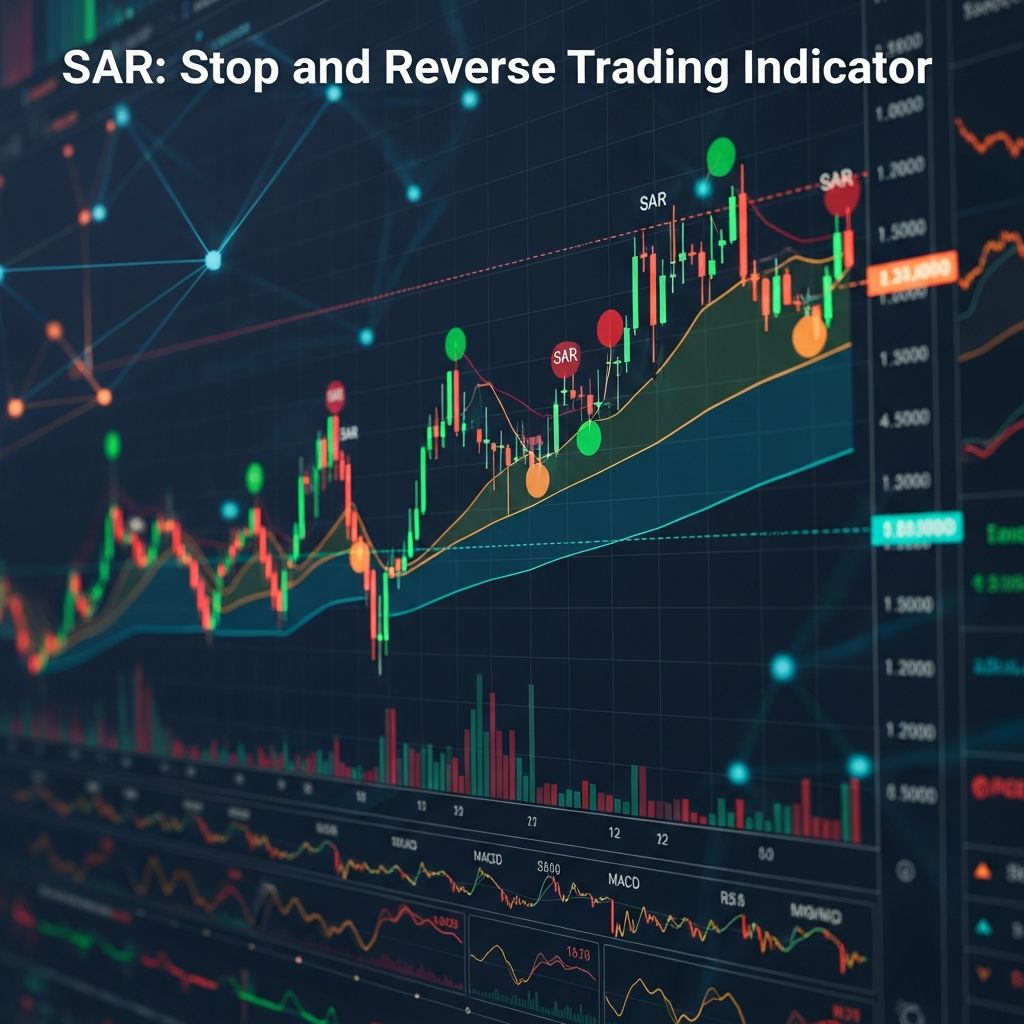
Understanding the Parabolic SAR Indicator
The Parabolic SAR, which stands for Stop and Reverse, is a powerful technical analysis indicator designed to identify price trends and potential reversal points in financial markets. Developed by J. Welles Wilder in the 1970s—the same innovator who created the Relative Strength Index (RSI)—the Parabolic SAR has become an indispensable tool for traders seeking to optimize entry and exit points in both trending and volatile market conditions. This indicator displays as a series of dots positioned either above or below price candles on a trading chart, providing visual signals that guide traders in making informed decisions about when to buy or sell securities.
Unlike lagging indicators that rely solely on historical price data, the Parabolic SAR actively follows price movement in real-time, adapting to market conditions and alerting traders to potential shifts in momentum. The indicator’s primary function is to help traders ride strong trends while simultaneously protecting profits through strategic stop-loss placement. Whether you’re trading stocks, currencies, commodities, or cryptocurrencies, understanding how to interpret and apply the Parabolic SAR can significantly enhance your trading performance and risk management strategies.
How the Parabolic SAR Works
The mechanics of the Parabolic SAR revolve around the concept of trailing stops that accelerate as a trend strengthens. The indicator creates stop and reverse points—hence its name—that move progressively in the direction of the prevailing trend. When price is in an uptrend, the SAR dots appear below the price candles and gradually move upward. Conversely, during a downtrend, the dots position themselves above the price and descend as the trend continues.
The fundamental principle underlying the Parabolic SAR is that it never decreases during an uptrend or increases during a downtrend. This characteristic ensures the indicator continuously tightens stop losses, protecting accumulated profits. As price moves favorably, the SAR trails behind, giving the trend room to develop while maintaining defensive positioning. The acceleration factor, which increases as the trend strengthens, causes the SAR to move faster and eventually close in on price, signaling when a reversal may occur.
The Role of Acceleration Factor
The acceleration factor (AF) is crucial to how the Parabolic SAR functions. It typically starts at 0.02 (or 2%) and increases by 0.02 each time the price reaches a new extreme point (a new high in an uptrend or new low in a downtrend). The AF usually caps at 0.20 (or 20%), preventing the SAR from accelerating excessively. This graduated approach allows traders to remain in winning positions longer while maintaining protection against sudden reversals.
Extreme Point and SAR Calculation
The Extreme Point (EP) represents the highest price during an uptrend or the lowest price during a downtrend. The SAR value is calculated by adding the acceleration factor multiplied by the difference between the extreme point and the current SAR value. This mathematical relationship creates the characteristic parabolic curve that gives the indicator its name. Prior day data is typically used to calculate current day SAR points, ensuring consistency and reliability in the indicator’s signals.
Signal Generation and Trade Execution
Trading with the Parabolic SAR involves recognizing two primary signal types: bullish signals and bearish signals, each with distinct implications for market entry and exit decisions.
Bullish Signals
A bullish signal occurs when the Parabolic SAR dots transition from above the price to below the price. This crossover indicates that the downtrend has reversed and an uptrend is beginning. Traders interpret this signal as a buy opportunity, as it suggests the market is gaining upward momentum. The steeper the slope of the rising dots, the stronger the bullish trend. In strong uptrends confirmed by the Parabolic SAR, the indicator can provide extended trading opportunities lasting weeks or months, allowing traders to capture substantial profits by staying positioned with the trend.
Bearish Signals
A bearish signal occurs when the Parabolic SAR dots move from below the price to above the price, indicating a downtrend has begun. This crossover suggests a sell opportunity or signal to exit long positions and potentially initiate short positions. The steeper the downward slope of the dots, the stronger the bearish trend. Just as bullish trends offer extended opportunities, bearish trends can provide sustained profit potential for traders who successfully identify and ride the downtrend.
Practical Trading Applications
The Parabolic SAR serves multiple strategic functions in active trading and investing. Understanding these applications helps traders maximize the indicator’s potential while minimizing exposure to false signals and market noise.
Trend Identification
One of the primary applications of the Parabolic SAR is identifying the current market trend. By observing whether the dots are positioned above or below price action, traders quickly determine trend direction. This fundamental feature aligns with the popular trading maxim: “The trend is your friend.” Trading with established trends is generally more profitable and less risky than attempting to trade against them or in choppy, trendless markets.
Stop Loss Placement
The Parabolic SAR naturally provides logical stop-loss levels. When trading long positions, traders place stops at or slightly below the current SAR value. As the uptrend progresses and the SAR rises, the stop-loss moves up, progressively locking in profits. For short positions, stops are placed above the SAR as it descends. This automatic trailing stop mechanism removes emotion from stop-loss decisions and ensures systematic risk management.
Entry and Exit Timing
While the Parabolic SAR provides excellent exit signals through trend reversals, some traders use the indicator in combination with other technical tools to identify entry points. Early in a new trend, when the SAR begins moving in the trend direction, traders might enter positions. Exits occur when the SAR reverses, crossing price and indicating trend termination.
Advantages and Strengths
The Parabolic SAR offers numerous advantages that have sustained its popularity for over four decades:
– Clear Visual Signals: The dot-based display provides unambiguous trend and reversal signals that are easy to interpret even for novice traders- Automatic Trailing Stops: The indicator systematically adjusts stops as trends develop, protecting profits without requiring manual adjustments- Versatility: The Parabolic SAR works across all timeframes and asset classes, from day trading stocks to long-term cryptocurrency positions- Trend-Following Strength: Studies indicate the indicator can deliver returns exceeding 80% in strong trends lasting multiple years- Simplicity: Unlike complex indicators requiring numerous parameters, the Parabolic SAR operates with straightforward mechanics and minimal customization
Limitations and Challenges
Despite its strengths, the Parabolic SAR has notable limitations that traders must understand and manage:
– Sideways Market Whipsaws: In choppy or range-bound markets lacking clear directional bias, the Parabolic SAR generates frequent false signals as dots cross above and below price repeatedly- Lagging Indicator Nature: The SAR follows price action rather than leading it, meaning reversals are confirmed after price has already begun moving in the new direction- Initial Trend Uncertainty: Early signals in new trends can prove unreliable, as the acceleration factor hasn’t yet built sufficient momentum- Overnight Gaps: In markets that gap overnight, the SAR may fail to provide adequate protection if prices gap significantly past the stop level
Best Practices and Optimization
Successful traders employing the Parabolic SAR follow specific practices that enhance performance and mitigate false signals:
Confirming Trends
Use additional technical indicators or price action analysis to confirm trends identified by the Parabolic SAR. Support and resistance levels, moving averages, or momentum indicators can validate signals before committing capital.
Waiting for Clear Direction
Avoid trading in sideways markets entirely. Wait until price breaks clearly above resistance or below support before initiating positions based on Parabolic SAR signals. This discipline prevents the frustrating whipsaw losses characteristic of choppy market conditions.
Position Sizing
Adjust position size inversely with signal reliability. Smaller positions during uncertain early trends protect capital when false signals occur. Larger positions can be maintained in well-established trends showing strong Parabolic SAR confirmation.
Combining with Price Action
Integrate the Parabolic SAR with price action analysis examining candlestick patterns, trend lines, and support/resistance levels. For example, traders might look for downtrends showing reversal patterns like morning stars before taking bullish signals from the SAR.
Parabolic SAR vs. Other Technical Indicators
| Indicator | Signal Type | Best For | Weakness |
|---|---|---|---|
| Parabolic SAR | Trend reversal & trailing stops | Trending markets | False signals in sideways markets |
| Moving Averages | Trend identification | Confirming trends | Lag in fast markets |
| Relative Strength Index (RSI) | Momentum & overbought/oversold | Identifying extremes | Unreliable in strong trends |
| MACD | Trend & momentum change | Medium-term trends | Slower signals than SAR |
Historical Performance and Modern Applications
Since its introduction in the 1970s, the Parabolic SAR has demonstrated consistent effectiveness in trending markets. Academic studies examining its performance across multiple decades and asset classes show reliable profitability when properly applied. Today, the indicator remains featured in most professional trading platforms and is utilized by retail traders, professional fund managers, and algorithmic trading systems.
The Parabolic SAR has proven particularly valuable in modern cryptocurrency and forex markets, where 24-hour trading and high volatility create extended trending opportunities. Many successful traders include the Parabolic SAR as a core component of systematic trading strategies combined with risk management protocols and position sizing rules.
Frequently Asked Questions
Q: What does SAR stand for?
A: SAR stands for Stop and Reverse, named for its dual function of providing stop-loss levels while signaling trend reversals through price crossovers.
Q: Who developed the Parabolic SAR indicator?
A: J. Welles Wilder created the Parabolic SAR in the 1970s. Wilder also developed the Relative Strength Index (RSI) and Average True Range (ATR), making him one of technical analysis’s most influential innovators.
Q: Can the Parabolic SAR work on all timeframes?
A: Yes, the Parabolic SAR functions effectively on all timeframes, from one-minute charts for day traders to weekly or monthly charts for position traders and investors.
Q: What is the acceleration factor in the Parabolic SAR?
A: The acceleration factor (AF) starts at 0.02 and increases by 0.02 each time price makes a new extreme point, capping at 0.20. This gradual acceleration causes the SAR to move faster as trends strengthen.
Q: How do I avoid false signals from the Parabolic SAR?
A: Wait for clear trends to establish before trading SAR signals, avoid choppy sideways markets, confirm signals with other technical indicators, and use appropriate position sizing that accounts for signal reliability.
Q: Is the Parabolic SAR suitable for beginners?
A: Yes, the Parabolic SAR’s straightforward dot-based signals make it accessible for beginners, though traders should combine it with solid risk management and market analysis before committing real capital.
References
- Parabolic SAR Indicator: Definition, Formula, and Examples — Bullish Bears. 2024. https://bullishbears.com/parabolic-sar/
- What is the Parabolic SAR Indicator? — Gate.com Learn. 2024. https://www.gate.com/learn/articles/what-is-the-parabolic-sar-indicator/390
Similar Articles








Read full bio of medha deb