Paid Holidays in the U.S.: A Complete Guide
Understand federal and state paid holidays, employer policies, and employee rights in the US.
What Are Paid Holidays in the U.S.?
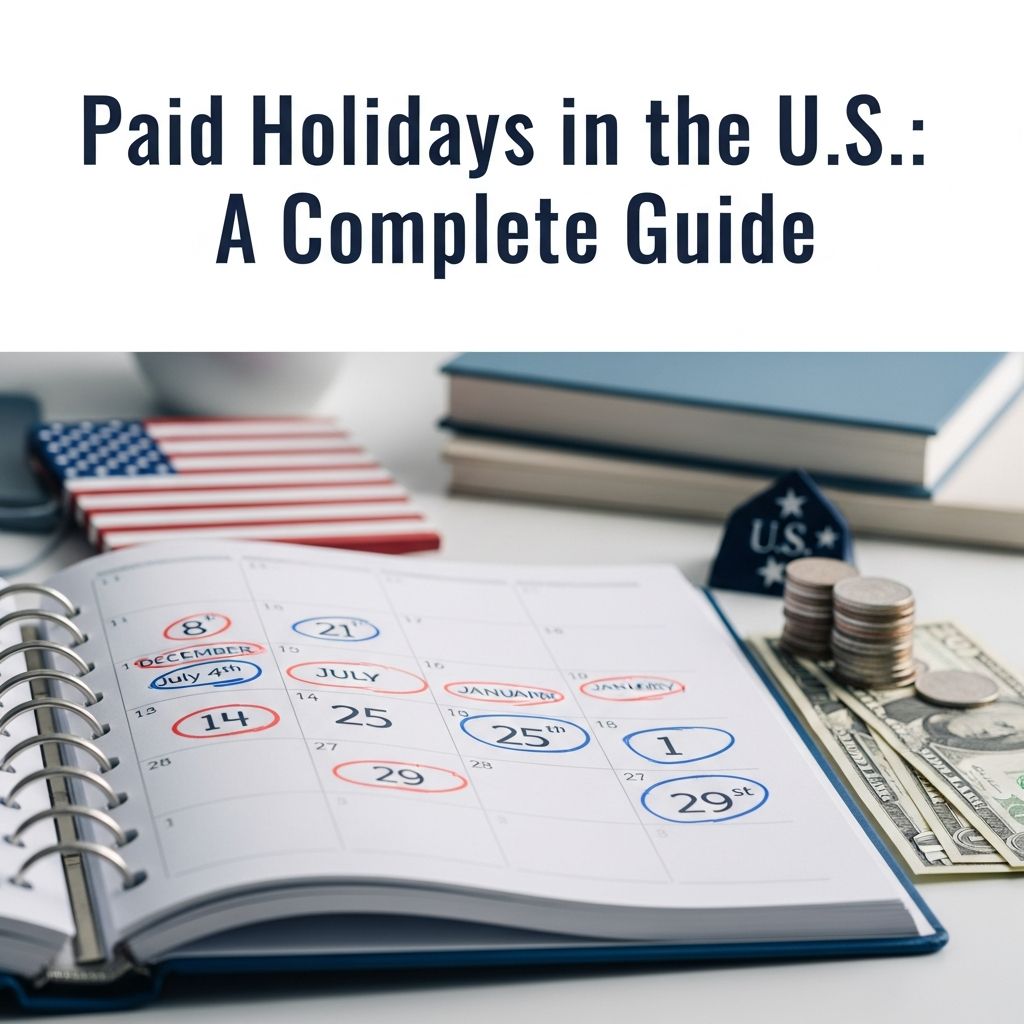
Paid holidays represent days when employees receive compensation without working, typically recognized by employers and government agencies across the United States. These designated days off allow workers to celebrate important cultural, historical, and national occasions while maintaining their regular income. Understanding the landscape of paid holidays is crucial for both employers and employees, as policies vary significantly across different states, industries, and organizations.
In the United States, paid holidays operate under a complex system that includes federal holidays recognized nationwide, state-specific holidays that vary by location, and company-specific holidays determined by individual employers. Unlike many other developed nations, the U.S. does not have a universal requirement mandating that all private employers provide paid time off for holidays. This means paid holiday policies depend heavily on employer discretion, industry standards, and state regulations.
Federal Holidays in the United States
Federal holidays are established by Congress and apply to all federal government employees. These are days when most federal offices close, and employees receive paid time off. The following are the official federal holidays recognized in 2025:
- New Year’s Day – January 1, 2025
- Martin Luther King Jr. Day – January 20, 2025
- Washington’s Birthday (Presidents’ Day) – February 17, 2025
- Memorial Day – May 26, 2025
- Juneteenth National Independence Day – June 19, 2025
- Independence Day – July 4, 2025
- Labor Day – September 1, 2025
- Columbus Day (Indigenous Peoples’ Day) – October 13, 2025
- Veterans Day – November 11, 2025
- Thanksgiving Day – November 27, 2025
- Christmas Day – December 25, 2025
These 11 federal holidays are observed by the federal government, and most private businesses also recognize them as paid days off. However, private sector employers are not legally required to provide paid time off for these days, though many do as a matter of standard practice and to remain competitive in the job market.
State-Specific Holiday Variations
Beyond federal holidays, individual states have the authority to designate additional paid holidays for their employees. These state holidays reflect regional history, culture, and traditions, creating significant variations across the country.
State Holiday Examples:
- California observes Rosa Parks Day on February 4
- Texas recognizes Texas Independence Day on March 2
- Alaska celebrates Seward’s Day on March 27
- Hawaii observes Statehood Day on August 18
- Nevada recognizes Nevada Day on October 25-31
- Alabama and Louisiana observe Mardi Gras Day on February 21
Additionally, many states recognize the day after Thanksgiving as a paid holiday. Kentucky, South Carolina, Tennessee, and other states observe Good Friday as either a full or half-day holiday. Some states like Maryland and Washington observe Native American Heritage Day, while West Virginia celebrates West Virginia Day on June 20.
Private Employer Policies for Paid Holidays
Private sector employers in the United States have considerable discretion in determining which holidays qualify for paid time off. While there is no federal mandate requiring private businesses to close on specific days or provide paid holidays, most organizations do offer paid holidays as part of their benefits packages to attract and retain quality employees.
Typical Private Sector Holiday Practices:
Most private employers recognize between 8 and 12 paid holidays annually, typically including the major federal holidays. However, the specific holidays offered can vary by company, industry, and region. Retail businesses, for example, often require employees to work on major shopping days like the day after Thanksgiving or Christmas Eve, sometimes offering higher pay or alternative days off as compensation. Healthcare facilities, transportation services, and hospitality industries similarly maintain operations during traditional holidays.
Some employers offer flexible holiday policies where employees can choose which holidays to observe based on their personal or religious beliefs. Others provide a set number of paid days off that employees can use for holidays or other purposes, without specifying which holidays must be observed.
Federal Government Employee Holiday Benefits
Federal government employees receive the most comprehensive holiday protection under the law. Federal employees are entitled to paid time off on all 11 designated federal holidays, as specified in Title V of the United States Code (5 U.S.C. § 6103). Both federal and state government employees generally observe the same federal holidays with full pay.
When a federal holiday falls on a weekend, the observed date is typically moved to either the preceding Friday or the following Monday, ensuring federal employees always receive their paid day off. This observance system maintains consistency across federal agencies while accommodating weekend scheduling.
Non-Federal and Observance Holidays
Beyond official paid holidays, the United States recognizes numerous observance holidays and cultural celebrations that may not come with guaranteed paid time off but are widely acknowledged.
- Religious Holidays: Easter (Good Friday), Ash Wednesday, Christmas Eve, Hanukkah
- Cultural Celebrations: St. Patrick’s Day, Cinco de Mayo, Diwali, Day of the Dead
- Observance Days: Mother’s Day, Father’s Day, Flag Day, Halloween
- Shopping Events: Black Friday, Cyber Monday
These observances vary in their recognition by employers and states. Some states, particularly those with significant immigrant or religious populations, may provide paid time off for religious holidays like Good Friday or Rosh Hashanah, while others do not. Employers in diverse communities increasingly accommodate religious holiday requests through flexible scheduling or personal day allowances.
How Holidays Affect Work Schedules
When a holiday falls on a regular workday, most employers provide the day off with pay. However, when a holiday falls on a weekend, the observance varies:
Weekend Holiday Rules:
- If a holiday falls on Saturday, it is typically observed on Friday
- If a holiday falls on Sunday, it is typically observed on Monday
- Some employers provide a different day off or additional compensation
- Federal employees receive the observed holiday on the designated day
Employees who work on a holiday often receive premium pay, typically time-and-a-half or double-time, depending on employer policy and industry standards. This practice compensates workers for sacrificing their holiday observance to maintain essential services.
State-by-State Holiday Breakdown
The following table illustrates how paid holiday recognition varies across select states:
| State | Federal Holidays Observed | Additional State Holidays |
|---|---|---|
| Florida | All federal holidays | Presidents’ Day, Columbus Day (where applicable) |
| Iowa | All except Washington’s Birthday and Columbus Day | Day after Thanksgiving |
| Kentucky | All except Washington’s Birthday and Columbus Day | Good Friday (half-day), Day after Thanksgiving, Christmas Eve, New Year’s Eve |
| Maine | All federal holidays | Patriots’ Day, Day after Thanksgiving |
| Maryland | All federal holidays | Election Day (every 2 years), Native American Heritage Day |
| North Carolina | All except Washington’s Birthday and Columbus Day | Good Friday, Day after Thanksgiving, Christmas Eve and Day after Christmas |
| Pennsylvania | All federal holidays | Good Friday, Election Day, Day after Thanksgiving |
| Tennessee | All except Columbus Day | Good Friday, Christmas Eve |
Employee Rights and Employer Obligations
Understanding employee rights regarding paid holidays is essential for workplace compliance and fair treatment.
Key Employee Rights:
- Federal employees are guaranteed paid time off for all 11 federal holidays
- State employees must receive holidays designated by their state
- Private sector employees rely on employer policies and cannot be forced to work without compensation arrangements
- Employers cannot discriminate in holiday policies based on protected characteristics
- Religious accommodations must be considered for employees requesting time off for religious observances
While private employers are generally free to set their own holiday policies, federal and state employment laws prohibit discrimination based on religion, national origin, or other protected statuses. If an employee requests time off for a religious holiday not recognized by the company, employers must consider reasonable accommodations unless doing so creates undue hardship.
Frequently Asked Questions About Paid Holidays
Q: Are private sector employers required to provide paid holidays?
A: No, private sector employers are not required by federal law to provide paid holidays. This is a benefit determined by individual companies. However, most employers offer paid holidays to remain competitive and retain employees.
Q: What happens if I work on a federal holiday?
A: If you work on a federal holiday, your employer typically compensates you with premium pay (often 1.5 to 2 times your regular rate) or provides an alternative day off. The specific policy depends on your employer and employment agreement.
Q: Do all states observe the same holidays?
A: No, states have flexibility in designating additional holidays beyond the federal holidays. Some states recognize 12-15 paid holidays, while others recognize fewer. State employees must receive state-designated holidays, but private employees depend on employer policies.
Q: Can employers deny requests for religious holiday observance?
A: Employers cannot deny reasonable religious accommodation requests unless it causes undue hardship to business operations. If a holiday holds religious significance for an employee, employers must consider flexible scheduling, personal day usage, or unpaid leave unless it creates substantial operational difficulties.
Q: How are holiday bonuses and holiday pay calculated?
A: Holiday pay is typically calculated based on your regular hourly rate or salary. If you work on a holiday, premium pay calculations (usually 1.5x or 2x) depend on state law and employer policy. Some employers provide holiday bonuses as additional compensation during the holiday season.
Q: Do part-time employees receive paid holidays?
A: This varies by employer. Some companies provide paid holidays to part-time employees who meet certain tenure or scheduling requirements, while others do not. Check your employment agreement or company handbook for specific policies.
References
- Holidays with paid time off in the United States — Wikimedia Foundation. Accessed November 29, 2025. https://en.wikipedia.org/wiki/Holidays_with_paid_time_off_in_the_United_States
- US Holiday Calendar 2025 — Springworks Blog. 2025. https://www.springworks.in/blog/us-holiday-calendar/
- Federal Holidays — United States Courts, Second Circuit. 2025. https://www.ca2.uscourts.gov/clerk/calendars/federal_holidays.html
- Printable List of 2025 & 2024 U.S. Federal Holidays — TriNet. 2025. https://www.trinet.com/insights/federal-holidays-for-small-business-owners
- State Holidays — California Secretary of State. 2025. https://www.sos.ca.gov/state-holidays
- Federal Holidays for 2025 and 2026 — FederalPay.org. 2025. https://www.federalpay.org/holidays
Similar Articles








Read full bio of medha deb