Owner Financing: What It Is and How It Works
Complete guide to owner financing: Structure, benefits, risks, and alternatives for home buyers.
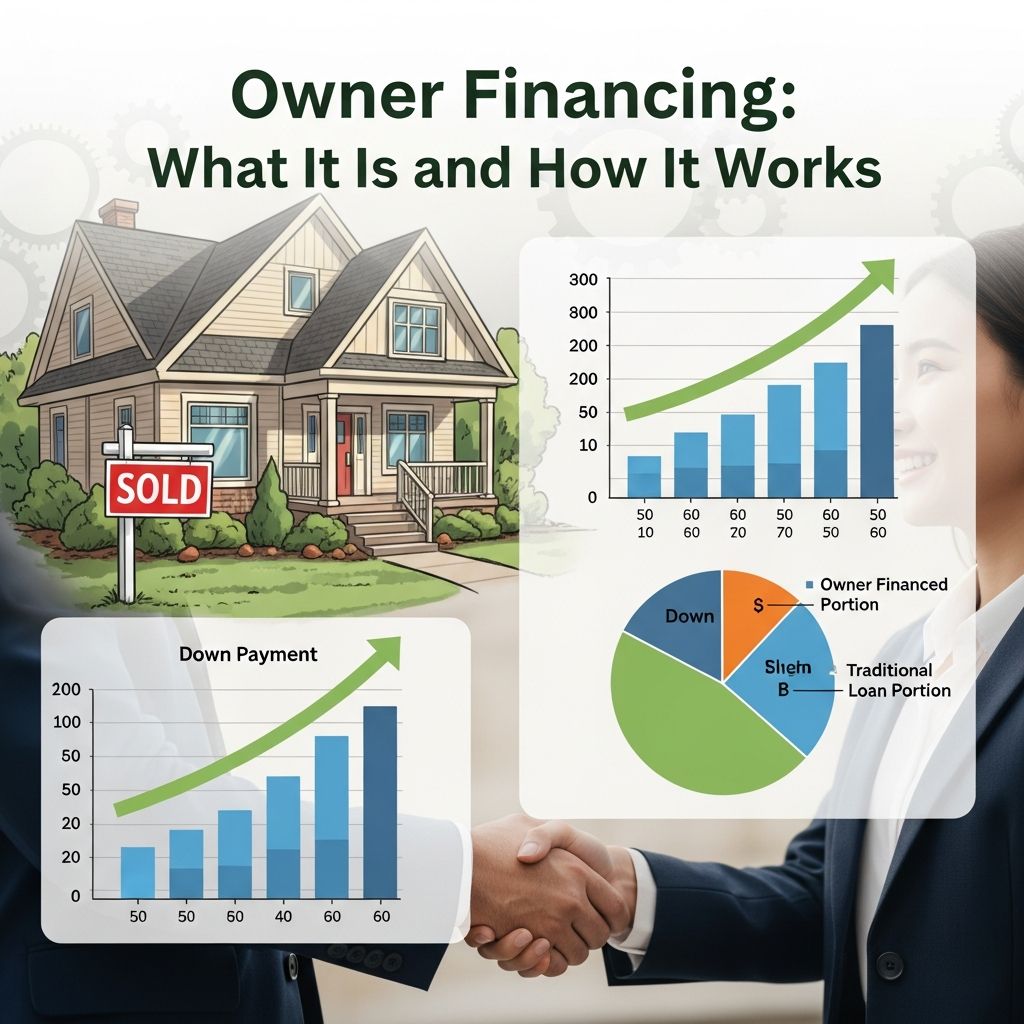
Owner financing is an arrangement in which a homeowner or seller, rather than a bank or mortgage lender, extends a loan to a buyer. This alternative financing method allows property owners to act as lenders, providing an alternative pathway to homeownership for buyers who may not qualify for traditional mortgage financing. In owner financing arrangements, the seller holds the mortgage note and receives monthly payments directly from the buyer, including principal and interest.
This financing approach has become increasingly relevant in today’s real estate market, particularly for buyers facing challenges with credit history, limited down payment funds, or non-traditional income sources. Understanding owner financing can open doors to homeownership that might otherwise remain closed through conventional lending channels.
How Owner Financing Works
Owner financing fundamentally functions similarly to a traditional mortgage, with one critical difference: the seller acts as the lender instead of a financial institution. The mechanics of owner financing involve several key components that create a binding agreement between buyer and seller.
In a typical owner financing arrangement, the buyer makes a down payment to the seller, just as they would with a traditional mortgage. The remaining purchase price is financed by the seller at an agreed-upon interest rate. The buyer and seller establish an amortization schedule and payment plan that must be followed throughout the loan term. Monthly payments flow directly to the seller rather than to a bank or lending institution.
A promissory note and owner financing contract outline all arrangements in detail. These legal documents specify the loan amount, interest rate, payment schedule, loan term, and consequences for default. Having these formal agreements ensures both parties understand their responsibilities and the specific terms that must be met before the property officially changes hands.
Types of Owner Financing Arrangements
Owner financing can be structured in multiple ways, each serving different financial situations and objectives. Understanding these variations helps buyers and sellers choose the arrangement that best fits their circumstances.
Second Mortgage
In a second mortgage arrangement, the buyer qualifies for a traditional mortgage covering only a portion of the purchase price. The seller then extends a second mortgage for the remaining financing needed. Second mortgages typically feature a higher interest rate than the primary mortgage, a shorter loan term, and often include a lump-sum balloon payment. Sellers typically do not hold these mortgages for longer than five to ten years, after which the remaining balance becomes due as a balloon payment.
Wraparound Mortgage
A wraparound mortgage occurs when a seller still carries a mortgage on the home. In this arrangement, the buyer’s new loan “wraps around” the seller’s existing loan. The buyer makes monthly payments to the seller, who then pays their own mortgage lender. Wraparound loans typically feature a higher interest rate than the original mortgage, allowing the seller to profit from the rate difference between what the buyer pays and what the seller owes to their lender. However, the seller must first obtain permission from their lender before proceeding with a wraparound arrangement.
Rent-to-Own Contracts
Rent-to-own arrangements combine rental and purchase elements. A portion of monthly rent payments goes toward the eventual purchase of the property, allowing the buyer to build equity while renting. This structure gives buyers time to improve their credit, save additional funds, and secure traditional financing before finalizing the purchase.
Benefits of Owner Financing
Owner financing presents several potential advantages for both buyers and sellers, though these benefits come with corresponding trade-offs that both parties should carefully evaluate.
Enhanced Negotiating Power for Buyers
With owner financing, buyers often gain more negotiating power than they would have with traditional lenders. While many aspects of homebuying are negotiable with banks—such as purchase price and closing costs—lenders typically maintain strict control over amortization schedules, down payments, and interest rates. Private sellers, lacking the carefully structured frameworks of institutional lenders, may be willing to negotiate lower down payments, more favorable interest rates, or better overall financing terms.
Customizable Loan Agreements
Owner financing allows for highly customizable loan agreements tailored to the specific circumstances of both parties. Rather than accepting standard lending products, buyers and sellers can negotiate terms that reflect their unique situations, timelines, and financial capabilities. This flexibility can result in more favorable arrangements for both parties compared to the one-size-fits-all approach of traditional lenders.
Faster Underwriting Process
Traditional mortgage processes involve lengthy underwriting procedures, extensive documentation requirements, and thorough credit investigations. Owner financing typically bypasses much of this bureaucratic process, allowing buyers and sellers to reach agreements more quickly. This expedited timeline can be particularly valuable in competitive real estate markets or when buyers need to close quickly.
Access for Non-Traditional Borrowers
Buyers with weak loan application credentials—those with lower credit scores, self-employment income, or limited employment history—may find owner financing their most viable path to homeownership. Sellers may accept alternative income documentation, such as bank statements, rental income records, or asset statements, rather than requiring traditional W-2 forms and extensive credit verification.
Benefits for Sellers
Owner financing benefits sellers by expanding their potential buyer pool, particularly in buyer’s markets where homes sit on the market longer. Sellers earn steady income through interest payments over the loan term, effectively creating an investment vehicle. Additionally, sellers may attract more offers and potentially command higher prices when they’re willing to finance purchases.
Potential Drawbacks and Risks
While owner financing offers advantages, buyers should carefully consider significant risks and drawbacks before pursuing this financing method.
Risks for Buyers
Owner financing typically comes without the protections and support that institutional mortgage lenders provide. Buyers lose access to standardized loan disclosures, consumer protection regulations, and established dispute resolution processes. Additionally, owner financing often involves higher interest rates than conventional mortgages, sometimes ranging from 8 to 15 percent or higher. Buyers may also face balloon payment obligations, requiring substantial lump-sum payments after the initial loan term expires. If a buyer cannot meet this obligation, they face foreclosure or property loss despite years of payments.
Higher Interest Rates and Total Costs
Interest rates for owner financing are typically significantly higher than conventional mortgage rates, often 1 to 2 percent above traditional lending rates. Over the life of a loan, these higher rates substantially increase the total amount buyers pay. Combined with potential prepayment penalties and fees, owner financing often costs buyers considerably more than traditional mortgages.
Risks for Sellers
Sellers assume significant risks when financing property sales. If the buyer defaults, sellers must pursue costly foreclosure proceedings. The seller remains responsible for their own mortgage payments while dealing with a non-paying buyer. Additionally, property values may decline, leaving sellers with inadequate security for their loans. Legal disputes over loan terms can also prove expensive and time-consuming.
When Owner Financing Makes Sense
Owner financing may be appropriate in specific scenarios where traditional financing proves unavailable or inadequate:
- The buyer’s credit history or financial circumstances prevent qualification for traditional financing
- The buyer lacks sufficient funds for a conventional down payment
- The home’s purchase price exceeds its appraised value, requiring the buyer to cover the shortfall with additional funds
- The buyer has non-traditional income sources that traditional lenders cannot verify
- The buyer needs time to improve credit or save additional funds through a rent-to-own arrangement
- The seller owns the property free and clear and wishes to create investment income
Key Considerations for Sellers
If considering owner financing as a seller, establishing clear parameters protects your interests:
Require a Substantial Down Payment: A down payment of at least 15 percent is recommended, ensuring the buyer has significant skin in the game and reducing your risk.
Understand the Buyer’s Position: Thoroughly investigate the buyer’s financial circumstances, employment stability, and overall creditworthiness. Request bank statements, tax returns, and employment verification to assess risk.
Establish Exit Strategies: Determine the buyer’s plan and timeline for repaying the balloon payment. Will they refinance into a traditional mortgage? Sell the property? Understand their strategy ensures they’ll be positioned to pay you off when the balloon payment becomes due.
Obtain Legal Documentation: Require comprehensive legal agreements drafted by an attorney specializing in real estate. These documents should clearly specify all terms, conditions, payment schedules, and default provisions.
Legal and Financial Protections
Both buyers and sellers should implement protections to ensure the owner financing arrangement functions smoothly:
– Obtain a professional appraisal confirming the property’s market value- Conduct a title search to verify clear ownership and identify any liens- Record the promissory note and mortgage in county records- Require homeowner’s insurance naming the seller as loss payee- Establish clear escrow arrangements for property taxes and insurance- Include specific default provisions and remedies in written agreements- Consider title insurance protecting the buyer’s interest
Owner Financing vs. Traditional Mortgages
Understanding how owner financing compares to traditional mortgages helps buyers make informed decisions:
| Factor | Owner Financing | Traditional Mortgage |
|---|---|---|
| Interest Rates | 8-15% or higher | Typically 3-7% |
| Down Payment | Often negotiable, 10-20% | Generally 5-20% |
| Credit Requirements | More flexible, lower scores accepted | Typically 620+ credit score |
| Underwriting Timeline | Days to weeks | 30-45 days typically |
| Closing Costs | Usually lower | 2-5% of loan amount |
| Income Documentation | Bank statements, alternative sources | W-2s, pay stubs, tax returns |
| Prepayment Penalties | Sometimes included | Rarely included |
| Balloon Payments | Often required | Not typically used |
Alternatives to Owner Financing
Several alternatives exist for buyers who cannot qualify for traditional mortgages but want to avoid owner financing risks:
Private Mortgage Lenders: Private lenders offer more flexible terms than traditional banks while providing additional protections for buyers. They use their own funds or investor capital and may accept non-traditional income documentation.
Federal Housing Administration (FHA) Loans: FHA loans accommodate lower credit scores and smaller down payments than conventional mortgages, making them accessible to buyers with credit challenges.
State and Local Programs: Many states and municipalities offer down payment assistance programs, favorable loan terms, and other support for qualified homebuyers.
Co-Borrowers: Adding a co-borrower with stronger credit or income may help buyers qualify for traditional financing.
Frequently Asked Questions
Q: What is owner financing?
A: Owner financing is an arrangement where a property seller acts as the lender, extending credit to the buyer to purchase the home. Rather than obtaining a mortgage from a bank, the buyer makes payments directly to the seller.
Q: Is owner financing a good idea?
A: Owner financing can be a viable option for buyers who don’t qualify for traditional mortgages, but it typically involves higher interest rates and additional risks. Buyers should carefully evaluate their circumstances and seek legal counsel before proceeding.
Q: What is a balloon payment in owner financing?
A: A balloon payment is a large lump-sum amount due at the end of an owner financing loan term. For example, a loan might amortize over 30 years but require the remaining balance be paid after 10 years.
Q: Can owner financing be used with traditional mortgages?
A: Yes, owner financing often works alongside traditional mortgages. A buyer might secure a conventional mortgage for part of the purchase price and have the seller finance the remaining balance through a second mortgage.
Q: What protection do buyers have with owner financing?
A: Buyer protections depend on the loan agreement and applicable state laws. Legal documentation, title insurance, and recorded mortgages provide some protection, but owner financing generally offers fewer protections than traditional mortgages.
Q: How do I know if owner financing is right for me?
A: Owner financing may be appropriate if you cannot qualify for traditional financing, need flexibility in loan terms, or want to avoid lengthy underwriting processes. However, carefully weigh the higher costs and risks before proceeding.
Q: What should I look for in an owner financing agreement?
A: Key elements include the loan amount, interest rate, payment schedule, loan term, balloon payment amount (if applicable), default provisions, and any prepayment penalties. Have an attorney review all agreements.
Q: Can the seller foreclose on an owner-financed property?
A: Yes, if the buyer defaults on an owner financing agreement, the seller can typically foreclose on the property, though the specific process depends on state laws and the loan agreement terms.
References
- Owner Financing: What It Is and How It Works — Bankrate. 2025. https://www.bankrate.com/mortgages/owner-financing/
- What Is A Private Mortgage Lender? — Bankrate. 2025. https://www.bankrate.com/mortgages/what-is-a-private-mortgage-lender/
- What is owner financing? How does it work? — Guaranteed Rate. 2025. https://www.rate.com/mortgage/resource/owner-financing
- What Is A Wraparound Mortgage? — Bankrate. 2025. https://www.bankrate.com/mortgages/what-is-a-wraparound-mortgage/
- 6 Creative Home Financing Ideas to Consider — Bankrate. 2025. https://www.bankrate.com/real-estate/creative-home-financing-ideas/
- How To Buy A House From A Family Member — Bankrate. 2025. https://www.bankrate.com/real-estate/buying-a-house-from-a-family-member/
Similar Articles








Read full bio of medha deb