Owner Financing: Definition, How It Works, and Key Benefits
Complete guide to owner financing: understand seller financing alternatives to traditional mortgages.

Owner Financing: Definition and Overview
Owner financing, also known as seller financing or creative financing, is a transaction in which a property’s seller finances the purchase directly with the person or entity buying it, either in whole or in part. This arrangement allows homebuyers to purchase property without relying on traditional mortgage lenders such as banks or other financial institutions. In owner financing, the seller assumes the role typically played by a mortgage lender, extending credit to the buyer and receiving regular payments over an agreed-upon period.
Owner financing has become an increasingly popular alternative for buyers who may not qualify for conventional loans due to credit issues, insufficient income documentation, or other financial circumstances. Similarly, sellers may choose this option to attract more buyers, expedite the sale process, or earn additional income through interest payments. This arrangement is particularly common in transactions involving family members or parties that know each other well, though it can apply to any buyer-seller relationship.
How Owner Financing Works
Owner financing operates similarly to a traditional mortgage in many respects, yet with significant differences in process and flexibility. The fundamental mechanics involve the buyer making a down payment on the property and agreeing to pay off the remaining purchase price over time through regular installments.
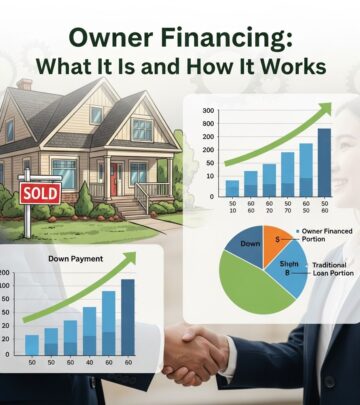
To illustrate how owner financing functions, consider this practical example: A buyer is interested in purchasing a home listed at $380,000 and plans to put down $38,000, representing a 10 percent down payment. However, due to credit or financial circumstances, the buyer can only qualify for a conventional mortgage of $100,000. In this scenario, the seller might agree to finance the outstanding $242,000 at a fixed interest rate over a ten-year term, with a balloon payment due at the end, calculated based on a 30-year amortization schedule.
Unlike traditional mortgages, owner financing typically moves more quickly through the closing process. There’s no lengthy loan approval process, underwriting requirements, or extensive documentation needed. Both parties simply need to agree on terms, have the agreement documented properly, and proceed to closing. The buyer still needs to provide a down payment and agree to make monthly payments, but the flexibility in terms and reduced bureaucracy make this option attractive for many parties.
Types of Owner Financing Arrangements
Owner financing can be structured in several different ways, depending on the specific needs and preferences of both the buyer and seller. Understanding these various structures helps determine which option best suits your situation.
Promissory Note and Deed of Trust
The promissory note is a binding legal document in which the buyer promises to repay the seller for the borrowed funds. This note includes critical financing terms such as the loan amount, interest rate, monthly payment amount, and the loan term. The deed of trust is a separate agreement that gives the seller a security interest in the property. This arrangement means the seller retains the legal title to the property until the loan is paid in full, protecting the seller’s interest if the buyer defaults.
Land Contract
A land contract, sometimes called a contract for deed, is another popular structure for owner financing. In this arrangement, the buyer takes possession of the property and makes regular payments to the seller, but the seller retains the title until the purchase price is fully paid. This structure provides additional security for the seller while allowing the buyer to occupy and use the property.
Lease Purchase Agreement
Also known as rent-to-own arrangements, lease purchase agreements allow the buyer to lease the property with an option to purchase it later. A portion of the monthly rent payments may be credited toward the eventual purchase price. This option is particularly useful for buyers who need additional time to improve their credit or save for a down payment.
Wraparound Mortgage
In a wraparound mortgage structure, the seller finances the buyer while still owing an existing mortgage on the property. The buyer makes payments to the seller, who then continues making payments on the original mortgage. This arrangement can be beneficial when the existing mortgage has favorable terms that the buyer wants to take advantage of.
Essential Terms in Owner Financing Agreements
When structuring an owner financing agreement, specific terms and conditions must be clearly outlined to protect both parties. These elements should be documented in the promissory note and related agreements:
Core Agreement Terms
Purchase price: The total price for the property should always be explicitly stated. This figure is essential for calculating the total loan amount and establishing the foundation for all other financial calculations in the agreement.
Down payment and earnest money deposit: This term details how much money the buyer pays upfront. A larger down payment typically reduces the seller’s risk and may result in more favorable loan terms for the buyer.
Loan amount: This is calculated as the purchase price minus any down payment or earnest money paid by the homebuyer. Understanding the exact loan amount is critical for all parties.
Interest rate: The promissory note must specify whether the interest rate is fixed or variable, and the exact percentage rate being charged.
Loan term and monthly payment: The agreement should clearly state the duration of the loan and the amount of each monthly payment required from the buyer.
Amortization schedule: This outlines how payments are distributed between principal and interest over the life of the loan.
Balloon payment: If applicable, the agreement must specify the amount of any large lump-sum payment due at the end of the loan term.
Default consequences: The agreement should detail what happens if the buyer fails to make payments or pays late, including any penalties, late fees, or foreclosure provisions.
Insurance and tax responsibilities: The agreement must clarify who is responsible for property taxes, homeowners insurance, and maintenance costs.
Owner Financing Timeline and Duration
Unlike traditional mortgages that typically span 30 years, owner financing arrangements are usually structured as short-term loans. Most owner financing agreements last between five and ten years. At the end of this term, a balloon payment becomes due, representing the remaining balance on the loan. This shorter timeline and balloon payment structure differ significantly from conventional financing and should be carefully considered by potential buyers.
Advantages of Owner Financing for Buyers
Flexible credit and down payment requirements: Buyers who may not qualify for conventional loans due to poor credit history or other financial issues can still purchase property through owner financing. Additionally, sellers may accept lower down payments than banks typically require.
No mortgage application or underwriting: The buyer avoids the lengthy and often frustrating mortgage application process, including extensive documentation requirements and credit checks.
Faster and less expensive closing: Without the need for lender appraisals, inspections, and formal approval processes, the closing can happen more quickly. Buyers also avoid many traditional closing costs associated with bank mortgages.
Benefits for self-employed individuals: Self-employed buyers who struggle to document income to satisfy bank requirements find owner financing particularly valuable, as sellers may be more flexible about income verification.
Elimination of certain requirements: Owner financing eliminates the need for formal home inspections and appraisals required by traditional lenders, potentially saving buyers time and money.
Advantages of Owner Financing for Sellers
Broader buyer pool: By offering owner financing, sellers can attract buyers who cannot qualify for traditional mortgages, potentially leading to a quicker sale.
As-is property sales: Sellers don’t need to meet traditional lender requirements for appraisals and inspections, allowing them to sell properties in their current condition without costly repairs or upgrades.
Additional income through interest: Sellers earn extra income through the interest payments made by the buyer over the life of the loan, increasing the total return on the property sale.
Expedited sales process: By eliminating the due diligence requirements of traditional lenders, the selling process moves more quickly.
Selling promissory notes: Sellers have the option to sell their promissory note to a real estate investor for a lump sum payment, providing immediate capital if needed.
Title retention protection: If the buyer defaults, the seller retains the legal title to the property in many arrangements, providing a straightforward path to repossession.
Disadvantages and Risks of Owner Financing
While owner financing offers advantages, it also comes with risks and drawbacks that both parties should carefully consider.
For Buyers
Higher interest rates: Owner financing typically comes with higher interest rates than conventional mortgages, potentially costing buyers significantly more over the life of the loan.
Balloon payment obligations: The large lump-sum payment due at the end of the loan term can be challenging for buyers to pay, potentially forcing them into refinancing or defaulting.
Difficulty finding willing sellers: Not all sellers are comfortable with owner financing, making these opportunities less common in the real estate market.
No credit building: If the seller doesn’t report payments to credit bureaus, the buyer’s credit score won’t benefit from making on-time payments.
Full financial responsibility: The buyer remains responsible for keeping up with homeowners insurance, property tax payments, and maintenance costs.
For Sellers
Default risk: The seller assumes the risk that the buyer may default on the loan, similar to what banks face with traditional mortgages.
Delayed full payment: The seller only receives the down payment at closing and must wait five to ten years until the balloon payment comes due to receive the full sales price.
Administrative burden: The seller becomes responsible for loan servicing, payment collection, and managing the financial relationship with the buyer.
Potential legal complications: If the buyer defaults, the seller must navigate foreclosure proceedings, which can be time-consuming and costly.
When Owner Financing Makes Sense
Owner financing may be the right choice in several specific scenarios:
Credit or financial challenges: When a buyer’s credit or finances aren’t sufficient to qualify for traditional financing, owner financing becomes a viable path to homeownership.
Insufficient down payment: Buyers who don’t have enough savings for a conventional down payment may find owner financing more accessible.
Purchase price exceeds appraised value: When the home’s purchase price is higher than the appraised value, necessitating the buyer to cover the shortfall with additional funds, owner financing can bridge the gap.
Speed and cost savings: When parties want to close quickly or save on closing costs, owner financing eliminates time-consuming approval processes and associated fees.
Flexible terms preference: When parties prefer more flexible terms than what traditional lenders offer, owner financing allows for customized arrangements.
Unique properties: Transactions involving serious fixer-uppers or other unique properties that traditional lenders are unwilling to finance become possible through owner financing.
Important Considerations and Best Practices
Both buyers and sellers should take several important steps when considering owner financing:
Consult legal professionals: Each party should have an experienced real estate attorney review the agreement to ensure protections on both sides and that all terms are clearly documented and legally sound.
Conduct title search and insurance: Buyers should ensure proper title searches are conducted and title insurance is obtained to protect against any ownership disputes.
Document all terms: Every aspect of the agreement should be documented in writing, including payment schedules, default provisions, and responsibilities for taxes and insurance.
Consider professional assistance: Working with a real estate agent experienced in owner-financing transactions can help both parties understand their options and find suitable matches.
Frequently Asked Questions About Owner Financing
Q: What is the difference between owner financing and a traditional mortgage?
A: The primary difference is that in owner financing, the seller directly finances the buyer rather than a bank or lender doing so. Owner financing typically has shorter loan terms (5-10 years versus 30 years), higher interest rates, often includes balloon payments, and avoids lengthy approval processes and formal underwriting requirements.
Q: Can I get owner financing if I have bad credit?
A: Yes, owner financing is more accessible for buyers with poor credit because sellers may be more flexible than traditional lenders. However, sellers may require a larger down payment or charge higher interest rates to compensate for the increased risk.
Q: What happens if I default on an owner-financed loan?
A: If you default on an owner-financed loan, the seller may initiate foreclosure proceedings to reclaim the property. The specific consequences depend on the terms outlined in your promissory note and deed of trust or land contract.
Q: How long does owner financing typically last?
A: Most owner financing arrangements last between 5 and 10 years, after which a balloon payment is typically due. This is much shorter than the 30-year terms common in traditional mortgages.
Q: Do I need a real estate attorney for owner financing?
A: Yes, it’s highly recommended that both the buyer and seller have a real estate attorney review the agreement. An attorney ensures that all terms are clearly documented, legally sound, and protective of both parties’ interests.
Q: Can seller financing help me build credit?
A: Only if the seller reports your payments to credit bureaus. Many owner-financed arrangements don’t include credit bureau reporting, so you should specifically discuss this with the seller if building credit is important to you.
References
- What is Owner Financing in Real Estate? — Arrived. Accessed November 2025. https://arrived.com/blog/owner-financing
- Owner Financing: What It Is and How It Works — Bankrate. Accessed November 2025. https://www.bankrate.com/mortgages/owner-financing/
- Owner Financing – Definition, How It Works, Types, Requirements — Corporate Finance Institute. Accessed November 2025. https://corporatefinanceinstitute.com/resources/commercial-lending/owner-financing/
- Seller Financing: Definition and How It’s Used in Real Estate — Chase Bank. Accessed November 2025. https://www.chase.com/personal/mortgage/education/financing-a-home/seller-financing
Similar Articles








Read full bio of Sneha Tete