Overlooked Tax Mistakes: 8 Ways To Avoid Costly Errors In 2026
Discover common tax filing errors that cost you money and learn simple strategies to avoid them for maximum refunds.

Tax season brings opportunities for refunds but also pitfalls that can lead to penalties, audits, or lost savings. Many Americans make simple errors that cost them hundreds or thousands of dollars annually. This article explores the most common overlooked tax mistakes, drawing from IRS data and expert analyses, and provides actionable steps to sidestep them in 2026.
Filing Too Early Without All Documents
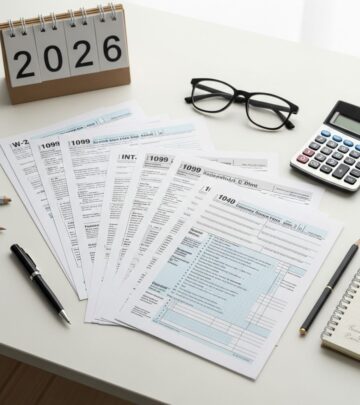
One of the biggest temptations is filing your return as soon as tax software opens, often in late January. However, rushing without all necessary forms can trigger rejections or amendments, delaying refunds by weeks or months. Common missing documents include W-2s from employers, 1099-NEC for freelance work, 1099-INT for bank interest, and 1099-DIV for investment dividends. The IRS receives copies of these forms directly, so discrepancies flag your return immediately.
For gig workers on platforms like Uber or Upwork, 1099-K forms for transactions over $600 arrive later. Filing prematurely means amending with Form 1040-X, which the IRS processes slowly—averaging 16 weeks in recent years. Instead, create a checklist: track expected forms via employer portals and bank apps. Wait until mid-February when most arrive. This ensures accuracy and avoids red flags.
Wrong Social Security Numbers or Dependent Info
A single transposed digit in a Social Security number (SSN) is among the top reasons returns get rejected. This error peaks when claiming dependents, as mismatched SSNs block Child Tax Credits or Earned Income Credits worth up to $7,830 in 2026. Parents often enter children’s SSNs from memory, leading to mismatches against SSA records.
- Verify SSNs against official cards or Social Security statements.
- Cross-check with prior-year returns, but confirm updates for newborns or name changes.
- Use IRS tools like the Interactive Tax Assistant for dependent qualification.
Math errors in addition or subtraction also trigger e-file rejections, but SSN issues cause 30% of all rejects per IRS stats. Double-entering data into software reduces risks.
Incorrect Filing Status
Your filing status determines standard deductions, tax brackets, and eligibility for credits like Head of Household (HOH), which offers a $20,800 standard deduction in 2026 versus $13,850 for singles—nearly $7,000 more. Many single parents or divorced individuals default to ‘Single’ despite qualifying for HOH if they provide over half the home for a qualifying child or relative.
| Filing Status | 2026 Standard Deduction | Key Eligibility |
|---|---|---|
| Single | $13,850 | Unmarried, no dependents |
| Married Filing Jointly | $27,700 | Married couples combining income |
| Head of Household | $20,800 | Single with qualifying dependent |
| Qualifying Surviving Spouse | $27,700 | Widowed with dependent child |
Married Filing Separately often spikes taxes due to halved credits. Review IRS Publication 501 annually, as life changes like divorce or new dependents alter status. Tax software prompts help, but manual review prevents overpayment.
Missing Eligible Credits and Deductions
Americans forfeit $1 billion yearly in unclaimed credits, per IRS estimates. Common oversights include the Child Tax Credit ($2,000 per child under 17), Earned Income Tax Credit (up to 40% refundable for low earners), and education credits like American Opportunity Credit ($2,500 max).
Self-employed miss Schedule C deductions: home office (square footage x $5/sq ft simplified), mileage (67 cents/mile in 2026), and Section 179 for equipment up to $1.22 million. Retirees overlook IRA contributions if under 70½ with earned income.
- Out-of-pocket charity: Cash, goods, or mileage (14 cents/mile) without receipts.
- Student loan interest: Up to $2,500 even if not itemizing.
- State sales tax: Deduct in high-sales-tax states instead of income tax.
Answer every software question; changes like remote work unlock home office deductions. H&R Block notes 25% of EIC-eligible filers miss it due to complex rules.
Inaccurate Income Reporting
The IRS matches your return against 300 million info returns. Underreporting side hustle income from Venmo, Etsy, or cash tips invites audits—penalties reach 20% plus interest. Gig economy earners often omit $600+ payments without 1099s, but all taxable income must be reported.
Cryptocurrency sales trigger capital gains; unreported trades led to 10,000+ notices in 2025. Rental income from Airbnb requires Schedule E. Track via apps like QuickBooks Self-Employed. Report everything to align with IRS computers and slash audit odds from 1% to near zero.
Using Outdated Tax Rules
Tax laws evolve: 2026 brings higher standard deductions ($1,000+ increase), expanded SALT caps to $20,000, and new car loan interest deductions for U.S.-made vehicles. TCJA extensions raise brackets, but ignoring inflation adjustments overstates liability.
Retirees face RMDs at 73, with 85% of Social Security taxable if combined income exceeds $44,000 (joint). Use IRS withholding estimator for IRA distributions to avoid underpayment penalties (90% safe harbor rule). Update software and consult Pub 505.
Procrastinating Until the Deadline
April 15 extensions are easy, but last-minute rushes spike errors by 40%, per TurboTax data. Owing taxes accrues 0.5% monthly failure-to-pay penalties plus interest. Early filing unlocks refunds faster—average $2,800 in 21 days via direct deposit.
Start in February: gather docs, maximize contributions (IRA deadline April 15). Pros find 10-20% more savings via audits.
Special Considerations for Retirees and Self-Employed
Retirees blunder by withdrawing IRA funds without withholding, facing penalties on $50k+ withdrawals. Coordinate Social Security timing—delay to 70 for 8% annual boosts, but manage provisional income for taxability. Self-employed skip QBI deduction (20% of qualified income) or health insurance write-offs.
FAQs
What is the most common tax mistake?
Math errors and SSN mismatches top IRS lists, but missing credits costs the most money.
Can I deduct home office if remote working?
Yes, if exclusive business use; simplified method is $5/sq ft up to 300 sq ft.
How do I avoid audit triggers?
Match all income forms, claim reasonable deductions, and e-file for accuracy.
Are state taxes deductible in 2026?
Yes, up to expanded SALT limits; choose sales or income tax whichever higher.
What if I miss a deduction?
Amend within 3 years via 1040-X; carrybacks possible for some losses.
References
- Tax Season Is Open: 7 Costly Mistakes to Avoid When Filing in 2026 — Elite Consulting PC. 2026-01-01. https://www.eliteconsultingpc.com/blogs/chicago-tax-consulting-cpa-firm-blog/1445919-tax-season-is-open-7-costly-mistakes-to-avoid-when-filing-in-2026
- The Most Overlooked Write-Offs You Can Still Claim This Month — Straight Talk CPAs. 2025-12-01. https://www.straighttalkcpas.com/the-most-overlooked-write-offs-you-can-still-claim-this-month
- Don’t overlook these common tax deductions in 2026 — H&R Block. 2025-11-15. https://www.hrblock.com/tax-center/filing/adjustments-and-deductions/5-common-tax-deductions/
- 7 Tax Blunders to Avoid in Your First Year of Retirement — Kiplinger. 2025-10-20. https://www.kiplinger.com/retirement/retirement-planning/tax-blunders-to-avoid-in-your-first-year-of-retirement
- The 10 Most Overlooked Tax Deductions — TurboTax Intuit. 2025-09-10. https://turbotax.intuit.com/tax-tips/fun-facts/the-10-most-overlooked-tax-deductions/L2WjmvZAH
- Common Tax Mistakes and How to Avoid Them — Horizon Bank. 2026-01-05. https://www.horizonbank.com/about-us/newsroom/advice/sensible-advice-categories/personal-finance/personal-finance/2026/01/05/common-tax-mistakes-and-how-to-avoid-them
- Take Advantage of These New Tax Changes for 2026 — AARP. 2025-12-15. https://www.aarp.org/money/taxes/2026-tax-changes/
Similar Articles








Read full bio of Sneha Tete