Overheated Economy: Causes, Effects, and Solutions
Learn how excessive economic growth leads to inflation and what policymakers do to cool overheated economies.

An overheated economy represents one of the most complex challenges faced by policymakers and central banks worldwide. While economic growth is generally viewed as positive, there exists a critical threshold beyond which rapid expansion becomes unsustainable and counterproductive. This phenomenon occurs when the pace of economic expansion far exceeds the economy’s productive capacity, creating widespread imbalances that ultimately harm consumers, businesses, and the broader financial system. Understanding what constitutes an overheated economy, recognizing its warning signs, and knowing how to address it is essential for anyone seeking to comprehend modern macroeconomic policy.
What Is an Overheated Economy?
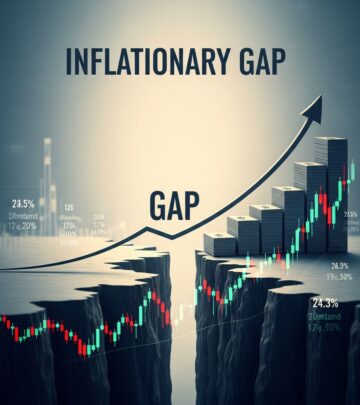
An overheated economy exists when an economy grows at an unsustainable rate, with aggregate demand significantly outpacing aggregate supply. During these periods, the economy operates beyond its potential output level, typically characterized by full employment where unemployment rates fall to historically low levels and productive resources face severe constraints. The fundamental problem underlying an overheated economy is straightforward: too many dollars chasing too few goods and services.
When economic activity reaches excessive levels too quickly, producers cannot supply sufficient goods to meet consumer and business demand. This imbalance creates persistent upward pressure on prices as suppliers attempt to capitalize on strong demand, initiating inflationary pressures that ripple throughout the economy. The phenomenon typically emerges during boom phases of the economic cycle, when growth appears robust and unemployment appears solved. However, this apparent strength masks underlying vulnerabilities that ultimately surface as inflation erodes purchasing power and destabilizes economic conditions.
Understanding the Key Characteristics
Several distinctive features mark an overheated economy and distinguish it from normal, healthy expansion:
- Rapid GDP Growth: The economy expands at rates well above its long-term potential, typically exceeding historical averages by significant margins.
- Full or Near-Full Employment: Unemployment rates fall to minimal levels, approaching or reaching full employment where joblessness exists only among those transitioning between positions.
- High Capacity Utilization: Factories, businesses, and workers operate at maximum or near-maximum capacity with virtually no slack resources available.
- Rising Prices and Wages: Both consumer prices and worker compensation climb rapidly as demand pressures mount and labor becomes scarce.
- Inflationary Pressures: General price levels rise persistently, eroding the purchasing power of consumers and savers.
- Increased Consumer and Business Confidence: Economic optimism leads households and firms to spend and invest aggressively, further fueling demand.
Primary Causes of Economic Overheating
Multiple factors can trigger an overheated economy, though the underlying common thread involves excessive aggregate demand relative to available supply. Understanding these causes helps explain why overheating occurs and how policymakers might prevent it.
Ultra-Loose Monetary Policy and Low Interest Rates
Central banks attempting to stimulate economic growth often reduce interest rates to historically low levels. While low rates can promote borrowing and spending during economic weakness, they can overstimulate demand if maintained too long or set too aggressively during already-strong economic conditions. When borrowing becomes extremely cheap, businesses expand operations beyond sustainable levels, consumers increase spending and take on excessive debt, and investors engage in speculative behavior. The resulting flood of liquidity into the economy drives up both the money supply and demand for all goods and services. Excessive money creation artificially inflates the currency supply, leading households and businesses to invest aggressively in fixed assets like housing, creating bubbles in real estate and other asset classes.
Full Employment and Rising Labor Costs
When unemployment falls to very low levels approaching full employment, the labor market fundamentally shifts in workers’ favor. With few jobless individuals available for hire, companies compete intensely for talent by offering higher wages and better benefits. Rising labor costs directly increase business expenses, which companies pass along to consumers through higher prices. This wage-price spiral becomes self-reinforcing: higher wages increase consumer purchasing power, driving up demand for goods, which pressures companies to raise prices, which erodes the purchasing power gains from wage increases, leading workers to demand even higher wages. This dynamic, once initiated, becomes difficult to contain without substantial policy intervention.
Fiscal Stimulus and Government Spending
Governments sometimes boost spending or cut taxes to promote economic growth, injecting additional demand into the economy. While such policies can be appropriate during recessions when excess capacity exists, implementing them during already-strong expansion accelerates overheating. Government spending directly adds to aggregate demand, and tax cuts increase consumer disposable income, both further straining the supply side’s ability to meet demand.
Increased Consumer and Business Confidence
Periods of rapid growth and declining unemployment generate widespread optimism about future economic prospects. This confidence causes households to increase spending beyond prudent levels and businesses to expand capacity aggressively. Such behavior may prove unsustainable if future income growth fails to materialize or if economic conditions deteriorate unexpectedly.
Effects and Consequences of Overheating
An overheated economy produces far-reaching negative consequences that ultimately harm the very growth that initially appeared so positive.
Demand-Pull Inflation
The most immediate effect of overheating is demand-pull inflation, where rising prices result directly from excessive aggregate demand. Suppliers, unable to increase output fast enough, raise prices to ration scarce supply among competing buyers. This inflation reduces purchasing power, particularly harming savers with cash holdings and fixed-income earners whose wages fail to keep pace with price increases.
Reduced Export Competitiveness
As domestic prices rise, goods produced domestically become more expensive internationally. Foreign consumers switch to cheaper alternatives from competing nations, reducing export volumes and export revenues. This external demand shock partially offsets the internal demand boom, but only after causing significant disruption to export-dependent industries and workers.
Unsustainable Resource Utilization
Overheated economies often rely on unsustainable production practices to meet excessive demand. Machinery operates beyond recommended capacity, workers labor excessive overtime, and natural resources face depletion. These practices prove unsustainable because they accelerate equipment degradation, worker burnout, and resource exhaustion, ultimately reducing long-term productive capacity.
Financial Imbalances and Asset Bubbles
Excessive liquidity and confidence can inflate asset prices in real estate, stock markets, and other markets far beyond sustainable levels justified by underlying fundamentals. When these bubbles eventually burst, substantial financial losses cascade through the economy, triggering broader instability and potentially severe recessions.
Excessive Consumer Debt
Overconfident consumers often borrow aggressively to finance consumption and investment in assets like housing. If future income fails to materialize or interest rates rise, debt service becomes unsustainable, leading to defaults, bankruptcies, and financial distress.
How Overheating Leads to Economic Recession
The trajectory from overheating to recession follows a predictable pattern. As inflation pressures mount, central banks respond by tightening monetary policy, raising interest rates to cool demand. Higher borrowing costs reduce business investment spending and consumer spending on interest-sensitive items like homes and automobiles. Simultaneously, rising prices reduce real purchasing power, causing consumers to reduce consumption. These demand reductions, occurring too abruptly after years of explosive growth, create sharp reversals in economic conditions. Businesses facing falling demand reduce production and lay off workers. Unemployment climbs, consumer confidence evaporates, and spending collapses further. Asset bubbles burst as speculative investors exit positions, triggering financial losses. This boom-bust cycle, entirely preventable through appropriate policy management, causes substantial economic damage including job losses, bankruptcies, foreclosures, and suffering for ordinary people.
Correction Measures and Policy Responses
Monetary Policy Tightening
Central banks typically respond to overheating by raising interest rates, making borrowing more expensive and saving more attractive. Higher rates reduce both business investment and consumer spending, cooling excessive demand. Additionally, central banks may reduce the money supply through open market operations, selling securities to absorb liquidity from the financial system.
Fiscal Policy Restraint
Governments can cool overheated economies by reducing spending and raising taxes, decreasing aggregate demand through the fiscal channel. Such measures prove unpopular politically but prove necessary to prevent inflation and subsequent severe recession.
Supply-Side Improvements
Policymakers can also address overheating by expanding productive capacity through infrastructure investment, education improvements, and regulatory reforms that reduce business bottlenecks. Increasing supply relative to demand reduces inflationary pressure while maintaining growth.
Lending Restrictions
Central banks can impose limits on excessive lending, requiring banks to maintain higher capital standards and restricting credit expansion. Such macroprudential policies directly reduce the money supply and credit availability, cooling demand without necessarily raising rates as aggressively.
Comparison: Overheated Economy vs. Market Froth
| Characteristic | Overheated Economy | Market Froth |
|---|---|---|
| Scope | Broader macroeconomic condition affecting the entire economy | Specific condition within financial markets or particular asset classes |
| Core Cause | Aggregate demand exceeding aggregate supply | Investor speculation and irrational exuberance |
| Primary Symptoms | High inflation, low unemployment, wage growth, high capacity utilization | Unsustainable rapid asset price appreciation, inflated valuations, ignored fundamentals |
| Affected Population | Entire economy including consumers, businesses, and workers | Primarily investors and financial market participants |
| Policy Response | Monetary and fiscal tightening to reduce aggregate demand | Regulatory measures and disclosure requirements to improve market transparency |
Real-World Examples and Lessons
Historical examples illustrate the dangers of uncontrolled overheating. The 2000s housing boom, fueled by ultra-low interest rates and loose lending standards, created massive overheating in the real estate sector. When prices inevitably corrected, the resulting financial crisis devastated the global economy. Similarly, the rapid expansion of emerging markets in the 2010s, while broadly beneficial, created overheating dynamics that led to sharp currency depreciations and financial stress when conditions shifted. These examples underscore the importance of preventing overheating rather than attempting to manage it after it emerges.
Frequently Asked Questions
Q: What exactly causes an economy to become overheated?
A: An economy becomes overheated when aggregate demand exceeds aggregate supply due to factors such as ultra-loose monetary policy with very low interest rates, full employment conditions, expansionary fiscal policy through government spending and tax cuts, and heightened consumer and business confidence driving excessive spending and investment.
Q: How does an overheated economy affect regular people and households?
A: Individuals experience higher inflation, eroding purchasing power as the cost of living rises. While more job opportunities and potentially higher wages may exist, rising prices can erase these gains. Savers see cash savings lose value, while those with fixed-rate debt benefit. However, the eventual policy tightening and recession cause job losses and hardship.
Q: What are the main risks of an overheated economy?
A: Primary risks include persistent high inflation, potential for sharp economic downturns or recession if policymakers tighten policy too aggressively, financial imbalances creating asset bubbles that burst and cause instability, excessive consumer and business debt that becomes unsustainable, and widespread bankruptcies and job losses during the inevitable correction.
Q: Can overheating be prevented entirely, or is it inevitable?
A: While some fluctuations prove inevitable in market economies, severe overheating can largely be prevented through appropriate policy management. Policymakers can monitor economic indicators, raise interest rates preemptively when overheating appears, limit fiscal expansion during strong growth periods, and implement supply-side reforms to expand capacity. Vigilance and willingness to act unpopularly when necessary prevent the worst overheating scenarios.
Q: How long does it typically take for an overheated economy to cool down?
A: The timeline varies considerably depending on the severity of overheating, the aggressiveness of policy response, and underlying structural factors. Modest overheating may cool within one to two years through gradual rate increases. Severe overheating, particularly involving large asset bubbles, may require years of adjustment and can trigger recessions lasting multiple quarters or longer.
Q: What should investors do when an economy appears to be overheating?
A: Investors should reduce exposure to interest-rate-sensitive sectors like utilities and real estate, consider rotating toward defensive assets, maintain higher cash allocations to deploy when prices decline, avoid speculative positions in overvalued asset classes, and diversify internationally if domestic overheating appears severe. However, timing market peaks remains notoriously difficult.
References
- Overheated Economy – Meaning, Causes, Examples, Correction — Wall Street Mojo. 2025. https://www.wallstreetmojo.com/overheated-economy/
- What Does Overheating in the Economy Mean — Central Bank of Ireland. 2025. https://www.centralbank.ie/consumer-hub/explainers/what-does-overheating-in-the-economy-mean
- Overheating (economics) — Wikipedia. 2024. https://en.wikipedia.org/wiki/Overheating_(economics)
- Overheated Economy: Understanding Its Legal Definition — US Legal Forms. 2024. https://legal-resources.uslegalforms.com/o/overheated-economy
- Overheated: Meaning, Criticisms & Real-World Uses — Diversification. 2024. https://diversification.com/term/overheated
Similar Articles








Read full bio of medha deb