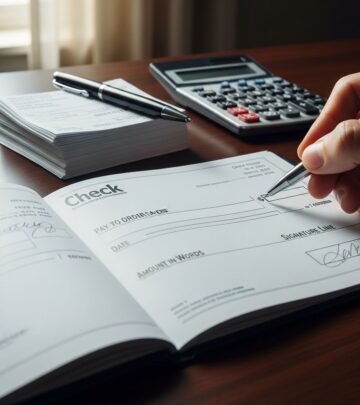
Outstanding Check Letter Template & Guide
Learn how to write an effective outstanding check letter with templates and best practices.
Understanding Outstanding Check Letters
An outstanding check letter is a formal business communication used to notify a recipient that a check issued to them has not been deposited or cashed within a reasonable timeframe. This situation commonly arises in business operations when vendors, employees, contractors, or service providers fail to cash checks for various reasons, including lost checks, incorrect addresses, or simple oversight. Understanding how to compose an effective outstanding check letter is essential for maintaining accurate financial records, reconciling bank accounts, and ensuring proper cash flow management.
Outstanding checks create complications for both the issuer and recipient. From the issuer’s perspective, uncashed checks remain on the books as outstanding liabilities, which can distort financial statements and complicate reconciliation processes. For recipients, a lost or misplaced check means delayed access to funds they are owed. Addressing this situation promptly through a well-crafted letter demonstrates professionalism and helps resolve the issue efficiently.
When to Send an Outstanding Check Letter
Determining the appropriate timing for sending an outstanding check letter is crucial. Generally, you should wait a reasonable period before reaching out, typically 30 to 90 days after issuing the check. This timeframe allows sufficient time for the check to be delivered through standard mail and processed through the banking system. However, if you know the check was hand-delivered or sent via expedited mail, you may send the letter sooner.
Several scenarios warrant sending an outstanding check letter:
– When a check appears on your bank statement as outstanding for more than 60 days- When reconciling accounts and discovering uncashed checks from months prior- When addressing unclaimed property compliance requirements- When a vendor or employee inquires about a payment they never received- During year-end financial reviews to clear up accounting discrepancies- When preparing to issue stop-payment orders on checks
Key Components of an Outstanding Check Letter
A professional outstanding check letter should include specific essential elements to ensure clarity and effectiveness. These components help the recipient understand the situation and know exactly what action you need them to take.
Header and Sender Information
Begin your letter with your company letterhead or personal contact information. Include your name, title, company name, full address, email address, and phone number at the top of the letter. This information allows the recipient to easily contact you if they have questions or need clarification.
Date of Correspondence
Always include the date you are sending the letter. This date becomes important for record-keeping and establishes a timeline if follow-up communications become necessary. Use the current date in a clear format, such as January 15, 2025.
Recipient Information
Provide the complete name and mailing address of the check recipient. If the letter is being sent to a business, include the appropriate department or contact person name. Accurate recipient information ensures the letter reaches the intended party and demonstrates attention to detail.
Check Details
Clearly specify all relevant check information:
– Check number- Date the check was issued- Exact amount of the check- Purpose or reason for the payment- Original due date or invoice reference if applicable
Clear Statement of Purpose
In the opening paragraph, explicitly state that you are writing regarding an outstanding or uncashed check. Use language such as, “In an attempt to clear up outstanding items, we found that check # [number] was issued to you on [date] in the amount of $[amount] and has not cleared our bank to date.”
Options and Call to Action
Provide the recipient with clear options for how to proceed. The most common choices include requesting them to void the check, accepting a replacement check, indicating they still have the original check, or specifying an alternative arrangement. Use checkboxes or numbered options to make selections easy.
Response Deadline
Always include a specific timeframe for response, typically 10 business days. This creates urgency and establishes a clear expectation. State consequences if no response is received, such as stopping payment on the check or turning funds over to the state unclaimed property division.
Professional Closing
End the letter with a courteous closing such as “Sincerely” or “Best Regards,” followed by your signature and printed name and title.
Outstanding Check Letter Template
Here is a professional template you can customize for your needs:
[Your Company Letterhead][Your Name][Your Title][Company Name][Your Address][City, State, Zip Code][Email Address][Phone Number][Date][Recipient Name][Recipient Address][City, State, Zip Code]Dear [Recipient Name]:In an attempt to clear up outstanding items in our accounting records, we found that check # [CHECK NUMBER] was issued to you on [ISSUE DATE] in the amount of $[AMOUNT] for [PURPOSE] and has not cleared our bank to date.Please let us know your preference by selecting one of the following options:____ Please void the check and consider it a donation to [CHARITABLE ORGANIZATION, if applicable].____ Please advise if you no longer wish to receive this payment.____ Please reissue a replacement check to me at the address listed below.____ I still have the check and will cash it immediately.____ Other (please specify): ___________________________________________________Please reply within 10 business days. If we do not receive your response by [RESPONSE DEADLINE DATE], we are obligated by law to turn the money over to the State of [STATE NAME] unclaimed property division.New Mailing Address (if different from above):_________________________________________________________________Please reply to this letter or contact me directly at [PHONE NUMBER] or [EMAIL ADDRESS]. Thank you for your prompt attention to this matter.Sincerely,[Your Signature][Your Printed Name][Your Title]Best Practices for Outstanding Check Letters
Use Professional Formatting
Maintain a formal business letter format with proper spacing, alignment, and font selection. Use a standard, readable font such as Times New Roman or Arial in 11 or 12-point size. A professionally formatted letter demonstrates legitimacy and increases the likelihood the recipient will take it seriously.
Maintain a Professional Tone
Keep the tone polite, courteous, and businesslike throughout the letter. Avoid accusatory language or implications that the recipient is dishonest. Assume good faith and present the situation as a simple administrative matter that needs resolution. Remember that the recipient may genuinely have lost or misplaced the check.
Be Specific and Accurate
Double-check all details before sending the letter. Ensure the check number, amount, date, and recipient information are completely accurate. Any errors in these details can create confusion and delay resolution. Cross-reference your records and bank statements to confirm accuracy.
Send via Certified Mail
Send the outstanding check letter via certified mail with return receipt requested. This creates a paper trail and provides proof of delivery. If you need to take further legal action or file a claim with the state, having documentation of your communication attempts is valuable. Keep copies of all correspondence for your records.
Document Everything
Maintain detailed records of all communications regarding outstanding checks. Save copies of the letters you send, any responses you receive, and the dates of contact. This documentation is essential for compliance with unclaimed property laws and for defending your position if disputes arise.
Follow Up Appropriately
If you do not receive a response within your stated timeframe, consider sending a follow-up communication. You may send a second letter marked as a final notice, or attempt to contact the recipient by phone or email. However, exercise caution with multiple contacts to avoid harassment concerns.
Understanding Unclaimed Property Laws
Many states have unclaimed property laws that require businesses to turn over outstanding checks to the state after a specified period, often one to three years. Before discarding records or closing accounts with outstanding checks, understand your state’s requirements. An outstanding check letter demonstrates your due diligence in attempting to return funds to the rightful owner before turning them over to state authorities.
These due diligence efforts are important for maintaining compliance and can protect your business from penalties. Consult your state’s unclaimed property division or a qualified accountant to understand your specific obligations.
Frequently Asked Questions
Q: How long should I wait before sending an outstanding check letter?
A: Generally, wait 30 to 90 days after issuing the check. This allows sufficient time for delivery and processing through the banking system. However, if you have specific knowledge of delivery circumstances, you may adjust this timeframe accordingly.
Q: What should I do if the recipient does not respond to my letter?
A: After the stated deadline passes without response, you may issue a final notice letter. If still no response is received, follow your state’s requirements for unclaimed property, which typically involves turning the funds over to the state after a designated period.
Q: Can I stop payment on an outstanding check?
A: Yes, you can place a stop payment order with your bank. However, this may incur a fee, and it is advisable to give the recipient reasonable opportunity to respond to your letter first. Check your state’s unclaimed property requirements before taking this action.
Q: Should I include legal language or threats in my outstanding check letter?
A: No. Maintain a professional, courteous tone. While you can mention legal obligations regarding unclaimed property, avoid threatening language or accusations. A polite, straightforward approach is more effective and less likely to create conflict.
Q: What if I cannot locate the recipient’s correct address?
A: Use your payment records, invoice files, or business database to locate the most recent address on file. If you have no current address, consult public records or attempt to contact them by phone or email if that information is available. Document your efforts to locate the recipient.
Q: Can I email an outstanding check letter instead of mailing it?
A: Email is acceptable if you have a valid email address for the recipient, though certified mail provides stronger legal documentation. Consider using both methods for important matters—email for quick notification and certified mail for official record purposes.
References
- Outstanding Checks Letter Template — Fohrman LLP. https://www.fohrman.com/
- Unclaimed Property Due Diligence for Imprest Accounts — University of Pennsylvania Finance Department. https://www.finance.upenn.edu/
- Notice of Uncashed Check(s) — Utah Courts. https://legacy.utcourts.gov/
- Collection Email Templates and Best Practices — Gaviti. https://gaviti.com/
- How to Write an Effective Debt Collection Letter — Chaser HQ. https://www.chaserhq.com/
Similar Articles








Read full bio of medha deb