Original Equipment Manufacturer: Definition and Examples
Understanding OEMs: How manufacturers reduce costs through outsourced production and component supply.
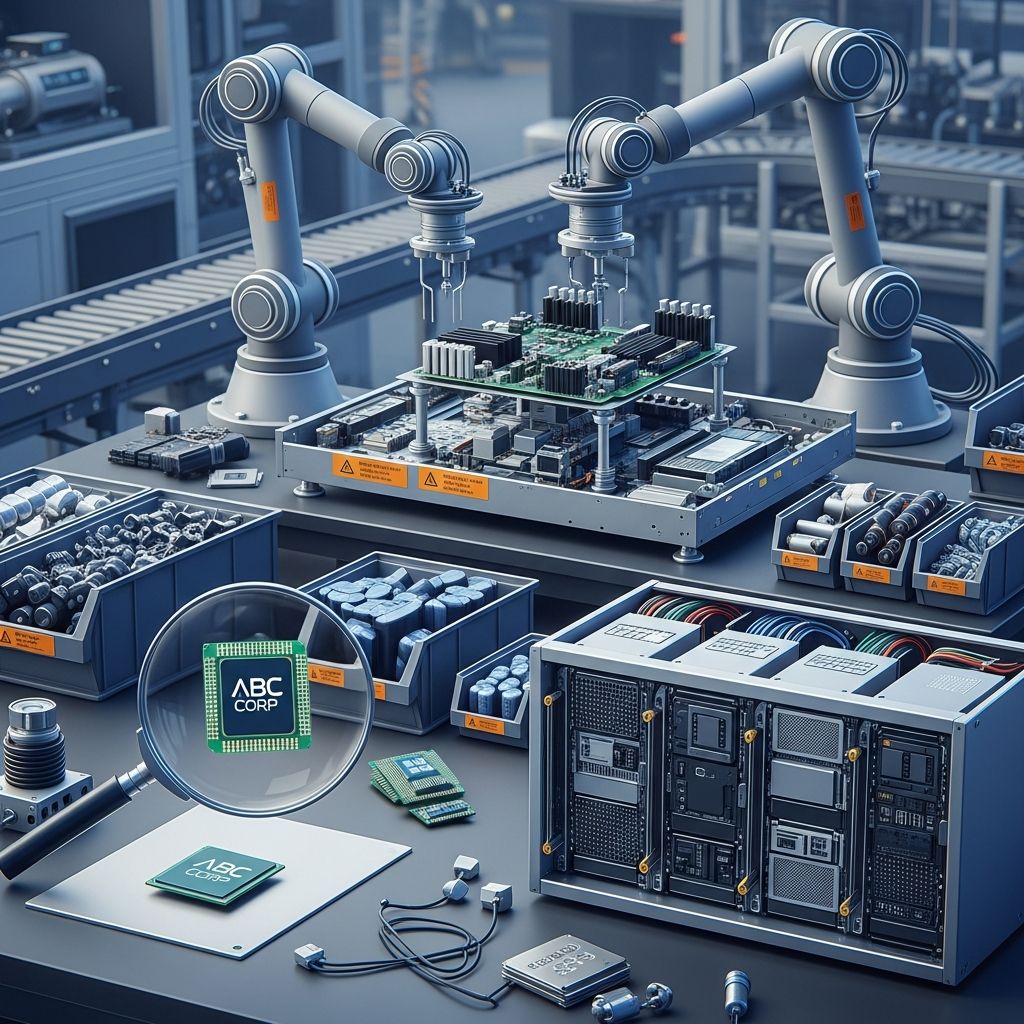
What Is an Original Equipment Manufacturer?
An original equipment manufacturer (OEM) is a company that produces equipment, parts, and components on behalf of another company for resale under that company’s branding. OEMs operate in a business-to-business (B2B) model, supplying specialized components and assemblies to companies that integrate them into finished products marketed to end consumers. The OEM business model has become fundamental across numerous industries, including automotive, information technology, hardware manufacturing, and advanced electronics.
The term “original equipment manufacturer” can sometimes be ambiguous because it carries multiple meanings depending on context. In its broadest sense, an OEM is any manufacturer of parts, components, or products designed for sale to other businesses rather than directly to consumers. However, the specific role and relationship between OEMs and their purchasing partners varies significantly based on industry practices and product complexity.
Understanding the OEM Business Model
The fundamental concept behind the OEM business model centers on specialization and efficiency. Rather than attempting to manufacture every component in-house, companies partner with OEMs who specialize in producing specific parts or assemblies. This approach allows companies to focus on their core competencies while leveraging the expertise and scale of specialized manufacturers.
When a company purchases from an OEM, it receives components or products designed to specific technical requirements and specifications. These items are then integrated into larger systems or combined with other components to create finished products. The purchasing company, known as a value-added reseller (VAR), enhances the OEM’s base product by incorporating additional features, software, services, or customizations before selling the final product to end users.
The OEM business model initially gained significant traction in the computer software industry during the 1980s and 1990s but has since expanded deeply into virtually every manufacturing sector globally. From automotive suppliers to electronics manufacturers to industrial equipment producers, the OEM model has become the dominant approach for managing complex supply chains and production processes.
OEM vs. Value-Added Reseller (VAR): Key Differences
Understanding the distinction between OEMs and value-added resellers is essential for grasping how modern manufacturing and distribution networks operate. These two entities play complementary but distinctly different roles in the product lifecycle.
Original Equipment Manufacturers (OEMs) are the companies that design and manufacture the base products or components. They specialize in production, quality control, and component engineering. OEMs typically operate at scale, producing large volumes of parts or assemblies for multiple purchasing partners. They own the manufacturing facilities, equipment, and intellectual property associated with the base product design.
Value-Added Resellers (VARs) purchase finished OEM products or components and enhance them before resale. VARs add value by incorporating additional features, software integration, customization, branding, technical support, or specialized services. The VAR then markets and sells these enhanced products under their own brand name directly to end consumers or specific market segments.
For example, in the automotive industry, an OEM might manufacture brake systems or electrical components, while an automotive company serves as the VAR by integrating these components into complete vehicles with additional features and branding before selling to consumers. In the computer industry, Microsoft functions as an OEM by producing Windows software, while Dell operates as a VAR by purchasing Windows, combining it with hardware components from other suppliers, and selling complete computer systems under the Dell brand.
OEM vs. Original Design Manufacturer (ODM): Core Distinctions
While OEMs and Original Design Manufacturers (ODMs) both produce products for other companies, the nature of their involvement and creative control differs significantly. Understanding these differences is crucial for companies deciding which manufacturing partnership model best suits their business needs.
Original Equipment Manufacturers (OEMs) produce products according to detailed specifications and designs provided by their purchasing partners. The customer typically controls the product design, features, and technical requirements, while the OEM handles manufacturing, quality assurance, and logistics. OEMs may attach their own branding or logos but have limited input into the fundamental product design.
Original Design Manufacturers (ODMs) take a more comprehensive approach by designing the product themselves and then manufacturing it. ODMs provide pre-designed or pre-engineered products ready for market launch. The purchasing company can often rebrand these products with minimal modification, making ODM arrangements particularly attractive for companies lacking in-house design capabilities.
The distinction matters because OEMs offer more customization and control over specifications, while ODMs provide faster time-to-market and lower development costs. Most products in today’s market are ultimately designed and manufactured to meet particular company specifications, creating a spectrum rather than a binary choice between these two models.
Advantages and Benefits of the OEM Model
Cost Reduction Through Economies of Scale
One of the primary advantages of partnering with OEMs is significant cost reduction through economies of scale. OEMs manufacture components or products in large volumes for multiple customers simultaneously. This high-volume production drives down per-unit manufacturing costs substantially compared to in-house production. The fixed costs of equipment, facilities, and labor are distributed across thousands of units, resulting in lower unit prices than small-scale or custom manufacturing operations could achieve.
Eliminating Capital Expenditure
By outsourcing to OEMs, companies avoid the need to build, maintain, and upgrade expensive manufacturing facilities. This eliminates substantial capital expenditures on factory construction, machinery, production equipment, and associated infrastructure. For emerging companies or those focused on specific market segments, this advantage proves particularly valuable, allowing them to allocate financial resources toward research, development, marketing, and sales instead.
Operational Focus and Efficiency
OEM partnerships enable companies to concentrate on their core competencies and strategic advantages. Rather than dividing attention and resources across diverse manufacturing operations, companies can dedicate expertise and investment to activities that directly differentiate their products in the marketplace. This focused approach typically results in better products, stronger market positioning, and improved profitability.
Rapid Scaling and Flexibility
OEMs provide flexibility in production volume and responsiveness to market demands. As market conditions change or customer demand fluctuates, OEM partners can adjust production volumes more efficiently than companies operating dedicated manufacturing facilities. This flexibility proves invaluable in dynamic markets where demand forecasting remains uncertain.
Real-World OEM Examples Across Industries
Automotive Industry
The automotive sector extensively utilizes OEM relationships. Major automotive companies partner with specialized manufacturers for components such as exhaust systems, brake cylinders, electrical components, transmissions, and suspension systems. These OEM manufacturers produce components meeting stringent quality standards and technical specifications, which are then assembled into complete vehicles by automotive companies operating as VARs.
Computer and Electronics
The technology sector represents one of the most developed OEM ecosystems. Computer manufacturers including Dell, HP, ASUS, Acer, and Lenovo partner with component OEMs for processors, memory modules, storage devices, and other hardware components. Additionally, Microsoft supplies Windows software to computer manufacturers, which incorporate it into complete PC systems sold under their own brands. Foxconn represents a major OEM helping companies such as Hewlett Packard Enterprise and other technology firms manufacture complex electronics and servers, with intellectual property typically retained by the upstream companies.
Industrial and Manufacturing Equipment
Industrial equipment manufacturers frequently rely on OEMs for specialized components and subsystems. This allows industrial companies to focus on system integration, customization, and market-specific features while OEM partners handle specialized component manufacturing requiring dedicated expertise and facilities.
OEM vs. Aftermarket Products: Understanding the Distinction
The distinction between OEM products and aftermarket products represents an important consideration for consumers and businesses making purchasing decisions. These terms describe fundamentally different product sources and implications for quality, compatibility, and warranty.
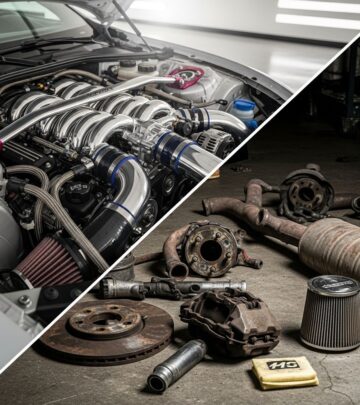
OEM Products are components or parts manufactured by the original equipment manufacturer or authorized by them specifically for use in original products. OEM products are designed to original specifications, meet quality standards established for the original product, and typically come with warranties or guarantees from the manufacturer. When you purchase OEM replacement parts, you receive components identical to or compatible with those used in the original product.
Aftermarket Products are produced by third-party manufacturers not affiliated with the original equipment manufacturer. Aftermarket alternatives may be similar in function but are not manufactured to the original OEM specifications. Aftermarket products often cost less than OEM equivalents but may vary in quality, durability, and compatibility. Aftermarket suppliers might produce parts designed to fit original equipment but without the same engineering standards or quality control processes.
OEM Parts Classification and Terminology
The OEM industry uses several related terms to classify different types of parts and manufacturing relationships, each carrying specific implications for quality, compatibility, and sourcing.
Original Equipment (OE) Parts
Original Equipment parts are components installed during the manufacture of a finished product or sub-assembly. OE parts represent the exact same components used in original products. While technically OE parts are only available as components within new products, the term increasingly refers to parts available for purchase independently and marketed as matching original specifications.
Original Equipment Replacement (OER) Parts
OER parts are replacement components designed to match original specifications for products no longer in production or when replacements are needed. OER parts may not be technically identical to original OEM parts but are engineered to be functionally equivalent and compatible. These parts are frequently available through authorized distributors and service networks.
Original Component Manufacturer (OCM) Parts
OCM parts, also called direct source parts, are identical to components used in original equipment and are sold through authorized manufacturer networks and distributors. OCM designation essentially confirms that a part is an original or OEM-equivalent component rather than an aftermarket alternative.
Frequently Asked Questions
Q: What exactly does OEM stand for?
A: OEM stands for Original Equipment Manufacturer. It refers to a company that produces parts, components, or equipment that other companies purchase and integrate into their own finished products for resale to consumers.
Q: How do OEMs differ from companies that manufacture final products?
A: OEMs specialize in producing specific components or sub-assemblies according to customer specifications. Final product manufacturers, operating as VARs, purchase these OEM components and integrate them into complete products sold to end consumers, often adding their own features, branding, and services.
Q: Why would a company choose to use OEMs instead of manufacturing everything in-house?
A: Companies use OEMs to reduce production costs through economies of scale, avoid capital expenditure on manufacturing facilities, eliminate the need for specialized expertise in component production, and focus resources on core business activities and product differentiation.
Q: What is the difference between OEM and ODM?
A: OEMs manufacture products according to customer specifications and designs provided by the purchasing company. ODMs (Original Design Manufacturers) design products themselves and then manufacture them, providing pre-engineered solutions that customers can rebrand with minimal modification.
Q: Are OEM products better quality than aftermarket products?
A: OEM products are manufactured to original specifications and quality standards, making them identical or fully compatible with original equipment. Aftermarket products may cost less but sometimes vary in quality, durability, and compatibility. The choice depends on specific needs and budget considerations.
Q: How do OEMs help reduce production costs?
A: OEMs achieve cost reduction through economies of scale by manufacturing large volumes for multiple customers. This distributes fixed costs across thousands of units, resulting in lower per-unit prices than companies could achieve through smaller-scale or in-house manufacturing.
The Role of OEMs in Modern Supply Chains
OEMs have become essential participants in modern global supply chains, enabling companies across industries to operate efficiently and competitively. By specializing in specific components or products, OEMs develop deep expertise, invest in specialized equipment and processes, and achieve efficiencies impossible for companies attempting to manufacture everything internally. This specialization benefits the entire ecosystem, resulting in better products, lower prices, and faster innovation cycles for end consumers. As global manufacturing continues evolving, the OEM business model will likely remain central to how companies organize production, manage complexity, and compete in increasingly specialized markets.
References
- Original Equipment Manufacturer (OEM) | Definition + Examples — Wall Street Prep. Accessed November 30, 2025. https://www.wallstreetprep.com/knowledge/oem-original-equipment-manufacturer/
- Original equipment manufacturer — Wikipedia. Accessed November 30, 2025. https://en.wikipedia.org/wiki/Original_equipment_manufacturer
- Original Equipment Manufacturer (OEM) — WRC Akron. Accessed November 30, 2025. https://www.wrcakron.com/original-equipment-manufacturer-oem/
- What Does OEM Parts Mean for Manufacturing? — Industrial Spec Manufacturing. February 8, 2023. https://www.industrialspec.com/about-us/blog/detail/oem-original-equipment-parts-manufacturing-oe-oer-odm
Similar Articles








Read full bio of Sneha Tete