Options Trading Strategies: Complete Guide for Beginners
Master essential options strategies to optimize your trading portfolio and manage risk effectively.

Options trading represents one of the most versatile approaches to financial markets, offering traders and investors multiple ways to profit, hedge risk, or generate income. Unlike simply buying and holding stocks, options strategies provide flexibility and leverage that can be tailored to various market outlooks and risk tolerances. Whether you’re a beginner seeking to understand the fundamentals or an experienced trader looking to refine your approach, this comprehensive guide covers essential options strategies that can enhance your trading toolkit.
Understanding Options Basics
Before diving into specific strategies, it’s crucial to understand what options are and how they work. An option is a financial contract that gives the buyer the right, but not the obligation, to buy or sell an underlying asset at a predetermined price on or before a specific date. This fundamental right-without-obligation characteristic forms the foundation of all options strategies.
There are two primary types of options:
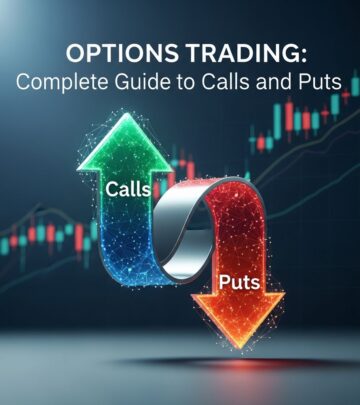
- Call Options: Contracts that give the holder the right to buy an underlying asset at a specified price (strike price) before the expiration date. Call buyers profit when the asset price rises above the strike price.
- Put Options: Contracts that give the holder the right to sell an underlying asset at a specified price before expiration. Put buyers profit when the asset price falls below the strike price.
Understanding these basic components is essential for implementing any options strategy effectively.
Long Call Strategy
The long call strategy represents one of the simplest and most popular options strategies for traders with bullish market outlooks. This strategy involves purchasing a call option with the expectation that the underlying asset’s price will rise significantly before the option’s expiration date.
Key characteristics of the long call strategy:
- Maximum profit is unlimited as the stock price rises above the strike price
- Maximum loss is limited to the premium paid for the call option
- The strategy benefits from increasing stock prices and generally favorable for volatile markets
- Requires lower capital compared to purchasing the actual stock
- Time decay works against the position as expiration approaches
The long call strategy is ideal for traders who believe a stock will appreciate but want to limit their downside risk to the premium paid.
Long Put Strategy
Conversely, the long put strategy is employed by traders who anticipate a decline in an asset’s price. By purchasing a put option, traders gain the right to sell the underlying asset at the strike price, allowing them to profit from price decreases.
Advantages of the long put strategy:
- Profits increase as the underlying asset’s price falls below the strike price
- Maximum loss is limited to the premium paid for the put option
- Provides downside protection for portfolio holdings
- Requires less capital than short selling the actual stock
- Maximum profit is limited by the strike price minus the premium paid
This strategy is particularly useful for hedging existing positions or taking a bearish stance on a specific security.
Covered Call Strategy
The covered call strategy combines stock ownership with call option selling. In this strategy, an investor holds shares of a stock and simultaneously sells call options against those holdings. This approach is popular among investors seeking to generate additional income from their portfolio.
How the covered call strategy works:
- You own 100 shares of a stock (covered position)
- You sell a call option against those shares at a higher strike price
- You receive the premium from selling the call, providing downside protection
- If the stock price rises above the strike price, your shares may be called away at that price
- If the stock stays below the strike price, you keep the premium and retain your shares
The covered call strategy is ideal for investors who believe stock prices will remain relatively stable or moderately increase, while generating supplementary income from premium collection.
Protective Put Strategy
The protective put strategy, also known as a “married put,” involves buying put options while holding the underlying stock. This strategy acts as insurance, protecting against significant price declines while allowing upside participation.
Key features of the protective put strategy:
- Provides downside protection below the strike price
- Allows unlimited upside potential if the stock appreciates
- The maximum loss is limited to the difference between stock price and strike price, plus the put premium
- Maximum profit is theoretically unlimited
- Cost of protection is the put option premium paid
This strategy is particularly valuable during uncertain market conditions or when investors want to hold stocks while protecting against sudden price crashes.
Bull Call Spread Strategy
The bull call spread is a two-legged strategy that involves simultaneously buying a call option at a lower strike price and selling a call option at a higher strike price. Both options typically have the same expiration date.
Benefits of the bull call spread:
- Lower net cost compared to buying a call outright
- Reduced maximum loss through premium collection from the short call
- Maximum profit is limited but predetermined
- Requires less margin and capital commitment
- Less affected by time decay than a long call alone
- Ideal for moderately bullish market outlooks
The bull call spread is excellent for traders who want bullish exposure with defined risk and lower capital requirements.
Bear Put Spread Strategy
The bear put spread is a credit spread strategy where traders sell a put option at a higher strike price and simultaneously buy a put option at a lower strike price. This strategy profits from rising or stable stock prices.
Characteristics of the bear put spread:
- Maximum profit equals the net credit received from both options
- Maximum loss is the difference between strike prices minus the credit received
- Generates income through premium collection
- Requires margin or cash reserves to support potential assignment
- Profits from stocks remaining above the higher strike price
- Benefits from time decay working in the seller’s favor
This strategy is suitable for traders who believe a stock will remain stable or increase in price while generating income.
Iron Condor Strategy
The iron condor is an advanced four-legged strategy combining a bull call spread and a bear put spread. This strategy is designed for neutral market outlooks where traders expect the underlying asset to trade within a specific price range.
Structure of an iron condor:
- Sell a put at a lower strike price and buy a put at an even lower strike
- Sell a call at a higher strike price and buy a call at an even higher strike
- All four options typically share the same expiration date
- Maximum profit occurs when the stock closes between the two short strikes
- Creates a “condor wing” pattern when charting strikes
The iron condor is particularly effective in range-bound markets and for traders seeking to generate consistent income with limited risk.
Straddle Strategy
The straddle strategy involves simultaneously buying (or selling) both a call option and a put option on the same underlying asset, with the same strike price and expiration date. This strategy is ideal when traders expect significant price movement but are uncertain about direction.
Long straddle characteristics:
- Profits from large price movements in either direction
- Maximum loss is limited to the combined premiums paid
- Break-even points exist above and below the strike price
- Benefits from increased volatility
- Requires significant price movement to be profitable
The straddle strategy is particularly valuable around events such as earnings announcements, FDA approvals, or economic data releases that typically trigger substantial price volatility.
Strangle Strategy
The strangle strategy is similar to a straddle but involves buying or selling a call option and a put option with different strike prices. Typically, the call strike is higher than the put strike, creating a “strangle” formation.
Advantages of the strangle strategy:
- Lower initial cost compared to straddles due to out-of-the-money options
- Profits from large price movements in either direction
- Requires more significant price movement to be profitable than a straddle
- Effective in high-volatility environments
- Commonly used before major corporate or economic events
The strangle is a cost-effective alternative to the straddle when traders anticipate major price swings but want reduced upfront costs.
Calendar Spread Strategy
The calendar spread, also known as a horizontal spread, involves selling a near-term option and buying a longer-term option with the same strike price. This strategy profits from time decay differences and potential changes in volatility.
Key aspects of calendar spreads:
- Generates income from the near-term option sale
- Maintains upside or downside exposure through the longer-term option
- Profits from time decay working faster on near-term options
- Can be constructed as a call spread or put spread
- Effective in low-volatility environments
- Can be rolled multiple times to extend the strategy
Calendar spreads are excellent for traders who want to capitalize on time decay while maintaining directional exposure.
Key Considerations for Options Strategy Success
Risk Management: Regardless of which strategy you choose, proper risk management is paramount. Always determine your maximum acceptable loss before entering a trade and use stop-loss orders appropriately.
Volatility Analysis: Understanding implied volatility helps traders select appropriate strategies. High volatility periods favor selling strategies, while low volatility periods may be better for buying strategies.
Time Decay (Theta): Time decay affects options values differently depending on whether you’re a buyer or seller. Sellers benefit from theta decay, while buyers suffer from it.
Greeks Understanding: Options have several risk measures (Greeks) including delta, gamma, theta, and vega that measure different aspects of options price sensitivity. Understanding these is crucial for successful trading.
Frequently Asked Questions
Q: What is the simplest options strategy for beginners?
A: The long call strategy is typically considered the simplest for beginners as it offers limited downside risk (only the premium paid) while providing unlimited upside potential. It’s straightforward to understand: you believe the stock will rise, so you buy a call option.
Q: How much capital do I need to start options trading?
A: Capital requirements vary depending on your brokerage and the strategies you employ. Some brokerages allow trading with $500-$1,000, though more capital provides better flexibility and risk management opportunities. Selling covered calls or spreads may require more capital or margin.
Q: Can I lose more money than I invest with options?
A: This depends on the strategy. Buyers of options (long calls or puts) can only lose the premium paid. However, sellers of options can face losses exceeding their initial investment, particularly with naked calls. Always understand your maximum loss before trading.
Q: What does “expiration date” mean for options?
A: The expiration date is the last day an option can be exercised. After this date, the option becomes worthless if not exercised. U.S. stock options typically expire on the third Friday of each month, though weekly and other expiration dates now exist.
Q: How do I choose between different options strategies?
A: Your choice depends on several factors: your market outlook (bullish, bearish, or neutral), risk tolerance, capital available, and volatility expectations. Start with simpler strategies like long calls or puts before progressing to more complex multi-legged approaches.
Q: What is implied volatility and why does it matter?
A: Implied volatility is the market’s expectation of future price fluctuations embedded in option prices. Higher implied volatility increases option premiums, making selling strategies more attractive. Lower implied volatility reduces premiums, favoring buying strategies.
References
- Options Industry Council – Educational Resources on Options Strategies — The Options Industry Council (OIC). 2025. https://www.optionseducation.org/
- U.S. Securities and Exchange Commission – Options Trading — U.S. Securities and Exchange Commission (SEC). 2024. https://www.sec.gov/investor/pubs/options.pdf
- FINRA – Options Trading Guide — Financial Industry Regulatory Authority (FINRA). 2024. https://www.finra.org/investors/learn-to-invest/types-investments/options
- CME Group – Options Strategy Educational Materials — CME Group Inc. 2025. https://www.cmegroup.com/education/
- Chicago Board Options Exchange – Strategy Guides — Cboe Global Markets. 2024. https://www.cboe.com/tradable_products/options/
Similar Articles








Read full bio of medha deb