Options Trading: Complete Guide to Calls and Puts
Master options trading with our complete guide covering calls, puts, strategies, and risk management.
What Are Options?
Options are financial derivatives that give investors the right, but not the obligation, to buy or sell an underlying asset at a predetermined price on or before a specific date. As a financial instrument, options provide flexibility and leverage that traditional stock trading cannot offer. They represent contracts between two parties: a buyer and a seller, where the buyer pays a premium for the right to exercise the option, while the seller receives this premium in exchange for the obligation to fulfill the contract if exercised.
Options are commonly used for hedging, income generation, and speculation. They can be based on various underlying assets including stocks, indices, commodities, currencies, and interest rates. The versatility of options makes them an essential tool in modern investment portfolios.
Understanding the Basics of Options
Key Terminology
Before diving into options trading, it’s crucial to understand fundamental terminology:
- Strike Price: The predetermined price at which the option holder can buy or sell the underlying asset
- Premium: The price paid by the buyer to purchase the option contract
- Expiration Date: The last date on which the option can be exercised
- Underlying Asset: The security or commodity on which the option is based
- Exercise (Assignment): The act of buying or selling the underlying asset through the option contract
- In-the-Money (ITM): When an option has intrinsic value
- Out-of-the-Money (OTM): When an option has no intrinsic value
- At-the-Money (ATM): When the strike price equals the current market price
Types of Options: Calls and Puts
Call Options
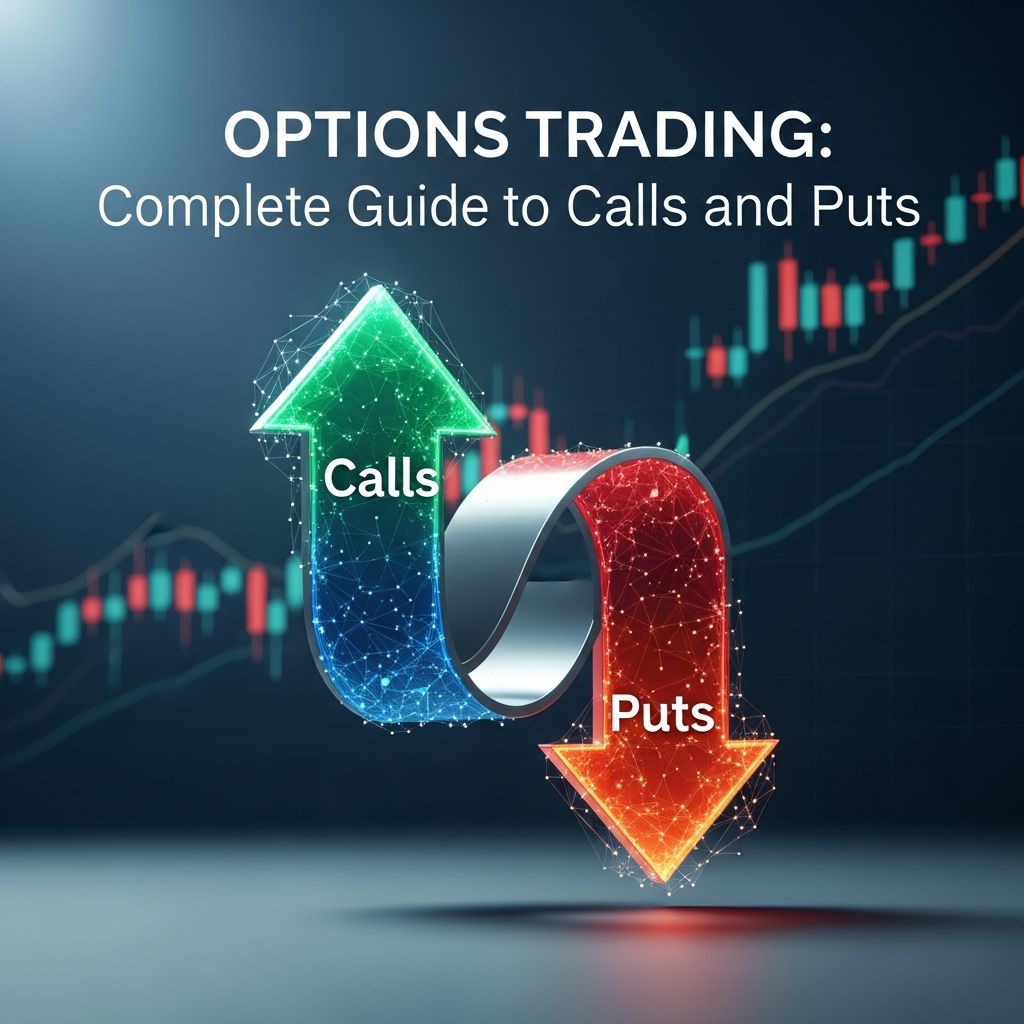
A call option gives the buyer the right to purchase the underlying asset at the strike price before expiration. Think of a call option like making a down payment on a house. When you buy a call, you pay a premium (similar to a down payment) to secure the right to purchase a stock at a specific price. If the stock price rises above the strike price at expiration, you can exercise your right to buy at the lower predetermined price. If the stock price falls below the strike price, you can simply let the option expire worthless, and your only loss is the premium paid.
The call seller (writer) receives the premium and has the obligation to sell the underlying asset at the strike price if the buyer decides to exercise. This strategy is often used by investors who believe the stock price will decline or remain stable.
Put Options
A put option gives the buyer the right to sell the underlying asset at the strike price before expiration. Put options work in the opposite way of calls. When you buy a put, you pay a premium for the right to sell a stock at the strike price. If the stock price falls below the strike price, you can exercise your right to sell at the higher predetermined price, protecting yourself from further losses. If the stock price rises above the strike price, you let the option expire, and your loss is limited to the premium paid.
The put seller (writer) receives the premium and has the obligation to buy the underlying asset at the strike price if the buyer chooses to exercise. Put sellers believe the stock price will remain stable or increase.
How Options Trading Works
The Transaction Process
When you buy an option, you pay a premium to the seller. This premium represents the cost of acquiring the right to buy (call) or sell (put) the underlying asset. The amount of the premium depends on several factors including the underlying asset’s price volatility, time until expiration, and the relationship between the current price and the strike price.
If the option moves in your favor before expiration, you can either exercise it to buy or sell the underlying asset, or you can sell the option contract itself to another investor at a higher price. If the option doesn’t move in your favor, you can let it expire worthless, and your loss is limited to the premium paid. This defined-risk characteristic makes options an attractive risk management tool.
Factors Affecting Option Prices
Several variables influence option pricing and are collectively known as “the Greeks”:
- Delta: Measures how much the option price changes relative to a $1 change in the underlying asset
- Gamma: Measures the rate of change of delta
- Theta: Measures time decay, or how much value the option loses as expiration approaches
- Vega: Measures sensitivity to changes in the underlying asset’s volatility
- Rho: Measures sensitivity to interest rate changes
Options Trading Strategies
Basic Strategies for Beginners
New options traders typically start with straightforward approaches:
- Long Call: Buying a call option when you expect the stock price to rise significantly
- Long Put: Buying a put option when you expect the stock price to fall
- Covered Call: Selling call options against shares you already own to generate income
- Protective Put: Buying put options as insurance against a decline in stock holdings
Advanced Strategies
More experienced traders use complex strategies involving multiple options contracts:
- Spreads: Simultaneously buying and selling options to reduce costs and limit risk
- Straddles: Buying both a call and put at the same strike price to profit from large price movements
- Collars: Combining protective puts with covered calls for limited-risk positions
- Butterflies: Using three strike prices to create a trade with defined maximum profit and loss
Risk Management in Options Trading
Understanding Risk and Reward
Options trading involves significant risks that differ from stock trading. When buying options, your maximum loss is limited to the premium paid, making risk quantifiable and defined. However, when selling options, your risk can be theoretically unlimited, particularly with short calls. It’s essential to understand your risk tolerance and position size before entering any options trade.
Best Practices for Risk Control
- Start with defined-risk strategies like spreads and protective puts
- Use stop-loss orders to limit potential losses
- Never risk more than you can afford to lose on a single trade
- Diversify across different underlying assets and strike prices
- Keep position sizes small as a percentage of your total portfolio
- Understand the impact of time decay on your positions
American vs. European Options
Options come in two main styles: American and European. American options can be exercised at any time before expiration, providing greater flexibility for the buyer. European options can only be exercised on the expiration date itself. Most equity options traded on U.S. exchanges are American-style, while many index options are European-style. This distinction can affect pricing and strategy selection.
Options vs. Other Investment Vehicles
| Feature | Options | Stocks | ETFs |
|---|---|---|---|
| Leverage | High | Low | Low |
| Maximum Loss | Premium paid (for buyers) | Full investment | Full investment |
| Time Decay | Yes | No | No |
| Hedging Capability | Excellent | Limited | Limited |
| Complexity | High | Low | Low |
Frequently Asked Questions
Q: Can I make money with options if the price doesn’t move?
A: Yes, you can profit from options through time decay. Sellers benefit as options lose value as expiration approaches, even if the underlying asset’s price remains stable. This is why covered calls are popular income strategies.
Q: What’s the minimum investment needed to trade options?
A: Minimums vary by broker, but options contracts typically control 100 shares of the underlying stock. A single option contract might cost anywhere from $50 to several hundred dollars depending on the premium.
Q: Are options suitable for beginners?
A: Options can be suitable for beginners with proper education and risk management. Start with simple strategies like protective puts and covered calls before moving to more complex approaches. Many brokers require approval before allowing options trading.
Q: How do I know when to exercise an option?
A: For calls, exercise when the stock price is significantly above the strike price. For puts, exercise when the stock price is well below the strike price. However, you can also sell the option contract itself for profit without exercising. Consider transaction costs and tax implications when deciding.
Q: What is assignment and when does it occur?
A: Assignment occurs when an option seller is obligated to fulfill the contract terms. For call sellers, this means selling shares at the strike price. For put sellers, this means buying shares at the strike price. Assignment typically occurs when an option is in-the-money at or near expiration.
Q: How can I reduce the cost of buying options?
A: You can reduce cost by selling options simultaneously (creating spreads), choosing farther out-of-the-money strikes (lower cost but lower probability of profit), or selecting longer expiration dates and selling them before expiration to benefit from time decay differently.
References
- Options Basics Tutorial — Investopedia. 2024-04-27. https://www.investopedia.com/
- U.S. Securities and Exchange Commission: Options Disclosure — SEC Official Website. 2024. https://www.sec.gov/
- Options Industry Council: Educational Resources — The Cboe Global Markets Organization. 2024. https://www.optionseducation.org/
- Financial Industry Regulatory Authority: Options Trading Guide — FINRA Official Resources. 2024. https://www.finra.org/
Similar Articles








Read full bio of Sneha Tete