Options Trading Fundamentals: Complete Guide To Calls And Puts
Master the mechanics of calls and puts for strategic portfolio management

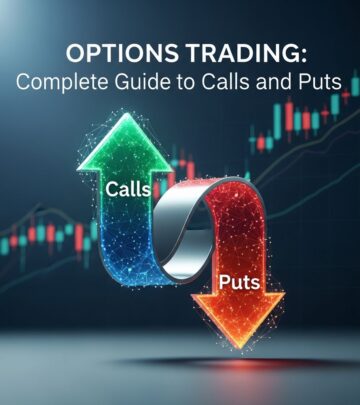
Options represent one of the most versatile yet complex financial instruments available to modern investors. These contracts grant the holder the right—but not the obligation—to buy or sell an underlying asset at a predetermined price within a specified timeframe. Unlike stocks, where ownership is straightforward, options derive their value from the underlying security and introduce leverage, time decay, and asymmetrical profit-loss profiles that require careful consideration.
Understanding the Foundations of Options Contracts
An options contract is fundamentally a legal agreement between two parties: the buyer (holder) and the seller (writer). The buyer pays an upfront cost called the premium to acquire the right to transact at a fixed price known as the strike price. The contract has a defined expiration date, after which the right expires and becomes worthless if unexercised. This basic structure applies to both categories of options, though each category operates with distinct mechanics and profit potential.
The premium represents the market’s consensus on the probability of the option becoming profitable by expiration. Premium costs reflect multiple variables including the current price of the underlying asset, volatility expectations, time remaining until expiration, and prevailing interest rates. Buyers pay this premium upfront, while sellers receive it immediately—creating an immediate cost for one party and immediate income for the other.
Decoding Call Options: Mechanics and Profit Scenarios
A call option provides the buyer with the contractual right to purchase the underlying asset at the strike price, regardless of the market price at the time of exercise. Investors typically purchase call options when they anticipate the underlying asset’s price will rise. This bullish outlook creates an asymmetrical risk-reward relationship favoring the buyer.
How Call Option Profitability Works
Consider a practical example: suppose an investor purchases a call option on a stock trading at $150, with a strike price of $170 and a one-month expiration date, paying a $5 premium per share. If the stock rises to $180 before expiration, the call buyer can exercise the option by purchasing shares at $170 and immediately selling them at the $180 market price, realizing a $10 per-share profit minus the $5 premium paid—netting $5 per share in gains. Conversely, if the stock price remains below $150, the option holder simply allows the contract to expire worthless, limiting their total loss to the premium paid.
This characteristic—limited downside paired with unlimited upside potential—makes call options attractive for investors with bullish market outlooks. The maximum loss is predetermined and finite (the premium), while profit potential extends indefinitely as long as the underlying asset’s price rises above the strike price plus the premium paid.
The Call Option Seller’s Perspective
When an investor sells a call option, they adopt the opposite position with inverted profit dynamics. The seller (writer) receives the premium immediately but faces potentially unlimited losses. If the stock price soars above the strike price, the option writer loses money proportional to how far the price exceeds the strike. Specifically, the call seller’s loss equals the call buyer’s profit. However, if the underlying asset’s price stays below the strike price at expiration, the option expires worthless, and the seller keeps the entire premium as profit.
Call sellers employ this strategy when holding a bearish outlook or when they own the underlying asset and want to generate additional income through premium collection. This approach combines limited profit potential with theoretically unlimited loss exposure, making it suitable primarily for experienced traders with substantial capital reserves.
Exploring Put Options: Protection and Profit from Declining Prices
A put option grants the buyer the right to sell the underlying asset at the strike price by the expiration date. Investors purchase put options when they expect the underlying asset’s price to decline, or when they hold the asset and seek downside protection. This strategy allows investors to benefit from or hedge against bearish market movements.
Put Option Buyer Mechanics
Imagine an investor buys a put option on a stock currently trading at $100, with a strike price of $100 and a premium of $10 per share. If the stock price drops to $80, the put buyer can exercise the option by selling shares at the $100 strike price while the market price is only $80, capturing a $20 difference per share. After subtracting the $10 premium paid, the net profit reaches $10 per share. If the stock price never falls below $100, the put buyer loses only the premium invested, capping maximum loss at a known amount.
This asymmetrical payoff structure—limited downside with substantial upside potential—makes buying puts an effective strategy for pessimistic investors or for hedging existing stock positions against unexpected price declines. The insurance-like qualities of protective puts appeal particularly to portfolio managers seeking downside risk management.
Put Option Seller Dynamics
Put option sellers collect premiums by assuming the obligation to purchase the underlying asset if the buyer exercises the right. If the asset price falls significantly below the strike price, the put seller faces substantial losses—equal to the difference between the strike price and the market price, minus the premium received. The seller’s maximum profit remains limited to the premium collected, while potential losses can extend to the full strike price (in the case of a stock declining to zero).
Put sellers typically implement this strategy when maintaining a bullish outlook on the underlying asset or when seeking to acquire the asset at a favorable price. The strategy yields steady premium income during sideways or rising markets but exposes the seller to significant losses during sharp price declines.
Key Risk-Reward Comparison Framework
| Option Type | Buyer Maximum Loss | Buyer Maximum Gain | Seller Maximum Loss | Seller Maximum Gain |
|---|---|---|---|---|
| Call Option | Premium Paid (Fixed) | Unlimited | Unlimited | Premium Received (Fixed) |
| Put Option | Premium Paid (Fixed) | Strike Price Minus Premium | Strike Price Minus Premium | Premium Received (Fixed) |
The Concept of Moneyness: Understanding In-the-Money and Out-of-the-Money Status
Options terminology includes the concept of “moneyness,” which describes the relationship between the current market price and the strike price. A call option is in-the-money when the underlying asset’s market price exceeds the strike price—meaning the option has intrinsic value. Conversely, a call option is out-of-the-money when the market price falls below the strike price, meaning exercising the option would result in a loss relative to simply buying in the open market.
For put options, the terminology reverses: a put is in-the-money when the market price falls below the strike price, and out-of-the-money when the market price exceeds the strike price. Understanding this distinction helps investors quickly assess whether an option has current value or exists purely as a speculative bet on future price movements.
Strategic Applications and Real-World Use Cases
Directional Betting and Income Generation
Investors employ call and put options for two primary strategic purposes. First, options enable investors to express directional market views with limited capital. Buying calls or selling puts aligns with bullish expectations, while buying puts or selling calls supports bearish positions. The leverage inherent in options amplifies both gains and losses, making them suitable for traders comfortable with higher volatility.
Second, options facilitate income generation through premium collection. Covered call writing—selling call options against owned shares—and cash-secured put selling—guaranteeing the ability to purchase shares if assigned—provide steady income streams in range-bound or modestly bullish markets. These strategies appeal to investors seeking yield enhancement beyond traditional dividend income.
Hedging and Portfolio Protection
Portfolio managers frequently employ protective puts to insure stock positions against sharp downside moves. By purchasing put options on held stocks or index positions, managers establish a floor price below which losses cannot extend. This insurance costs the premium paid but provides peace of mind during uncertain market conditions.
Similarly, collar strategies combine long protective puts with short calls on the same underlying, creating a defined risk range. This approach reduces hedging costs by capping upside potential while protecting against downside risk—suitable for investors anticipating heightened volatility but seeking to maintain core portfolio positions.
Essential Considerations for Options Trading
Time Decay and Volatility Impact
Options gradually lose value as expiration approaches, a phenomenon called time decay. All else being equal, an option worth $5 per share three months before expiration may decline to $2 per share with only one month remaining, even if the underlying asset’s price stays constant. This decay accelerates dramatically in the final days before expiration, making time decay a critical consideration for option buyers.
Implied volatility—the market’s expectation of future price fluctuations—profoundly affects option premiums. Higher volatility increases option values since larger price swings create greater probability of profitable exercise. During market turbulence, options become more expensive; during calm periods, they become cheaper. Sophisticated investors monitor volatility expectations to identify potentially mispriced options.
Capital Requirements and Assignment Risk
Options buyers face relatively modest capital requirements—only the premium paid. Options sellers, however, face substantial margin requirements to ensure they can fulfill their obligations if assigned. Brokers typically require cash reserves equivalent to a significant percentage of the strike price for uncovered put positions, limiting the capital available for other investments.
Assignment risk—the possibility of being forced to buy or sell the underlying asset—represents another critical consideration for option sellers. Assignment can occur at any time before expiration for American-style options, potentially disrupting portfolio strategies or forcing sales at inconvenient times.
Comparing Long and Short Positions Across Options Types
Options trading involves four basic positions: long calls, short calls, long puts, and short puts. Each position serves distinct strategic purposes with different risk-return characteristics:
- Long Calls: Bullish strategy with limited risk and unlimited profit potential; optimal during expected uptrends with increasing volatility.
- Short Calls: Bearish or neutral strategy with limited profit and unlimited risk; employed for income generation or with underlying holdings.
- Long Puts: Bearish strategy with limited risk and substantial profit potential; used for speculation or portfolio insurance.
- Short Puts: Bullish strategy with limited profit and substantial risk; employed for income or to accumulate shares at discounted prices.
Practical Example Scenarios
An investor expecting a technology stock to rise from $200 to $250 within three months might purchase a call with a $220 strike price for $8 per share. If the prediction proves correct and the stock reaches $250, the investor exercises the option, buying at $220 and selling at market value, netting a $22 per-share profit minus the $8 premium—a $14 per-share gain representing 175% return on the premium invested.
Alternatively, a portfolio manager holding $100,000 of dividend-paying stock might sell monthly calls slightly above current prices, collecting $2,000 in premiums. If the stock price stays below the strike price, the manager keeps the premium as pure income. Even if assigned, the sale occurs at a predetermined price the manager considers fair—effectively harvesting premium income while maintaining willingness to sell the underlying shares.
Risk Management Imperatives
Options trading demands rigorous risk management discipline. Position sizing should reflect the premium amount each trader can afford to lose—typically a small percentage of total capital. Diversification across multiple underlying assets prevents concentrated losses from any single security’s adverse price movement. Stop-loss orders on options positions help contain losses before they expand beyond acceptable thresholds.
Traders should establish clear entry and exit criteria before initiating positions, avoiding emotional decision-making as positions move into or out of profitability. Regular monitoring of positions proves essential given the time-sensitive nature of options and the potential for rapid value changes from volatility fluctuations.
Conclusion: Foundational Knowledge for Options Success
Options represent powerful financial instruments enabling investors to express sophisticated market views, generate portfolio income, and manage risk effectively. Understanding the mechanics of calls and puts—including their asymmetrical risk-reward profiles, moneyness concepts, and time decay characteristics—provides essential foundation knowledge. Whether employed for directional speculation, income generation, or portfolio protection, options strategies should align with individual risk tolerance, market outlook, and capital resources. As with all financial instruments, education, discipline, and prudent risk management separate successful options traders from those who experience losses, making comprehensive knowledge a prerequisite for profitable engagement in this dynamic market segment.
References
- Options: Calls and Puts – Overview, Examples, Trading Long & Short — Corporate Finance Institute. 2025. https://corporatefinanceinstitute.com/resources/derivatives/options-calls-and-puts/
- What Is Options Trading? A Complete Guide to Options — Merrill Edge. 2025. https://www.merrilledge.com/investor-education/options-education
- Options Trading: Definition, How It Works, and Smart Strategies — Hey Go Trade. 2025. https://heygotrade.com/en/blog/what-is-options-trading
- Call and Put Option – Meaning, Differences and Risk vs Reward — Bajaj FinServ. 2025. https://www.bajajfinserv.in/call-and-put-options
Similar Articles








Read full bio of medha deb