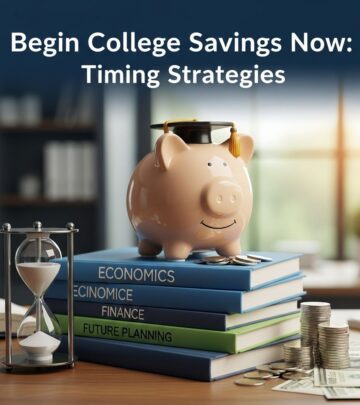
Optimal Timing for Retirement Savings
Discover why starting retirement savings early maximizes growth through compounding, and learn age-specific strategies to build a secure future.

The best moment to initiate retirement savings is as soon as you earn your first paycheck, harnessing the extraordinary power of compound interest over decades. Delaying even a few years can drastically reduce your final nest egg due to lost growth opportunities.
Why Time Matters More Than Amount in Building Wealth
Compound interest acts as a financial multiplier, where earnings generate further earnings over time. A young saver contributing modestly benefits far more than someone starting later with larger sums. For instance, investing $200 monthly from age 25 at a 7.1% annual return could accumulate to $491,648 by age 65, outpacing $300 monthly from age 35, which yields $346,239.
This disparity underscores that consistent early contributions outperform higher but delayed ones. Financial planners emphasize automating savings to mimic forced discipline, treating retirement like an essential bill.
Core Retirement Savings Vehicles to Utilize
Selecting the right accounts forms the foundation of effective saving. Employer-sponsored plans often provide the easiest entry point with built-in advantages.
- 401(k) and 403(b) Plans: Pre-tax deductions reduce current taxable income; Roth options allow tax-free withdrawals in retirement. Many employers match contributions, effectively doubling your input.
- Traditional and Roth IRAs: IRAs offer flexibility for self-employed or those without workplace plans. Traditional versions defer taxes; Roths favor tax-free growth if eligibility rules are met.
- Health Savings Accounts (HSAs): Triple tax-advantaged for medical expenses, convertible to retirement funds post-65.
Maximize contributions annually, mindful of IRS limits, and leverage catch-up options after 50—up to $7,500 extra for 401(k)s, more for ages 60-63.
Investment Choices Within Retirement Accounts
Once funds are deposited, allocation determines growth. Beginners often select target-date funds, which automatically adjust from aggressive stocks to conservative bonds nearing retirement.
| Investment Type | Risk Level | Suitable For |
|---|---|---|
| Stocks/Mutual Funds | High | Long-term growth (20s-40s) |
| Bonds/Share Certificates | Low | Preservation (50s+) |
| Target-Date Funds | Medium (adjusts) | Hands-off investors |
Diversification across assets mitigates risks, balancing growth and stability. Periodically rebalance to align with evolving goals and risk tolerance.
Age-Specific Strategies for Maximum Impact
Tailor your approach to life stage, ramping up intensity as income grows and time shortens.
Twenties and Thirties: Lay the Groundwork
Prioritize employer matches and automate 10-15% of income. Embrace growth investments despite volatility, as time buffers downturns. Build an emergency fund first—3-6 months’ expenses—to avoid raiding retirement pots.
Forties: Accelerate and Consolidate
Boost savings rates, reviewing allocations for goal alignment. Roll over old 401(k)s to avoid fragmentation. Aim for 80% income replacement via consistent saving.
Fifties: Catch-Up and Shift Gears
Eligibility for catch-ups supercharges balances. Gradually tilt toward income generation, estimating needs like 33x annual expenses for early retirement.
Sixties and Beyond: Transition to Income Focus
Plan withdrawals tax-efficiently, diversifying across taxable, deferred, and Roth accounts. Delay Social Security to 70 for higher benefits if feasible. Ensure liquid assets cover initial years.
Overcoming Common Hurdles to Consistent Saving
Life interruptions like job changes or family needs challenge savers. Counter with budgeting that prioritizes retirement, side hustles for extra contributions, and professional advice for complex scenarios.
Estimate retirement spending at 70-80% of pre-retirement income, adjusting for healthcare and leisure. Tools like Vanguard’s planners help track progress.
Tax Strategies to Amplify Returns
Tax diversification—mixing account types—enables strategic withdrawals minimizing liabilities. HSAs and Roth conversions offer advanced tactics.
Frequently Asked Questions
How much should I save annually?
Target 15% of income, including matches, scaling to needs.
Can I retire early?
Yes, with aggressive saving aiming for 25-33x expenses.
What if I started late?
Catch-ups, delayed retirement, and part-time work help.
Are target-date funds safe?
Convenient but not guaranteed; review fees and fit.
How to estimate my needs?
Use 80% income replacement rule, factoring inflation.
Actionable Steps to Start Today
- Enroll in employer plan; capture full match.
- Open IRA if needed; fund automatically.
- Select diversified investments.
- Review annually; adjust for life changes.
- Consult fiduciary advisor for personalization.
Proactive planning secures independence. Early action, disciplined habits, and informed choices pave the way.
References
- A Beginner’s Guide to Saving for Retirement — First New York Federal Credit Union. 2024. https://firstnewyork.org/a-beginners-guide-to-saving-for-retirement/
- 10 Tips to Help You Boost Your Retirement Savings — Merrill Edge. 2024. https://www.merrilledge.com/article/10-tips-to-help-you-boost-your-retirement-savings-whatever-your-age-ose
- Saving for Retirement — Vanguard. 2025. https://investor.vanguard.com/investor-resources-education/retirement/savings
- Retirement Planning 101 — Santa Clara County Federal Credit Union. 2024. https://www.mysccu.com/learn/how-to-plan-for-retirement
- How to Retire Early in 8 Steps — Fidelity Investments. 2025. https://www.fidelity.com/learning-center/personal-finance/how-to-retire-early
Similar Articles








Read full bio of Sneha Tete