Optimal Stock Trading Windows
Discover proven strategies to identify the ideal moments for entering and exiting stock positions to maximize returns and minimize risks.

Timing your stock purchases and sales can significantly influence investment outcomes, though no method guarantees success due to market unpredictability. Effective strategies combine technical analysis, risk management tools, and disciplined decision-making to capitalize on opportunities while protecting capital.
Core Principles of Smart Stock Entry and Exit
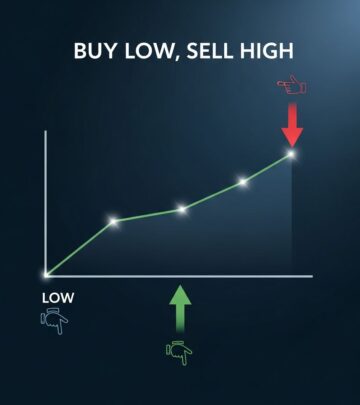
Successful trading hinges on understanding basic market dynamics. When demand for a stock exceeds supply, prices rise, creating buying opportunities. Conversely, excess supply drives prices down, signaling potential sell points. Investors typically aim for long positions—buying assets expecting price appreciation—or short positions, selling borrowed shares anticipating declines.
Define clear objectives upfront, such as pursuing short-term gains or long-term growth. Assess your risk tolerance and available research time to tailor approaches. Diversification across sectors reduces exposure to single-stock volatility, allowing reallocation from underperformers to high-potential assets.
Identifying Prime Buying Opportunities
Enter positions when stocks appear undervalued relative to fundamentals or show upward momentum. Use fundamental analysis to evaluate company health, including earnings growth and debt levels, alongside technical analysis for chart patterns and volume trends.
- Follow rising trends: Purchase shares in stocks demonstrating consistent upward movement, confirmed by indicators like moving averages.
- Spot oversold conditions: Tools such as Relative Strength Index (RSI) below 30 suggest potential rebounds.
- Leverage personal insights: Familiarity with a company’s products can highlight undervalued picks before broad market recognition.
For beginners, blue-chip stocks with stable prices suit market orders, executed at prevailing rates for quick entry.
Strategic Approaches to Selling Positions
Selling requires discipline to lock in gains or cut losses. Defensive tactics prevent deep drawdowns, while offensive ones secure profits during peaks.
| Strategy | Description | Example |
|---|---|---|
| 8% Trailing Stop | Sell if price drops 8% from peak, adjusted from purchase basis. | Bought at $100, peaks at $150, sell at $138 (8% below peak). |
| 20-25% Profit Target | Exit after 20-25% gain from ideal buy point. | 20% rise yields ~18% net if bought slightly above entry. |
| Partial Scaling Out | Sell portions incrementally as price advances. | Sell half at double, or 20% every 40% gain. |
These methods, like the 20-25% rule, account for buy-point variances and promote profit preservation.
Advanced Order Types for Precise Control
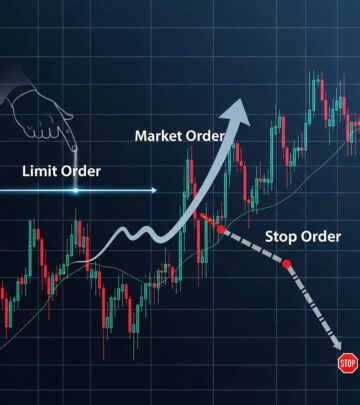
Brokerage platforms offer orders beyond basic buys/sells to automate timing.
- Market Orders: Execute immediately at current price; ideal for liquid, stable stocks.
- Limit Orders: Fill only at or better than specified price, e.g., buy below $95 or sell above target.
- Stop Orders: Trigger sale at a set decline level to cap losses.
- Trailing Stops: Dynamically adjust sell point upward with price gains.
- Stop-Limit: Combines stop trigger with limit price for controlled exits.
Implement stop-losses at predefined margins and profit targets to enforce discipline, especially for short-term trades.
Long-Term vs. Short-Term Trading Timings
Buy-and-hold favors patience, acquiring quality stocks and retaining through fluctuations for compounded growth. This passive method outperforms frequent trading over decades, as market timing demands perfect buy/sell alignment.
Active traders “trade around core positions,” scaling into dips and trimming extended rallies. Reduce holdings to one-third during overbought phases, rebuilding on pullbacks. External ratings services flag risks, prompting tighter stops.
Risk Management in Volatile Markets
Volatility demands safeguards. Daily chart reviews detect reversals, while diversification buffers sector downturns. Rebalance by selling peaks and funding laggards.
Commit to goals: Calculate position sizes based on portfolio risk limits, avoiding overexposure. Trends guide: “The trend is your friend,” using momentum and volume for confirmation.
Common Pitfalls and How to Avoid Them
Emotional decisions erode gains—stick to rules. Overtrading incurs fees; focus on high-conviction ideas. Ignore hype; prioritize data-driven entries/exits.
- Avoid chasing peaks; buy dips in strong trends.
- Set ruthless profit targets to counter greed.
- Use math: Project returns via Rule of 72 for doubling timelines.
Building a Cohesive Trading Plan
Integrate strategies: Define goals, select tools, diversify, monitor trends, and automate via orders. Review quarterly, adapting to economic shifts.
For long-term investors, buy-and-hold minimizes timing errors. Short-term players layer defensive/offensive rules for agility.
Frequently Asked Questions
What is the best time of day to buy stocks?
First 30-60 minutes often see volatility; wait for stabilization unless using limit orders.
Should I sell stocks after a big gain?
Yes, partially—strategies like selling 20% at 40% up recoup capital while riding winners.
How do stop-loss orders work?
They auto-sell at a threshold, e.g., 8% below recent high, protecting against crashes.
Is market timing reliable?
Rarely; long-term holding historically yields better results than frequent trades.
What’s the role of diversification?
It spreads risk, enabling sales from weak areas to bolster strong ones.
References
- Best Stock Selling Strategies | When To Sell Stocks at a Profit — Enrich Money. 2023. https://enrichmoney.in/knowledge-center-chapter/stock-selling-techniques
- Techniques for Managing Positions — Fidelity Investments. 2024-10-15. https://www.fidelity.com/learning-center/trading-investing/trading/managing-positions
- How to Buy Stocks: What to Know Before Your First Trade — NerdWallet. 2025-02-20. https://www.nerdwallet.com/investing/learn/how-to-buy-stocks
- Eight Trading Tips for the First-Time Investor — FNB. 2024. https://www.fnb.co.za/blog/investments/articles/EightTradingTips/
- Buying and Selling Explained | Long vs Short Trades — IG Group. 2024-04-30. https://www.ig.com/en-ch/trading-strategies/buying-and-selling-in-trading-explained-190430
- Why Buy-and-Hold Stocks for Long-Term Investing — U.S. Bank. 2025-01-10. https://www.usbank.com/investing/financial-perspectives/investing-insights/buy-and-hold-long-term-investment-strategies.html
- Stock Investment Tips for Beginners — Charles Schwab. 2024-11-05. https://www.schwab.com/learn/story/stock-investment-tips-beginners
Similar Articles








Read full bio of medha deb