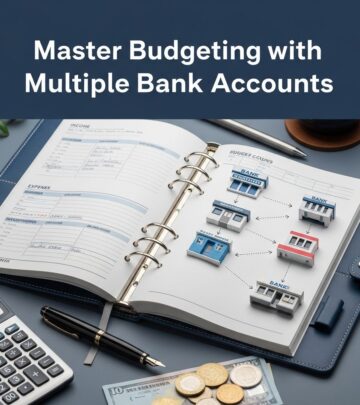
Optimal Number of Bank Accounts for Smart Money Management
Discover why maintaining multiple bank accounts can transform your budgeting, savings goals, and financial security without unnecessary complexity.

Determining the right number of bank accounts depends on your financial objectives, lifestyle, and organizational preferences. While some thrive with a simple setup of one checking and one savings account, others benefit from 3-5 targeted accounts to enhance budgeting discipline and goal achievement. This approach allows for clear separation of funds, reducing the temptation to dip into savings and providing visual progress on specific targets.
Why Consider Multiple Bank Accounts?
Maintaining several accounts offers practical advantages for everyday financial control. Dedicated accounts for distinct purposes make tracking expenses straightforward and foster motivation through visible milestones. For instance, separating funds for emergencies, vacations, or home repairs prevents overspending in one area from derailing others.
- Enhanced Budgeting: Allocate funds to specific categories like bills or groceries, making it easier to monitor adherence to your monthly plan.
- Goal Visualization: Nicknamed accounts, such as ‘Vacation 2027’ or ‘New Car Fund,’ create a psychological commitment to saving.
- Risk Isolation: An emergency fund in a separate account protects discretionary savings from unexpected costs.
According to surveys, over 21% of Americans use multiple savings accounts for varied goals, highlighting this as a common and effective strategy.
Core Accounts Everyone Should Have
Start with foundational accounts before expanding. A primary checking account handles daily transactions and bill payments, while a high-yield savings account builds your safety net.
| Account Type | Purpose | Key Features |
|---|---|---|
| Checking | Daily spending, bills | Debit card access, bill pay, low/no interest |
| Emergency Savings | 3-6 months expenses | Liquid, FDIC-insured, separate from spending |
| Goal-Specific Savings | Travel, home, etc. | High-yield, nicknamed for tracking |
These basics provide liquidity for immediate needs and security for surprises, with FDIC insurance up to $250,000 per depositor per bank.
Strategies for Using Multiple Accounts Effectively
Goal-Based Segmentation
Assign accounts to short-term (under 1 year), medium-term (1-5 years), and long-term goals. Short-term might include holiday gifts, while long-term could fund education or retirement boosts. Automate transfers post-payday to ensure consistent contributions without relying on willpower.
Household vs. Personal Separation
For couples or families, joint accounts cover shared bills, paired with individual accounts for personal spending. This balances collective responsibility with personal freedom.
Leveraging High-Yield Options
Distribute funds across accounts with competitive rates. High-yield savings or CDs for locked goals yield more than standard checking. Note liquidity trade-offs: CDs penalize early withdrawals but secure higher returns for patient savers.
Pros and Cons of Account Proliferation
Multiple accounts shine for organization but demand maintenance. Weigh these factors carefully.
| Pros | Cons |
|---|---|
| Clear goal tracking and motivation | Potential fees if minimums unmet |
| Better spending control via separation | Complexity in monitoring multiple logins |
| Maximized interest across products | Risk of forgotten inactive accounts |
| FDIC coverage expansion at different banks | Time for setup and transfers |
Consolidation: The Case for Fewer Accounts at One Bank
While multiples aid segmentation, consolidating at one institution unlocks perks like relationship discounts and seamless transfers. Banks often reward bundled services with lower loan rates or waived fees.
- Streamlined Access: Real-time moves between checking and savings simplify cash flow.
- Perks and Discounts: ‘Relationship pricing’ improves rates on loans or investments when services are grouped.
- Estate Simplicity: Fewer accounts ease management for heirs or caregivers.
Hybrid approach: Multiple sub-accounts (savings buckets) under one roof combines organization with convenience.
Advanced Tactics for Power Users
Tech-savvy individuals use apps for automated ‘bucketing’ within single accounts, mimicking multiples digitally. Enable alerts for low balances and auto-transfers to maintain discipline.
For higher FDIC limits, spread over multiple banks—e.g., $250,000 per account type per institution. Shared accounts strengthen family bonds on joint dreams like home down payments.
Common Pitfalls and How to Avoid Them
- Inactivity Fees: Choose no-fee online banks; review terms annually.
- Over-Fragmentation: Limit to 4-6 total; consolidate low-balance ones.
- Neglect: Schedule quarterly reviews to rebalance and close redundancies.
FAQs
How many bank accounts is too many?
Generally, 4-6 suffices for most; beyond that, management overhead outweighs benefits unless for FDIC maximization.
Are multiple savings accounts free?
Many online banks offer unlimited no-fee savings accounts; confirm with your provider.
Should savings be at a different bank?
Yes, to curb impulse access, but same-bank convenience suits automated savers.
Do multiple accounts affect credit?
New accounts trigger inquiries, but few hard pulls if spaced out; focus on utilization.
Best for beginners?
Start with checking + emergency savings; add goal accounts as needs grow.
Building Your Personalized Account Portfolio
Assess goals: List 3-5 priorities, estimate timelines, and match account types. Example portfolio for a young professional:
- Checking: Daily use
- Emergency: 6 months expenses
- Travel Savings: High-yield
- Car Fund: CD ladder
- Retirement Boost: Separate HYSA
Review semi-annually, adjusting for life changes like marriage or job shifts. Tools like mobile apps with goal trackers amplify success.
This structure empowers disciplined saving while adapting to your stage of life.
References
- The Pros and Cons of Multiple Savings Accounts — Five Star Bank. 2023. https://www.five-starbank.com/resources/the-pros-and-cons-of-multiple-savings-accounts
- Benefits of Consolidating Accounts to One Bank — Bank at First. 2024. https://www.bankatfirst.com/personal/discover/flourish/consolidating-accounts-benefits.html
- How Many Bank Accounts Should I Have? — PNC Insights. 2025. https://www.pnc.com/insights/personal-finance/spend/how-many-bank-accounts-should-i-have.html
- 7 Reasons to Have Multiple Bank Accounts—Especially Savings — Bank of Heritage. 2024. https://www.boh.com/blog/7-reasons-to-have-multiple-bank-accounts-especially-savings
- Pros and Cons of Keeping Multiple Bank Accounts at Different Banks — NerdWallet. 2025-03. https://www.nerdwallet.com/banking/learn/accounts-at-multiple-banks
Similar Articles








Read full bio of Sneha Tete