Optimal Duration for Credit Card Accounts
Discover strategic insights on maintaining credit card accounts to boost your credit profile and avoid common pitfalls in financial management.
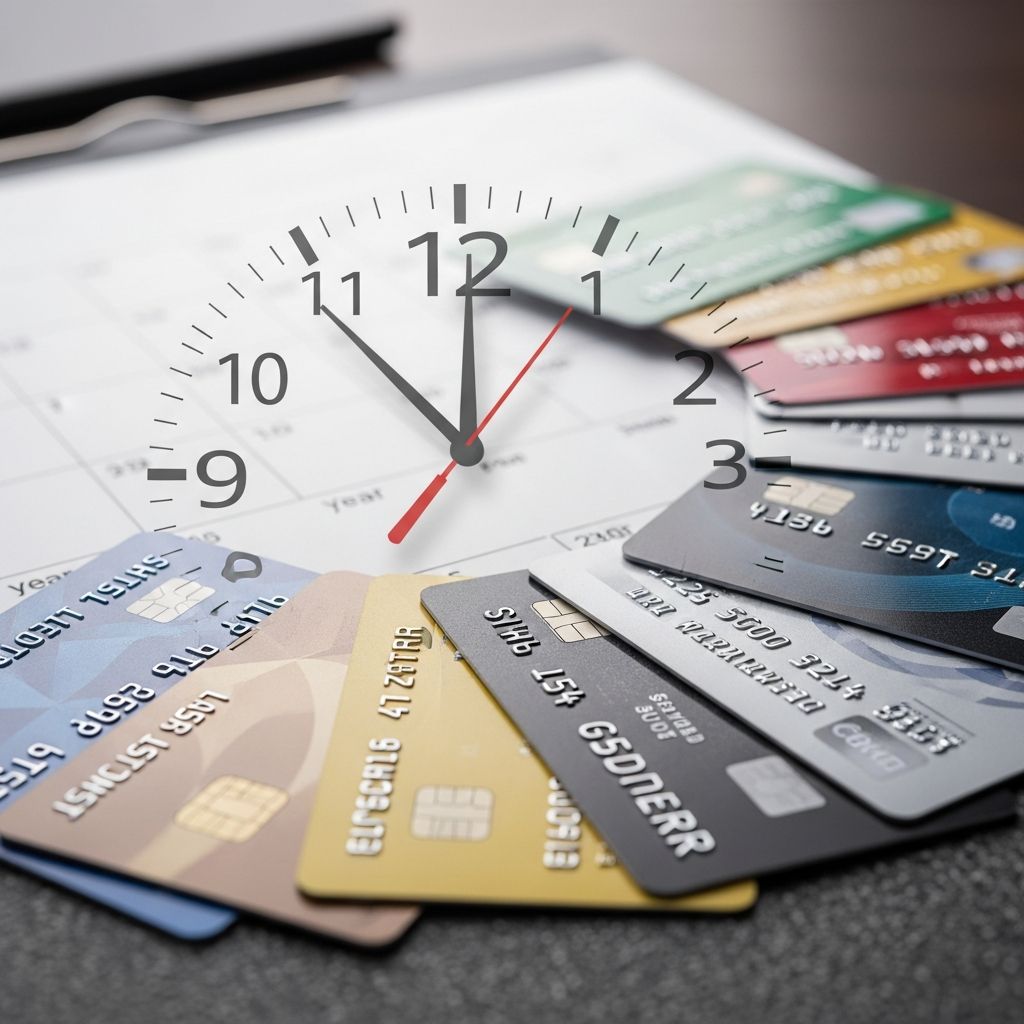
Credit card accounts can remain open indefinitely if managed responsibly, significantly benefiting your credit profile through extended history and lower utilization ratios. Closing them prematurely often harms scores more than helps, unless specific conditions apply.
Understanding Credit History Length and Its Value
The length of your credit history constitutes 15% of your FICO score, making long-held accounts powerful assets. An aged account, such as one open for two decades amid newer ones, elevates your average account age, stabilizing your score against fluctuations.
Even infrequently used cards contribute positively while open. Issuers rarely close accounts in good standing due to inactivity alone, though policies vary—some act after 12-24 months of dormancy. Keeping them open preserves this history benefit without ongoing costs if no annual fee applies.
Navigating Credit Utilization Dynamics
Credit utilization, weighing 30% of your FICO score, measures debt against available credit limits. Open accounts expand your total limit, keeping ratios low—ideally under 30%—even with balances elsewhere.
For instance, with $10,000 total limits and $2,000 debt (20% utilization), closing a $5,000-limit card spikes it to 40%, potentially dropping your score. This effect intensifies if the closed card holds a high limit relative to your portfolio.
| Scenario | Total Limit | Debt | Utilization % | Score Impact |
|---|---|---|---|---|
| Before Closure | $10,000 | $2,000 | 20% | Positive |
| After Closing $5K Card | $5,000 | $2,000 | 40% | Negative |
This table illustrates a typical shift; maintaining open accounts buffers utilization effectively.
Consequences of Account Closure
Closing reduces average account age immediately among open accounts and shrinks available credit, dual hits to your score. Closed positive accounts linger on reports up to 10 years, retaining some history value, but their full impact fades upon dropping off.
- Age Reduction: A 20-year card’s closure lowers averages if others are younger.
- Utilization Spike: Limits drop, ratios rise unless debt is zero.
- Long-Term Loss: After 10 years, history benefit vanishes completely.
Avoid closure within the first year especially, as it maximizes negative effects before history builds value—wait post-annual fee for refunds if applicable.
Strategic Alternatives to Closing
Rather than cancel, adapt the account to minimize downsides while preserving benefits.
Downgrade to Fee-Free Options
Request a downgrade to a no-fee card from the same issuer, retaining account age and limit without costs. This suits unused premium cards.
Upgrade for Relevance
Upgrade to a better-fitting card, like from starter to rewards, keeping the original account number and history intact.
Minimal Activity Maintenance
Use sparingly—e.g., monthly streaming autopay, paid in full—to signal activity, balance utilization, and extend history without risk. Automation prevents oversight.
Balance Transfer Tactics
For high-APR debts, transfer to 0% intro offers before any closure, saving interest while managing payoff.
These preserve score advantages over outright closure in most scenarios.
Ideal Scenarios for Closure
Closure makes sense rarely: high annual fees outweighing rewards on low-limit cards, or issuer-mandated shutdowns. If utilization stays low post-closure and history remains robust, impact minimizes—but calculate via free score tools first.
Post-closure, positive records endure 10 years; delinquent ones, 7 years from delinquency. Plan accordingly for loans or rate-sensitive needs.
Building and Balancing Your Credit Portfolio
Aim for 3-5 cards: mix revolving (cards) and installment (loans) for diversity (10% score factor). Newer users benefit from keeping starter cards open years post-upgrade.
- Reserve old cards for emergencies or utilization padding.
- Rotate usage to keep all active.
- Monitor via annualcreditreport.com or apps.
Frequently Asked Questions
How long do closed accounts affect my credit?
Positive closures stay 10 years; past-due, 7 years from delinquency.
Can issuers close my inactive card?
Yes, after 12+ months typically, but rare if in good standing.
Does closing hurt if I have no balance?
Yes, mainly via age and utilization shifts.
What’s the minimum usage to keep active?
Once every 3-6 months suffices for most issuers.
Should I close cards before applying for a mortgage?
No—recent inquiries plus closure worsen profiles.
Proactive Credit Health Strategies
Beyond duration, pay on time (35% score), limit inquiries, and diversify. Tools like Credit Karma preview impacts. Long-term: older profiles yield better rates—patience pays.
In summary, indefinite openness trumps closure for most, barring fees or risks. Weigh personally via simulators.
References
- How Long Should You Keep A Credit Card Open? — Bankrate. 2024-05-15. https://www.bankrate.com/credit-cards/advice/credit-card-how-long-should-i-keep/
- How Long Should I Keep a Credit Card? — NerdWallet. 2024-08-20. https://www.nerdwallet.com/credit-cards/learn/credit-card-how-long-should-i-keep
- How Long Do Closed Accounts Stay on Your Credit Report? — Experian. 2024-03-10. https://www.experian.com/blogs/ask-experian/when-are-closed-accounts-deleted/
- How long should you keep a credit card account open? — Chase. 2025-01-12. https://www.chase.com/personal/credit-cards/education/basics/how-long-to-keep-your-credit-card-open
- Why you shouldn’t close your credit cards before the 1-year mark — The Points Guy. 2024-11-05. https://thepointsguy.com/credit-cards/close-credit-card-one-year/
Similar Articles








Read full bio of medha deb