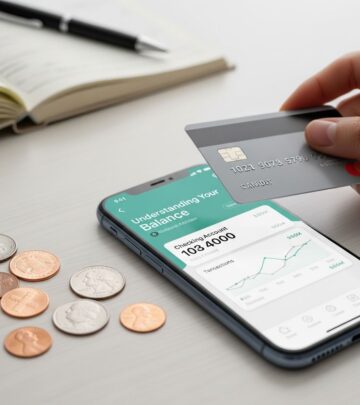
Optimal Checking Account Balance: Less Than You Think
Discover how much cash you really need in checking to avoid fees, cover bills, and maximize savings growth—it's simpler than you imagine.

Most people hold far more money in their checking accounts than necessary, missing out on better returns elsewhere. The ideal amount covers your essential outflows with a modest safety margin, freeing up the rest for higher-earning options.
Why Checking Account Balances Get Out of Hand
Checking accounts offer easy access but earn minimal or no interest, making them inefficient for idle funds. In 2024, 11% of banked adults faced overdraft fees, highlighting the risks of underfunding, while excess balances sit stagnant. National data shows wide variation: the 2023 average was $62,410, but the median stood at just $8,000, reflecting that most individuals need far less than the skewed mean suggests.
Overfunding stems from fear of fees or emergencies, yet proper planning allows minimal balances without stress. This approach protects against penalties—often $30+ per incident—while directing surplus cash to accounts yielding 4-5% APY or more.
Core Formula for Your Perfect Balance
Financial guidelines converge on a straightforward rule: maintain 1-2 months of living expenses plus a 30% buffer. This covers rent, utilities, groceries, debt payments, and incidentals without excess.
- Step 1: Tally fixed costs like housing ($1,200), utilities ($250), and minimum debt ($300).
- Step 2: Average variable spending on food ($400) and transport ($200) from recent statements.
- Step 3: Add discretionary items sparingly, aiming for total monthly outflow (e.g., $2,500).
- Step 4: Multiply by 1-2 (e.g., $2,500-$5,000) and apply 30% buffer ($750-$1,500), yielding $3,250-$6,500 target.
This personalized calculation beats generic averages like the $2,900 from 2019 surveys, which ignore individual circumstances.
Factors Tailoring Your Minimum Amount
No universal number fits all; adjust based on these elements:
| Factor | Impact on Balance | Example Adjustment |
|---|---|---|
| Pay Frequency | Bi-weekly pay allows smaller balances | Reduce to 1 month + 10% buffer |
| Bill Timing | Early-month due dates need padding | Add $300 if paychecks lag |
| Overdraft Tools | Linked savings auto-transfer lowers need | Cut buffer by 50% |
| Account Fees | Minimums (e.g., $1,000) set floors | Max of expense needs and fee threshold |
| Income Stability | Irregular gigs demand more cushion | Opt for 2 months + full 30% |
For stable salaried workers with frequent deposits, $100-$500 buffers suffice alongside one month’s expenses. Freelancers or those with volatile cash flow should lean toward the higher end.
Risks of Too Little or Too Much Cash
Dangers of Insufficient Funds
Low balances trigger overdrafts, with banks collecting billions annually. Declined transactions harm credit and convenience, while minimum balance fees compound losses. A modest buffer prevents these, ensuring smooth payments.
Opportunity Costs of Excess
Extra funds in checking forgo growth: $10,000 at 0% interest vs. 5% savings yields $500 yearly difference. Beyond FDIC’s $250,000 limit per bank, uninsured amounts risk loss in failures. Redirect surpluses post-buffer to high-yield savings or investments.
Tools and Habits for Balance Management
Automate success with these strategies:
- Budget Apps: Track via Mint or YNAB to refine expense estimates monthly.
- Auto-Transfers: Move inflows above targets to savings immediately after paydays.
- Alerts: Set notifications for low balances (e.g., buffer threshold).
- Review Quarterly: Recalculate as life changes—raises, moves, or family shifts alter needs.
Zero-balance checking with categorized sub-accounts (e.g., bills, fun) further optimizes by sweeping excesses nightly.
Checking vs. Savings: Clear Division
Reserve checking for liquidity, savings for security. Standard advice: 1-2 months + buffer in checking, 3-6 months in emergency savings. Example for $3,000 monthly expenses:
| Account | Target Amount | Purpose |
|---|---|---|
| Checking | $3,900-$7,800 | Daily bills, buffer |
| Savings | $9,000-$18,000 | Emergencies |
Funds beyond 5-year horizons suit CDs or stocks, not either.
Real-World Examples by Life Stage
Young Professional (Single, $4,000/month expenses): $4,200-$5,200 total (1 month + 5-30% buffer). Frequent pay supports lean approach.
Family of Four ($6,500/month): $8,450-$13,000 (1.5 months + buffer). Childcare variability justifies more.
Retiree (Fixed $3,000/month): $3,900 (1 month + 30%). Pensions enable minimalism with accessible savings.
Common Myths Debunked
- Myth: Match the National Average. Skewed by high earners; median $8,000 suits few.
- Myth: Bigger is Safer. Excess invites inertia; proper buffers + savings protect better.
- Myth: No Buffer Needed with Overdraft Protection. Fees still apply; transfers aren’t instant.
Frequently Asked Questions
How do I calculate my monthly expenses accurately?
Average 3 months’ statements, categorizing fixed/variable/discretionary. Exclude savings contributions.
What if my bank requires a $1,500 minimum?
Meet it or switch fee-free options; don’t exceed needs otherwise.
Is $1,000 enough for most people?
Only if expenses are low and pay aligns; scale to your outflow.
Should I keep zero balance?
No—buffers prevent fees. Use sweeping tools instead.
What about high-yield checking accounts?
Ideal for modest balances (0.5-2% APY), but still move large sums to savings.
Action Plan to Optimize Today
- Download statements; compute expenses.
- Set target balance.
- Transfer excess to high-yield savings.
- Automate transfers and alerts.
- Monitor for 30 days, adjust.
Implementing this shifts finances from idle to productive, potentially adding thousands in returns yearly.
References
- How Much Money Should You Keep in Your Checking Account? — Citi. 2024. https://www.citi.com/banking/personal-banking-guide/basic-finance/how-much-money-should-i-keep-in-my-checking-account
- How Much Money Should I Keep In My Checking Account? — ORSA Credit Union. 2023. https://orsacu.org/posts/how-much-money-should-you-keep-in-your-checking-account
- How Much Should I Keep in My Checking Account? — Clearview FCU. 2019. https://www.clearviewfcu.org/tips-insights/blog/how-much-money-should-i-keep-in-my-checking-accoun
- How Much Cash to Keep in Checking vs. Savings Accounts — NerdWallet. 2024. https://www.nerdwallet.com/banking/learn/how-much-money-in-checking-and-savings
- How Much Money Should I Keep In My Checking Account? — SkyOne Federal Credit Union. N/A. https://www.skylacu.com/learning-guidance/how-much-money-to-keep-in-checking
- Maintaining the Right Balance in Your Checking Account — AERO Federal Credit Union. N/A. https://www.aerofinancial.com/blog/maintaining-the-right-balance-in-your-checking-account
Similar Articles








Read full bio of Sneha Tete