Optimal Cash in Checking and Savings
Discover ideal amounts for checking and savings to balance liquidity, security, and growth in your financial plan.

Maintaining the right balance between your checking and savings accounts is essential for financial stability. Checking accounts handle daily transactions, while savings accounts protect funds for future needs and emergencies. This guide outlines recommended amounts, influencing factors, and optimization tips to ensure your money works efficiently.
Understanding Account Roles
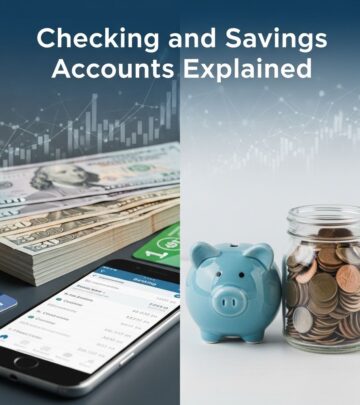
Checking accounts provide immediate access for bills, groceries, and transfers. They typically offer low or no interest but prioritize liquidity. Savings accounts, conversely, earn higher interest and serve as a safety net or goal-oriented repository. Separating funds prevents overspending and encourages disciplined saving.
- Checking: Covers 1-3 months of routine outflows.
- Savings: Holds 3-12 months of living expenses, depending on risk tolerance.
Ideal Checking Account Balance
Aim for enough to cover monthly expenses without frequent overdrafts. Calculate your average outflows: add rent, utilities, food, transportation, and subscriptions. Multiply by 1.5 to 2 for a buffer against surprises.
For a household spending $4,000 monthly, target $6,000-$8,000 in checking. This prevents fees from low balances, which average $15 per incident at many banks. Excess funds drag on returns since traditional checking APYs hover near 0.01%.
| Monthly Expenses | Recommended Checking Buffer | Key Benefit |
|---|---|---|
| $2,000-$3,000 | $3,500-$6,000 | Avoids overdraft risks |
| $4,000-$6,000 | $7,000-$12,000 | Handles variable income |
| $7,000+ | $12,000-$20,000 | Supports business-like flows |
Building Your Savings Foundation
Savings should first fund an emergency reserve: 3-6 months of essential costs for stable jobs, 6-12 for freelancers or single earners. Essentials include housing, food, utilities, and minimum debt payments—exclude luxuries.
Example: $3,000 monthly essentials require $9,000-$18,000 minimum. Beyond emergencies, allocate to short-term goals like vacations or repairs (3-12 months away) and long-term objectives.
Layered Savings Approach
- Emergency Tier: Fully liquid, high-yield account.
- Goal Tier 1: Near-term needs, accessible within days.
- Goal Tier 2: Medium-term, possibly CDs for higher rates.
Distribute proportionally: 50% emergencies, 30% short-term, 20% medium-term initially.
Factors Influencing Your Targets
Personal circumstances dictate adjustments. Stable dual-income households lean toward lower buffers; high-risk profiles need more.
- Income Stability: Irregular paychecks demand larger checking cushions.
- Debt Load: High payments reduce disposable for savings.
- Family Size: Dependents increase expense volatility.
- Health/Insurance: Poor coverage warrants extra reserves.
- Market Conditions: Recession risks boost emergency sizing.
Review annually or after life changes like job shifts or births.
Maximizing Returns on Idle Cash
With national savings averages at 0.40% APY in early 2026, high-yield options yield 3-4% or more, compounding meaningfully over time. Shift excess checking funds monthly.
| Bank | APY (2026) | Min Balance | Monthly Fee | Access |
|---|---|---|---|---|
| Capital One | ~3.30% | $0 | $0 | App + Branches |
| Ally Bank | ~3.30% | $0 | $0 | App + Tools |
| Marcus by Goldman Sachs | ~3.65% | $0 | $0 | App |
| SoFi Bank | Up to 4.00% (w/ direct deposit) | $0 | $0 | App |
| CIT Bank | ~3.75% (≥$5K) | Varies | $0 | App |
These FDIC-insured accounts match liquidity needs while beating inflation. For checking, select fee-free options with perks like early direct deposit.
Automation and Habits for Success
Automate transfers post-payday: 10-20% to savings, rest to checking. Use apps for rounding up purchases. Track via budgeting tools to refine balances quarterly.
- Set alerts for low checking thresholds.
- Rebalance if savings dip below targets.
- Shop rates biannually as Fed changes impact yields.
Common Pitfalls to Avoid
Oversaving in checking forfeits interest; undersaving invites fees or stress. Don’t tap savings for non-emergencies. Beware promo APYs with traps like balance minimums.
Advanced Strategies for Growth
Once basics are covered, ladder CDs for predictable needs or money market funds for slight yield boosts. For hybrid accounts like SoFi’s, qualify for tiered rates via direct deposit. Diversify across banks for FDIC max ($250K per account).
Frequently Asked Questions
How much should I keep in checking if paid biweekly?
Target 1-1.5 months’ expenses, adjusting for pay frequency. Biweekly earners might hold less due to steadier inflows.
Is 6 months’ savings enough?
Yes for most with stability; extend to 9-12 if vulnerable to layoffs or health issues.
What if rates drop?
High-yield accounts adjust variably; maintain liquidity over chasing peaks.
Should I use joint accounts?
Yes for couples, but clarify emergency access to avoid disputes.
Can I have multiple savings accounts?
Absolutely—bucket by purpose for better organization and motivation.
Next Steps for Your Plan
Inventory expenses, tally current balances, and transfer excesses today. Monitor for 30 days, then tweak. Consistent action builds wealth quietly.
References
- Best High-Yield Savings Accounts 2026: Top 10 Rates, Perks — GreenFi. 2026-01 (approx.). https://www.greenfi.com/resources/best-high-yield-savings-accounts-2026
- 10 Best Checking Accounts for March 2026 — NerdWallet. 2026-03. https://www.nerdwallet.com/banking/best/checking-accounts
- Your Guide to an Emergency Fund — Consumer Financial Protection Bureau (CFPB). 2023-07-20. https://www.consumerfinance.gov/consumer-tools/emergency-funds/
- How Much Should You Have in Emergency Savings? — Federal Reserve Bank of Cleveland. 2024-10. https://www.clevelandfed.org/publications/economic-commentary/2024/ec-202410-how-much-emergency-savings-is-enough
Similar Articles








Read full bio of medha deb