Oprah’s $150 Million Klimt: The Art World’s Biggest Surprise
How Oprah Winfrey turned a $87.9M Klimt masterpiece into a $150M fortune.
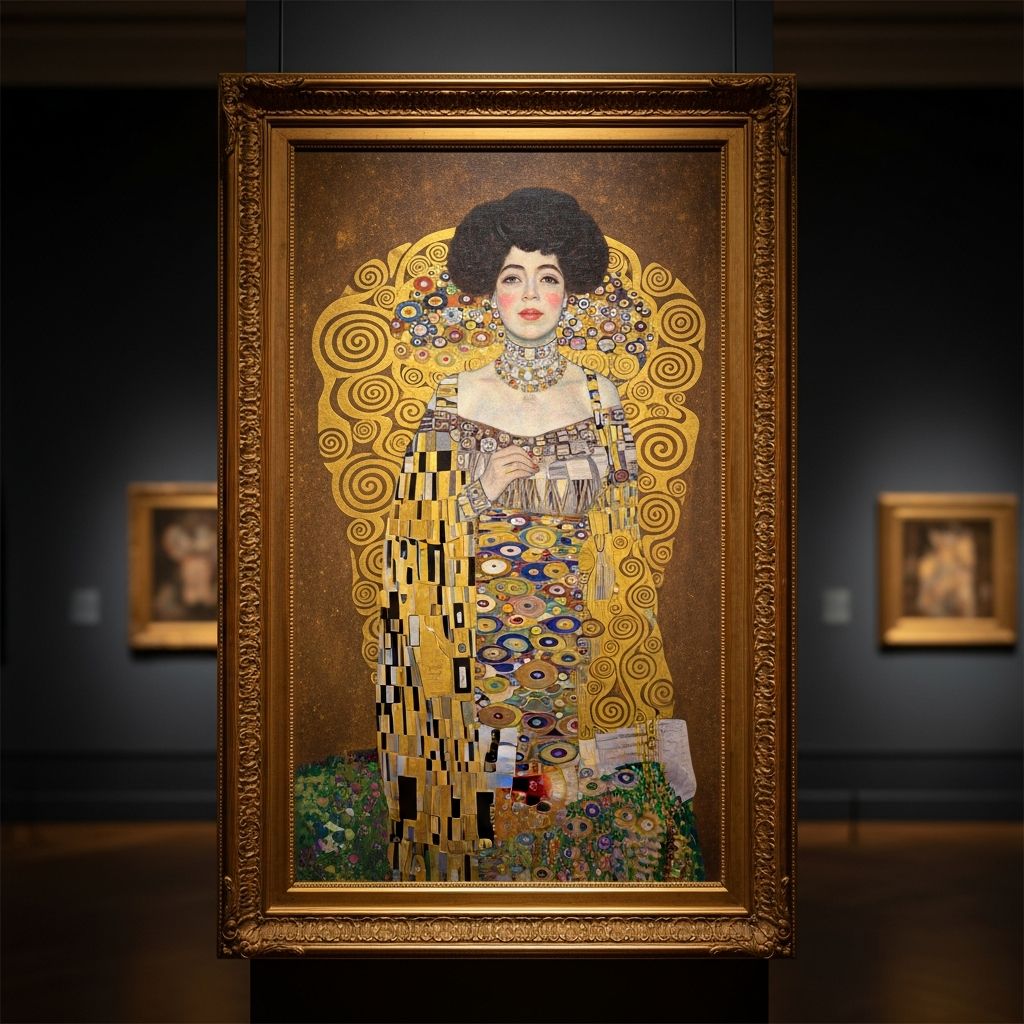
The Surprising Connection Between Oprah and a $150 Million Art Masterpiece
The art world was left speechless when Bloomberg revealed in February 2017 that Oprah Winfrey, the legendary talk show host and media mogul, had been the anonymous owner of one of the most valuable paintings in the world. For a full decade, Winfrey quietly held Gustav Klimt’s “Adele Bloch-Bauer II,” one of the Austrian symbolist master’s most celebrated works. What made this revelation even more stunning was the financial transaction behind it: Winfrey purchased the 54-by-54-inch masterpiece at Christie’s in 2006 for $87.9 million, only to sell it to a Chinese collector for $150 million in 2016, netting a profit of approximately $62.1 million.
This remarkable story intertwines wealth, culture, philanthropy, and the complex history of stolen art reclaimed. It also reveals Oprah’s sophisticated understanding of art collecting as both a personal passion and a shrewd investment. The narrative of how one of America’s most influential figures came to own this iconic portrait encompasses themes of redemption, cultural preservation, and the power of recognizing true artistic value.
Who Was Adele Bloch-Bauer?
To understand the significance of Winfrey’s connection to this painting, one must first understand Adele Bloch-Bauer herself. Adele Bloch-Bauer was an Austrian-Jewish art patron, salon leader, and taste-maker during Vienna’s Golden Age. She became a key figure in Vienna’s cultural circles, hosting salons that attracted artists, intellectuals, and creative minds. Her influence on the artistic community was substantial, and she embodied the sophisticated, refined aesthetic of early 20th-century Vienna.
Gustav Klimt, captivated by Adele’s elegance and cultural significance, painted not one but two portraits of her. The first portrait, completed in 1903, is considered the more famous of the two and is known simply as “Portrait of Adele Bloch-Bauer I.” The second portrait, completed in 1912 and the one Winfrey owned, depicts Adele in a different composition and aesthetic style. Interestingly, Adele herself did not particularly care for the second portrait, a detail that adds a layer of irony to the story of its astronomical value.
The Journey of the Masterpiece: From Nazi Theft to Recovery
The history of “Adele Bloch-Bauer II” is inseparable from the tragic events of World War II. During the Nazi occupation, the painting and four other Klimt canvases were seized from Adele’s husband’s collection. For decades, these masterpieces remained missing, their fate unknown to the art world. The recovery of these stolen artworks became a matter of both historical importance and family legacy.
It wasn’t until much later that Adele’s heirs engaged in a protracted legal battle with the Austrian state museum to reclaim these works. This legal struggle was so significant that it inspired the acclaimed film “Woman in Gold,” which tells the story of the effort to recover these paintings and restore them to their rightful owners. The documentary-style narrative captured the determination of those fighting to correct historical wrongs and reclaim cultural treasures.
It was this film that initially sparked Oprah’s interest in both the artwork and Adele’s remarkable story. Watching “Woman in Gold” connected Oprah emotionally to the narrative of these masterpieces and the woman who had inspired them. The film provided context for understanding not just the paintings themselves, but the human stories intertwined with them—stories of resilience, cultural preservation, and the enduring power of art.
Oprah’s Entry Into the Art World: The $87.9 Million Purchase
In November 2006, Christie’s hosted an auction that would change Oprah’s relationship with the art world. Following the successful legal recovery by Bloch-Bauer’s heirs, the painting went to auction. Oprah, inspired by the film and captivated by the masterpiece’s history and beauty, entered the competitive bidding. According to reports from the time, the winning bidder—Oprah—entered the competition at $74 million and demonstrated an unwavering commitment to securing the work, regardless of how high the price climbed.
Her final bid of $87.9 million set a record at the time for any painting by Gustav Klimt sold at auction. This was a bold statement of both her appreciation for fine art and her financial capability. However, Oprah made the strategic decision to remain anonymous during the purchase, a practice common among ultra-high-net-worth collectors who wish to maintain privacy or avoid attracting unwanted attention.
It’s worth noting that Oprah’s net worth at the time and certainly by the time of the sale—estimated at approximately $2.9 billion according to Forbes—made the $87.9 million investment a significant but manageable portion of her wealth. For Oprah, this purchase was not driven by financial necessity but by genuine appreciation for artistic excellence and the historical importance of the work.
A Decade of Stewardship: Oprah as Custodian of Culture
For ten years, Oprah served as the custodian of this masterpiece. During this period, she experienced the painting not as a passive investment but as an active collector who understood its cultural value. Her stewardship of the work demonstrated her commitment to preserving and sharing important art with the public.
A pivotal moment in Oprah’s tenure came in September 2014 when she loaned the painting to the Museum of Modern Art (MoMA) in New York for a public exhibition. This decision was particularly significant because it allowed millions of art enthusiasts and the general public to view one of the world’s most valuable paintings. The loan was arranged with the assistance of her friend and fellow entertainment mogul David Geffen, who had donated $100 million to MoMA himself and understood the importance of making great art accessible.
During this loan period, Oprah remained anonymous as the painting’s owner. The art world knew the masterpiece was in private hands, but the identity of the collector remained a closely guarded secret. This anonymity was maintained through careful coordination with museum officials and dealers.
In 2016, the painting received further public attention when it was featured in the Neue Galerie’s exhibition titled “Klimt and the Women of Vienna’s Golden Age, 1900–1918.” In this exhibition, “Adele Bloch-Bauer II” was reunited with its famous predecessor, “Adele Bloch-Bauer I,” which had been purchased by Ronald Lauder, co-founder of the Neue Galerie, for $135 million in 2006. Seeing both portraits together offered viewers an unprecedented opportunity to compare Klimt’s artistic evolution and his changing interpretation of his subject.
The Sale: From $87.9 Million to $150 Million
By 2016, after a decade of ownership, Oprah made the decision to sell the masterpiece. According to reports, renowned art dealer Larry Gagosian was instrumental in facilitating the transaction. Gagosian, one of the world’s most powerful art dealers, had been approached by a client interested in acquiring the work. This led to negotiations that resulted in the sale to an unidentified Chinese collector for $150 million.
This represented a remarkable financial outcome. In the ten years Oprah owned the work, its value increased by approximately 71 percent—a substantial return even for a high-value asset in the art market. The $62.1 million profit made it one of the most successful art investments in recent history.
The identity of the buyer has remained largely confidential, though later investigations revealed connections to Hong Kong-based investment advisories specializing in discrete art acquisitions. In October 2022, the painting resurfaced at an exhibition in Amsterdam’s Van Gogh Museum, appearing in a major Klimt retrospective with provenance listed as “Private Collection, Courtesy of HomeArt,” suggesting involvement by a sophisticated art investment firm catering to ultra-wealthy collectors.
Oprah’s Broader Art Collection and Philosophy
While the Klimt purchase represents the most high-profile aspect of Oprah’s art collecting, it is far from her only engagement with the art world. Oprah has assembled an eclectic and impressive collection of artworks spanning multiple periods, styles, and mediums. Her collection includes works by renowned artists such as Richard Edward Miller, Hovsep Pushman, and other contemporary and classical masters.
One particularly notable piece in her collection is Thomas Hart Benton’s 1945 painting titled “Back from the Fields,” which holds a place of honor above the mantel in her California home library. She also owns paintings by Harry Roseland and the 1926 sculpture “Standing Woman with Pleated Skirt” by French-American artist Gaston Lachaise. These selections reflect Oprah’s refined taste and her appreciation for works that combine technical mastery with emotional resonance.
In 2015, when Oprah closed Harpo Studios in Chicago, she organized a major auction of personal possessions, including select pieces from her decorative art and furniture collection. Among the items were a renowned “Royal Copenhagen Flora Danica” set, Hovsep Pushman’s “The Little Mother” (estimated at $35,000–$45,000), and Richard Edward Miller’s “The Red Scarf” (estimated at $80,000–$120,000). This auction showcased the breadth and quality of her collecting across different mediums and price points.
The Parallels Between Oprah and Adele
Beyond the financial and historical aspects of her Klimt purchase, Oprah’s connection to this masterpiece reflects deeper thematic resonances. Just as Adele Bloch-Bauer served as an art patron, salon leader, and cultural taste-maker in Vienna’s Golden Age, Oprah has played a similar role in American culture through her television show and media empire.
Oprah’s talk show functioned as a “salon writ large on the screen,” a space where important conversations happened, diverse voices were amplified, and cultural dialogue shaped public consciousness. Like Adele, Oprah used her platform and resources to elevate artists, intellectuals, and important ideas. Both women understood their roles as cultural arbiters with the responsibility and opportunity to influence artistic and intellectual discourse.
This parallel extends to their philanthropic commitments. While Adele invested in the Vienna cultural scene, Oprah has invested substantially in educational and cultural institutions. She founded The Angel Network in 1998 and has donated millions to the Oprah Winfrey Leadership Academy for Girls in South Africa. Additionally, she contributed $12 million to the Smithsonian National Museum of African American History and Culture, resulting in the naming of the museum’s 350-seat theater in her honor.
The Art Market and Celebrity Collectors
Oprah’s entry into ultra-high-end art collecting places her among a select group of celebrities and public figures who have significantly shaped the contemporary art market. Her participation in the purchase and sale of masterpieces like “Adele Bloch-Bauer II” demonstrates how individual collectors with substantial resources can influence valuations and market dynamics.
The sale of the Klimt for $150 million in 2016 was described as one of the biggest private art deals of that year, highlighting Oprah’s impact on the art world. Her willingness to invest at the highest levels of the market and her eventual sale at a substantial profit demonstrated sophisticated understanding of art as both cultural artifact and investment vehicle.
Understanding Oprah’s Investment Acumen
While Oprah is best known for her media empire and philanthropic work, her art collecting reveals another dimension of her business intelligence. The decision to purchase an $87.9 million painting, maintain it for a decade, strategically loan it to major museums, and then sell it for a significant profit demonstrates investment discipline and market awareness.
Oprah understood that true value in art collecting comes from several sources: the work’s historical significance, its rarity, its cultural impact, and its potential appreciation. The Klimt satisfied all these criteria. By maintaining anonymity during ownership while strategically allowing public access through museum loans, Oprah balanced privacy with cultural contribution.
Frequently Asked Questions
Q: Why did Oprah buy the Adele Bloch-Bauer II painting?
A: Oprah was inspired by the film “Woman in Gold,” which tells the story of Adele Bloch-Bauer and the legal battle to recover Klimt paintings stolen by the Nazis during World War II. She became emotionally connected to Adele’s story and the historical significance of the masterpiece.
Q: How much profit did Oprah make from selling the painting?
A: Oprah purchased the painting for $87.9 million in 2006 and sold it for $150 million in 2016, making a profit of approximately $62.1 million.
Q: Who was Adele Bloch-Bauer?
A: Adele Bloch-Bauer was an Austrian-Jewish art patron and salon leader during Vienna’s Golden Age who became a major influence on the cultural scene. Gustav Klimt painted two famous portraits of her.
Q: Why was the painting stolen during World War II?
A: The painting and other Klimt works were seized by the Nazis from Adele’s husband’s collection during the German occupation of Austria in World War II. The recovery of these works became a significant legal and historical matter.
Q: Who bought the painting from Oprah?
A: The painting was sold to an unidentified Chinese collector, with reports later suggesting connections to Hong Kong-based art investment firms that help wealthy clients acquire masterpieces discreetly.
Q: Did Oprah keep the painting private or allow public viewing?
A: Although Oprah remained anonymous as the owner, she generously loaned the painting to MoMA in 2014 and it was featured in the Neue Galerie’s Klimt exhibition in 2016, allowing millions of people to view this masterpiece.
Q: How does Oprah’s collecting relate to her public persona?
A: Like historical figure Adele Bloch-Bauer, Oprah has served as a cultural patron and taste-maker through her media empire, television show, and philanthropic work, supporting artists and important cultural institutions.
References
- Oprah Winfrey Sells Painting for $150 Million — Essence Magazine. 2017-02-16. https://www.essence.com/news/money-career/the-surprising-connection-between-oprah-and-a-150-million-art-masterpiece/
- Oprah Sells Famed Gustav Klimt Portrait for $150 Million — Artnet News. 2017-02-16. https://news.artnet.com/market/oprah-sells-famed-gustav-klimt-portrait-150-million-851537
- Most Expensive Painting by Klimt Sold at a Private Sale — Guinness World Records. https://www.guinnessworldrecords.com/world-records/769006-most-expensive-painting-by-klimt-sold-at-a-private-sale
- How is US$150 million Klimt painting once owned by Oprah Winfrey linked to Hong Kong art investment fund — South China Morning Post. 2022-10-18. https://www.scmp.com/lifestyle/arts-culture/article/3201222/how-us150-million-klimt-painting-once-owned-oprah-winfrey-linked-hong-kong-art-investment-fund
- Oprah Winfrey: Media Mogul and Passionate Art Collector — ArtMajeur Magazine. 2023-03-15. https://www.artmajeur.com/en/magazine/2-art-news/oprah-winfrey-media-mogul-and-passionate-art-collector/334102
- Celebrities With a Significant Art Collection — MyArtBroker. 2024-01-10. https://www.myartbroker.com/collecting/articles/celebrities-with-a-significant-art-collection
Similar Articles








Read full bio of medha deb