Operations Management: Definition, Process & Importance
Master operations management: Drive efficiency, optimize processes, and maximize profitability.
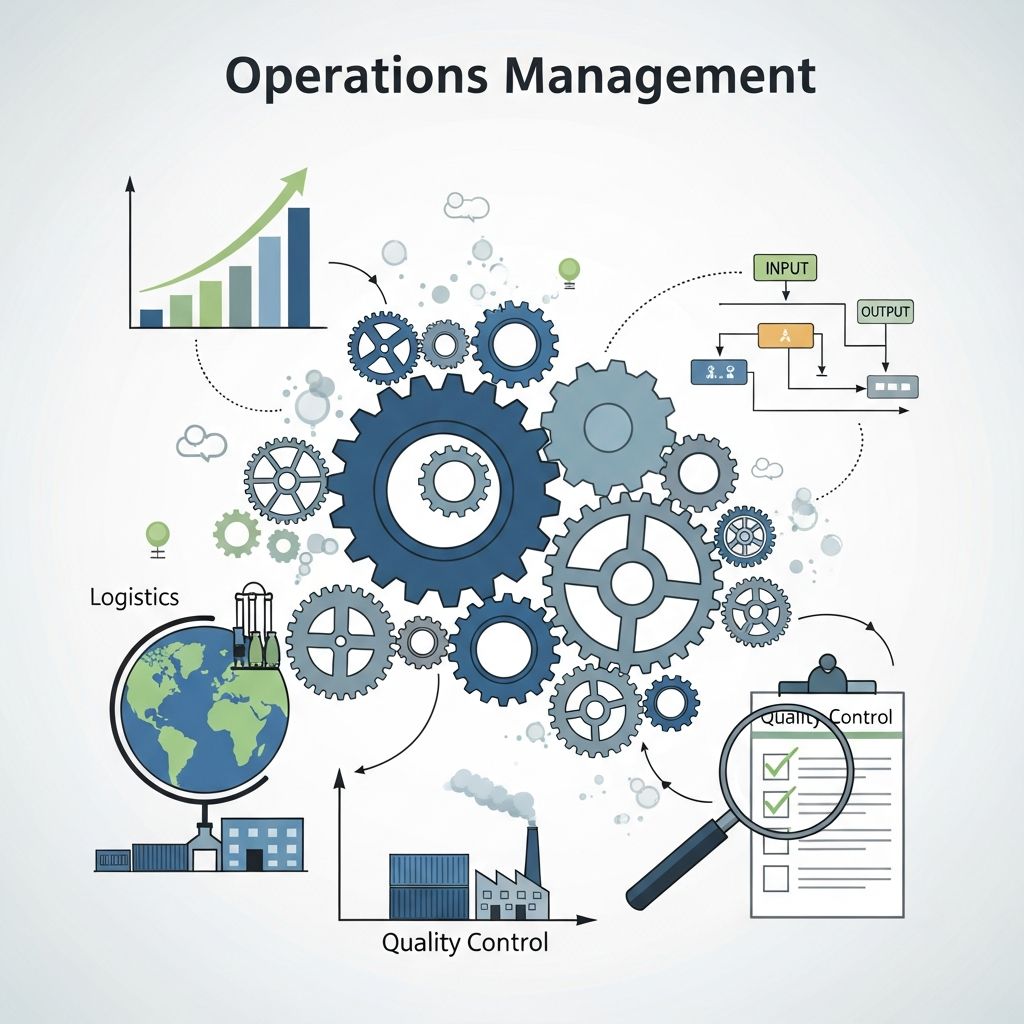
What is Operations Management?
Operations management is the administration of business practices designed to create the highest level of efficiency possible within an organization. It represents a critical business discipline that focuses on converting materials, labor, and technology into goods and services as efficiently as possible to maximize organizational profit. Rather than being confined to a single department, operations management functions as a cross-departmental role that integrates multiple business functions to ensure seamless workflow and optimal resource utilization.
At its core, operations management involves planning, organizing, and overseeing an organization’s processes to balance revenues and costs while achieving the highest possible operating profit. This comprehensive approach requires managers to understand not only their immediate operational scope but also how their decisions impact other departments and the overall business objectives. Operations managers must bridge the gap between different functional areas, ensuring that strategic goals translate into effective daily operations.
The Purpose of Operations Management
The fundamental purpose of operations management is to promote and support efficient business processes through deliberate coordination and strategic planning. This discipline focuses on optimizing the staff, procedures, and physical resources required to operate a business effectively. Beyond merely handling day-to-day functions, operations management helps organizations run safely, securely, and at scale while maintaining compliance with regulatory requirements and industry standards.
Operations management also addresses how an organization coordinates and oversees information flow among departments, ensures customer satisfaction, and manages the continuous improvement of daily operations. It represents a proactive coordination approach rather than reactive problem-solving, positioning the organization to anticipate challenges and capitalize on opportunities before they become critical issues.
Core Responsibilities of Operations Managers
Operations managers shoulder a diverse range of responsibilities that span multiple organizational functions. Their duties include overseeing daily business activities, studying operational processes, and preparing comprehensive operational and financial reports. Unlike managers in marketing or finance departments who focus on their specific areas, operations managers assume an array of responsibilities across multiple disciplines, making their role inherently cross-functional.
Key Operational Functions
Product Design and Development: Operations managers ensure that products sold to consumers meet customer needs and align with current market trends. This responsibility involves collaborating with design and marketing teams to transform ideas into commercially viable products while maintaining quality standards and cost efficiency.
Supply Chain Management: Operations managers maintain control over inventory management, the production process, distribution, sales, and supplier sourcing to ensure goods are supplied at reasonable prices. A properly managed supply chain results in efficient production processes, reduced overhead costs, and timely product delivery to consumers.
Delivery and Customer Satisfaction: Managers are responsible for ensuring goods reach consumers in a timely manner and meet their functionality requirements. They also receive customer feedback and complaints, forwarding this information to relevant departments for continuous improvement and product refinement.
Resource Allocation: Effective operations managers allocate company resources strategically to achieve business goals while meeting established standards and keeping costs manageable.
Types of Operations Management
Operations management approaches vary depending on an organization’s specific needs and goals. Managers often employ different types of operations management based on particular situations and operational contexts.
Objectives Management
This approach focuses on setting priorities and making operational decisions based on business goals while aligning operations to support overall company objectives. It emphasizes strategic alignment and ensures that daily operations contribute meaningfully to long-term organizational vision.
Task Management
Task management involves overseeing daily operations based on work in progress and linear workflows, assigning tasks methodically before moving to the next phase. This structured approach ensures that work progresses systematically and that resources are allocated efficiently across operational stages.
Individual Supervision
This type uses real-time information from managers and employees performing the work to optimize operations dynamically. It relies on frontline insights to adjust processes and improve efficiency based on actual operational conditions rather than theoretical models.
The Operations Management Process
The operations management process focuses on making a company’s daily actions as sharp and effective as possible through intelligent resource utilization and data-driven decision-making. This systematic approach requires clear communication with clients, stakeholders, and business units to ensure alignment and coordination.
Strategic Planning and Analysis
Organizational planning involves planning across multiple dimensions—strategic (long-term goals), tactical (mid-term goals), and operational (day-to-day workflows). A focus on resource allocation, structured processes, and realistic timelines proves essential for effectively aligning resources with business objectives and ensuring sustainable competitive advantage.
Process Design and Continuous Improvement
Operations managers map out tasks, resources, and roles to identify and eliminate inefficiencies in workflows. This ongoing effort uses operational key performance indicators (KPIs) to track progress, support continuous improvement initiatives, and respond to changing business conditions and market dynamics.
Data-Driven Decision Making
Operations managers collect, process, and communicate operational KPIs to measure the impact of business operations. They use operational data to analyze results and adjust long-term strategic plans as necessary, ensuring the organization remains responsive to market changes and internal performance data.
The Five P’s of Operations Management
Modern operations management typically revolves around five core principles that guide strategic and tactical decisions:
Planning
Setting objectives, forecasting demand, and allocating resources form the foundation of effective operations management. Strategic planning establishes the roadmap for organizational operations, while demand forecasting ensures resources align with market needs.
Process
Designing and optimizing workflows improves productivity and efficiency throughout the organization. Well-designed processes eliminate redundancies, reduce bottlenecks, and create clear pathways for transforming inputs into valuable outputs.
People
Hiring, training, and fostering a collaborative, high-performing workforce ensures operations managers have the human capital necessary to execute organizational strategies. Investing in employee development and creating a supportive work culture directly impacts operational effectiveness and employee retention.
Possessions
Managing physical resources such as inventory, equipment, and space reduces waste and optimizes asset utilization. Effective resource management ensures that capital is deployed productively and that operational assets remain well-maintained and efficiently deployed.
Profits
Prioritizing long-term growth and profitability over short-term cost-cutting ensures sustainable business success. This perspective encourages strategic investments that may have higher initial costs but generate substantial long-term value and competitive advantages.
Essential Skills for Operations Managers
To succeed in this cross-departmental role, operations managers must possess a diverse skill set that combines technical knowledge with soft skills. Strong coordination abilities are fundamental, requiring managers to integrate resources, activities, and time effectively to achieve organizational goals. This involves carrying out specific activities simultaneously, switching between tasks with ease, and efficiently handling interruptions, obstacles, and crises while maintaining normal routine functions.
Operations managers must also demonstrate exceptional communication skills to coordinate effectively across departments and with external stakeholders. Problem-solving abilities allow them to identify inefficiencies and develop practical solutions. Strategic thinking enables them to align operational decisions with long-term business objectives, while technical proficiency ensures they can leverage modern tools and technologies to optimize processes. Additionally, strong financial acumen helps managers balance cost considerations with quality and efficiency objectives.
Operations Management vs. Project Management
While often confused, operations management and project management represent distinct management approaches. Operations management focuses on ongoing activities required to keep a business running smoothly, while project management emphasizes planning, execution, and control of specific projects with defined timelines and deliverables. The key difference lies in their focus: operations management optimizes preexisting systems and processes, whereas project management concentrates on delivering specific sets of tasks or objectives.
Without effective management in both areas, organizations risk experiencing delays, inefficiencies, and significant costs. Many successful organizations employ both approaches simultaneously, using operations management to ensure daily efficiency while leveraging project management for strategic initiatives and innovation efforts.
Developing an Effective Operations Strategy
An effective operations strategy represents the art and science of tailoring an organization’s resources and capabilities to achieve goals efficiently and effectively. This strategy involves making deliberate trade-offs between cost, quality, speed, flexibility, and innovation based on competitive positioning and market demands.
Key elements of a solid operations management strategy include organizational planning across strategic, tactical, and operational levels; process design and analysis using data-driven insights; and continuous monitoring and adjustment based on performance metrics. Organizations that develop comprehensive operations strategies position themselves to respond more effectively to market changes, optimize resource utilization, and maintain sustainable competitive advantages.
Modern Operations Management Environments
Contemporary operations management must address three critical dimensions that encompass the full scope of organizational operations:
Organizational Planning: Multi-dimensional planning ensures alignment of resources with business objectives across strategic, tactical, and operational timeframes.
Process Design and Analysis: Ongoing mapping and optimization of workflows eliminate inefficiencies and support continuous improvement through operational KPIs.
Strategic Adaptation: Using operational data to analyze results and adjust long-term strategies ensures organizations remain responsive to changing conditions.
Why Operations Management Matters
Effective operations management is fundamental to business success for several reasons. It ensures organizations can meet customer demands profitably by matching supply with demand in a sustainable manner. Strong operations management also drives innovation, improves productivity, and ensures organizations remain profitable and competitive in the long term.
Moreover, operations management enables organizations to operate safely, securely, and at scale while maintaining compliance with regulatory requirements. It creates a foundation for sustainable growth by optimizing existing processes and enabling strategic resource allocation toward future opportunities.
Frequently Asked Questions
Q: What is the main goal of operations management?
A: The main goal of operations management is to maximize organizational efficiency and profitability by optimizing business processes, managing resources effectively, and balancing costs with quality to deliver products and services that meet customer needs.
Q: What are the key responsibilities of an operations manager?
A: Operations managers oversee daily business activities, manage supply chains, ensure product quality, coordinate delivery, handle customer feedback, allocate resources strategically, prepare operational reports, and align operations with overall business objectives.
Q: How does operations management differ from project management?
A: Operations management focuses on ongoing business activities and optimizing existing processes, while project management emphasizes delivering specific projects with defined timelines. Operations management is continuous, whereas project management is temporary and goal-specific.
Q: What skills are essential for an operations manager?
A: Essential skills include coordination, communication, strategic thinking, problem-solving, financial acuity, technical proficiency, and the ability to work cross-functionally across multiple departments.
Q: How can organizations improve their operations management?
A: Organizations can improve operations through strategic planning, process optimization, data-driven decision-making, continuous improvement initiatives, effective resource allocation, and regular analysis of operational KPIs.
References
- Operations Management – Overview, Responsibilities, Skills Required — Corporate Finance Institute. 2024. https://corporatefinanceinstitute.com/resources/management/operations-management/
- What Is Operations Management? Definition, Types, and Importance — NetSuite. 2024. https://www.netsuite.com/portal/resource/articles/erp/operations-management.shtml
- What is Operations Management and Why Do You Need It? — Kantata. 2024. https://www.kantata.com/blog/article/what-is-operations-management-and-why-do-you-need-it
- What Is Operations Management? — Mitch Daniels School of Business, Purdue University. 2024. https://business.purdue.edu/master-of-business/online-masters-in-business-administration/posts/what-is-operations-management.php
- What Is Operations Management? — Western Governors University. 2024. https://www.wgu.edu/blog/what-is-operations-management2304.html
Similar Articles








Read full bio of Sneha Tete