Operating Profit: Definition, Calculation, and Significance
Understanding operating profit: A key metric for evaluating business operational efficiency.
What Is Operating Profit?
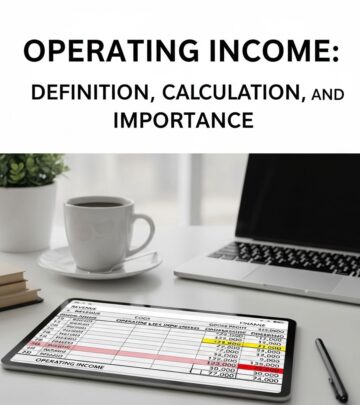
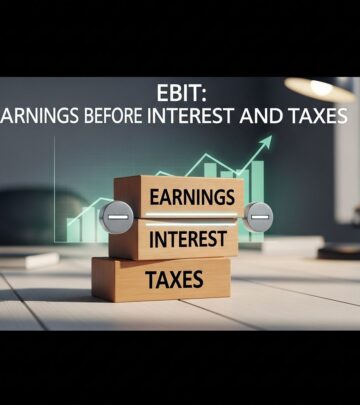
Operating profit, also known as operating income or EBIT (earnings before interest and taxes), represents the profitability generated from a company’s core business operations. This financial metric measures how much profit a business makes from its primary activities before accounting for the effects of capital structure, interest expenses, and income taxes. Operating profit is a crucial indicator of a company’s operational efficiency and ability to generate earnings from its day-to-day business activities.
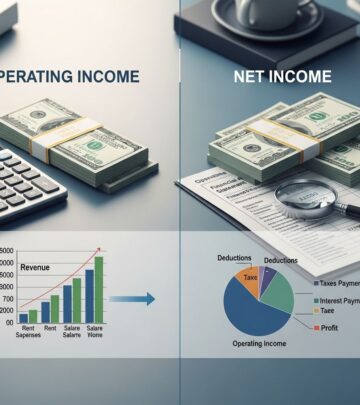
Unlike net income, which includes all expenses and revenues, operating profit focuses specifically on the results of business operations. This makes it an invaluable tool for investors and analysts who want to understand how well a company’s management is running the business at its most fundamental level.
Key Characteristics of Operating Profit
- Excludes Non-Operating Items: Operating profit does not include gains or losses from investments, interest income, or interest expenses, allowing for a clear view of operational performance.
- Pre-Tax Measure: As a pre-tax metric, operating profit is not affected by variations in tax rates or tax strategies employed by different companies.
- Comparable Across Companies: Operating profit enables meaningful comparisons between companies with different capital structures or tax situations.
- Reflects Management Efficiency: Operating profit demonstrates how effectively management controls costs and generates revenue from core business operations.
- Used in Multiple Analyses: Operating profit serves as a foundation for calculating other important metrics like operating margin and return on invested capital.
How to Calculate Operating Profit
Operating profit can be calculated using two primary methods, both of which yield the same result:
Method 1: Top-Down Approach
This method starts with revenue and subtracts all operating expenses:
Operating Profit = Revenue − Cost of Goods Sold (COGS) − Operating Expenses
Where operating expenses include selling, general, and administrative expenses (SG&A), depreciation, and amortization.
Method 2: Bottom-Up Approach
This method starts with net income and adds back non-operating items:
Operating Profit = Net Income + Interest Expense + Tax Expense
This approach is particularly useful when working backward from financial statements to isolate operational performance.
Step-by-Step Calculation Example
- Begin with total revenue from all sales
- Subtract the cost of goods sold (COGS)
- Calculate gross profit
- Subtract operating expenses (salaries, rent, utilities, marketing)
- The resulting figure is operating profit
Operating Profit vs. Other Profitability Metrics
Understanding the differences between operating profit and other profitability measures is essential for comprehensive financial analysis:
| Metric | Definition | Includes |
|---|---|---|
| Gross Profit | Revenue minus cost of goods sold | Only production-related costs |
| Operating Profit | Revenue minus all operating expenses | COGS and SG&A expenses |
| EBITDA | Operating profit plus depreciation and amortization | Excludes D&A to show cash flow potential |
| Net Income | Revenue minus all expenses including interest and taxes | All expenses and financial obligations |
Operating Profit Margin
Operating profit margin is a related metric that expresses operating profit as a percentage of revenue. This percentage metric provides better insight into operational efficiency across companies of different sizes.
Operating Profit Margin = (Operating Profit ÷ Revenue) × 100
A higher operating profit margin indicates that a company is more efficient at converting sales into operational profits. For example, if a company has revenue of $1 million and operating profit of $250,000, its operating profit margin is 25%, suggesting that 25 cents of every dollar in sales becomes operating profit.
Why Operating Profit Matters
For Investors
Operating profit helps investors assess whether a company’s management team is efficiently running the business. By excluding financing and tax decisions, which are often outside the control of operational management, investors can evaluate pure operational performance. This is particularly useful when comparing companies across different industries or countries with varying tax regimes.
For Analysts
Financial analysts use operating profit to evaluate company performance and create financial models. Since it removes the impact of capital structure and tax rates, it provides a standardized measure for comparing operational efficiency across different companies and time periods.
For Creditors
Lenders and creditors analyze operating profit to assess a company’s ability to service debt. A strong operating profit indicates that a company generates sufficient cash from its business operations to meet interest and principal payments.
For Company Management
Operating profit helps management identify areas where operational improvements can be made. By tracking operating profit trends, management can monitor the effectiveness of their strategies and make informed decisions about cost control and revenue optimization.
Factors That Affect Operating Profit
- Revenue Levels: Changes in sales volume and pricing directly impact operating profit.
- Cost of Goods Sold: Fluctuations in raw material costs, labor costs, and production efficiency affect COGS and therefore operating profit.
- Operating Expenses: Changes in administrative, selling, and distribution costs influence the final operating profit figure.
- Operational Efficiency: Improvements in production processes and resource management can increase operating profit.
- Market Conditions: Competition, demand shifts, and economic conditions impact both revenue and operating expenses.
- Depreciation and Amortization: These non-cash charges reduce operating profit but vary based on asset base and accounting methods.
Operating Profit vs. Net Income: Key Differences
While both metrics appear on the income statement, they tell different stories about company performance:
Operating Profit measures the profit from core business operations and excludes financing activities and taxes. It answers the question: “How much profit does the business make from its main activities?”
Net Income represents the bottom-line profit after all expenses, including interest, taxes, and other income or losses. It answers: “What is the company’s actual profit available to shareholders?”
A company might have strong operating profit but weak net income if it carries substantial debt (high interest expenses) or has significant tax liabilities. Conversely, a company with modest operating profit might report strong net income if it benefits from substantial investment income or tax advantages.
Using Operating Profit for Financial Analysis
Trend Analysis
By tracking operating profit over multiple periods, analysts can identify whether a company’s operational performance is improving or deteriorating. Growing operating profit combined with growing revenue suggests effective expansion, while declining operating profit with stable revenue may indicate rising costs that need management attention.
Comparative Analysis
Operating profit enables meaningful comparisons between competitors. Companies with similar operating profit margins typically have comparable operational efficiency, regardless of their different financing structures or tax situations.
Forecasting and Valuation
Financial analysts use historical operating profit data to forecast future performance and value companies. Operating profit is often the starting point for creating pro forma financial statements and determining enterprise value.
Performance Benchmarking
Companies benchmark their operating profit margins against industry averages and direct competitors to gauge their competitive position. Industry-specific benchmarks provide context for whether a company’s operating efficiency is above or below average.
Limitations of Operating Profit
While valuable, operating profit has certain limitations that investors and analysts should consider:
- Non-Cash Expenses: Operating profit includes depreciation and amortization, which are non-cash charges that may not reflect actual cash outflows.
- Ignores Capital Structure: Operating profit doesn’t account for how a company finances its operations, potentially masking financial risk.
- Tax Implications Not Considered: Since operating profit is pre-tax, it doesn’t reflect the actual cash available to shareholders after tax obligations.
- One-Time Items: Operating expenses may include unusual or one-time items that don’t reflect recurring operational performance.
- Industry Differences: Capital-intensive industries may show different operating profit patterns than service-oriented businesses, complicating comparisons.
Frequently Asked Questions
Q: Is operating profit the same as EBIT?
A: Yes, operating profit and EBIT (earnings before interest and taxes) are essentially the same thing. Both represent the profitability from a company’s core business operations before accounting for interest expenses and income taxes.
Q: Why would a company have positive operating profit but negative net income?
A: This can occur when a company has high interest expenses from significant debt, substantial losses from investments, or large one-time charges that exceed operating profit. The operating profit is strong, but other costs push net income into negative territory.
Q: How can companies improve their operating profit?
A: Companies can improve operating profit by increasing revenue (through higher sales volume or pricing), reducing cost of goods sold (through operational efficiency or cheaper suppliers), or decreasing operating expenses (through better cost management).
Q: What is a good operating profit margin?
A: A “good” operating profit margin varies by industry. Technology companies might have margins of 20-30%, while retail might have margins of 5-10%. Compare a company’s margin to its competitors and industry averages to assess performance.
Q: How do depreciation and amortization affect operating profit?
A: Depreciation and amortization are non-cash expenses that reduce operating profit. Companies with significant fixed assets typically have higher depreciation charges, which can meaningfully impact operating profit calculations.
Q: Can operating profit be negative?
A: Yes, operating profit can be negative when a company’s operating expenses exceed its gross profit. This indicates the company is not generating profit from its core business operations before considering other income sources or financing.
Q: How does operating profit relate to cash flow?
A: Operating profit is an accounting measure based on accrual accounting, while operating cash flow reflects actual cash generated from operations. The difference lies in timing of revenues and expenses, and the treatment of non-cash items like depreciation.
References
- Financial Accounting Standards Board (FASB) – Statement of Financial Accounting Concepts No. 1 — Financial Accounting Standards Board. 1978. https://www.fasb.org/
- U.S. Securities and Exchange Commission – Division of Corporation Finance Manual of Publicly Available Telephone Interpretations — U.S. Securities and Exchange Commission. 2024. https://www.sec.gov/
- Financial Reporting and Analysis Principles — International Accounting Standards Board (IASB). 2024. https://www.ifrs.org/
- Corporate Finance Institute – Operating Profit Guide — Corporate Finance Institute. 2024. https://corporatefinanceinstitute.com/
- CFA Institute – Financial Reporting Standards — CFA Institute. 2024. https://www.cfainstitute.org/
Similar Articles








Read full bio of medha deb