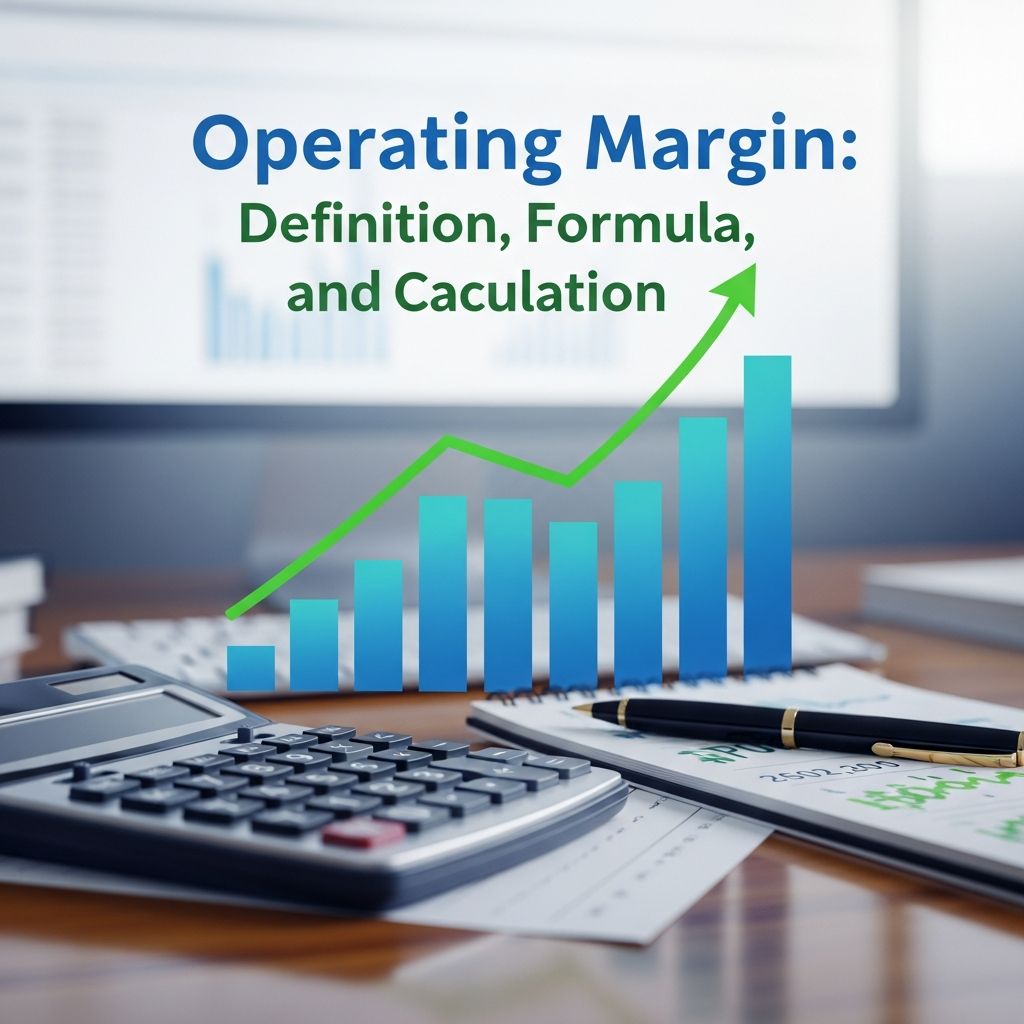
Operating Margin: Definition, Formula, and Calculation
Master operating margin calculation to assess your business's operational efficiency and profitability.
Operating Margin: Understanding Business Efficiency and Profitability
Operating margin is one of the most important financial metrics for evaluating how efficiently a company converts its revenue into profit through its core operations. This metric provides business owners, investors, and financial analysts with a clear picture of operational performance by measuring the percentage of revenue that remains as profit after accounting for operating expenses. Understanding operating margin is essential for making informed business decisions and assessing the long-term viability of any enterprise.
At its core, operating margin represents the relationship between operating income and total revenue. When a company has an operating margin of 20%, it means the business generates 20 cents of profit for every dollar of revenue generated. This percentage-based approach makes it easy to compare profitability across different companies and industries, regardless of their absolute size or revenue scale.
What Is Operating Margin?
Operating margin, also known as operating profit margin or return on sales, is a financial ratio that measures how much profit a company makes from its operational activities before accounting for interest and taxes. Unlike metrics that include all types of expenses, operating margin focuses specifically on costs directly related to running the core business operations.
The metric excludes financing costs, interest expenses, and taxes, making it an excellent measure of operational efficiency. By removing these peripheral factors, operating margin isolates how well management is running the actual business. A higher operating margin indicates that a company has successfully managed to control its costs and generate substantial profits from its primary business activities. Conversely, a lower operating margin may signal operational inefficiencies or elevated operational costs that could impact long-term profitability and competitiveness.
Operating margin serves as a diagnostic tool for understanding where a business stands in terms of operational effectiveness. It helps stakeholders evaluate whether the company can sustain its operations profitably and whether management is making efficient use of resources.
The Operating Margin Formula
Calculating operating margin requires a straightforward formula that divides operating income by total revenue and expresses the result as a percentage:
Operating Margin = (Operating Income ÷ Revenue) × 100
To illustrate how this formula works in practice, consider a company with total revenue of $1,000,000 and operating income of $200,000. Using the formula:
(200,000 ÷ 1,000,000) × 100 = 20%
This means the company converts 20% of its revenue into operating profit, demonstrating reasonable operational efficiency. The formula’s simplicity belies its importance as a comprehensive measure of business performance.
How to Calculate Operating Margin Step by Step
Calculating your operating margin accurately requires careful attention to detail and a clear understanding of what constitutes operating expenses. Following these steps will help you arrive at an accurate figure:
Step 1: Identify Total Revenue
Begin by determining your total revenue, which includes all income generated from your primary business activities. This figure appears at the top of the income statement and represents all sales and service revenues before any expenses are deducted.
Step 2: Calculate Operating Expenses
Next, compile all operating expenses directly related to running your core business. These expenses typically include:
- Employee salaries and wages
- Rent for office or facility space
- Utilities and facility maintenance
- Office supplies and equipment
- Marketing and advertising costs
- Depreciation and amortization
- Research and development expenses
- Administrative overhead
It is critical to include all relevant operating expenses. Overlooking even seemingly minor costs can result in an artificially inflated operating margin that doesn’t accurately reflect your business’s true operational efficiency.
Step 3: Calculate Operating Income
Subtract total operating expenses from total revenue to determine operating income. This figure represents profit generated purely from business operations before considering interest, taxes, or other non-operational items.
Step 4: Apply the Formula
Divide your operating income by total revenue and multiply by 100 to express the result as a percentage. This final calculation gives you your operating margin.
Interpreting Operating Margin Results
Understanding what your operating margin means is just as important as calculating it correctly. The interpretation of this metric depends on several factors, including industry standards, company size, and competitive positioning.
A healthy operating margin typically falls between 10% and 20%, though this varies significantly by industry. Companies operating in sectors with high capital requirements or intense competition may naturally have lower operating margins, while those in specialized or less competitive markets might achieve higher margins. Operating margins above 20% generally indicate strong profitability and efficient cost management. Companies in this range demonstrate excellent ability to convert revenue into profit while maintaining lean operations.
Operating margins below 10% may suggest operational inefficiencies or excessive costs relative to revenue. Such companies might face challenges sustaining profitability over time, particularly during economic downturns when revenue could decline further. However, some industries naturally operate with margins below 10%, so context remains essential.
Operating Margin Versus Gross Profit Margin
While both operating margin and gross profit margin are important profitability metrics, they measure different aspects of business performance and focus on different types of costs.
Gross Profit Margin measures profitability immediately after subtracting the cost of goods sold (COGS) from total revenue. This metric reflects production efficiency and how effectively a company manages direct manufacturing or product delivery costs. It answers the question: “How much profit remains after producing or acquiring the product for sale?”
Operating Profit Margin builds upon gross profit by further subtracting all operating expenses, including indirect costs like administrative salaries, marketing, and facility overhead. This metric provides a more comprehensive view of operational efficiency by accounting for all costs necessary to run the business.
| Aspect | Gross Profit Margin | Operating Profit Margin |
|---|---|---|
| Expenses Considered | Only COGS | All operating expenses |
| Scope of Analysis | Production efficiency | Overall operational efficiency |
| Use Case | Evaluating manufacturing efficiency | Assessing management effectiveness |
| Typical Range | Highly industry-dependent | 10%-20% for healthy businesses |
Both metrics serve important purposes. Gross profit margin helps identify opportunities to optimize production processes and manage direct costs more effectively. Operating profit margin, meanwhile, reveals how well overall management is running the business and controlling total operational expenses. Together, these metrics provide a complete picture of profitability at different levels of the business.
Why Operating Margin Matters
Operating margin is crucial for several reasons that make it indispensable for business analysis and decision-making:
Evaluates Operational Efficiency: Operating margin directly measures how effectively management converts revenue into profit through core operations. This assessment is independent of financing decisions or tax considerations, making it a pure measure of operational performance.
Enables Meaningful Comparisons: By expressing profitability as a percentage, operating margin allows investors and analysts to compare companies of different sizes across the same or different industries. This standardization makes it easier to identify which companies operate most efficiently.
Reveals Cost Control Effectiveness: A stable or improving operating margin indicates that management successfully controls costs and maintains operational discipline. Declining margins may signal rising costs, reduced pricing power, or operational challenges requiring attention.
Guides Strategic Decision-Making: Understanding your operating margin helps identify specific areas for improvement. If margins are declining, management can investigate whether the issue stems from production inefficiencies, excessive overhead, or market competition.
Indicates Financial Stability: Companies with healthy operating margins are better positioned to weather economic downturns, invest in growth initiatives, and weather unexpected challenges. Strong margins provide a financial cushion and demonstrate sustainable business operations.
Factors That Influence Operating Margin
Several factors can affect a company’s operating margin, and understanding these influences is essential for contextualizing the metric:
Industry Characteristics: Different industries naturally have different operating margin ranges due to capital requirements, competitive dynamics, and cost structures. Technology companies often achieve higher margins than retail businesses due to lower direct costs relative to revenue.
Economies of Scale: Larger companies often achieve higher operating margins as they spread fixed costs across greater revenue volumes. As a company grows, per-unit operating costs typically decrease.
Operational Efficiency: How well a company manages its supply chain, production processes, and administrative functions directly impacts operating margins. More efficient operations typically yield higher margins.
Pricing Power: Companies with strong brand recognition or differentiated products can command premium prices, supporting higher operating margins. Commoditized businesses with weak pricing power face margin pressure.
Cost Management: Disciplined cost control and efficient resource allocation directly support operating margin performance. Companies that successfully minimize waste and optimize spending maintain healthier margins.
Monitoring Operating Margin Over Time
Calculating operating margin regularly is crucial for monitoring financial performance trends and identifying potential issues before they become serious problems. By tracking this metric consistently, business leaders can quickly identify deviations from historical performance and take corrective action.
A gradual decline in operating margin may indicate rising costs, declining pricing power, or increasing competition. An improvement in operating margin suggests that cost management efforts are working or that the company is gaining competitive advantages. Quarterly and annual comparisons provide valuable insights into business momentum and operational health.
Frequently Asked Questions
What is considered a good operating margin?
A good operating margin typically ranges from 10% to 20%, though this varies significantly by industry. Technology and software companies often achieve margins above 20%, while retail and manufacturing businesses may operate with margins in the 5-15% range. The key is understanding industry benchmarks and comparing your margin to direct competitors.
How does operating margin differ from net profit margin?
Operating margin measures profit from operations before interest and taxes, while net profit margin includes all expenses, including interest, taxes, and other non-operational items. Net profit margin is typically lower than operating margin because it accounts for all company costs.
Can operating margin be negative?
Yes, operating margin can be negative when operating expenses exceed revenue from operations. A negative operating margin indicates the company’s core business is operating at a loss before considering interest and taxes, which is a serious red flag requiring immediate attention.
How frequently should I calculate operating margin?
Most companies calculate operating margin quarterly and annually as part of regular financial reporting. However, for critical operational monitoring, businesses may calculate it monthly to track performance trends more closely and identify issues more quickly.
What actions can improve operating margin?
Operating margin can be improved by increasing revenue through sales growth or price increases, reducing operating expenses through efficiency improvements, automating processes to reduce labor costs, negotiating better supplier terms, and eliminating waste in operations.
Conclusion
Operating margin stands as a fundamental financial metric for assessing business profitability and operational efficiency. By understanding how to calculate this metric, interpreting its results, and monitoring it consistently, business leaders and investors gain critical insights into how effectively a company converts revenue into profit through its core operations. Whether you’re evaluating your own business performance or analyzing potential investments, operating margin provides an essential baseline for financial analysis and strategic decision-making. Regular monitoring of this metric, combined with an understanding of industry context and competitive positioning, enables informed decisions that drive business growth and long-term profitability.
References
- Investopedia – Operating Margin Definition — Investopedia. 2025. https://www.investopedia.com/terms/o/operatingmargin.asp
- Operating Margin: What It Is and the Formula for Calculating It — Fathom HQ. 2025. https://www.fathomhq.com/kpi-glossary/operating-profit-margin
- Financial Reporting Standards – Income Statement Presentation — International Accounting Standards Board (IASB). 2024. https://www.ifrs.org
Similar Articles








Read full bio of medha deb