Operating Lease: Definition, Accounting & Examples
Comprehensive guide to operating leases, accounting treatment, and differences from capital leases.
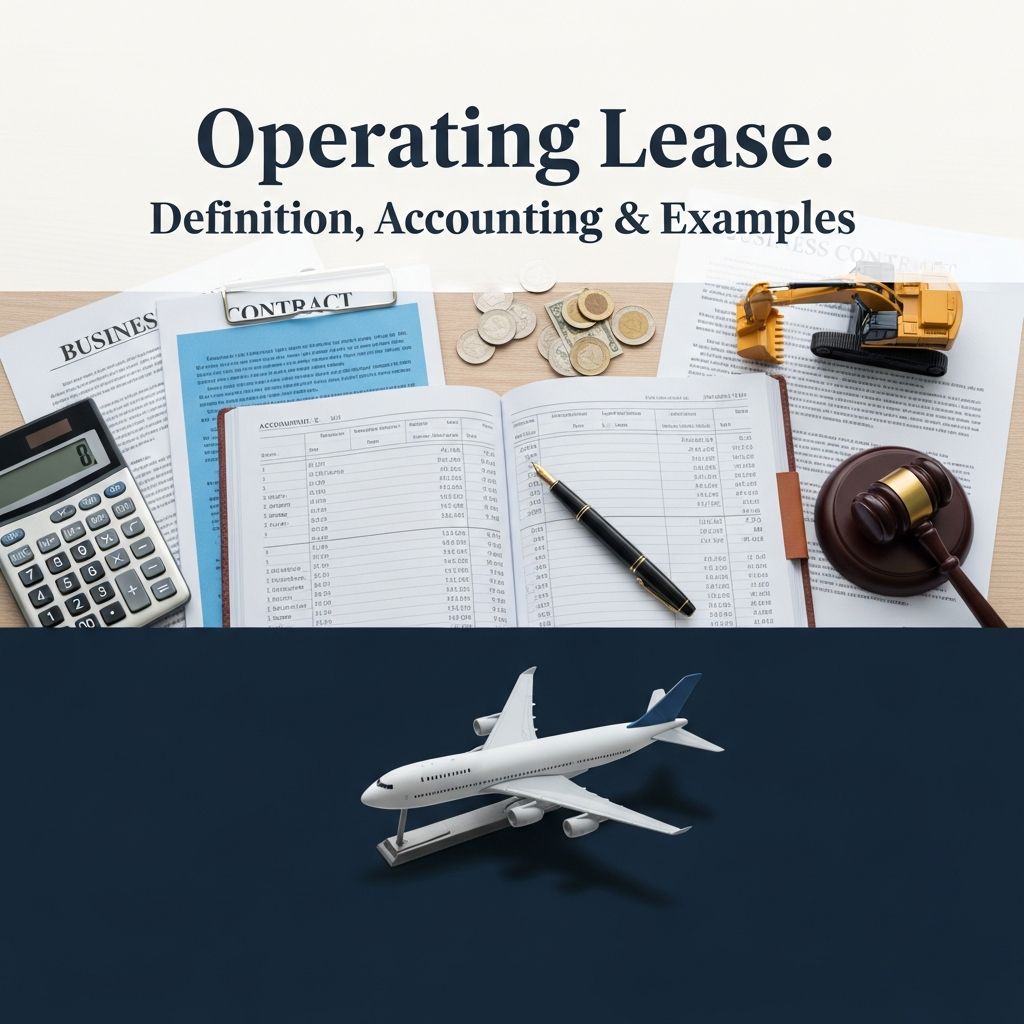
An operating lease is an agreement that allows a lessee to use and operate an asset without transferring ownership to the user. This type of lease arrangement has become increasingly important in modern business operations, particularly with the introduction of new accounting standards that have changed how operating leases are reported on financial statements. Operating leases are commonly used for equipment, vehicles, real estate, and other assets where the lessee needs temporary use without the commitment of ownership.
What Is an Operating Lease?
An operating lease represents a contractual arrangement between a lessor (the asset owner) and a lessee (the user of the asset). Under this agreement, the lessee gains the right to use and control the asset for a specified period, typically for the short-term or non-core operations of the business. However, ownership of the asset remains with the lessor throughout the lease term and beyond. Unlike ownership arrangements, the lessee does not assume the risks and rewards typically associated with asset ownership.
Common assets leased under operating lease arrangements include office buildings and commercial real estate, automobiles and fleet vehicles, aircraft and aviation equipment, computers and technology equipment, and heavy machinery and manufacturing equipment. By utilizing operating leases, companies can access necessary assets without the substantial capital investment required for outright purchase, thereby preserving cash flow and financial flexibility.
Key Characteristics of Operating Leases
Operating leases possess several distinctive features that differentiate them from other lease types and financing arrangements:
Short-Term Agreements
Operating leases are typically structured as short-term agreements that cover only a portion of the asset’s total economic life. These leases do not extend for the entire useful life of the asset, distinguishing them from finance leases which may span most of the asset’s productive years. This characteristic allows businesses to upgrade or change equipment more frequently without long-term commitments.
Lessor Retains Ownership
The lessor maintains full ownership of the leased asset throughout the lease term and after its conclusion. The lessee typically has no option to purchase the asset at the end of the lease period, though some agreements may include bargain purchase options. This arrangement keeps the asset on the lessor’s balance sheet while the lessee enjoys temporary use rights.
Maintenance and Risk
The lessor remains responsible for maintaining the asset and bears the risks associated with ownership, including obsolescence, technological changes, and variations in residual value. The lessee is relieved from these ownership burdens, which is a significant advantage in operating lease arrangements. However, some lease agreements may require the lessee to perform routine maintenance under the lessor’s specifications.
Flexibility and Upgrades
Operating leases typically offer greater flexibility compared to finance leases, allowing businesses to upgrade equipment more easily as technology advances or business needs change. This flexibility is particularly valuable in industries where technological obsolescence occurs rapidly or where business operations require frequent equipment changes.
Operating Lease vs. Finance Lease
Understanding the distinctions between operating leases and finance leases is crucial for proper accounting treatment and financial reporting. These two lease types are treated substantially differently under accounting standards and have distinct implications for financial statements.
| Characteristic | Operating Lease | Finance Lease (Capital Lease) |
|---|---|---|
| Ownership Transfer | No ownership transfer; lessor retains ownership | Transfers economic ownership to lessee |
| Lease Term | Short-term; typically less than the asset’s useful life | Long-term; typically covers most of useful life |
| Maintenance Responsibility | Lessor responsible for maintenance and repairs | Lessee responsible for maintenance and repairs |
| Balance Sheet Treatment | Right-of-use asset recognized as intangible asset | Asset and liability recognized on balance sheet |
| Expense Recognition | Straight-line lease expense over lease term | Separate depreciation and interest expenses |
| Residual Risk | Lessor bears residual value risk | Lessee bears residual value risk |
| Tax Treatment | Lease payments fully tax-deductible | Depreciation and interest deductible separately |
Finance Lease Characteristics
A finance lease, formerly known as a capital lease, transfers the economic benefits and risks of asset ownership to the lessee. Under a finance lease arrangement, the lessee effectively assumes ownership risks including maintenance responsibility, insurance obligations, and the possibility of purchasing the asset at the end of the lease term. The lessee may also bear the risk of technological obsolescence and changes in the asset’s residual value. Finance leases typically extend for a substantial portion or the majority of the asset’s useful economic life.
Accounting Treatment Differences
The accounting treatment differs significantly between these lease types. Under modern accounting standards, both operating and finance leases now result in the recognition of right-of-use assets on the balance sheet. However, the expense recognition differs substantially. Finance leases are amortized over their useful life with separate interest expense recognition, while operating leases are expensed using a straight-line method where lease payments are evenly distributed over the lease term. This distinction creates different impacts on reported operating income and interest expense.
Accounting Treatment Under GAAP and IFRS
The accounting treatment of operating leases has undergone significant changes with the introduction of new accounting standards. Understanding these requirements is essential for accurate financial reporting.
ASC 842 Standards (United States GAAP)
Under ASC 842, the accounting standards for leases that took effect in 2019, operating leases are now recognized on the lessee’s balance sheet as right-of-use assets with corresponding lease liabilities. This represents a significant change from previous standards where operating leases were treated as off-balance-sheet financing. Despite this change, the expense recognition method remains distinct from finance leases, using a straight-line approach where lease expense remains consistent throughout the lease term.
IFRS 16 Standards (International Accounting)
IFRS 16 similarly requires the recognition of right-of-use assets for operating leases on the lessee’s balance sheet. From the lessor’s perspective, operating lease income must be recognized on a straight-line basis or another systematic basis that better reflects the asset’s usage pattern. The lessor continues to present the underlying asset on its statement of financial position based on its nature, maintaining responsibility for ownership costs including depreciation, property taxes, insurance, and maintenance.
Benefits of Operating Leases
Operating leases offer numerous advantages to lessees that make them attractive alternatives to asset ownership or finance leases:
Preservation of Working Capital
Operating leases allow companies to access necessary assets without substantial upfront capital expenditures. This preservation of working capital enables businesses to invest resources in core operations, research and development, or other strategic initiatives rather than depleting cash reserves for asset purchases.
Tax Advantages
Under operating lease arrangements where equipment is used to generate taxable income, rental payments are fully tax-deductible as operating expenses. This tax treatment can provide significant advantages compared to ownership scenarios where only depreciation and interest are deductible.
Elimination of Residual Value Risk
The lessor bears the residual value risk as the asset owner at the end of the operating lease term. The lessee is relieved from concerns about technological obsolescence, equipment value decline, or difficulties in selling used equipment. This benefit is particularly significant for assets susceptible to rapid technological change or market value fluctuations.
Flexibility and Upgrades
Operating leases provide flexibility to upgrade or change equipment as business needs evolve or technology advances. This flexibility enables companies to maintain current, efficient equipment without being locked into outdated assets for extended periods.
Maintenance and Support
Since the lessor maintains responsibility for equipment maintenance, repairs, and support services, the lessee is freed from these operational burdens. This arrangement can reduce unexpected maintenance costs and operational disruptions.
Criteria for Operating Lease Classification
Under GAAP standards, a lease is classified as an operating lease if it does not meet the criteria for classification as a finance lease. A lease qualifies as a finance lease if it meets any one of the following conditions established by accounting standards:
Finance Lease Criteria
A lease must be classified as a finance lease if: (1) the lease transfers ownership of the asset to the lessee by the end of the lease term; (2) the lessee has an option to purchase the asset at a bargain price; (3) the lease term is for the major part of the remaining economic life of the asset; (4) the present value of lease payments and residual value guarantees equals or exceeds substantially all of the fair value of the leased asset; or (5) the leased asset is of such a specialized nature that it is expected to have no alternative use to the lessor at the end of the lease term.
Operating Lease Classification
If a lease does not satisfy any of these finance lease criteria, it is automatically classified as an operating lease. This classification determines the accounting treatment, with operating leases now recognized as right-of-use assets under current standards but expensed on a straight-line basis rather than separated into depreciation and interest components.
Impact on Financial Statements
Operating leases, while now recognized on the balance sheet under modern accounting standards, continue to have distinct impacts on financial statements compared to finance leases and asset ownership:
Balance Sheet Presentation
Operating leases result in the recognition of right-of-use assets and corresponding lease liabilities on the lessee’s balance sheet. This recognition affects key financial ratios including debt-to-equity ratios, current ratios, and asset turnover metrics. However, the treatment remains distinct from finance leases in terms of the separate components recognized.
Income Statement Effects
Operating lease expenses are recognized as a single lease expense line item using the straight-line method, resulting in consistent expense recognition throughout the lease term. This differs from finance leases where depreciation and interest expenses are recognized separately and decline over time as the lease liability decreases.
Cash Flow Implications
Operating lease payments are typically recognized as operating activities in the statement of cash flows, whereas finance lease payments are partially classified as financing activities. This distinction can affect the analysis of operating cash flows and financing activities.
Examples of Operating Leases
Operating leases are prevalent across numerous industries and business scenarios. Common examples include vehicle fleet leasing where companies lease automobiles and trucks for business operations without ownership transfer; office space leasing where businesses rent commercial real estate for defined periods; equipment leasing such as photocopiers, printers, and technology equipment; aircraft leasing where airlines lease aircraft without purchasing them outright; and retail space leasing where retailers lease storefront locations from landlords.
Frequently Asked Questions (FAQs)
What is the main difference between an operating lease and a finance lease?
The primary difference is that an operating lease does not transfer ownership risks and rewards to the lessee, with expenses recognized evenly over the lease term using the straight-line method. A finance lease transfers ownership risks and rewards to the lessee, with expenses recognized separately as asset amortization and interest expense.
Are operating lease expenses tax-deductible?
Yes, operating lease payments are fully tax-deductible as business operating expenses when the equipment is used to generate taxable income. This tax treatment provides a significant advantage of operating leases compared to asset ownership scenarios.
How are operating leases now presented on balance sheets?
Under ASC 842 and IFRS 16, operating leases are now recognized on the lessee’s balance sheet as right-of-use assets with corresponding lease liabilities, representing a change from previous off-balance-sheet treatment. However, the expense recognition method remains straight-line rather than separated into depreciation and interest components.
Who bears the residual value risk in an operating lease?
The lessor bears the residual value risk as the asset owner throughout the lease term and beyond. The lessee is relieved from concerns about the asset’s value decline or technological obsolescence, which is a significant advantage of operating leases.
What assets are commonly leased under operating lease arrangements?
Common assets leased under operating arrangements include office buildings and commercial real estate, vehicles and fleet equipment, aircraft, computers and technology equipment, and heavy machinery. These assets are typically for short-term or non-core business operations.
Can operating leases be adjusted in financial analysis?
Yes, financial analysts may adjust operating lease obligations to debt for comparative analysis purposes, treating operating leases as debt to provide a more comparable picture across companies with different financing strategies. This adjustment involves calculating the present value of future lease payments and recognizing them as debt and assets.
References
- Learn How to Account for Operating Leases — Corporate Finance Institute. 2025. https://corporatefinanceinstitute.com/resources/accounting/operating-lease/
- Finance Leases vs. Operating Leases: Understanding the Differences and ASC 842 — VisualLease. 2025. https://visuallease.com/finance-leases-vs-operating-leases-understanding-the-differences-and-asc-842/
- Operating Lease — International Financial Reporting Standards (IFRS). 2024. https://www.ifrs.org/issued-standards/list-of-standards/ifrs-16-leases/
Similar Articles








Read full bio of medha deb