Opening Range: Definition, Strategy & Trading Guide
Master opening range trading strategies with expert insights on breakouts and market entry points.
What Is the Opening Range?
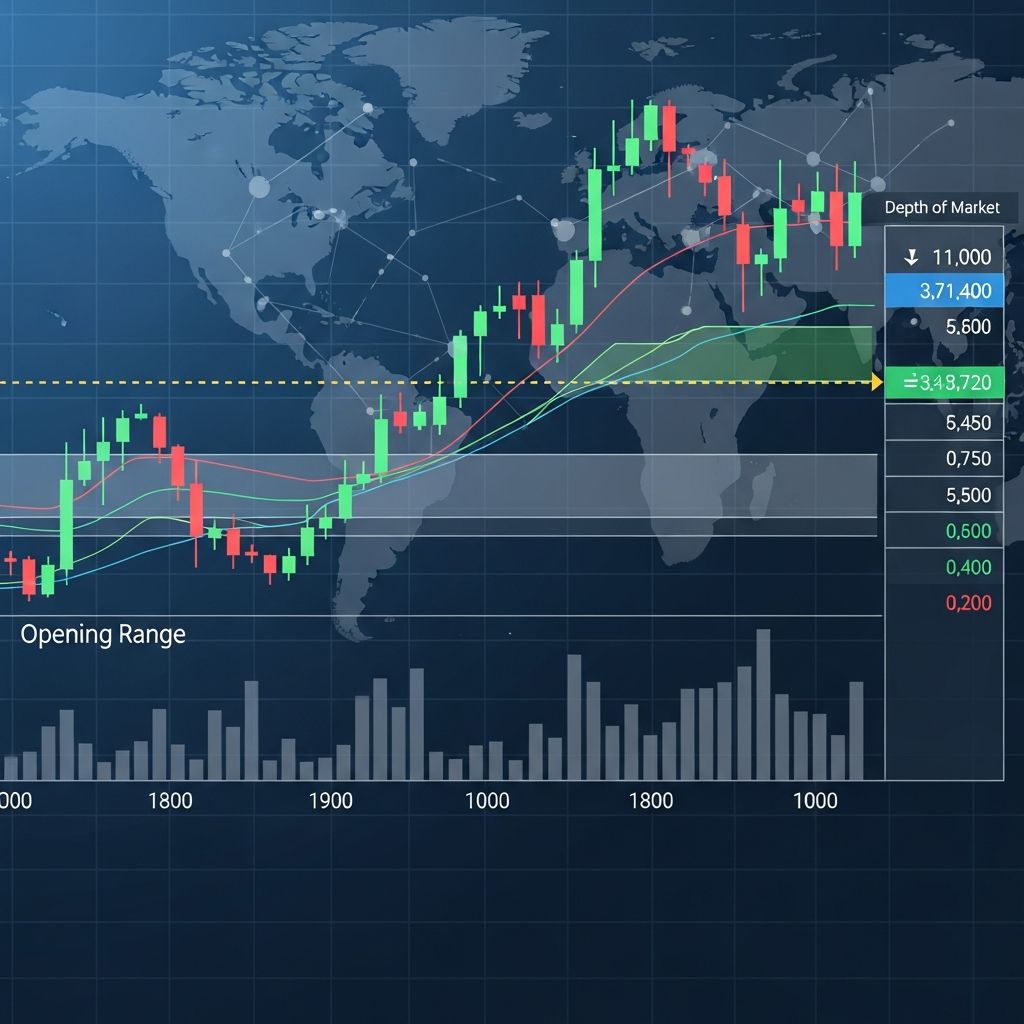
The opening range is a fundamental concept in day trading that refers to the high and low prices established during the first 15 to 30 minutes of a trading session. This initial period, typically occurring between 9:30 and 10:00 AM in the U.S. stock market, sets the tone for the entire trading day ahead. The opening range is created by the first few candlesticks on a price chart and represents the initial price discovery process as traders and investors react to overnight news, earnings announcements, and economic data.
During this critical opening period, market participants are particularly active, often resulting in some of the most significant price movements of the trading day. The opening range establishes key support and resistance levels that many traders monitor throughout the session. Understanding and identifying the opening range accurately is essential for traders who employ intraday strategies, as it provides a clear framework for decision-making and entry point selection.
Understanding the Opening Range Breakout Strategy
An opening range breakout (ORB) is a popular day trading strategy that involves taking a position when the price breaks above or below the high or low established during the opening range. This strategy has been utilized by traders for decades due to its simplicity and effectiveness across various time frames and markets. The fundamental premise of the opening range breakout strategy is that price movements initiated during the first hour of trading tend to continue in the same direction, creating profitable trading opportunities.
When the market opens, traders and algorithms quickly process overnight information, resulting in initial price discovery. Many experienced traders wait for the opening range to fully form before entering trades, preferring to trade breakouts rather than participating in the potentially choppy and unpredictable opening minutes. This patience often pays dividends, as trading after the opening range setup allows traders to identify clearer directional bias and reduces the risk of being caught in false moves.
How the Opening Range is Defined
Defining the opening range involves two key reference points:
- The high and low of the previous trading day’s closing candle
- The high and low of the first 30 minutes of the current trading day
Once these levels are established, traders draw support and resistance lines on their charts. The opening range essentially creates a box or zone through which price must move in order to generate a breakout signal. The width of this range varies depending on market volatility, liquidity, and overnight gaps between trading sessions.
The Role of Price Gaps in Opening Range Trading
Price gaps between the previous day’s close and the current day’s open represent a critical component of opening range analysis. These gaps occur when significant overnight news or events cause the market to open at a substantially different price than where it closed. The opening range breakout strategy specifically considers the price gap between two trading days, as gaps tend to get filled as trading progresses throughout the session.
Understanding the magnitude and direction of price gaps helps traders better manage their trades and establish appropriate profit targets and stop losses. A gap up opening (where today opens higher than yesterday’s close) typically creates bullish bias, while a gap down opening (where today opens lower than yesterday’s close) creates bearish bias. Experienced traders use gap analysis to anticipate potential price movements and direction following the opening range formation.
Step-by-Step Guide to Trading Opening Range Breakouts
Successfully trading opening range breakouts requires a systematic approach. Here are the essential steps to follow:
Step 1: Identify Key Price Levels
Begin by identifying the high and low prices within your chosen time frame. Mark the high and low from the previous trading day and the high and low from the first 30 minutes of the current trading session. These levels form the boundaries of your opening range.
Step 2: Draw Support and Resistance Lines
Once you’ve identified the key price levels, draw horizontal support and resistance lines on your chart. The support line connects the lows, while the resistance line connects the highs. These visual markers help you clearly see the trading range and identify when price breaks through these critical levels.
Step 3: Wait for a Breakout Signal
The most crucial element of this strategy is patience. Rather than trading during the opening range formation, wait for the price to move decisively above the resistance line or below the support line. Many successful traders only enter trades after the 10 AM mark, giving the opening range sufficient time to develop fully.
Step 4: Execute Your Trade
Once price breaks through the opening range, enter your trade in the direction of the breakout. A breakout above resistance signals a potential bullish continuation, while a breakdown below support suggests bearish continuation. Always ensure you have adequate volume and momentum supporting the breakout before entering.
Step 5: Establish Profit Targets and Risk Management
Professional traders maintain a risk-to-reward ratio of at least 2:1 when trading opening range breakouts. For example, if you risk 25 cents on a trade, your first profit target should be at least 50 cents from your entry price. This ensures that winning trades compensate sufficiently for losing trades over time.
Selecting the Optimal Time Frame
Choosing the right time frame is essential for opening range breakout trading. While there is no universally “correct” time frame, different markets and trading styles have proven most effective at specific intervals:
| Time Frame | Best Use Case | Considerations |
|---|---|---|
| 1-Minute | Highly active scalpers with strong momentum | Requires strong directional momentum; use only during high volatility |
| 5-Minute | Active day traders with quick execution | Best when combined with higher time frame analysis; requires strong confluence |
| 15-Minute | Standard choice for equities and futures | Most commonly used; works well on index futures and individual stocks |
| 30-Minute | Medium-term day trading | Popular for traders seeking fewer trades with larger moves |
The 15-minute time frame has emerged as the most popular choice among traders for opening range breakout strategies, particularly for trading equities and index futures. Traders using shorter time frames, such as 1 or 5-minute charts, should ensure that the momentum for the day is exceptionally strong and that there is confluence between multiple time frames. The concept of “confluence” refers to multiple technical factors aligning to confirm a trading signal, significantly improving the probability of success.
Calculating Opening Range Measurements
Proper measurement of the opening range involves several calculations that help traders establish meaningful profit targets and stop losses:
Distance Calculation
First, identify the distance between the high and low of the previous day’s closing candle. This distance provides a baseline for expected price movement. Next, examine the highs and lows of the opening day’s candle. The relationship between these measurements helps predict how far price might travel once a breakout occurs.
Bullish and Bearish Interpretations
A stock is typically considered bullish if the price breaks above the opening range resistance level. This breakout suggests continued buying pressure throughout the session. Conversely, a stock is usually considered bearish if it breaks down below the opening range support level, indicating sustained selling pressure.
Average True Range (ATR) Application
Many traders incorporate Average True Range (ATR) into their opening range calculations. ATR measures volatility and helps traders determine appropriate position sizes and target distances. As ATR increases, you’ll observe more wide-range candles and expanded price movements. Conversely, as volatility declines, you’ll see fewer wide-ranging candles. Professional intraday traders prioritize trading only stocks with expanding volatility and strong volume, as these conditions provide the best risk-to-reward opportunities.
Essential Rules for Opening Range Breakout Trading
Successful opening range breakout traders adhere to several fundamental principles:
- Develop a detailed trading plan that clearly outlines your entry and exit rules, risk parameters, and exact definition of ranges
- Select a time frame that suits your trading style and stick with it consistently
- Trade only volatile stocks with surging volume that clearly break the opening range
- Use relative strength indicators; an upward relative strength line signals a long entry opportunity
- Use downward relative strength; a declining relative strength line signals a short entry opportunity
- Cut your losses immediately if the opening range breakout fails to continue in the direction of your position
- Never add to losing positions; discipline is paramount in day trading
Understanding False Breakouts
One of the most challenging aspects of opening range breakout trading is distinguishing between genuine breakouts and false breakouts. A false opening range breakout occurs when the price briefly breaks the highs or lows but quickly reverses, trapping traders who entered on the initial breakout. These false signals can result in quick losses and frustration for traders.
False breakouts typically occur during periods of low volume or conflicting technical signals. To minimize false breakout exposure, traders should wait for confirmation of the breakout over multiple candles and monitor volume to ensure that buying or selling pressure is genuinely strong. Additionally, trading with higher profit target ratios provides a buffer that allows some trades to fail while still maintaining overall profitability.
The Opening Range Breakout Theory
The core theory underlying opening range breakout strategies is based on price momentum and continuation patterns. The theory posits that if price action breaks above the opening range after the first trading hour of the day, the price should continue moving higher in a bullish direction. Similarly, if price breaks below the opening range, it should continue declining in a bearish direction.
However, this theory is not infallible. Many false breakouts and breakdowns occur, which is why traders emphasize the importance of risk management and having predefined exit rules. The strategy works best when combined with other technical indicators and when traded during periods of clear market direction and adequate volume. Traders who incorporate multiple confirmatory signals—such as moving average trends, momentum indicators, and volume analysis—significantly improve their success rates.
Frequently Asked Questions
Q: Does the opening range breakout strategy actually work?
A: Yes, the opening range breakout strategy works effectively when price action breaks and holds resistance levels. However, many price movements create false breakouts that quickly fail. Success depends on proper technique, risk management, and trading only during periods of adequate volatility and volume. The strategy has been used successfully for decades by professional traders.
Q: How is the opening range specifically identified?
A: The opening range is identified by examining two key price levels: the high and low of the previous day’s closing candle, and the high and low of the first 30 minutes of the current trading session. Traders watch for breakouts or breakdowns of these zones, typically after 10 AM. These levels are marked on the chart as horizontal support and resistance lines.
Q: What causes false opening range breakouts?
A: False opening range breakouts occur when price briefly breaks the highs or lows of the opening range but quickly reverses course. These false signals trap bulls entering at the top of breakouts, forcing them to exit quickly at losses. False breakouts typically happen during low volume periods or when technical signals are conflicting.
Q: What time frame is best for opening range breakout trading?
A: The 15-minute time frame is widely considered the most effective for opening range breakout trading, particularly for equities and index futures. However, the best time frame depends on your trading style. Some traders prefer 30-minute charts for larger moves, while aggressive scalpers use 1 or 5-minute charts during strong momentum days.
Q: What should my profit target be for opening range breakout trades?
A: Professional traders maintain a minimum risk-to-reward ratio of 2:1. If you risk 25 cents on a trade, your first profit target should be at least 50 cents from your entry point. This ensures that winning trades compensate adequately for losing trades over a series of transactions.
Conclusion
The opening range breakout strategy remains one of the most reliable and straightforward day trading approaches available to modern traders. By understanding how to identify the opening range, recognize genuine breakouts, and manage risk appropriately, traders can develop a systematic approach to capturing the significant price movements that typically occur during the first hours of trading. Success requires discipline, consistent application of rules, and the wisdom to sit out trades that lack proper technical confirmation or adequate volatility. Whether you’re a beginner or experienced trader, mastering opening range breakout trading can significantly enhance your trading performance and profitability.
References
- Opening Range Breakout: What Is It and How to Trade It? — Bullish Bears. 2025. https://bullishbears.com/opening-range-breakout/
Similar Articles








Read full bio of medha deb