Open-End Credit Explained: 3 Common Types And Risks
Discover how open-end credit provides flexible borrowing options like credit cards and lines of credit for ongoing financial needs.
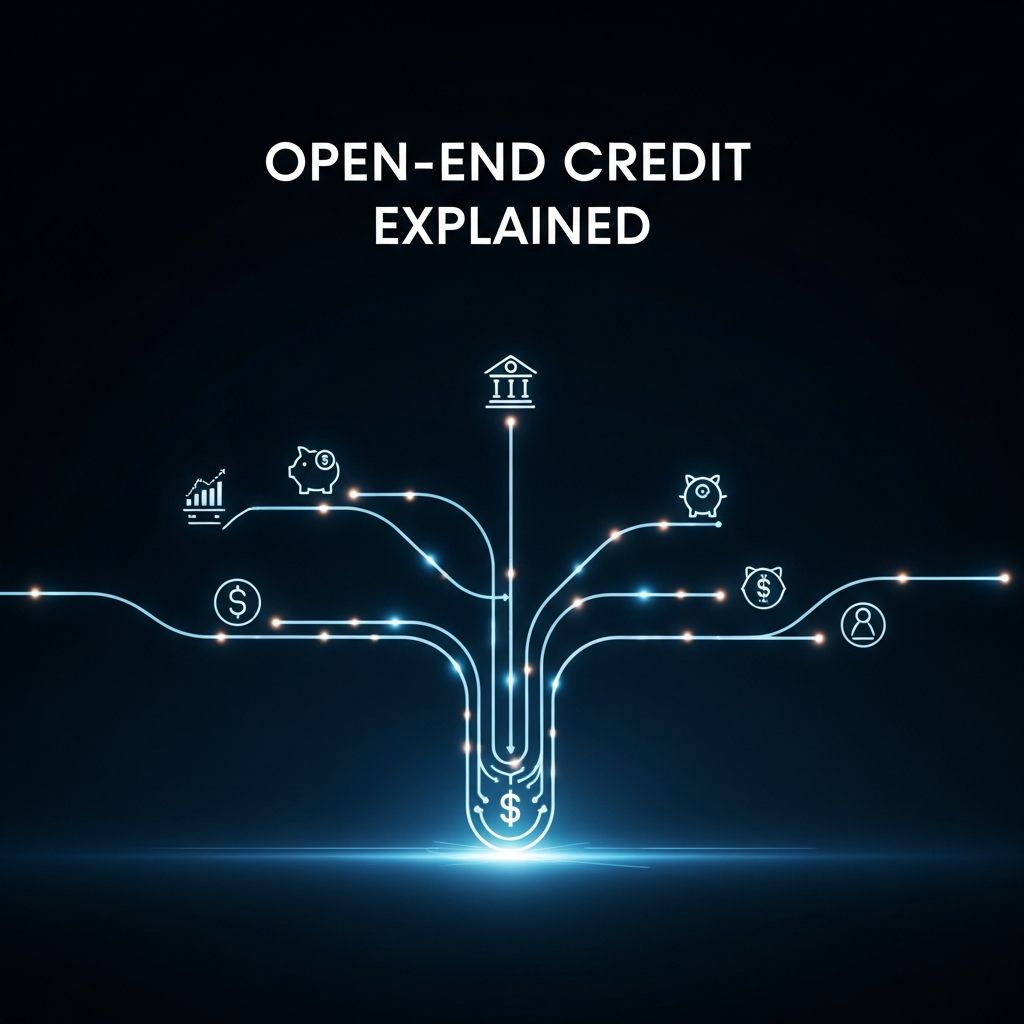
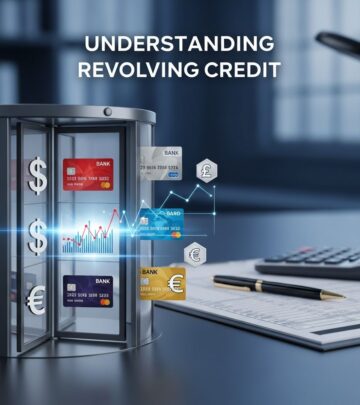
Open-end credit, often called revolving credit, offers borrowers ongoing access to a set amount of funds, allowing repeated draws and repayments without a fixed end date. This flexible arrangement contrasts with traditional loans by charging interest only on the borrowed portion, making it suitable for variable spending needs.
Defining Open-End Credit in Modern Finance
At its core, open-end credit establishes a predefined borrowing limit approved by a lender, from which individuals can withdraw funds as required. Unlike one-time loans, this credit type renews availability upon repayment, creating a revolving cycle of use. Lenders assess factors like credit score, income, and repayment history to determine the limit, which can fluctuate based on account performance.
This mechanism supports unpredictable expenses, providing liquidity without repeated applications. Legally, it involves expectations of multiple transactions and potential finance charges on unpaid balances, as outlined in consumer credit regulations.
Core Mechanics of Revolving Credit Access
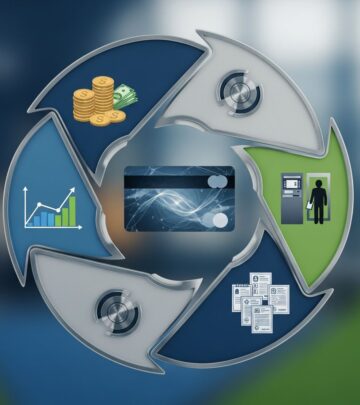
The process begins with lender approval for a credit line, say $10,000. A borrower using $2,000 sees their available credit drop to $8,000. Repaying $1,000 restores that amount, enabling further use up to the limit. Interest accrues daily on outstanding balances, typically calculated on average daily balances, and minimum payments cover interest plus a portion of principal.
Access methods vary: plastic cards for purchases, checks or transfers for lines of credit. Grace periods, often 21-25 days, allow interest-free repayment if balances are cleared monthly. Exceeding limits may incur fees, and inactivity could lead to account closure.
Popular Forms of Open-End Credit
- Credit Cards: Ubiquitous for everyday transactions, offering rewards, cash back, or travel perks. Balances revolve if not paid in full, with APRs ranging 15-30%.
- Home Equity Lines of Credit (HELOCs): Secured by home equity, ideal for large expenses like renovations. Draw periods (5-10 years) allow borrowing, followed by repayment phases.
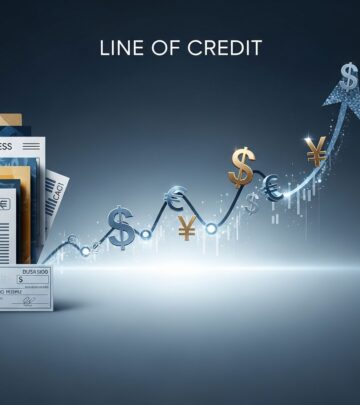
- Personal Lines of Credit: Unsecured or secured, providing flexible funds via checks or transfers, often at lower rates than cards.
These options cater to diverse needs, from daily purchases to major investments, with secured types tying to assets like homes for better terms.
Contrasting Open-End with Closed-End Credit
| Feature | Open-End Credit | Closed-End Credit |
|---|---|---|
| Borrowing Style | Revolving, repeated access | Lump sum, one-time |
| Repayment | Minimum monthly, ongoing | Fixed installments by term end |
| Examples | Credit cards, HELOCs | Auto loans, mortgages |
| Interest | On used amount only | On full principal |
| End Date | None, until closed | Specific maturity |
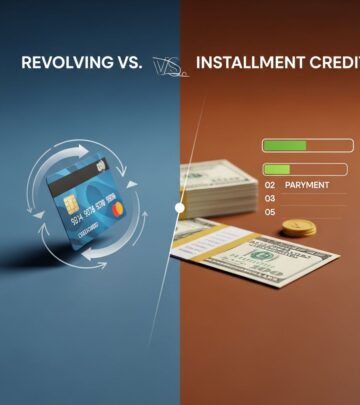
Open-end suits fluctuating needs; closed-end fits fixed-purpose borrowing with predictable payments.
Advantages Driving Its Popularity
Flexibility tops the list: borrow exactly what’s needed, repay to replenish. Cost-efficiency follows, as unused credit incurs no interest, unlike full-loan disbursements. Convenience shines in emergencies, with quick access via apps or cards.
- Builds credit history through ongoing use and timely payments.
- Potential for limit increases with good management.
- Rewards programs add value on cards.
For self-employed or variable-income users, it aligns spending with cash flow.
Potential Drawbacks and Risks
High interest rates can escalate debt if balances linger. Minimum payments prolong repayment, inflating total costs via compounding. Overspending risks exceeding limits, triggering fees or denials.
Variable rates on some products rise with market changes, and secured options like HELOCs endanger collateral. Credit utilization above 30% harms scores.
Navigating Open-End Credit Responsibly
Monitor utilization below 30% of limits to bolster scores. Pay more than minimums to reduce interest. Track statements for errors or fraud.
- Set spending budgets aligned with repayments.
- Use autopay for minimums to avoid late fees.
- Compare APRs, fees before opening accounts.
- Avoid cash advances with steep fees.
During economic shifts, request hardship relief or balance transfers.
Qualifying Factors and Approval Process
Lenders evaluate credit scores (typically 670+ FICO), debt-to-income ratios under 36%, stable income, and history. New users build via secured cards requiring deposits matching limits.
Documentation includes ID, income proof. Approval yields immediate access, with terms detailed in agreements.
Strategic Applications for Financial Goals
Leverage for cash flow gaps, emergencies, or rewards maximization. HELOCs fund home improvements boosting value. Pair with savings for balanced liquidity.
Business owners use for operational flexibility, though personal variants suit individuals.
Common Myths Demystified
- Myth: Open-end credit is free money. Fact: Interest and fees apply to unpaid balances.
- Myth: No end date means no urgency. Fact: Minimums ensure steady repayment.
- Myth: Only for high earners. Fact: Accessible via building history.
Frequently Asked Questions
What happens if I max out my open-end credit?
Available credit hits zero; further use may be blocked, hurting scores. Prioritize repayments.
Can open-end credit limits change?
Yes, lenders adjust based on usage, payments, or credit changes.
Is open-end credit reported to bureaus?
Yes, activity impacts scores positively or negatively.
How does it affect debt-to-income ratios?
Available limits count; high utilization signals risk.
Are there fees beyond interest?
Possibly annual, late, over-limit, or transfer fees.
Building Credit Through Open-End Accounts
Consistent on-time payments (35% of score) and low utilization (30%) drive improvements. Start small, scale up. Multiple accounts diversify history without overextension.
Tools like apps track progress, alerting to optimizations.
References
- Open-End Credit: Understanding Its Legal Definition — US Legal Forms. Accessed 2026. https://legal-resources.uslegalforms.com/o/open-end-credit
- What Is Open-End Credit? — Experian. Accessed 2026. https://www.experian.com/blogs/ask-experian/what-is-open-end-credit/
- Open-end credit: Definition, examples and more — Capital One. 2024-10-24. https://www.capitalone.com/learn-grow/money-management/open-end-credit/
- Open Credit – Overview, How it Works, Advantages — Corporate Finance Institute. Accessed 2026. https://corporatefinanceinstitute.com/resources/commercial-lending/open-credit/
- What Is Open-End Credit? — American Express. Accessed 2026. https://www.americanexpress.com/en-us/credit-cards/credit-intel/open-end-credit/
- open-ended loan — Legal Information Institute, Cornell Law School. 2025-03. https://www.law.cornell.edu/wex/open-ended_loan
Similar Articles








Read full bio of Sneha Tete