Online Savings Accounts: 4 Key Benefits For Savers
Discover how online savings accounts deliver higher returns, convenience, and security for modern savers looking to grow their money effortlessly.
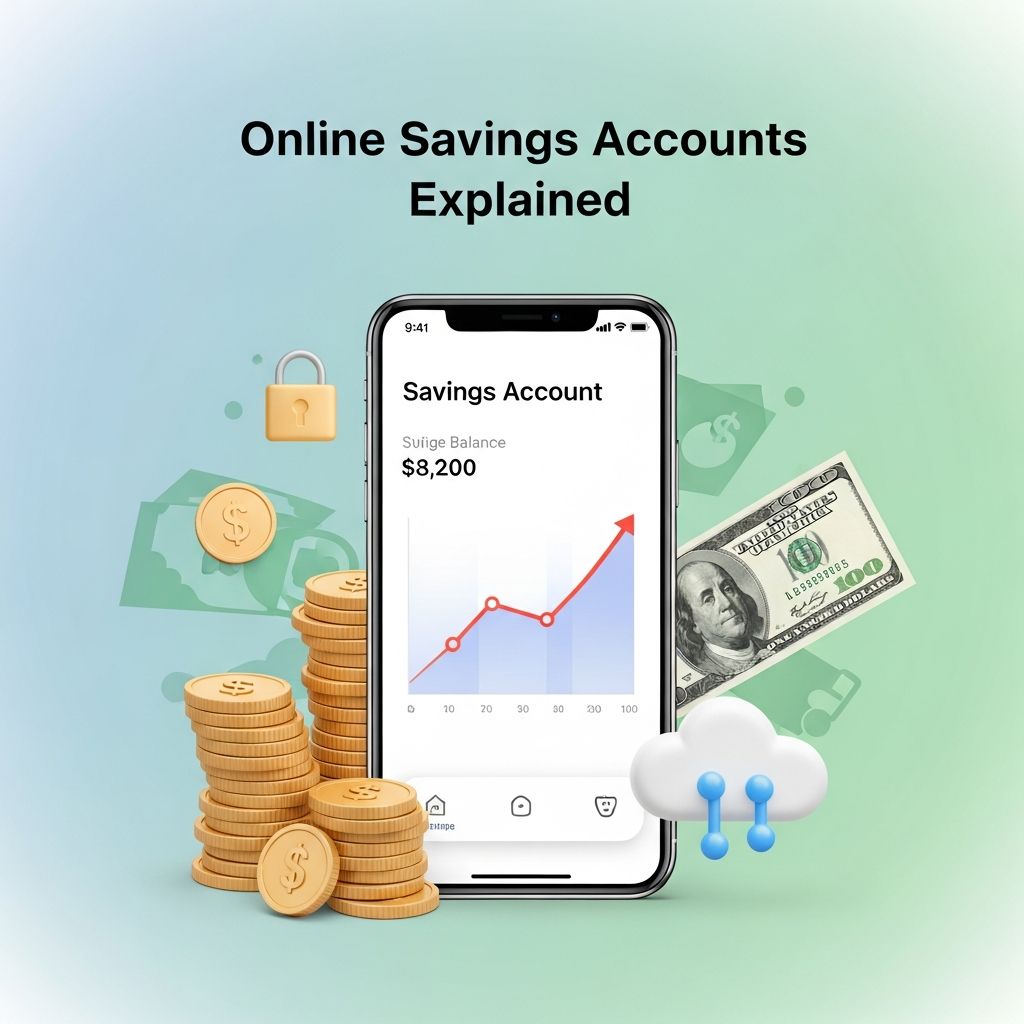
Online savings accounts represent a modern evolution in personal banking, allowing individuals to earn competitive interest on their savings without the need for physical branches. These accounts are managed entirely through digital platforms, providing flexibility and often superior returns compared to traditional options.
Understanding the Fundamentals of Digital Savings
At their core, online savings accounts function similarly to conventional savings accounts by holding funds separately from daily spending money while generating interest. The key distinction lies in accessibility: users interact via secure websites, mobile applications, or partnered ATM networks rather than in-person locations. This model empowers savers with round-the-clock control over their finances from any internet-connected device.
Financial institutions offering these accounts, typically online-only banks or credit unions, leverage technology to reduce operational expenses. This efficiency often translates into advantages for customers, such as elevated annual percentage yields (APY) and minimal charges. For instance, top accounts can provide rates several times higher than those at brick-and-mortar banks, accelerating wealth accumulation.
Step-by-Step Guide to Account Operations
Opening an online savings account begins with a straightforward digital application process. Prospective users submit identification details, create secure login information, and transfer initial funds electronically. Once established, management involves a suite of intuitive tools designed for efficiency.
- Funding Options: Deposits occur through direct payroll deposits, ACH transfers from linked accounts, mobile check deposits via photo upload, mailed checks, or ATM cash insertions where available.
- Accessing Funds: Withdrawals are facilitated by electronic transfers, wire services, or debit cards compatible with ATM networks for cash needs. Transactions typically process within 1-3 business days to ensure security.
- Support Channels: Assistance is available 24/7 through phone lines, live chat interfaces, email, or social media, compensating for the absence of physical branches.
Advanced features enhance usability, including customizable budgeting categories, automatic round-ups from purchases, and real-time transaction alerts to promote disciplined saving habits.
Key Advantages Driving Popularity
Digital savings accounts have surged in adoption due to their compelling benefits, particularly in a tech-driven era where convenience reigns supreme.
| Benefit | Description | Impact on Savers |
|---|---|---|
| Higher Interest Rates | Rates often 5-10x those of traditional banks, exceeding 4% APY in competitive offerings | Maximizes growth; $10,000 at 4% APY earns $400 annually vs. $10 at 0.1% |
| Low or No Fees | No monthly maintenance, minimum balance, or opening deposit requirements common | Preserves full principal for compounding |
| 24/7 Accessibility | Manage anytime via app or web; features like mobile deposit and autopay | Fits busy lifestyles; enables instant monitoring |
| Enhanced Security | FDIC insurance up to $250,000; multi-factor authentication | Protects against loss, builds trust |
These perks stem from streamlined operations without branch-related overheads, allowing providers to prioritize customer yields. Automation tools, such as bill pay scheduling, further simplify financial management, reducing oversight errors and late fees.
Navigating Potential Limitations
While advantageous, online savings accounts aren’t without challenges. The lack of physical branches can frustrate users preferring face-to-face interactions or immediate cash handling. ATM access depends on network partnerships, potentially incurring out-of-network fees if not verified beforehand.
Additionally, federal regulations limit certain transactions—typically six per month—to prevent accounts from resembling checking ones, though recent changes have relaxed this for many institutions. Tech dependency requires reliable internet and digital literacy, posing hurdles for some demographics.
Essential Factors for Selecting the Right Account
Choosing an optimal online savings account demands careful evaluation of features aligned with personal goals.
- APY Competitiveness: Prioritize variable rates that adjust with market conditions for sustained growth.
- Fee Structure: Confirm zero monthly fees and reimbursement for ATM usage.
- Network Coverage: Assess ATM and deposit point proximity via provider locators.
- User Interface: Test app intuitiveness for seamless navigation and goal-tracking tools.
- Insurance and Stability: Verify FDIC or NCUA backing for deposit protection.
High-yield variants, often labeled as such, stand out for aggressive savers targeting rapid accumulation toward emergencies, vacations, or down payments.
Real-World Applications and Strategies
Online savings accounts excel for short- to medium-term objectives due to their liquidity—funds remain accessible without penalties, unlike certificates of deposit. Link one to a checking account for overdraft buffers, automatically shifting funds during shortfalls.
For families, perks like unlimited withdrawals or lounge access on premium variants add value. Savvy users ladder multiple accounts by goal: one for emergencies (3-6 months’ expenses), another for travel, employing sub-accounts for visual progress tracking.
Interest compounds daily in most cases, amplifying returns over time. A $5,000 deposit at 4.5% APY grows to $5,229 in one year, demonstrating tangible benefits.
Integration with Broader Financial Ecosystems
These accounts complement UPI, mobile wallets, and investment platforms, enabling seamless transfers. Automation via autopay ensures consistent contributions, harnessing dollar-cost averaging principles even for cash reserves.
Paperless statements and spending insights foster behavioral shifts toward thriftiness, with alerts curbing impulse buys. In volatile economies, high APYs hedge inflation better than low-yield alternatives.
Frequently Asked Questions
Are online savings accounts safe?
Yes, they are protected by FDIC insurance up to $250,000 per depositor per bank, safeguarding against institutional failure. Robust cybersecurity measures like encryption and monitoring further minimize risks.
How do interest rates compare to traditional accounts?
Online options frequently offer 5-10 times higher APYs due to lower costs, with top rates over 4% as of recent data.
Can I access cash easily?
Through ATM cards, electronic transfers, or partnered networks; full liquidity mirrors traditional savings without lock-up periods.
Is there a minimum deposit required?
Many have none, though some high-yield accounts may request $100-$1,000 to activate bonuses.
What if I need in-person help?
Digital support via phone, chat, or email operates 24/7; some provide video consultations.
Optimizing Your Savings Journey
Transitioning to an online savings account unlocks potential for exponential growth through compounded interest and fee avoidance. Regularly compare rates, as they fluctuate with Fed policies, and diversify across institutions for maximized FDIC coverage. By prioritizing digital tools, savers position themselves for financial resilience in an increasingly cashless world.
References
- What Is an Online Savings Account? — Experian. 2023-10-01. https://www.experian.com/blogs/ask-experian/what-is-online-savings-account/
- Benefits of Online Savings Account: Higher Interest & Convenience — IDFC FIRST Bank. 2024-05-15. https://www.idfcfirst.bank.in/finfirst-blogs/savings-account/benefits-of-opening-online-saving-account
- 3 Reasons To Switch To An Online Bank — Bankrate. 2025-01-20. https://www.bankrate.com/banking/savings/reasons-to-switch-to-an-online-bank/
- 4 Key Advantages of a Savings Account: Access, Security and More — Comerica. 2024-08-12. https://www.comerica.com/insights/personal-finance/advantages-of-a-savings-account-security-access-and-more.html
- What is a savings account, and how does it work? — Citizens Bank. 2024-11-05. https://www.citizensbank.com/learning/what-is-a-savings-account.aspx
Similar Articles








Read full bio of medha deb