Online Business Lenders vs. Traditional Banks
Compare online business lenders and traditional banks to find the best financing option for your company’s goals and cash flow needs.

Small businesses have more financing options today than ever before. Traditional banks still play a central role in business lending, but a growing number of companies are turning to online business lenders for faster, more flexible funding. Understanding the differences between these two options is essential for choosing the right loan for your company’s size, risk profile, and growth plans.
Overview: Online Lenders vs. Traditional Banks
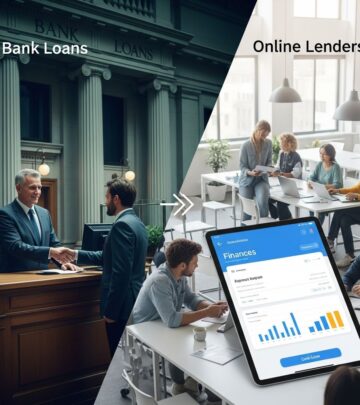
Both online lenders and traditional banks provide business loans, lines of credit, and other financing products, but they differ in how they evaluate applications, how quickly they fund loans, and the overall cost of borrowing. In general, online lenders prioritize speed and accessibility, while traditional banks focus on lower-cost, longer-term financing for well-established businesses.
- Online business lenders frequently rely on advanced underwriting technology and alternative data to make quicker credit decisions and serve borrowers who might not qualify at a bank.
- Traditional banks typically apply stricter standards, require more documentation, and take longer to approve and fund loans, but often offer lower interest rates and longer repayment terms.
The best option for your business depends on how urgently you need funds, your credit profile, and whether you are optimizing for speed and flexibility or for cost and long-term stability.
How Online Business Lenders Differ from Traditional Banks
Online lenders and banks can both provide term loans and other products, yet their business models and processes diverge in important ways.
Business Model and Funding Structure
Traditional banks generally accept deposits and use those funds, alongside other capital sources, to extend loans. Online lenders, by contrast, often operate as alternative lenders that do not take consumer deposits.
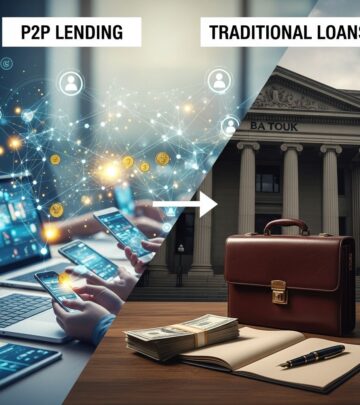
- Many online lenders use a marketplace or peer-to-peer model, where investors provide capital to finance loans made to small businesses.
- Banks may partner with fintech or online lending platforms to streamline small business lending, but business loans remain a subset of their broader product offering.
- Online-only lenders may specialize in particular segments, such as short-term working capital loans, merchant cash advances, or niche industries, allowing more tailored underwriting.
This structural difference often translates into different risk appetites, pricing, and product design.
Technology and Underwriting Approach
Online lenders tend to invest heavily in digital infrastructure and automated underwriting tools to accelerate credit decisions.
- Use of cash-flow data, payment processors, and accounting integrations to assess real-time business performance, not just credit scores.
- Automated scoring models that can approve many applications within hours or days.
- Bank underwriting often involves review by credit committees, multiple sign-offs, and more manual evaluation of financial statements.
According to the U.S. Federal Reserve’s Small Business Credit Survey, online lenders have gained market share particularly among smaller firms that report challenges with traditional bank requirements.
Key Differences: Online Lenders vs. Banks
The following table summarizes major differences between online business lenders and traditional banks, aligning with common small business borrowing needs.
| Feature | Traditional Banks | Online Business Lenders |
|---|---|---|
| Loan amounts | Often larger; can reach several million dollars for qualified borrowers. | Typically smaller; commonly up to about $500,000–$1,000,000 depending on lender. |
| Approval & funding speed | May take weeks or months to approve and disburse funds. | Approvals in hours or days; funding often within 1–3 business days. |
| Interest rates (APR) | Generally lower; many bank term loans range roughly from about 3%–13% APR for strong borrowers. | Generally higher due to serving higher-risk borrowers; ranges can be broader, from mid-single digits to significantly higher depending on product and risk. |
| Repayment terms | Longer terms, sometimes 5–10+ years for major investments. | Shorter terms, often 3–60 months for many products. |
| Eligibility standards | Stricter; higher credit scores, longer time in business, stronger financials and collateral. | More flexible; lower minimum credit scores and time in business, may rely more on cash flow than hard collateral. |
| Application process | Paperwork-heavy; likely requires in-person meetings and detailed business plans, especially for larger loans. | Streamlined, online-first process that can often be completed in minutes. |
| Flexibility & product variety | Emphasis on term loans, SBA loans, and lines of credit; less focus on alternative structures. | Wide range including term loans, lines of credit, invoice financing, and merchant cash advances. |
| Relationship & advice | Stronger potential for in-person relationships and ongoing advisory support. | Mostly digital interactions; support may be efficient but less relationship-based. |
Online Business Loans vs. Bank Loans: Detailed Comparison
When choosing between online lenders and banks, consider how they compare along several core dimensions: speed, requirements, loan structure, cost, and flexibility.
Speed and Convenience
Speed is one of the clearest advantages of online business lenders.
- Online lenders often provide:
- Application forms that take under 15 minutes to complete, fully online.
- Decisions within hours or 1–2 business days.
- Funding as soon as the next business day after approval in many cases.
- Banks typically require:
- More extensive documentation, including business plans and multi-year financial statements for larger requests.
- Review by underwriters and credit committees, which can extend timelines.
- Funding timelines that may stretch to several weeks or even months, especially for complex or SBA-guaranteed loans.
For businesses facing a time-sensitive opportunity or urgent cash-flow needs, the speed and convenience of online lenders can be decisive.
Qualification Requirements
Eligibility requirements often determine whether a business can feasibly access a given lender.
- Traditional banks usually expect:
- Higher credit scores, often in the good-to-excellent range.
- At least two years in business and consistent profitability for many loan types.
- Sufficient collateral for larger loans, such as real estate, equipment, or other assets.
- Online lenders may be an option when:
- Your credit score is lower or your business is younger (sometimes as little as six months in operation).
- You lack substantial collateral but can demonstrate strong and stable cash flow.
- You need a smaller loan amount that may not be economical for a traditional bank to process.
Because online lenders often factor real-time sales and bank account activity into their decisions, they can serve more borrowers who fall outside traditional criteria, though usually at higher cost.
Loan Amounts and Terms
Loan size and repayment term should align with the purpose of your financing.
- Online lenders commonly offer:
- Loan amounts from a few thousand dollars up to around $500,000–$1,000,000, depending on product and lender.
- Repayment periods typically in the range of about 3–60 months for many term loans.
- More emphasis on short- and medium-term working capital needs rather than large, long-term projects.
- Traditional banks often provide:
- Larger maximum loan amounts, including multi-million-dollar facilities for qualified businesses.
- Longer terms, sometimes up to 10 years or more for significant capital expenditures.
- Access to SBA-guaranteed loans that can extend terms further while keeping rates competitive.
For equipment purchases, real estate, or major expansion, a longer-term bank or SBA loan may better match the asset’s useful life. For short-term inventory or marketing campaigns, a shorter online loan or line of credit might be more appropriate.
Interest Rates and Fees
Cost is a critical factor in any funding decision. In general, bank loans cost less but are harder to obtain, while online loans cost more but are easier and faster to secure.
- Traditional bank loans:
- Benefit from access to low-cost deposits and risk sharing through programs like SBA guarantees, helping them offer lower APRs to qualified borrowers.
- Often provide APRs in a lower band relative to many online loan offerings for similar borrower profiles.
- May charge origination or closing fees, but fee structures are generally straightforward.
- Online business lenders:
- Charge higher rates to compensate for serving higher-risk borrowers, offering unsecured options, and providing rapid funding.
- May use factor rates or daily/weekly repayment schedules, which can complicate cost comparisons. Evaluating the annual percentage rate (APR) is important for apples-to-apples comparison.
- Can impose additional fees such as origination charges, draw fees on lines of credit, or prepayment provisions depending on the product.
Businesses with strong credit and time to navigate a bank process will often pay significantly less interest over the life of the loan by going through a traditional bank.
Flexibility, Product Types, and Repayment Structures
Product variety and repayment flexibility can influence how well financing fits your cash-flow cycle.
- Online lenders frequently offer:
- Term loans, revolving lines of credit, invoice financing, and merchant cash advances tailored to different industries.
- More customizable repayment structures, including daily or weekly payments tied closely to sales, which may help some businesses manage cash flow.
- Unsecured or limited-collateral options for smaller amounts, though personal guarantees are still common.
- Banks tend to focus on:
- Conventional term loans and lines of credit.
- SBA-backed loans for smaller businesses that meet program requirements.
- More standardized repayment schedules, typically monthly payments over longer horizons.
For companies with irregular cash flow or needing niche products like invoice factoring, online lenders may provide better-aligned solutions. For those seeking predictable, long-term amortization schedules, bank loans generally fit better.
Personalized Service and Relationship Banking
Traditional banks have an advantage when it comes to building long-term relationships and offering holistic financial services.
- Traditional banks can:
- Provide in-person access to relationship managers who understand your local market and industry.
- Offer bundled services such as checking, savings, treasury management, merchant services, and credit, making it easier to coordinate your financial strategy.
- Adjust credit lines or terms over time as they gain confidence in your business performance.
- Online lenders generally:
- Operate via digital channels, email, and phone support, prioritizing speed and scalability over relationship depth.
- Offer less tailored advice, though some provide dedicated account managers for larger clients.
Businesses that value ongoing financial guidance and integrated banking services may prefer to cultivate a relationship with a traditional bank, even if they occasionally use online lenders for fast, tactical funding.
Pros and Cons of Online Business Lenders
Online lenders are not inherently better or worse than banks, but they are better suited to certain situations. Understanding their strengths and weaknesses can clarify when they make sense for your business.
Advantages of Online Lenders
- Fast approval and funding: Applications can often be completed in minutes, with decisions and funding in days rather than weeks.
- More accessible eligibility: Willingness to work with newer businesses, lower credit scores, or limited collateral, relying more heavily on cash-flow data.
- Flexible loan products: Wide variety of structures and repayment schedules to match specific business models and seasonal cash flows.
- Convenient digital experience: Fully online processes, e-signature agreements, and integrations with accounting or bank software reduce paperwork and friction.
Drawbacks of Online Lenders
- Higher borrowing costs: APRs tend to be higher than comparable bank or SBA loans, particularly for unsecured or short-term products.
- Shorter terms and frequent payments: Shorter repayment periods can mean larger, more frequent payments, increasing pressure on cash flow.
- Less emphasis on long-term relationships: Support may be transactional rather than advisory, with fewer opportunities to negotiate broader banking arrangements.
Which Is Best for Your Business?
The ideal lender depends on your business’s financial health, the purpose of the loan, and your time horizon.
- You may lean toward a traditional bank if:
- Your business has strong credit, several years of stable operations, and sufficient collateral.
- You are seeking a large loan for expansion, equipment, or real estate and can wait weeks for approval.
- Minimizing long-term interest cost is more important than rapid access to funds.
- You value a long-term banking relationship and access to SBA or other specialized bank programs.
- You may lean toward an online business lender if:
- You need funds quickly to address a near-term opportunity or cash-flow gap.
- Your credit profile or time in business does not meet typical bank standards.
- You need a smaller loan amount that banks may be less motivated to underwrite.
- You prefer a streamlined, digital application over in-person meetings and extensive paperwork.
Many businesses use a combination: building a core relationship with a bank for major, low-cost loans and turning to online lenders when speed, flexibility, or accessibility take priority.
Frequently Asked Questions (FAQs)
Q: Do online business lenders check credit scores?
Most online lenders review credit scores, but they often place more emphasis on business cash flow, bank statements, and sales history than traditional banks do. This means you may qualify with a lower score than a bank would accept, although you will likely pay a higher rate.
Q: Are bank loans always cheaper than online loans?
Traditional banks typically offer lower interest rates and longer repayment terms to well-qualified borrowers, especially when backed by programs like SBA guarantees. However, if you do not meet bank standards or need funds very quickly, the overall cost advantage may be outweighed by the accessibility and speed of online lenders.
Q: How fast can I get funding from an online lender vs. a bank?
Online lenders often deliver decisions in hours and funding within 1–3 business days, assuming you submit required documentation promptly. Bank loans generally require more paperwork and internal review, so funding can take several weeks or longer, particularly for larger or SBA loans.
Q: Which option is better for a startup?
Startups without long operating histories or substantial collateral often find it difficult to qualify for traditional bank loans. Online lenders and certain SBA-backed products may be more accessible, especially when a business can demonstrate strong projected or early cash flow, though costs may be higher.
Q: Can I use both online lenders and traditional banks?
Yes. Many businesses maintain a primary relationship with a bank for core accounts and larger, long-term borrowing while using online lenders for short-term working capital or when rapid funding is critical. Coordinating both can help balance cost, speed, and flexibility.
References
- Online Business Loans vs. Bank Loans – What’s Best for Your Business? — iBusiness Funding. 2023-06-01. https://ibusinessfunding.com/resources/online-business-loans-vs-bank-loans-whats-best-for-your-business
- Online Lenders vs. Traditional Banks — Haystack. 2023-05-10. https://tryhaystack.ai/online-lenders-vs-traditional-banks/
- Banking vs. Online Lenders: Pros and Cons for Businesses — Crestmont Capital. 2023-04-15. https://www.crestmontcapital.com/blog/banking-vs.-online-lenders-pros-and-cons-for-businesses
- Banks vs. Online Lenders: Choosing the Right Funding Option for Your Small Business — The Fundworks. 2022-11-18. https://thefundworks.com/banks-vs-online-lenders-choosing-the-right-funding-option-for-your-small-business/
- SBA Loans vs. Traditional Business Loans: Key Differences — Vectra Bank. 2022-09-30. https://www.vectrabank.com/personal/community/two-cents-blog/SBA-Loans-vs-Traditional-Business-Loans/
- Traditional Bank vs. Alternative Lender: Which is Better for Your Small Business? — Kapitus. 2023-03-22. https://kapitus.com/blog/manage-your-money/financing/traditional-bank-vs-alternative-lender-which-is-better-for-your-small-business-kapitus/
- Banks vs. Online Lenders: Which Option Should Borrowers Choose? — myFICO. 2022-10-05. https://www.myfico.com/credit-education/blog/banks-vs-online-lenders
- Small Business Credit Survey: Report on Employer Firms — Federal Reserve Banks. 2023-02-22. https://www.fedsmallbusiness.org/survey
Similar Articles








Read full bio of Sneha Tete