One-Day Late Payment Credit Impact
Discover if missing a payment by just one day harms your credit score and learn strategies to safeguard your financial profile effectively.

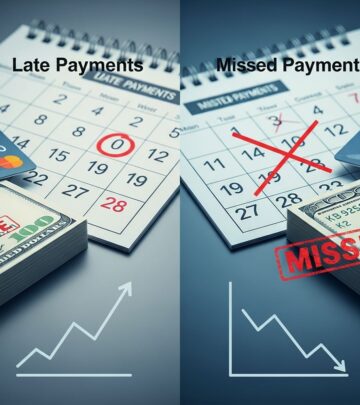
Payments missed by only one day generally do not influence credit scores because lenders report delinquencies to credit bureaus only after 30 days past due. This grace period shields minor slips from long-term harm, though immediate fees might apply.
Understanding Payment Reporting Timelines
Credit bureaus like Equifax, Experian, and TransUnion receive updates from lenders on a monthly cycle, typically coding accounts as current if payments arrive within 29 days of the due date. A one-day delay stays invisible on reports, avoiding any algorithmic penalty in FICO or VantageScore models where payment history dominates at 35% weighting.
Delinquencies emerge in 30-day increments: 30, 60, 90, up to 180 days before potential charge-offs. Lenders use standardized codes to flag these, ensuring minor lates evade formal notation.
Immediate Consequences Beyond Credit Scores
Even without bureau reporting, a one-day late triggers late fees, often $25-$40 per incident, and possible APR hikes under penalty rates. Repeated minor delays compound costs without score hits until the 30-day threshold.
- Late fees: Assessed post-grace period, regardless of bureau notification.
- Interest penalties: Variable APRs can surge 10-20% temporarily.
- Account flags: Internal lender notes may limit future approvals.
Threshold for Credit Score Damage: The 30-Day Mark
Once 30 days elapse, reports activate, slashing scores significantly—often 100+ points for pristine profiles. High scorers suffer more proportionally due to baseline perfection.
| Delinquency Level | Typical Score Drop | Additional Risks |
|---|---|---|
| 30 days | 60-110 points | Late notation begins |
| 60 days | 100-140 points | Escalating lender scrutiny |
| 90+ days | 140+ points | Charge-off imminent |
| 120-180 days | Severe, ongoing | Collections transfer |
Data reflects averages across FICO models; individual variance ties to history length and mix.
Longevity of Negative Marks on Reports
Reported lates linger seven years from delinquency date, diminishing influence over time. Recent infractions weigh heaviest, while aged ones fade. Charge-offs or collections extend damage, signaling unreliability.
Proactive cure—paying before 30 days—erases the event entirely from records. Post-reporting, consistent timeliness rebuilds gradually, often within 12-24 months for moderate drops.
Why Payment History Reigns Supreme
Comprising 35% of FICO scores, on-time payments underpin lender trust. Algorithms prioritize recency and severity; a lone 30-day late on a decade-long perfect record hurts less than clustered recent misses.
Multiple lates amplify fallout, eroding perceived reliability across loans and cards.
Real-World Score Drop Scenarios
Consider profiles:
- Excellent credit (750+): 30-day late drops ~110 points to 640 range, stalling premium rates.
- Good credit (700): ~90-point fall to 610, still viable but costlier.
- Fair credit (650): ~60 points to 590, marginal for approvals.
Recovery timelines: 6 months for 50% rebound via perfect payments, full in 2 years.
Preventing Late Payments Proactively
Autopay eliminates oversight, targeting due dates precisely. Alerts via apps or banks flag impending dues 3-7 days ahead.
- Sync payments to income cycles.
- Maintain buffer balances.
- Review statements weekly.
- Use calendar integrations.
Hardship programs from issuers waive fees for one-offs, preserving goodwill.
Steps to Recover After a Reported Late
If 30+ days hit, act swiftly:
1. Cure Immediately: Pay full delinquency to halt progression.
2. Diversify Positives: Open secured cards for flawless history building.
3. Reduce Utilization: Keep balances under 30% to offset negatives.
4. Monitor Reports: Dispute errors via AnnualCreditReport.com weekly checks.
Expect 1-2 year timelines for substantial rebounds.
Grace Periods and Lender Variations
Not all creditors align perfectly; some offer 25-day cycles post-statement, others stricter. Federal rules cap fees at $40 for first offenses, but variances exist. Always confirm terms upfront.
Broader Financial Ramifications
Beyond scores, lates signal risk, hiking insurance premiums or rental denials indirectly. Mortgage denials spike post-delinquency until dilution via age.
Frequently Asked Questions
Will a two-week late payment show on my report?
No, only 30+ days trigger reporting.
How quickly can I rebuild after a 30-day late?
50% recovery in months with perfect behavior; full in 1-2 years.
Do all lenders report identically?
Policies vary slightly, but 30-day standard prevails.
Can I remove a late payment?
Dispute inaccuracies; goodwill letters rarely succeed.
What’s worse: one 90-day late or three 30-day lates?
90-day inflicts heavier initial hit, but multiples compound.
Tools for Ongoing Credit Vigilance
Leverage free weekly reports from AnnualCreditReport.com. Apps like Credit Karma track shifts pre-bureau. FICO simulators project late impacts accurately.
Maintain 3+ revolving accounts with low utilization, blending ages over 5 years for resilience.
References
- How do late payments affect credit scores? — Credit Karma. 2023. https://www.creditkarma.com/credit/i/late-payments-affect-credit-score
- How Late Payments Affect Credit: What You Need to Know — Crestmont Capital. 2024. https://www.crestmontcapital.com/blog/how-late-payments-affect-credit-what-you-need-to-know
- Does a One Day Late Payment Affect Your Credit Score? — Experian. 2025-03-15. https://www.experian.com/blogs/ask-experian/does-a-one-day-late-payment-affect-your-credit-score/
- When do late payments show up on your credit report? — Chase. 2024. https://www.chase.com/personal/credit-cards/education/build-credit/when-late-payments-show-up-on-credit-report
- How Late Payments Impact your Credit — Upgrade. 2024. https://www.upgrade.com/credit-health/insights/how-late-payments-impact-your-credit/
- How Long Do Late Payments Stay on Your Credit Report? — Citi. 2025. https://www.citi.com/credit-cards/money-management/how-long-do-late-payments-stay-on-credit-report
- Does a Late Payment Affect Credit Score? — myFICO. 2024. https://www.myfico.com/credit-education/faq/negative-reasons/late-payments
Similar Articles








Read full bio of Sneha Tete