Oil Field: Definition, Operations, and Industry Overview
Comprehensive guide to oil fields, exploration, production, and their role in global energy supply.
What is an Oil Field?
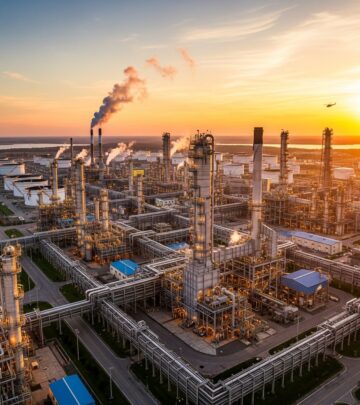
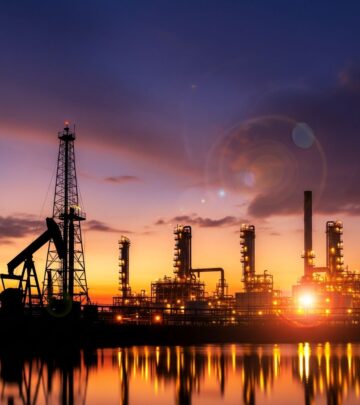
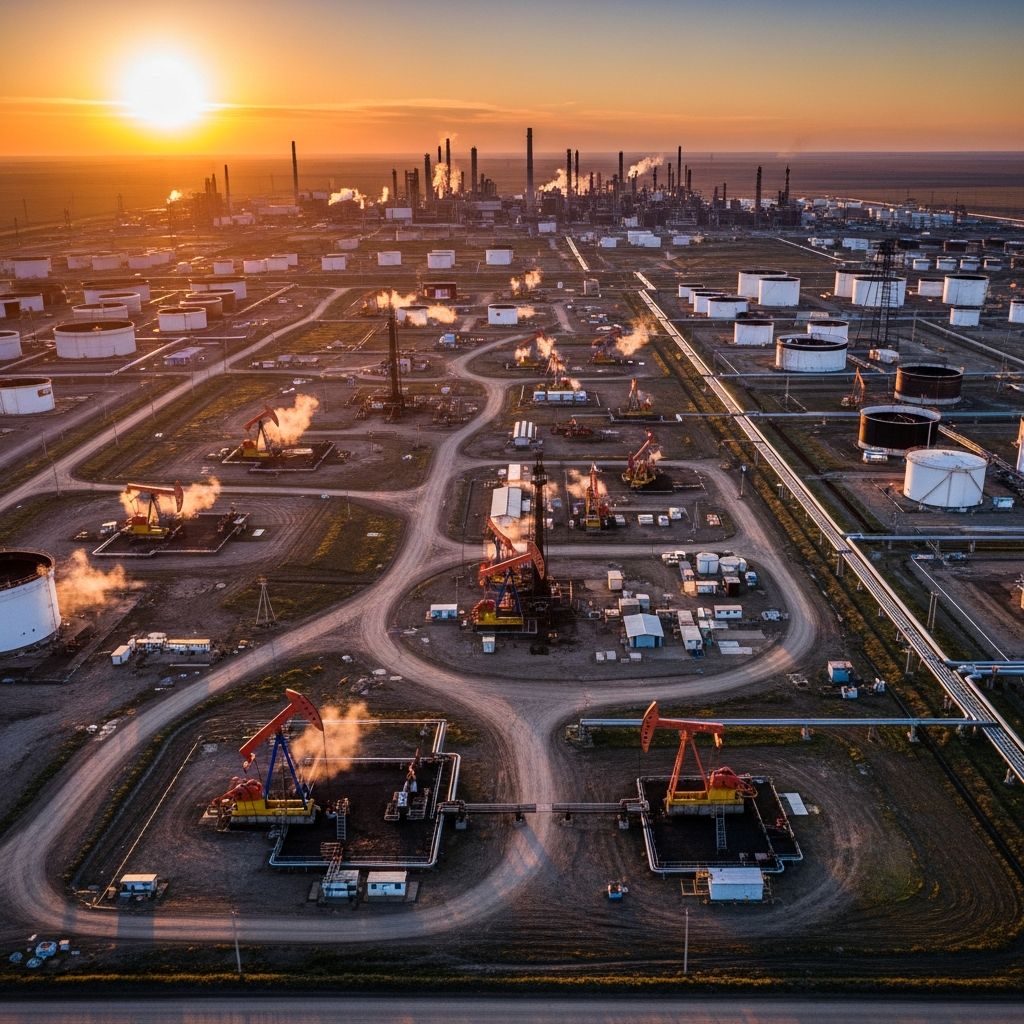
An oil field is a geographical area where crude oil and natural gas deposits are found and extracted from beneath the earth’s surface. These fields represent concentrations of hydrocarbons trapped in underground rock formations, forming the foundation of the global energy industry. Oil fields vary significantly in size, productivity, and location, ranging from small onshore operations to massive offshore installations that span thousands of square kilometers.
Oil fields are classified based on their location and extraction methods. Onshore oil fields are located on land, making them generally more accessible and cost-effective to develop compared to their offshore counterparts. Offshore oil fields, situated beneath ocean waters, require sophisticated technology and infrastructure but often contain vast reserves of crude oil and natural gas. The discovery and development of productive oil fields have historically shaped economies, geopolitics, and industrial development worldwide.
Understanding Oil Field Exploration and Development
The process of identifying and developing an oil field begins with extensive geological surveys and seismic studies. Exploration teams use advanced technology to identify potential hydrocarbon reservoirs beneath the surface. Once a promising geological formation is identified, exploration wells are drilled to confirm the presence of commercial quantities of oil or gas.
The exploration phase is capital-intensive and carries significant risk, as many wells do not result in economically viable discoveries. However, successful exploration can lead to major resource discoveries that generate substantial returns on investment. After exploration confirms the presence of commercially viable oil reserves, companies proceed to the development phase, where production infrastructure such as drilling rigs, pipelines, and processing facilities are installed.
The Exploration Process
Geological exploration involves identifying suitable rock formations that could contain oil and gas reserves. Geologists study subsurface geology, analyzing rock layers, porosity, permeability, and other factors that determine whether hydrocarbons can accumulate and be extracted economically. Seismic surveys use sound waves to create detailed images of underground formations, helping explorers locate potential oil and gas traps.
Drilling and Well Construction
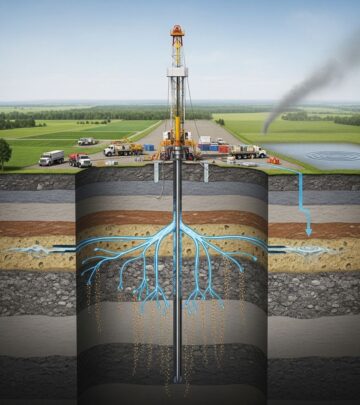
Drilling represents one of the most critical phases in oil field development. Modern drilling operations utilize sophisticated equipment and techniques to bore through rock layers and reach hydrocarbon deposits. Oilfield service companies provide essential support during well construction, offering drilling equipment, personnel, and technical expertise. Wells are carefully constructed with multiple layers of casing and cement to prevent leaks and ensure safe, efficient production.
Types of Oil and Gas Companies Operating in Oil Fields
The oil and gas industry comprises several types of companies, each playing distinct roles in bringing petroleum products from underground reserves to consumers.
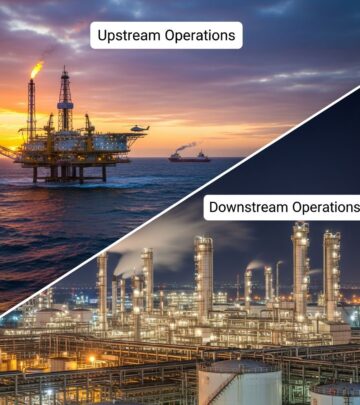
Upstream Companies
Upstream companies, also known as Exploration and Production (E&P) companies, focus on discovering oil and gas reserves and extracting them from the ground. These companies manage the high-risk, capital-intensive activities of exploring potential oil fields, drilling wells, and producing crude oil and natural gas. Upstream operations require substantial investment and sophisticated technology but generate the raw materials that fuel the entire energy industry.
Midstream Companies
Midstream companies handle the transportation, storage, and processing of crude oil and natural gas after extraction from oil fields. Their operations include constructing and maintaining pipelines, operating tanker ships and rail transport, and establishing storage facilities. Midstream companies depend on upstream producers to supply raw materials and work within highly regulated environments, particularly regarding pipeline safety and environmental protection.
Downstream Companies
Downstream companies purchase crude oil and process it into refined products such as gasoline, diesel, heating oil, and other petroleum derivatives. These companies operate refineries, maintain distribution networks, and supply end-users with finished petroleum products. Downstream operations are less capital-intensive than upstream exploration but require continuous supply of crude oil from upstream producers and midstream transportation partners.
Integrated Oil Companies
Integrated oil and gas companies operate across the entire value chain, from exploration and production through refining and distribution. These large multinational corporations leverage their integrated operations to optimize efficiency, manage risk across different business segments, and capture value throughout the petroleum supply chain. Major integrated companies include ExxonMobil, Shell, Chevron, and BP.
Oilfield Service Companies
Oilfield service companies provide specialized equipment, technology, and personnel to support oil and gas exploration and production operations. While these companies do not directly produce oil or gas, they offer critical services including drilling equipment rental, well construction, geological surveys, and production support. Service companies play an essential enabling role in the oil field industry, allowing exploration and production companies to efficiently develop reserves.
Oil Field Economics and Investment
Oil fields represent significant economic assets with substantial implications for investors, companies, and national economies. The value of an oil field depends on factors including reserve size, product quality, extraction costs, current commodity prices, and access to transportation infrastructure.
Reserve Estimation and Valuation
Oil field reserves are classified into proven reserves (resources that can be extracted with reasonable certainty), probable reserves, and possible reserves. Reserve estimates directly impact the economic value of oil fields, influencing investment decisions, financing availability, and company valuations. As oil prices fluctuate, the economic viability of previously marginal reserves can change substantially.
Production Economics
The profitability of oil field operations depends on the balance between production costs and commodity prices. Oil fields in regions with lower extraction costs, such as the Middle East, generate higher margins compared to fields requiring expensive deepwater drilling or complex extraction technologies. Production typically follows a bell curve, with initial rapid production increases followed by eventual decline as reserves deplete.
Investment Considerations
Oil and gas investments offer several potential advantages for portfolio diversification. The oil and gas sector historically demonstrates lower volatility compared to equity markets and provides potential insulation against inflation. Tax incentives further enhance returns, with deductions for intangible drilling costs providing significant tax advantages in the initial years of well development. Long-term demand for petroleum products, projected to increase by 38 million barrels per day through 2025, supports continued investment prospects in the sector.
Global Oil Field Distribution and Production
Oil fields are unevenly distributed across the planet, with major concentrations in the Middle East, Russia, North America, and West Africa. The Middle East contains approximately 48% of global proven oil reserves, concentrated in countries including Saudi Arabia, Iraq, Iran, and the United Arab Emirates. Russia possesses substantial reserves in Siberia and other regions, while North America produces significant quantities from the Permian Basin, Canadian oil sands, and Gulf of Mexico fields.
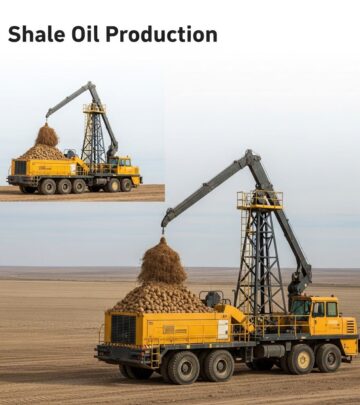
Production patterns have shifted significantly over recent decades as mature fields in the North Sea and other traditional production areas have declined, while new developments in deepwater and unconventional plays have expanded global supply. Technological advances including hydraulic fracturing and horizontal drilling have unlocked substantial reserves previously considered uneconomical to extract.
Regulatory and Environmental Considerations
Oil field operations face extensive regulatory oversight addressing environmental protection, worker safety, and resource management. Environmental regulations require mitigation of air and water pollution, proper waste management, and prevention of oil spills. Climate change concerns have intensified environmental scrutiny of petroleum extraction and combustion.
Regulatory frameworks vary significantly by country and region. Governments impose licensing requirements, production quotas, environmental standards, and royalty payments. International organizations influence oil prices through tariffs, embargoes, and subsidies, affecting the global oil field industry’s profitability and development decisions.
Oil Field Technology and Innovation
Technological advancement has fundamentally transformed oil field exploration, development, and production. Modern seismic imaging, advanced drilling techniques, and production optimization systems have increased recovery rates and reduced operational costs. Deepwater drilling capabilities have opened previously inaccessible reserves, while enhanced oil recovery methods extract additional oil from mature fields.
Digital technologies including artificial intelligence, automation, and real-time monitoring systems are increasingly deployed to optimize production, predict equipment failures, and improve safety. These innovations enhance operational efficiency while reducing costs and environmental impacts.
Oil Pricing and Market Dynamics
Oil prices are determined through complex interactions of supply, demand, geopolitical factors, and financial speculation. Crude oil futures trading on commodity exchanges like the New York Mercantile Exchange (NYMEX) establish price benchmarks that reflect market expectations. Price benchmarks vary based on crude quality, location, and delivery terms, with major benchmarks including West Texas Intermediate (WTI) and Brent crude.
Historical price volatility has demonstrated oil’s sensitivity to geopolitical events, supply disruptions, and demand shocks. The 2020 oil price collapse, when prices briefly turned negative amid pandemic-induced demand destruction and supply imbalances, illustrated the extreme price swings possible in oil markets.
Future Outlook for Oil Fields
The future of oil fields will be shaped by energy transition dynamics, technological innovation, and shifting global energy policies. While renewable energy sources are expanding, petroleum products remain essential for transportation, heating, chemicals, and numerous industrial applications. Sustained global demand supports continued exploration and development of oil fields, particularly in regions with low extraction costs.
However, environmental concerns and climate commitments increasingly constrain oil field development in developed nations, shifting focus toward resource-rich developing countries. Companies are investing in cleaner extraction technologies and carbon capture solutions to address environmental concerns while maintaining profitability.
Frequently Asked Questions
Q: What is the difference between an oil field and an oil reservoir?
A: An oil field is the entire geographical area containing multiple oil and gas reserves, while an oil reservoir is a specific underground formation containing hydrocarbons. A single oil field may contain multiple reservoirs at different depths.
Q: How long does it take to develop an oil field?
A: Oil field development typically requires 5-10 years from initial discovery to first production, depending on field size, location, geological complexity, and regulatory requirements. Offshore projects generally require longer development timelines than onshore operations.
Q: What factors determine oil field productivity?
A: Oil field productivity depends on reserve size, formation porosity and permeability, crude quality, extraction technology, production cost efficiency, and market commodity prices. Natural pressure, geological conditions, and reservoir depth also influence production rates.
Q: How are oil fields classified by size?
A: Oil fields are generally classified as giant fields (containing over 500 million barrels), major fields (100-500 million barrels), and smaller fields containing less than 100 million barrels of recoverable reserves.
Q: What is the average lifespan of an oil field?
A: Oil field productive lifespans typically range from 20-40 years, though some mature fields remain productive for 50+ years with advanced extraction technologies and secondary recovery methods extending their productive lives.
Q: How do companies decide where to explore for oil fields?
A: Companies utilize geological surveys, seismic data analysis, previous discoveries in the region, and geological modeling to identify areas with favorable conditions for oil and gas accumulation before committing to expensive exploration drilling.
References
- Understanding the Different Kinds of Oil and Gas Companies — DW Energy Group. 2025. https://www.dwenergygroup.com/understanding-the-different-kinds-of-oil-and-gas-companies/
- Oil and Gas Pricing – Oil and Gas Industry: A Research Guide — Library of Congress. 2025. https://guides.loc.gov/oil-and-gas-industry/pricing
Similar Articles








Read full bio of Sneha Tete