Offset Chase Sapphire Preferred Fee Easily
Discover proven strategies to make the Chase Sapphire Preferred $95 annual fee pay for itself through rewards, credits, and smart spending habits.

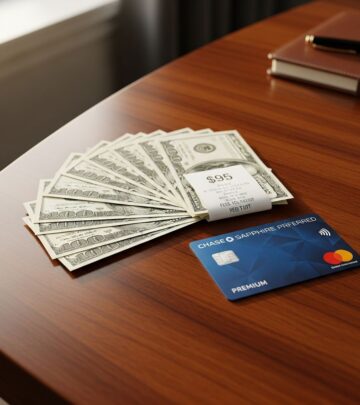
The Chase Sapphire Preferred Card carries a $95 annual fee, but its robust suite of rewards and perks can easily surpass this cost for many users. By leveraging bonus points, statement credits, and elevated earning rates, cardholders can generate value exceeding the fee through strategic use.
Understanding the Card’s Core Value Proposition
At its heart, the Chase Sapphire Preferred is designed for those who value flexibility in rewards, particularly in travel and dining categories. The card’s Ultimate Rewards points system allows redemption for travel at enhanced value or transfers to airline and hotel partners, amplifying returns on everyday spending.
Key features include a substantial welcome bonus, category-specific multipliers, and protections that provide peace of mind. For instance, new cardmembers can earn 75,000 bonus points after spending $5,000 in the first three months, which alone can yield over $750 in travel value when redeemed optimally.
Direct Fee Offsets Through Built-In Credits
One of the simplest ways to neutralize the annual fee is the $50 Annual Chase Travel Hotel Credit. This statement credit applies automatically to hotel bookings made through the Chase Travel portal each account anniversary year, effectively reducing the net fee to $45.
- Book any eligible hotel stay via Chase Travel to trigger the credit.
- No minimum spend required; credit posts as a statement adjustment.
- Combine with points for even greater savings on accommodations.
Beyond hotels, partnerships like DashPass offer additional no-cost value. Cardholders receive a complimentary DashPass membership (valued at $120 for 12 months) plus $10 monthly promos on groceries and retail through December 31, 2027, potentially adding $240 in annual savings on delivery fees.
Maximizing Everyday Spending Rewards
The card shines in high-spend categories, earning 5x points on travel purchased through Chase Travel (excluding hotels qualifying for the credit), 3x on dining including delivery and takeout, and 2x on other travel. Online grocery purchases (excluding Target, Walmart, and wholesale clubs) also earn 3x points.
Consider a typical user profile: spending $1,000 monthly on dining and $500 on travel yields approximately 45,000 points annually from multipliers alone, valued at $450+ when transferred to partners.
| Spending Category | Points per Dollar | Example Monthly Spend | Annual Points |
|---|---|---|---|
| Dining (incl. delivery) | 3x | $1,000 | 36,000 |
| Chase Travel Purchases | 5x | $500 | 30,000 |
| Other Travel | 2x | $300 | 7,200 |
| Online Groceries | 3x | $400 | 14,400 |
This table illustrates how moderate spending generates points worth far more than the fee. An additional 10% anniversary bonus based on the prior year’s spend further boosts earnings.
Leveraging Travel Protections for Added Security
Trip cancellation and interruption insurance covers up to $10,000 per person and $20,000 per trip for qualifying events like illness or severe weather, provided travel is paid with the card. This built-in coverage often exceeds standalone policies costing $50–$100 annually, directly justifying the fee for travelers.
Other protections include primary rental car insurance, baggage delay reimbursement, and purchase protection, reducing the need for separate insurance and saving money indirectly.
Unlocking High-Value Redemptions
The true power lies in point transfers to partners like United, Hyatt, and Air Canada, where valuations can reach 2 cents per point or more. For example, transferring points to Aeroplan can secure premium flights worth multiples of their cash price.
- Hyatt transfers at 1:1 for luxury stays at reduced rates.
- Airline partners enable business-class awards at 1–2 cents per point value.
- Chase Travel portal offers 25% more value (1.25 cents per point) without transfers.
A 75,000-point welcome bonus transferred optimally could cover round-trip flights or hotel stays valued at $1,500+, dwarfing the fee in year one.
Strategic Tips for Fee Maximization
To ensure the fee pays off:
- Hit the welcome bonus: Plan larger purchases like home improvements or taxes to meet the $5,000 threshold quickly.
- Route spending wisely: Use for all dining and travel; pair with no-fee cards for other categories.
- Activate perks annually: Book a hotel via Chase Travel and enroll in DashPass promptly.
- Monitor anniversary bonus: Increase spend in bonus categories to grow the 10% reward.
- Product change if needed: Downgrade to a no-fee Chase card before fee posting to retain points.
Avoid carrying balances, as APR ranges from 19.24%–27.49% variable, eroding rewards value.
Who Benefits Most from This Card
Ideal users spend $2,000+ annually on travel/dining and redeem points for travel. Infrequent travelers may find value in grocery and streaming rewards (3x points on select streaming), but the card underperforms without category utilization.
For business owners, compare to Chase Business Sapphire variants, though personal use cases dominate here.
Potential Drawbacks and Alternatives
Downsides include no intro APR and limited non-travel perks. If travel is rare, no-fee cards like Chase Freedom Unlimited offer similar points without the fee. Always review current terms, as benefits evolve.
Frequently Asked Questions
How much value can I get from the welcome bonus?
Up to $937.50 via Chase Travel or $1,500+ via transfers, easily covering the first year’s fee and more.
Does the hotel credit apply to all hotels?
Yes, any hotel booked through Chase Travel qualifies for the $50 credit.
Can I offset the fee in the first year?
Absolutely—the welcome bonus alone typically exceeds the fee.
What if I don’t travel much?
Focus on 3x dining/groceries; still viable if spending $500+/month in those areas.
Are points worth more than cash back?
Yes, especially for travel redemptions at 1.25–2+ cents per point.
Long-Term Strategy for Sustained Value
Beyond year one, consistency is key. Track spending via the Chase app, set reminders for credits, and explore point sales or promos. Many users report $300–$500 net annual value after the fee.
Integrate with other Chase cards for ecosystem boosts, like combining with Freedom cards for point pooling. This layered approach ensures perpetual fee offset.
References
- Is the Chase Sapphire Preferred Worth Its Annual Fee? — NerdWallet. 2023 (updated). https://www.nerdwallet.com/travel/learn/chase-sapphire-preferred-worth-annual-fee
- Chase Sapphire Preferred Credit Card — Chase.com (official). Accessed 2026. https://creditcards.chase.com/rewards-credit-cards/sapphire/preferred
- Chase Sapphire Credit Cards — Chase.com (official). Accessed 2026. https://creditcards.chase.com/rewards-credit-cards/sapphire
Similar Articles








Read full bio of medha deb