How Many Banks Are In The U.S.? 4,487 FDIC-Insured Banks
Discover the current number of banks in America and which states lead the banking industry.
How Many Banks Are in the U.S.?
The American banking landscape is vast and complex, with thousands of financial institutions serving millions of consumers and businesses across the nation. Understanding the current state of banking in America requires examining both the total number of banks and how they are distributed geographically.
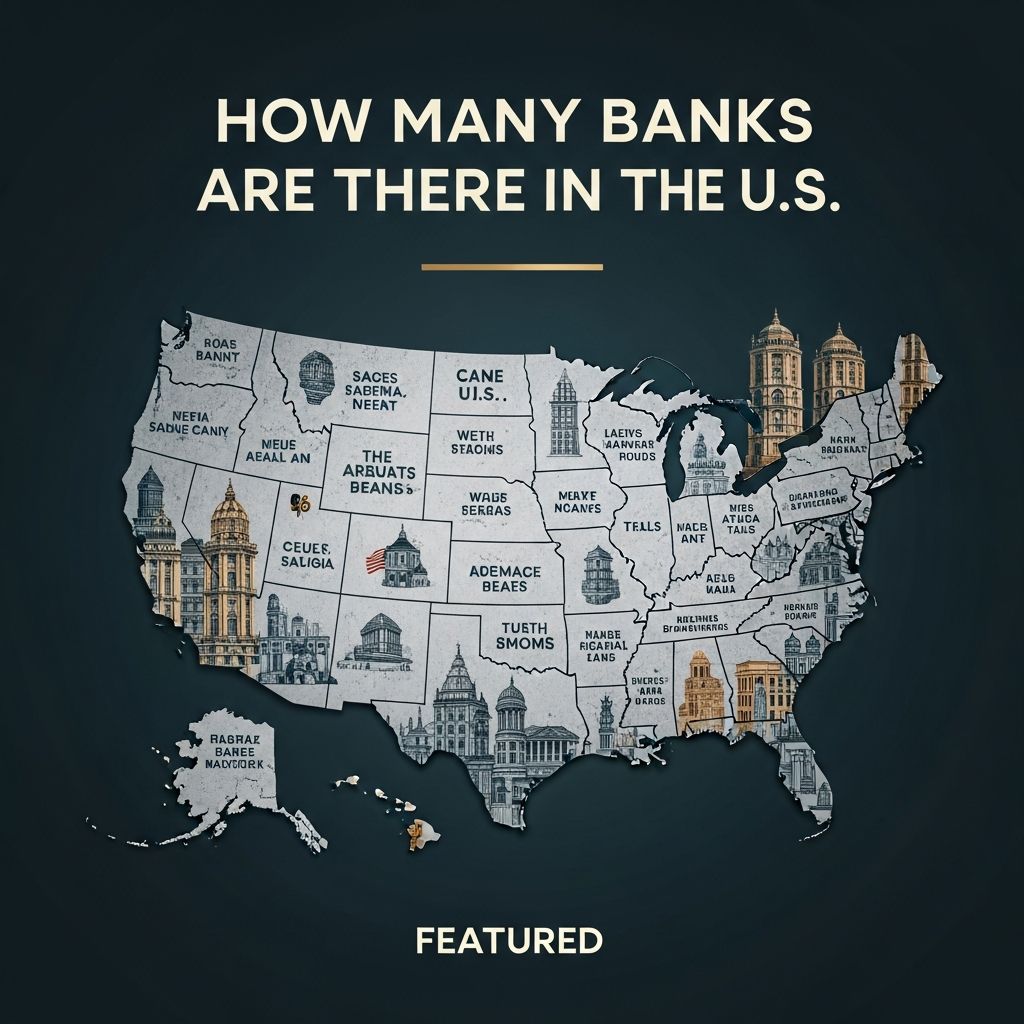
According to the Federal Deposit Insurance Corporation (FDIC), there are 4,487 FDIC-insured banks in the United States as of December 31, 2024. This figure represents a significant shift from previous years and reflects ongoing consolidation and changes within the banking industry. The FDIC reports updated insured bank counts annually, providing crucial data for understanding the health and structure of America’s financial system.
Understanding Bank Counts and Classifications
When discussing the number of banks in America, it’s important to distinguish between different types of banking institutions. The FDIC tracks both FDIC-insured banks and FDIC-supervised banks. While there are 4,487 FDIC-insured banks, there are also 2,848 FDIC-supervised banks operating within the United States. These classifications help regulators and consumers understand the landscape of financial institutions available for banking services.
Beyond traditional banks, the financial services landscape includes credit unions, which represent an important alternative for depositors. Currently, there are 4,653 credit unions operating in the United States, collectively serving over 141 million credit union memberships. While banks maintain control of approximately 90.1% of the country’s deposits, credit unions continue to play a vital role in providing financial services, particularly for specific communities and member groups.
State-by-State Distribution of Banks
The distribution of banks across the United States is far from uniform. Some states host significantly more banks than others, reflecting differences in population size, economic activity, community banking traditions, and regulatory environments.
States with the Most Banks
The five states with the highest concentration of banks are Texas, Illinois, Iowa, Minnesota, and Missouri. Each of these states hosts more than 200 banks within their borders. This concentration reflects various factors, including the strong tradition of community banking in the Midwest, Texas’s large economy and geographic size, and regional banking practices.
Texas leads with 375 banks, making it the state with the most banking institutions. Illinois follows closely with 346 banks, while Iowa has 256 banks despite its smaller population. Minnesota ranks fourth with 253 banks, and Missouri rounds out the top five with 213 banks.
States with the Fewest Banks
Conversely, the five states with the fewest banks are Alaska, Hawaii, Vermont, New Hampshire, and Maine. Each of these states has only six banks or fewer. Alaska has just 4 banks, Hawaii has 6, Vermont has 6, New Hampshire has 6, and Maine also has 6. If Washington, D.C., were classified as a state, it would rank among the bottom five with only 4 banks.
Regional Banking Patterns
Interesting patterns emerge when examining regional banking distribution. California, despite being the nation’s most populous state, has only 127 banks. Florida, the third most populous state, has 93 banks. New York has 89 banks, and Pennsylvania has 87. These numbers are significantly lower than what might be expected given their large populations, particularly when compared to smaller states like Iowa and Minnesota.
Banks Versus Bank Branches
A crucial distinction exists between the number of individual banks and the number of bank branches operating across the country. While there are 4,236 FDIC-insured commercial banking institutions in the United States, these institutions operate approximately 72,166 commercial bank branches collectively. This substantial difference illustrates how the banking industry has evolved, with individual banks operating multiple locations to serve customers more effectively.
The relationship between banks and branches varies significantly depending on the institution’s business model and target market. Most banks operate at least one physical branch, while larger institutions maintain dozens or even hundreds of branches across multiple states. For example, JPMorgan Chase, the country’s largest bank by asset size and headquartered in Columbus, Ohio, operates 4,828 branches nationwide, providing extensive consumer and small-business banking services.
The Role of Community Banks
Community banks represent a significant portion of America’s banking infrastructure and help explain why certain smaller states have more individual banks than much larger states. Community banks tend to be smaller, more localized institutions, frequently operating only one or two branches within their service areas. These banks often focus on personal relationships and understanding local business needs.
However, community banks face unique challenges in the modern banking environment. They are more vulnerable to recession, regulatory changes, and competition from larger national and regional banks. As a result, the number of community banks has been declining for decades. Many smaller institutions have been absorbed through mergers and acquisitions, consolidating the banking industry and creating a landscape dominated by larger institutions.
The Emergence of Fintech Banking Partners
The rise of financial technology companies has introduced a new dynamic to America’s banking landscape. Fintech apps and services have become increasingly popular among consumers seeking convenient digital banking solutions. However, every reputable fintech application operates in partnership with an FDIC-insured banking partner to ensure customer deposits remain protected.
Several banks have emerged as major fintech partners, including MetaBank, WebBank, and Cross River Bank. These institutions provide the regulatory framework and deposit insurance protection that allows fintech companies to operate legally and safely. Although these specialized banking partners may not be household names, they play a critical role in supporting the fintech ecosystem. A relatively small number of these partner banks provide services supporting numerous fintech platforms simultaneously, multiplying their impact on the financial services industry without significantly altering overall banking institution counts.
The Trend Toward Consolidation
The American banking industry continues to experience a long-term trend toward consolidation, with fewer but larger banks dominating the landscape. This consolidation reflects various factors, including regulatory pressures, economies of scale, technological changes requiring significant capital investment, and competitive pressures from both traditional and fintech competitors.
The consolidation trend has accelerated in recent decades as technology has reduced the need for physical branch networks and as larger banks have gained advantages in offering comprehensive financial services. Mergers and acquisitions have reshaped the banking landscape, creating megabanks that operate nationwide or internationally while smaller regional banks have either disappeared or been absorbed into larger institutions.
Major Banking Institutions in America
The largest banks in the United States control a substantial portion of the nation’s banking assets. JPMorgan Chase stands as the largest bank by total assets with $3.38 trillion, headquartered in both Columbus, Ohio, and New York, New York, with 4,828 branches across the country. Bank of America, headquartered in Charlotte, North Carolina, ranks second with $2.44 trillion in total assets and 3,895 branches. Citibank and Wells Fargo round out the top tier of American banking institutions.
Frequently Asked Questions
Q: Why do some small states have more banks than large states?
A: Community banking traditions in certain regions, particularly the Midwest, have historically supported more localized banking institutions. These smaller banks focus on serving specific geographic areas and maintaining personal relationships with customers, resulting in higher concentrations of individual banks even in less populous states.
Q: Are my deposits safe in smaller banks?
A: Yes, as long as your bank is FDIC-insured, your deposits are protected up to $250,000 per depositor, per insured bank, for each account ownership category. The FDIC guarantee applies regardless of bank size, ensuring depositor protection across institutions from the largest megabanks to smaller community banks.
Q: What’s the difference between a bank branch and a separate bank?
A: A bank branch is a physical location operated by an existing bank, while a separate bank is an independent institution with its own charter and regulatory status. One bank can operate multiple branches; the roughly 4,200 banks operate approximately 72,000 branches nationwide.
Q: How does fintech banking work if fintech companies aren’t banks?
A: Fintech companies partner with FDIC-insured banks that hold customer deposits and provide the regulatory infrastructure. The fintech company provides the technology and interface, while the partner bank ensures deposits are insured and federally regulated, protecting consumer funds.
Q: Is the number of banks in America increasing or decreasing?
A: The number of banks has been declining over recent decades due to mergers, acquisitions, and consolidation. The trend continues to move toward fewer, larger banking institutions as the industry consolidates and technology reduces the need for numerous small banks.
References
- How Many Banks Are In the US? (2025 Statistics) — BankBonus.com. 2024-12-31. https://bankbonus.com/statistics/how-many-banks-are-in-the-us/
- Number of Banks in the U.S. – How Many Are There? — Money Crashers. 2021. https://www.moneycrashers.com/number-banks-us/
- 20 Largest Banks in the U.S. by Total Assets — Money Crashers. https://www.moneycrashers.com/largest-banks-us-assets/
- FDIC: Federal Deposit Insurance Corporation Statistics — Federal Deposit Insurance Corporation. 2024. https://www.fdic.gov/
- Credit Union Statistics — National Credit Union Administration. 2024. https://www.ncua.gov/
Similar Articles








Read full bio of Sneha Tete