Non-Sufficient Funds (NSF) Explained: How To Avoid Costly Fees
Understand NSF charges, fees, and how to avoid overdrafts on your bank account.
What Is Non-Sufficient Funds (NSF)?
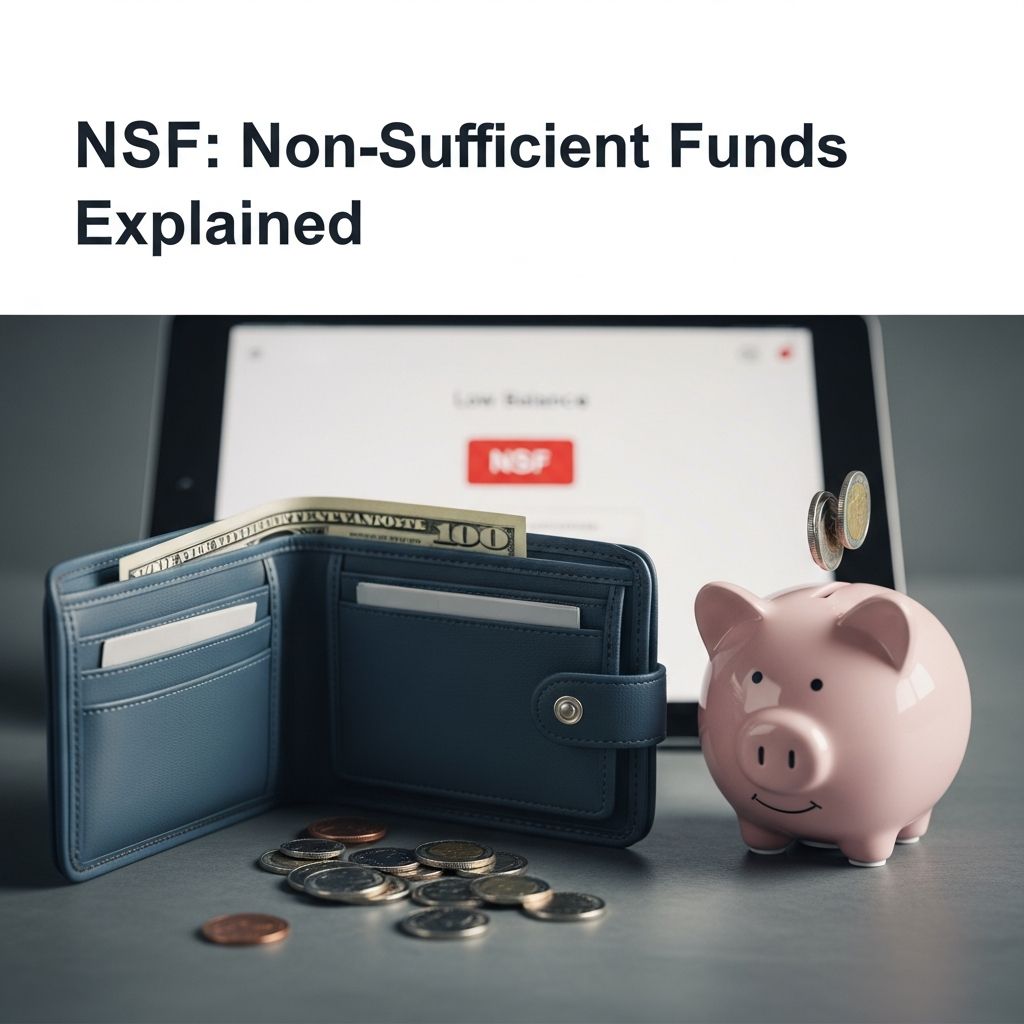
Non-Sufficient Funds, commonly abbreviated as NSF, refers to a situation where a bank account does not contain enough money to cover a check, debit card transaction, or other withdrawal request. When an account holder attempts to draw more funds than are available in their account, the transaction is typically declined or returned unpaid. NSF is one of the most common reasons for overdraft situations in banking and can result in significant fees and financial complications for consumers.
The term NSF is most frequently used in the context of returned checks, though it now applies to various types of transactions including electronic transfers, automatic bill payments, and point-of-sale debit card purchases. Understanding NSF and its implications is essential for managing personal finances effectively and avoiding unnecessary banking fees.
How Non-Sufficient Funds Work
When you write a check or initiate a transaction from your bank account, the financial institution must verify that sufficient funds are available. If the account balance is insufficient to cover the requested amount, the bank has several options:
- Decline the transaction outright
- Return the check unpaid and mark it as NSF
- Honor the transaction and charge an overdraft fee (if overdraft protection is enabled)
- Decline the debit card transaction at the point of sale
The timing of when funds are processed plays a crucial role in NSF situations. Banks typically process transactions in a specific order, which can affect whether an NSF charge occurs. For example, some banks process larger transactions first, while others process them in the order received. This practice, known as transaction sequencing, can sometimes result in NSF fees even when the total daily deposits exceed total withdrawals.
NSF Fees and Associated Costs
Banks impose NSF fees whenever a transaction cannot be completed due to insufficient funds. These fees can be substantial and vary significantly depending on your financial institution and account type.
Typical NSF Fee Amounts
- Average NSF fee ranges from $25 to $35 per transaction
- Some banks charge up to $40 or more per NSF incident
- Multiple NSF transactions in a single day can result in multiple fees
- Premium or elite accounts may have lower NSF fees or waived fees
Beyond the initial NSF fee, there are several additional costs to consider. If an NSF check is written to a merchant or creditor, that entity may also charge you a fee for the returned check. These merchant fees typically range from $15 to $25. Additionally, if the NSF check was meant to cover an important payment like rent, utilities, or a credit card bill, you may face late fees and damage to your credit score.
When Banks Charge NSF Fees
NSF fees are typically charged in the following scenarios:
- Returned Checks: When you write a check and insufficient funds are available to cover it when the check is presented for payment
- Debit Card Declines: When a debit card transaction is declined at the point of sale due to insufficient funds
- Automatic Payments: When scheduled automatic bill payments cannot be processed due to insufficient funds
- Electronic Transfers: When ACH transfers or wire transfers are declined due to account insufficiency
- ATM Withdrawals: Some banks charge NSF fees when ATM withdrawal requests cannot be honored
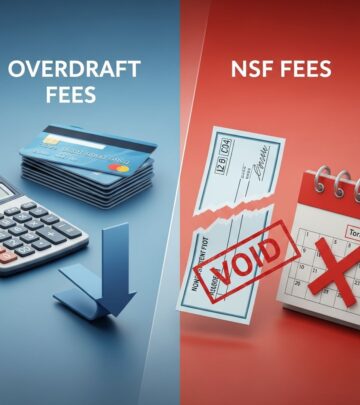
NSF Versus Overdraft Protection
It is important to understand the distinction between NSF and overdraft protection, as these are related but different banking concepts.
Non-Sufficient Funds (NSF)
NSF occurs when a transaction is denied or returned because the account lacks sufficient funds. The transaction does not go through, and the account holder receives an NSF fee.
Overdraft Protection
Overdraft protection is a service offered by banks that allows transactions to proceed even when account balance is insufficient. The bank essentially loans the money temporarily to cover the transaction. Account holders are charged an overdraft fee (typically $25 to $35) and may incur interest charges on the borrowed amount.
While overdraft protection can prevent the embarrassment of a declined transaction or returned check, it can be expensive and lead to a cycle of debt. Many banks have come under scrutiny for their overdraft policies, and some have voluntarily eliminated overdraft fees or offered more consumer-friendly policies.
Consequences of NSF Checks
Writing an NSF check or having an NSF transaction can have far-reaching consequences beyond the immediate fee:
- Credit Score Impact: If the NSF check is reported to credit bureaus, it can negatively affect your credit score
- Check Registry Records: Banks report NSF checks to services like ChexSystems and Early Warning Services, which track banking history
- Difficulty Opening New Accounts: Future banks may deny account applications based on NSF history
- Merchant Fees: Businesses that receive NSF checks may charge additional fees and refuse future checks from you
- Legal Issues: Intentionally writing bad checks can result in criminal charges in some jurisdictions
- Cascade Fees: Multiple NSF incidents can trigger additional bank fees and fees from creditors
How to Avoid NSF Charges
Preventing NSF situations is far more cost-effective and less stressful than dealing with the consequences. Here are practical strategies to avoid NSF fees:
Maintain an Accurate Check Register
Keep detailed records of all transactions, including checks written, debit card purchases, and automatic payments. Subtract each transaction immediately to maintain an accurate running balance of your account.
Monitor Your Account Regularly
Check your account balance frequently through online banking, mobile apps, or in-person visits. Most banks offer real-time balance updates, allowing you to know your exact available balance at any time.
Avoid Overdrawing Your Account
Only write checks and make transactions that you know your account can cover. If balance is low, wait until you have made a deposit before initiating new transactions.
Set Up Banking Alerts
Use your bank’s alert system to receive notifications when your balance falls below a certain threshold. This gives you time to address the situation before transactions fail.
Consider Account Linking
Link your checking account to a savings account or line of credit. If you overdraw, funds can be automatically transferred to cover the shortfall, though this may still incur a fee.
Evaluate Overdraft Protection Options
If you frequently face close calls with your balance, overdraft protection through a linked savings account may be preferable to repeated NSF fees, though fees still apply.
Use Direct Deposit
Ensure your paychecks are deposited directly into your account on a regular schedule so you always know when funds will be available.
NSF and Legal Implications
In most cases, an NSF check is simply returned to the payee with a fee assessed to the account holder. However, there are legal ramifications to consider:
Writing a check knowing there are insufficient funds to cover it can be considered fraud in many jurisdictions. While most financial institutions treat NSF checks as civil banking matters, repeated or intentional bad check writing can result in criminal charges. Some states have specific laws addressing bad checks, and penalties can include fines and jail time.
Many NSF situations are unintentional and result from accounting errors or timing issues. However, if you receive notice of an NSF check and fail to make good on it, creditors and merchants can pursue collection actions against you.
Recent Changes in NSF Policies
In response to consumer advocacy and regulatory pressure, many banks have recently modified their overdraft and NSF policies. Some notable changes include:
- Elimination of NSF fees for overdrafts under a certain amount (e.g., $5 or $10)
- Reduced frequency of NSF fees, with banks waiving fees beyond a certain number per month
- Opt-in requirements for overdraft coverage on debit card transactions
- Extended timelines for overdraft resolution before fees are assessed
- More transparent communication about NSF fees in account disclosures
These changes reflect growing recognition that NSF fees disproportionately affect low-income consumers and can trap individuals in cycles of financial difficulty. Consumers should review their bank’s current NSF policies to understand their specific protections and obligations.
NSF Versus Returned Check
The terms NSF and “returned check” are often used interchangeably, but there is a technical distinction. A returned check is a check that is physically returned to the account holder unpaid. An NSF charge is the fee assessed when a check is returned due to insufficient funds. Not all returned checks are due to NSF; checks can be returned for other reasons such as a stop payment order, account closure, or signature mismatch.
Frequently Asked Questions (FAQs)
Q: What does NSF mean on a check?
A: NSF stands for Non-Sufficient Funds. It means the check was returned unpaid because the account holder did not have enough money in their account to cover the check amount when it was presented for payment.
Q: How much is a typical NSF fee?
A: NSF fees typically range from $25 to $35 per transaction, though some banks charge up to $40 or more. The exact amount varies by financial institution and account type.
Q: Can I dispute an NSF fee?
A: Yes, you may be able to dispute an NSF fee if you believe the bank made an error in processing transactions or in calculating your account balance. Contact your bank’s customer service to request a review. If the fee was legitimate, the bank may waive it as a courtesy, especially if it is your first NSF incident.
Q: How long does an NSF check stay on my record?
A: NSF information is typically reported to banking history services like ChexSystems, where it can remain for up to five years. This can affect your ability to open new bank accounts during that period.
Q: Is it illegal to write an NSF check?
A: Writing a check knowing there are insufficient funds can be considered fraud or forgery in many jurisdictions. While most NSF checks result only in fees and civil action, repeated or intentional bad check writing can result in criminal charges.
Q: Can I prevent NSF fees with overdraft protection?
A: Overdraft protection can cover transactions when your balance is insufficient, but it still typically results in an overdraft fee. However, this fee may be lower than an NSF fee, and it prevents the embarrassment of a declined transaction or returned check.
Q: What is the difference between NSF and overdraft fees?
A: An NSF fee is charged when a transaction is declined or returned due to insufficient funds. An overdraft fee is charged when a bank allows a transaction to proceed despite insufficient funds, essentially extending a short-term loan to cover the shortfall.
References
- Consumer Financial Protection Bureau: Overdraft Programs — U.S. Consumer Financial Protection Bureau. 2023. https://www.consumerfinance.gov/about-us/newsroom/cfpb-issues-guidance-on-overdraft-programs/
- Uniform Commercial Code Article 4: Bank Deposits and Collections — National Conference of Commissioners on Uniform State Laws. 2023. https://www.uniformlaws.org/committees/community-home?communitykey=f1c9d206-e069-ed11-9079-501ac58c1108
- Federal Deposit Insurance Corporation: Banking Basics — FDIC. 2024. https://www.fdic.gov/resources/consumers/consumer-news/
- Board of Governors of the Federal Reserve System: Regulation E — Federal Reserve. 2023. https://www.federalreserve.gov/aboutthefed.htm
- Office of the Comptroller of the Currency: OCC Bulletin 2010-10 — U.S. Department of Treasury. 2010. https://www.occ.treas.gov/news-issuances/bulletins/2010/bulletin-2010-10.html
Similar Articles








Read full bio of Sneha Tete