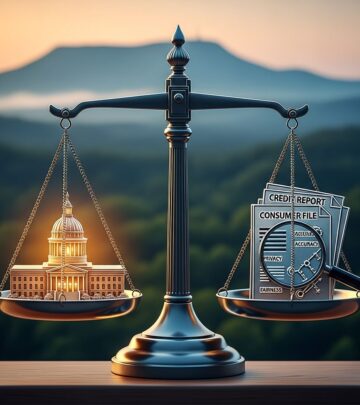
North Dakota FCRA Rights Guide
Unlock your rights under the Fair Credit Reporting Act in North Dakota: from free reports to dispute processes and state protections.
The Fair Credit Reporting Act (FCRA) stands as a cornerstone of consumer protection in the United States, enacted in 1970 to ensure the accuracy, fairness, and privacy of information held by consumer reporting agencies (CRAs). In North Dakota, residents benefit from both federal FCRA provisions and complementary state laws that enhance these safeguards. This guide delves into how these regulations apply locally, empowering individuals to manage their credit profiles effectively.
Core Principles of the FCRA Nationwide and in North Dakota
At its heart, the FCRA regulates the collection, dissemination, and use of consumer information by CRAs like Equifax, Experian, and TransUnion. It mandates that agencies follow reasonable procedures to maintain confidentiality, accuracy, and relevance of data. Key elements include financial details such as income estimates, bank accounts, and tradelines (credit accounts with payment history), alongside public records like bankruptcies and collection items.
North Dakota aligns fully with these federal standards, but state statutes under the North Dakota Consumer Credit Reporting Act (N.D. Cent. Code § 51-19) provide additional layers. For instance, the state prohibits CRAs from reporting outdated negative information beyond seven years (ten for bankruptcies), mirroring federal rules while emphasizing local enforcement.
Accessing Your Free Credit Reports in North Dakota
North Dakota consumers have robust rights to obtain their credit files. Under FCRA, you can request one free file disclosure annually from each nationwide CRA via AnnualCreditReport.com, though recent amendments allow weekly access. State law reinforces this, requiring CRAs to provide disclosures upon request and prohibiting fees for the first copy in a 12-month period.
- Weekly Free Access: Visit AnnualCreditReport.com for reports from all three major bureaus without cost.
- Additional Free Reports: Available if denied credit, employed via a report, or after placing a fraud alert.
- State-Specific Requests: Mail or online requests to CRAs must be honored promptly under N.D. law.
These disclosures include your full file, credit scores (when applicable), and a list of inquiries, helping residents monitor for errors or identity theft.
Disputing Inaccurate Information on Your Credit File
If you spot errors—like incorrect personal details, outdated accounts, or fraudulent activity—the FCRA obligates CRAs to investigate within 30 days. North Dakota law strengthens this by requiring “reasonable investigations” and free re-disclosures post-correction. Furnishers of information (e.g., lenders) must also verify data.
| Step | Action | Timeline |
|---|---|---|
| 1. Identify Error | Review your free report | Immediate |
| 2. File Dispute | Online, mail, or phone to CRA | Within 30 days of discovery |
| 3. Investigation | CRA notifies furnisher | 30 days max |
| 4. Resolution | Corrections or deletion | Free updated report |
North Dakota’s Attorney General oversees complaints, ensuring compliance. If unresolved, consumers can add statements of dispute to their files.
Adverse Action Notices and Your Rights
Whenever a credit report leads to denial of credit, insurance, employment, or housing, the FCRA requires an adverse action notice. This must detail the CRA used, your right to a free report, and dispute options. In North Dakota, employers need written consent for background checks, with notices mandatory for hiring or promotion denials.
Risk-based pricing notices apply if you’re offered worse terms due to your report, a provision from the 2003 FACTA amendments. State courts have upheld these, protecting against hidden discrimination.
Security Freezes and Fraud Alerts for North Dakota Residents
Placing a security freeze prevents CRAs from releasing your file without consent, ideal for identity theft prevention. North Dakota law (N.D. Cent. Code § 51-30) mandates free freezes, lifts, and removals. Fraud alerts—initial (1 year), extended (7 years), or active duty (1 year)—are also free and require CRAs to verify identity before access.
- Freeze Process: Contact each CRA online or by mail; effective immediately in most cases.
- Temporary Lifts: For specific creditors, with PIN access.
- State Fees: Prohibited—always free for residents.
Permissible Uses of Credit Reports Under FCRA
CRAs may only share reports for legitimate purposes: credit/insurance applications, employment (with consent), court orders, or account reviews. North Dakota bans use for targeted marketing or unrelated business needs. Investigative consumer reports (ICRs), which probe character via interviews, require advance notice.
Employers in the state must comply strictly, providing pre-adverse action notices and summaries of rights before final decisions.
North Dakota State Laws Enhancing FCRA Protections
Beyond federal rules, North Dakota’s Uniform Consumer Credit Code and specific reporting statutes offer extras. For example, the state limits reporting of medical debt and requires furnishers to cease reporting disputed debts during investigation. The Attorney General’s office provides mediation for unresolved issues.
Recent updates align with Dodd-Frank, mandating credit score disclosures in adverse actions.
Investigative Reports and Special Protections
ICRs, used for deeper background checks, demand heightened safeguards: notice within three days and rights to scope details. North Dakota employers favor these for sensitive roles but must disclose fully.
Time Limits on Negative Information
FCRA restricts negative data: 7 years for most items, 10 for bankruptcies. North Dakota enforces this rigorously, purging older data automatically.
Frequently Asked Questions (FAQs)
How do I get my free credit report in North Dakota?
Use AnnualCreditReport.com for weekly free access from all bureaus.
What if a CRA doesn’t fix my dispute?
Add a 100-word statement to your file and contact North Dakota’s AG.
Can employers check my credit without permission?
No—written consent is required under FCRA and state law.
How long does a security freeze last?
Indefinitely until lifted; free to place or remove.
Who enforces FCRA in North Dakota?
Federal CFPB/FTC, plus state Attorney General for local violations.
Protecting Yourself: Best Practices for North Dakota Consumers
Regularly review reports, freeze files proactively, and respond swiftly to notices. Educate yourself on rights to avoid pitfalls in lending, jobs, and rentals. North Dakota’s consumer-friendly stance ensures strong recourse.
This comprehensive framework under FCRA and state law equips residents to maintain accurate, private credit profiles, fostering financial stability.
References
- The Fair Credit Reporting Act (FCRA) — Electronic Privacy Information Center (EPIC). Accessed 2026. https://epic.org/fcra/
- Fair Credit Reporting Act — Wikipedia (for background; primary sources cited). Accessed 2026. https://en.wikipedia.org/wiki/Fair_Credit_Reporting_Act
- How the Fair Credit Reporting Act Empowers Your Financial Journey — MyCreditUnion.gov. Accessed 2026. https://mycreditunion.gov/about/news-blog/credit-clarity-how-fair-credit-reporting-act-empowers-your-financial-journey
- What Is the Fair Credit Reporting Act? — Experian. Accessed 2026. https://www.experian.com/blogs/ask-experian/credit-education/report-basics/fair-credit-reporting-act-fcra/
- Understanding the FCRA — Jones Day. 2016-04. https://www.jonesday.com/-/media/files/publications/2016/04/understanding-the-fair-credit-reporting-act-ipract/files/understanding-the-fcra/fileattachment/understanding-the-fcra.pdf
- Fair Credit Reporting Act — Federal Trade Commission (FTC). Accessed 2026. https://www.ftc.gov/legal-library/browse/statutes/fair-credit-reporting-act
- A Summary of Your Rights Under the Fair Credit Reporting Act — FTC. Accessed 2026. https://www.consumer.ftc.gov/sites/default/files/articles/pdf/pdf-0096-fair-credit-reporting-act.pdf
Similar Articles








Read full bio of medha deb