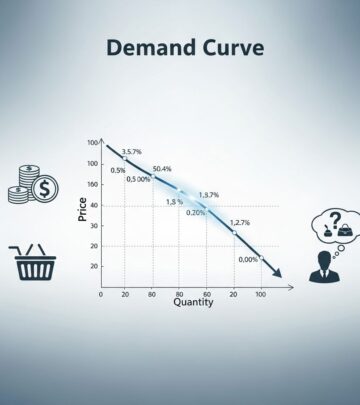
Normal Good: Definition, Examples, and Economic Impact
Understanding normal goods and their relationship to consumer income and demand.

Normal Good: Definition and Economic Significance
In economics, a normal good is a type of commodity for which consumer demand increases in direct proportion to an increase in income. This fundamental economic concept helps explain consumer purchasing behavior and market dynamics across various income levels. Unlike inferior goods, where demand decreases as income rises, normal goods follow an intuitive pattern: as people earn more money, they tend to purchase more of these items. Whether through wage increases, bonuses, or other income improvements, consumers demonstrate a consistent tendency to expand their consumption of normal goods. This relationship forms the foundation of demand analysis in microeconomic theory and has practical applications in business strategy, pricing, and market forecasting.
Understanding Income Elasticity of Demand
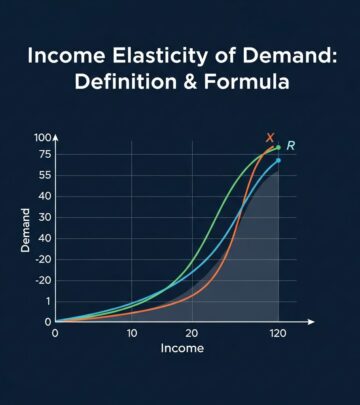
The concept of income elasticity of demand is central to understanding normal goods and classifying various products in the marketplace. Income elasticity of demand measures the responsiveness of quantity demanded to changes in consumer income, providing a quantitative framework for economic analysis.
The Income Elasticity Formula
Income elasticity of demand is calculated using the following mathematical expression:
[xi_i = frac{Delta Q/Q}{Delta Y/Y}]
Where:
- Q represents the original quantity demanded
- Y represents the original income
- ΔQ represents the change in quantity demanded
- ΔY represents the change in income
Alternatively, this can be expressed as: Income elasticity of demand = % change in quantity demanded / % change in consumer income. A good qualifies as a normal good when its income elasticity of demand is greater than zero but less than one (0 < elasticity < 1).
Practical Example of Income Elasticity
To illustrate this concept with a concrete example: if the demand for apples increases by 10 percent in response to a 30 percent increase in consumer income, the income elasticity for apples would be calculated as 0.33 (10% ÷ 30%). This elasticity coefficient of 0.33 confirms that apples qualify as a normal good. The relatively low elasticity value indicates that while apple demand does increase with income, the increase is proportionally smaller than the income change, which is typical for necessities and staple products.
Classification of Goods Based on Income Elasticity
The income elasticity of demand provides economists with a precise method for categorizing goods into distinct categories, each with different implications for consumer behavior and business strategy.
Normal Goods and Necessities
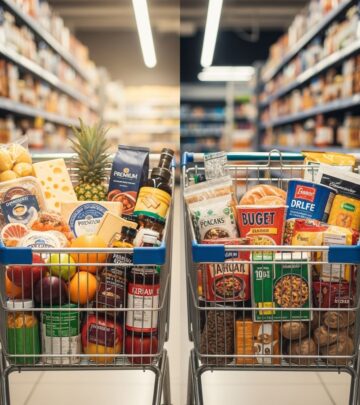
Normal goods are subdivided into two categories: necessities and luxury goods. Necessities are goods with income elasticity less than one, meaning demand increases with income but at a slower rate than income growth. Examples include basic food items, clothing, and household utilities. When a 5 percent increase in income results in a quantity demanded increase of less than 5 percent, the good is classified as a necessity. These are essential items that consumers will purchase regardless of income level, though they may upgrade quality or quantity as finances improve.
Luxury Goods
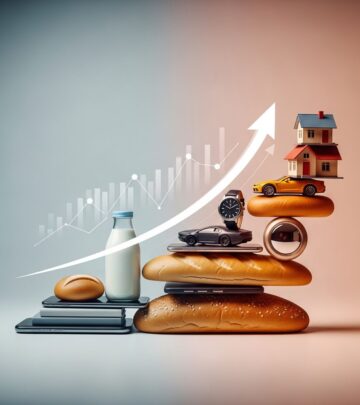
Luxury goods represent the other end of the normal goods spectrum, characterized by income elasticity greater than one. For luxury goods, demand increases proportionally more than income increases. When a 5 percent rise in income generates a more than 5 percent increase in quantity demanded, the good is classified as luxury. Examples include designer clothing, fine dining experiences, premium airline travel, luxury automobiles, and high-end watches. A higher-income group of people typically spend a greater proportion of their income on luxury items, while lower-income groups allocate more of their income toward necessities and normal goods.
Inferior Goods
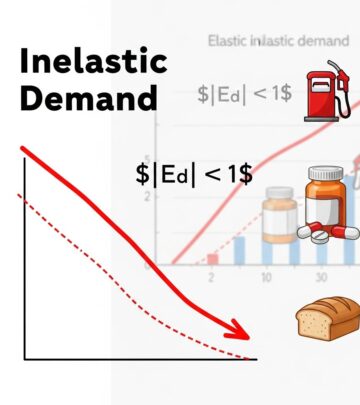
In contrast to normal goods, inferior goods exhibit negative income elasticity of demand. When consumer income increases, demand for inferior goods decreases. These are typically lower-cost substitutes or budget alternatives to higher-quality products. Examples include generic brand products, public transportation (when consumers can afford personal vehicles), and basic food items when premium alternatives become affordable. The income elasticity of demand for inferior goods is a negative number, indicating an inverse relationship between income and demand.
Key Characteristics of Normal Goods
Normal goods possess several distinctive characteristics that set them apart in economic analysis:
Positive Correlation with Income
There is a consistent positive correlation between consumer income and demand for normal goods. Both income changes and demand changes move in the same direction. When income increases, demand rises; when income decreases, demand falls. This predictable relationship makes normal goods valuable for economic forecasting and business planning.
Context-Dependent Classification
It is important to recognize that whether a good is classified as normal or inferior depends on empirical observations rather than inherent properties of the good itself. The same product can be a normal good for one consumer group and an inferior good for another. For example, a BMW 3 Series car might be a normal good for moderate-income consumers, representing an aspirational purchase as their income increases. However, for upper-income consumers, a BMW 3 Series might be an inferior good—as their income increases, they might prefer higher-end luxury vehicles instead. Similarly, average used cars demonstrate this flexibility: at low income levels, used cars might be normal goods (as people replace public transportation), but at higher income levels, consumers may substitute these for new or luxury vehicles, making them inferior goods for wealthy consumers.
Necessity of At Least One Normal Good
According to economic theory, in any given bundle of goods, there must be at least one normal good. This principle reflects the fundamental assumption that goods provide marginal utility. If all goods were inferior and demand decreased when income increased, consumers would find themselves unable to reach their new budget frontier despite having higher purchasing power. This would violate the basic economic rationality assumption and create a logical inconsistency in consumer behavior models.
The Price and Demand Relationship
An interesting theoretical consideration in the analysis of normal goods involves the relationship between price and demand. When the price of a normal good approaches zero, the demand for that good theoretically approaches infinity. This relationship reflects the fundamental principle that consumers will purchase increasingly larger quantities when the cost barrier is removed, limited only by physical constraints or satiation.
Comparative Analysis: Normal, Luxury, and Inferior Goods
| Characteristic | Normal Goods | Luxury Goods | Inferior Goods |
|---|---|---|---|
| Income Elasticity | 0 < elasticity < 1 | Elasticity > 1 | Elasticity < 0 |
| Income Relationship | Positive correlation | Positive correlation | Negative correlation |
| Demand Response | Increases with income (slower) | Increases with income (faster) | Decreases with income |
| Examples | Food, clothing, utilities | Designer goods, sports cars, premium travel | Generic brands, public transit, budget alternatives |
| Income Proportion | Smaller proportion of income | Larger proportion of income | Decreasing proportion as income rises |
Real-World Applications and Examples
Normal goods encompass a wide range of products and services that consumers purchase as their financial situations improve. Common examples include restaurant meals and dining services, where increased income often leads to more frequent restaurant visits and higher-quality dining experiences. Apparel and fashion items follow this pattern, with consumers purchasing more clothing and higher-quality garments as income increases. Electronics and technology products demonstrate normal good characteristics, as consumers upgrade devices and purchase additional items. Housing improvements and home furnishings represent significant normal goods categories, where income increases often lead to purchases of better accommodations or home enhancements. Travel and leisure services, including vacations and entertainment, show strong normal good behavior, with demand rising significantly as household income improves.
Nuances and Exceptions in Classification
The classification of goods as normal or inferior is not always absolute across all income levels and consumer groups. Important nuances exist that complicate straightforward categorization. One caveat involves goods that transition between classifications at different income levels. Used cars exemplify this complexity: at low income levels, used cars show positive income elasticity of demand as consumers upgrade from public transportation to personal vehicles. However, at higher income levels, the income elasticity of demand for used cars may turn negative, as affluent consumers choose new or luxury vehicles instead.
Research on specific goods reveals additional complexities. Different studies examining the same products sometimes reach different conclusions about their classification. For instance, beer exhibits slightly negative income elasticity of demand in some studies, classifying it as an inferior good, while wine shows significantly positive income elasticity, making it a normal good. These differences often reflect varying consumption patterns across different demographic groups and geographic regions.
Special Considerations for Public Goods
Public goods present particular challenges in applying normal versus inferior good classifications. Many public goods—such as parks, public transportation, and public services—exhibit unusual demand patterns. As rational consumers’ incomes rise, consumption of public goods often decreases as individuals replace public goods with private alternatives. For example, as income increases, people may build private gardens to replace usage of public parks, or purchase personal vehicles to replace public transportation. The distinction between normal and inferior public goods becomes difficult when effective congestion costs rise with consumer income, even when goods technically maintain low income elasticity of demand independent of congestion effects.
Frequently Asked Questions
Q: What is the difference between a normal good and an inferior good?
A: A normal good experiences increased demand when consumer income rises, with income elasticity between 0 and 1. An inferior good experiences decreased demand when consumer income rises, with negative income elasticity. Examples of normal goods include quality food and clothing, while inferior goods include generic brands and budget alternatives that consumers abandon as their income improves.
Q: Can the same product be both a normal good and an inferior good?
A: Yes, classification depends on the consumer group and income level being analyzed. A product may be a normal good for lower-income consumers but an inferior good for higher-income consumers who switch to premium alternatives. Used cars exemplify this, being normal goods for those upgrading from public transit but inferior goods for wealthy consumers purchasing luxury vehicles.
Q: How is income elasticity of demand different from price elasticity of demand?
A: Income elasticity of demand measures the responsiveness of quantity demanded to changes in consumer income, while price elasticity of demand measures the responsiveness of quantity demanded to changes in the good’s price. Normal goods have positive income elasticity but may have either positive or negative price elasticity depending on market conditions.
Q: Why must there be at least one normal good in every bundle of goods?
A: According to economic theory, if all goods were inferior, an increase in consumer income would result in decreased demand for all goods. This would create a paradox where consumers could not spend their additional income rationally, violating fundamental economic principles. Therefore, at least one normal good must exist in any bundle to maintain economic consistency.
Q: What are some examples of normal goods in everyday life?
A: Common examples of normal goods include fresh produce and quality groceries, restaurant meals and dining services, quality clothing and footwear, household utilities and appliances, entertainment services, and leisure activities. These goods show increased demand as consumer income rises.
References
- Normal good — Wikipedia. Accessed November 29, 2025. https://en.wikipedia.org/wiki/Normal_good
- Luxury goods — EBSCO Research Starters. Accessed November 29, 2025. https://www.ebsco.com/research-starters/business-and-management/luxury-goods
- How does an increase in consumer income affect demand for a normal good — Atlas.org. Accessed November 29, 2025. https://www.atlas.org/solution/57b3174a-c2b0-4c5e-86b5-e248658bc080/how-does-an-increase-in-consumer-income-affect-demand-for-a-normal-good
Similar Articles








Read full bio of Sneha Tete