Nonqualified Annuities: A Complete Guide
Understand nonqualified annuities, tax treatment, and how they fit your retirement strategy.
What Is a Nonqualified Annuity?
A nonqualified annuity is a retirement savings vehicle that is funded with after-tax dollars and exists outside of qualified retirement plans such as 401(k)s, 403(b)s, or IRAs. The term “nonqualified” refers specifically to the annuity’s tax treatment rather than its investment quality or performance potential. Unlike qualified annuities, which are purchased with pre-tax income and held within tax-advantaged retirement accounts, nonqualified annuities represent a flexible savings option for individuals who have already exhausted contribution limits in their traditional retirement accounts.
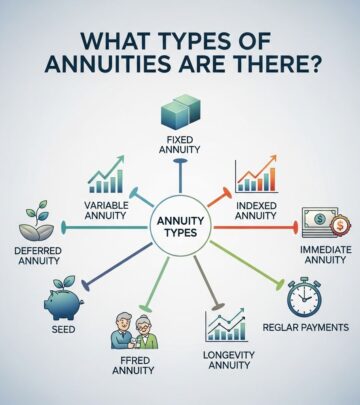
Most annuities in the marketplace are nonqualified in nature. These annuities can take various forms, including fixed annuities, variable annuities, immediate annuities, or deferred annuities, providing investors with multiple strategies to meet their specific retirement objectives and risk tolerance levels.
How Nonqualified Annuities Work
When you purchase a nonqualified annuity, you fund it with money that has already been taxed by the IRS. This fundamental characteristic distinguishes nonqualified annuities from their qualified counterparts and shapes how they are taxed throughout your investment journey.
Once you reach age 59½, you can begin withdrawing funds from your nonqualified annuity without incurring an early withdrawal penalty. The taxation of these withdrawals follows a specific structure: the original principal you contributed is returned to you tax-free, while any earnings or investment growth accumulated within the annuity are taxed as ordinary income. This “tax on earnings only” approach provides a significant advantage compared to qualified annuities, where the entire withdrawal amount is subject to taxation.
One of the most appealing features of nonqualified annuities is the absence of required minimum distributions (RMDs). Unlike qualified retirement accounts, where you must begin taking distributions by age 72 or 73, nonqualified annuities allow you to leave your money invested for as long as you wish. This flexibility enables you to control the timing and amount of withdrawals to match your personal financial needs and tax situation.
Funding Options for Nonqualified Annuities
Nonqualified annuities offer considerable flexibility regarding funding sources. You can establish your annuity with income, personal savings, inheritances, gifts received from others, or proceeds from the sale of an asset. The only restriction is that you cannot use pre-tax income to fund a nonqualified annuity, as this would compromise the annuity’s tax structure.
In practice, nonqualified annuities are most commonly funded with existing savings or money withdrawn from taxable investment accounts. While it’s theoretically possible to fund a nonqualified annuity with a Roth IRA distribution, this strategy is rarely recommended because Roth IRAs already provide substantial tax advantages, making this transfer inefficient for most investors.
The flexibility in funding sources makes nonqualified annuities particularly attractive for individuals who have received large lump sums through inheritance, divorce settlements, or asset sales and seek a tax-efficient way to invest these funds for retirement.
Contribution Limits and Caps
Unlike qualified retirement accounts, nonqualified annuities have no IRS-imposed contribution limits. This represents one of the most significant advantages for high-income earners who have already maximized contributions to 401(k)s, IRAs, and other tax-advantaged retirement plans. There is no annual ceiling on how much you can invest in a nonqualified annuity according to federal regulations.
However, individual insurance companies that issue annuities may establish their own contribution limits on specific contracts. These insurer-imposed limits typically range from $1 million to $3 million per contract, which remains substantially higher than contribution limits for qualified retirement accounts. For investors who need to deploy even larger amounts, purchasing multiple annuity contracts from one or several insurers provides a practical solution.
This unlimited contribution capacity makes nonqualified annuities an ideal choice for sophisticated investors and high-net-worth individuals seeking to set aside significant additional funds for retirement while maintaining tax-deferred growth.
Tax Treatment of Nonqualified Annuities
Taxation of Contributions
Since contributions to nonqualified annuities are made with money that has already been subject to income taxation, these contributions are never taxed again when you eventually withdraw them. The IRS recognizes that you have already paid taxes on this money, so your basis (original investment) is returned tax-free.
Taxation of Earnings
The earnings generated within your nonqualified annuity—including interest, dividends, and capital appreciation—are subject to taxation. These earnings are taxed as ordinary income when withdrawn, meaning they are subject to your marginal federal income tax rate. Additionally, if your modified adjusted gross income exceeds certain thresholds, you may be subject to the Net Investment Income Tax of 3.8 percent on a portion of your annuity earnings.
Form 1099-R Reporting
The insurance company administering your nonqualified annuity will report the taxable portions of your distributions to you annually on Form 1099-R. This form clearly distinguishes between the non-taxable return of your principal and the taxable earnings portion, simplifying your tax filing process.
Key Advantages of Nonqualified Annuities
Nonqualified annuities offer several compelling benefits for retirement savers:
No Contribution Limits: The absence of IRS contribution caps allows you to invest unlimited amounts, making these annuities ideal for high-income earners who have exhausted other retirement savings options.
No Required Minimum Distributions: You maintain complete control over withdrawal timing and amounts. Unlike qualified annuities and traditional IRAs, there are no mandatory withdrawal requirements at any age, allowing your money to continue compounding tax-deferred indefinitely.
Tax-Deferred Growth: Your earnings accumulate without annual tax drag, enabling compound growth to work more efficiently on your behalf.
Tax-Efficient Withdrawals: Only earnings are taxed upon withdrawal, not your original contributions, providing a more favorable tax treatment than some alternative investments.
Flexible Funding Sources: You can fund your annuity using various sources of after-tax money, providing greater flexibility than qualified accounts.
Estate Planning Benefits: Nonqualified annuities offer unique advantages for beneficiaries compared to qualified retirement accounts. Beneficiaries may have the option to extend distributions over their own life expectancy, a provision known as the “stretch” option, which allows for extended tax deferral and can result in significantly lower tax bills.
Customizable Benefits: Annuities can be structured with various options including death benefits, survivor benefits, guaranteed minimum payouts, and other features tailored to your specific needs.
Disadvantages and Considerations
While nonqualified annuities offer substantial advantages, they also have notable limitations to consider:
No Tax Deduction: Unlike contributions to traditional IRAs or 401(k)s, nonqualified annuity contributions do not reduce your taxable income in the year you make them. You receive no upfront tax benefit.
Early Withdrawal Penalties: If you need to access your funds before age 59½, you will face a 10 percent penalty tax on the earnings portion of any withdrawal. Additionally, most annuities impose surrender charges during the initial years after purchase, typically ranging from five to ten years. These surrender charges can be substantial and would be applied in addition to the IRS penalty.
Limited Liquidity: The penalty structure effectively locks your money away, making nonqualified annuities unsuitable for funds you might need in the near term.
Complexity: Calculating the taxable portion of your distributions can be complicated, often requiring professional assistance from a tax advisor or financial planner.
Fee Structure: Annuities typically involve various fees, including mortality and expense risk charges, administrative fees, and investment management fees that can impact your returns.
Who Should Consider Nonqualified Annuities?
Nonqualified annuities are most appropriate for specific investor profiles:
High-Income Earners: If you have already maximized contributions to 401(k)s and IRAs and continue earning income that you wish to invest for retirement, nonqualified annuities provide the next logical step for tax-deferred savings.
Long-Term Investors: Nonqualified annuities are designed for money you won’t need for at least five to ten years. The surrender charge period and early withdrawal penalties make them unsuitable for short-term or intermediate-term savings goals.
Affluent Individuals: Those with substantial assets and high net worth seeking to preserve wealth through tax-efficient strategies benefit from nonqualified annuities’ unlimited contribution capacity and favorable estate planning features.
Estate Planning Focus: Investors prioritizing leaving a tax-efficient legacy to heirs benefit from nonqualified annuities’ stretch provision options, which are more favorable than those available for qualified retirement accounts.
Tax-Deferred Growth Priority: Investors seeking to minimize annual tax obligations on investment returns benefit from the tax-deferred compounding that nonqualified annuities provide.
Inheritance and the Five-Year Rule
When a nonqualified annuity is inherited by a non-spouse beneficiary, special rules apply. The default rule requires beneficiaries to withdraw the entire balance within five years of the original owner’s death. However, this five-year rule applies only to beneficiaries who do not elect alternative payout options in a timely manner.
Importantly, beneficiaries are not subject to surrender charges or early withdrawal penalties when they make distributions from inherited nonqualified annuities, even if these withdrawals occur during what would have been the original surrender charge period for the contract owner.
Spouse beneficiaries enjoy greater flexibility. They can become the new owner of the contract, roll it into their own annuity, or select from various payout options available to beneficiaries.
The nonqualified stretch provision allows eligible beneficiaries to extend distributions over their own life expectancy, which spreads tax obligations over a longer period and allows more assets to remain invested and growing tax-deferred. This strategy can substantially reduce the total tax burden compared to taking the full distribution within five years.
Comparing Nonqualified and Qualified Annuities
| Feature | Nonqualified Annuity | Qualified Annuity |
|---|---|---|
| Funding Source | After-tax dollars | Pre-tax dollars |
| IRS Contribution Limits | None | Annual limits apply |
| Tax on Withdrawals | Only earnings taxed | Full amount taxed |
| Required Minimum Distributions | None | Required at age 72/73 |
| Tax Deduction | No deduction available | Immediate tax deduction |
| Beneficiary Stretch | Stretch option available | 10-year rule applies (SECURE Act) |
Frequently Asked Questions
Q: Can I withdraw money from my nonqualified annuity before age 59½?
A: Yes, you can withdraw funds before age 59½, but you will face a 10 percent penalty tax on the earnings portion of the withdrawal. Additionally, your annuity contract may impose surrender charges during the initial years after purchase, which can significantly reduce your net proceeds.
Q: What happens to my nonqualified annuity when I die?
A: If you have a death benefit rider on your contract, your beneficiary will receive the designated benefit amount. For inherited nonqualified annuities, non-spouse beneficiaries must typically distribute the entire balance within five years, though the stretch option may be available. Spouse beneficiaries have more flexibility and can elect to become the new owner of the contract.
Q: How do I calculate how much of my withdrawal is taxable?
A: The IRS uses an exclusion ratio to determine the taxable and non-taxable portions of your distributions. Your insurance company will help you calculate this ratio, and the taxable portion will be reported on Form 1099-R annually. Consulting with a tax professional is recommended to ensure accuracy.
Q: Are nonqualified annuities subject to required minimum distributions?
A: No, nonqualified annuities have no required minimum distribution requirements. You can leave your money invested and withdraw only what you need, whenever you need it, after reaching age 59½.
Q: Can I have both a qualified and nonqualified annuity?
A: Yes, many investors maintain both types of annuities as part of their comprehensive retirement strategy. Those who have already maximized contributions to qualified accounts often use nonqualified annuities to continue building retirement savings with additional after-tax funds.
Q: What is the net investment income tax and how does it apply to nonqualified annuities?
A: The Net Investment Income Tax is a 3.8 percent tax that applies to certain investment income for high-income earners. If your modified applied gross income exceeds specified thresholds, you may owe this tax on a portion of your nonqualified annuity earnings. A tax professional can help determine your liability.
Q: How do insurance company contribution limits work?
A: Individual insurers set their own maximum contribution limits for nonqualified annuity contracts, typically ranging from $1 million to $3 million. If you need to invest more than an insurer’s limit, you can purchase multiple contracts from that insurer or other insurance companies.
Key Takeaways
Nonqualified annuities represent a valuable tool for high-income earners and individuals with substantial assets seeking to maximize tax-deferred retirement savings beyond the limits of qualified retirement accounts. The combination of unlimited contributions, tax-deferred growth, favorable taxation of withdrawals, and no required minimum distributions creates a powerful retirement planning vehicle.
However, the early withdrawal penalties, surrender charges, limited liquidity, and lack of upfront tax benefits mean that nonqualified annuities are best suited for long-term savings rather than funds you might need in the near term. Careful consideration of your specific financial situation, retirement goals, and estate planning objectives is essential before committing to a nonqualified annuity.
Most financial advisors recommend that nonqualified annuities represent just one component of a diversified retirement strategy. Consulting with a qualified financial advisor or tax professional can help you determine whether a nonqualified annuity aligns with your unique circumstances and retirement vision.
References
- A Guide To Understanding Common Annuity Terms — Bankrate. https://www.bankrate.com/retirement/common-annuity-terms/
- Non-Qualified Annuities: What They Are & How They Work — PolicyGenius. https://www.policygenius.com/annuities/non-qualified-annuities/
- 5 Annuity Strategies For High Net Worth Individuals — Bankrate. https://www.bankrate.com/retirement/annuity-strategies-for-high-net-worth-individuals/
- How Are Annuities Taxed? 3 Things You Need To Know — Bankrate. https://www.bankrate.com/retirement/how-are-annuities-taxed/
- Did You Inherit An Annuity? Beware Of The 5-Year Rule — Bankrate. https://www.bankrate.com/retirement/did-you-inherit-an-annuity-beware-of-the-5-year-rule/
- How Annuities Work And What You Should Know — Bankrate. https://www.bankrate.com/retirement/life-insurance-annuity/
- Retirement Annuities: Pros and Cons of Annuity Investing — Bankrate. https://www.bankrate.com/retirement/pros-and-cons-of-annuities/
Similar Articles








Read full bio of medha deb