Non-Qualified Mortgages: 7 Situations Where They Make Sense
Discover how non-QM loans provide flexible home financing for borrowers outside traditional guidelines, with key benefits and considerations.
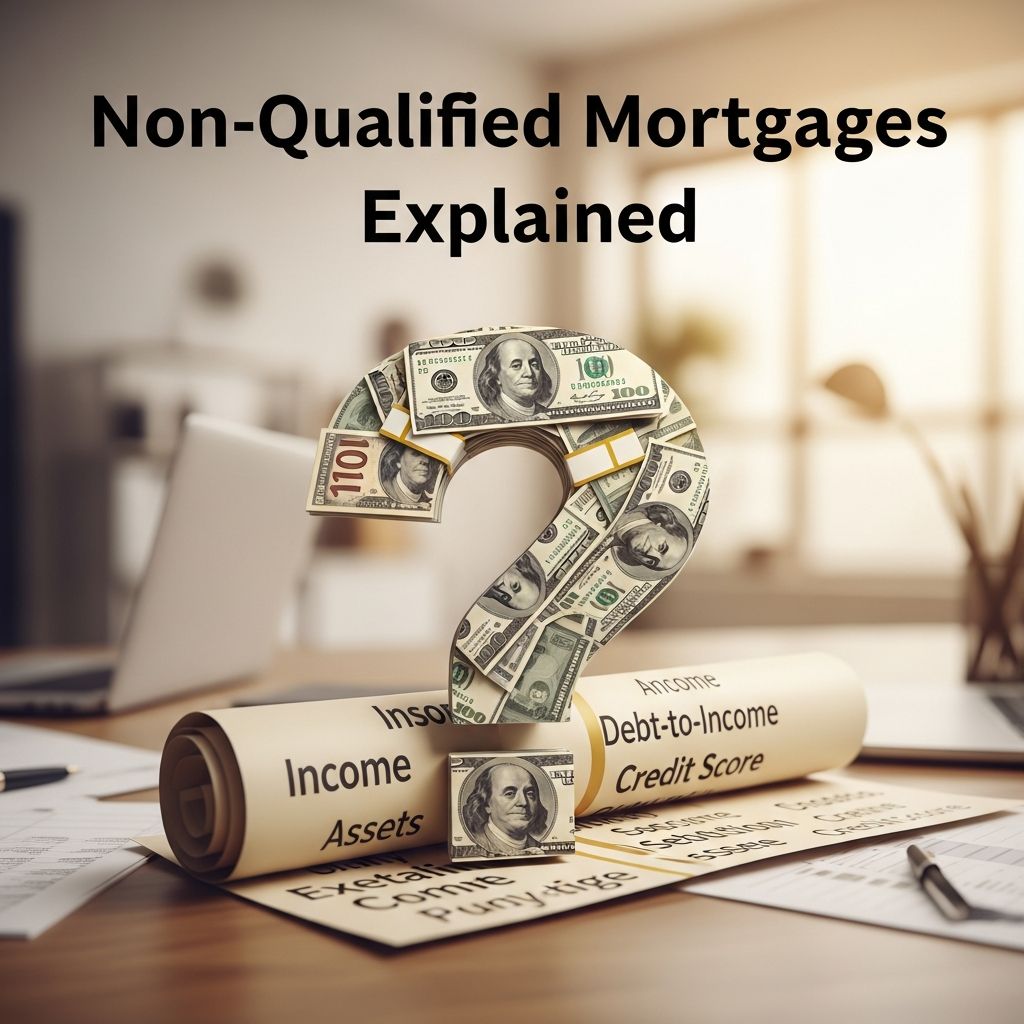
Non-qualified mortgages, often called non-QM loans, serve borrowers whose financial situations do not align with standard lending rules established by the Consumer Financial Protection Bureau (CFPB). These loans bypass specific protections and criteria designed for conventional qualified mortgages (QM), offering greater flexibility for individuals like freelancers, business owners, or those with substantial assets but irregular income.
Understanding the Foundations of Mortgage Classifications
The distinction between qualified and non-qualified mortgages arose from post-2008 financial reforms. The CFPB introduced QM standards in 2014 to curb risky lending practices that fueled the subprime crisis, mandating lenders verify borrowers’ ability to repay using documented income, cap debt-to-income (DTI) ratios at 43%, and avoid features like balloon payments. Non-QM loans, by contrast, do not adhere to these rules, allowing lenders to use alternative assessments such as bank statements or asset depletion calculations.
This flexibility stems from the CFPB’s recognition that rigid standards exclude creditworthy applicants with atypical profiles. Lenders must still evaluate repayment ability but can employ manual underwriting, considering factors like 1099 forms, investment income, or international credit reports.
Key Differences Between QM and Non-QM Loans
Non-QM loans diverge significantly from QM in underwriting and terms. The table below highlights core contrasts:
| Feature | Qualified Mortgage (QM) | Non-Qualified Mortgage (Non-QM) |
|---|---|---|
| DTI Ratio | Capped at 43% | Up to 50% or higher with compensating factors |
| Income Verification | W-2s, pay stubs, tax returns | Bank statements, 1099s, assets, contracts |
| Credit Requirements | Standard score and history | Flexible; scores as low as 500-620 possible |
| Post-Bankruptcy Wait | 1-7 years | Often none |
| Fees and Points | Capped at 3% for loans over $100K | Higher allowed |
| Loan Features | No balloon payments, interest-only limited | More options like interest-only or asset-based |
These differences enable non-QM loans to accommodate real-world financial complexities, though they often carry higher interest rates to offset lender risk.
Ideal Candidates for Non-QM Financing
Non-QM loans bridge gaps for groups sidelined by QM rigidity. Common beneficiaries include:
- Self-employed and gig workers: Variable income from freelancing or side gigs defies W-2 standards; bank statement loans use 12-24 months of deposits to gauge cash flow.
- Business owners: Profits retained in companies complicate tax-based verification; alternative docs like profit/loss statements help qualify.
- High-debt professionals: Doctors or lawyers with student loans exceeding 43% DTI can leverage strong assets or future income potential.
- Real estate investors: Rental income or multiple properties often undocumented traditionally; non-QM counts these via leases or appraisals.
- Foreign nationals: Lacking U.S. credit, they qualify via passport, foreign reports, large down payments (often 30-40%), and liquid reserves.
- Credit-challenged borrowers: Recent bankruptcies or low scores (500+) allowable with manual reviews and higher equity.
- Asset-rich individuals: Retirees or high-net-worth people deplete savings/investments to simulate income, e.g., $1M assets might yield $30K+ monthly “income”.
Prime non-QM borrowers with excellent credit seek these for jumbo loans or interest-only periods, while near-prime use them post-credit events.
Popular Non-QM Loan Types
Lenders offer specialized non-QM products:
- Bank statement loans: Average deposits over 12-24 months replace tax returns, ideal for 1099 earners.
- Asset depletion loans: Qualify via liquid assets divided by 360-480 months, suiting retirees.
- 1099 or profit-sharing loans: Use commission or business income docs for sales pros.
- Interest-only or balloon loans: Deferred principal for cash-flow positive investors.
- No-income verification (NIV): Rare post-reform, but assets/down payments substitute.
These programs vary by lender, with overlays like minimum reserves (6-12 months) common.
Pros and Cons of Pursuing Non-QM Loans
Advantages
- Access to homeownership for non-traditional profiles.
- Custom underwriting matches unique finances.
- Potentially faster approval for documented alternatives.
- Higher loan amounts for jumbos outside Fannie/Freddie limits.
Disadvantages
- Higher costs: Rates 1-3% above QM, plus elevated fees.
- Risk exposure: No QM safe harbor; lenders may foreclose easier in disputes.
- Stricter lender overlays: Larger down payments (10-40%), reserves.
- Refinancing hurdles: Harder to switch to QM later.
Weighing these, non-QM suits those prioritizing access over cost minimization.
Navigating the Non-QM Application Process
Securing a non-QM loan demands preparation:
- Assess eligibility: Calculate DTI, gather 12-24 months bank statements, asset proofs.
- Shop specialized lenders: Non-bank or portfolio lenders dominate this space.
- Provide extras: Explain income variability, show reserves (6+ months PITI).
- Expect scrutiny: Manual reviews take longer; credit pulls multiple times.
- Compare terms: Focus on APR, not just rate, given fees.
Down payments range 10-40%, with FICO minimums 500-680 by program. Pre-approvals clarify options early.
Risks and Regulatory Safeguards
While flexible, non-QM carries pitfalls. Lenders assess repayment via eight CFPB factors (income, assets, debts, etc.), even sans QM rules. Post-2013 FDIC guidance shields non-QM from automatic criticism if prudently underwritten. Borrowers face higher default risk if income drops, amplified by elevated rates. CFPB monitors for abuse, but market discipline prevails.
Recent trends (2023-2026) show non-QM growth amid high rates, aiding 10-15% of originations for self-employed.
Alternatives to Non-QM Loans
- FHA/VA loans for lower credits (FHA DTI to 50%+).
- Portfolio loans from credit unions.
- Improve profile: Pay debts, build 2-year history for QM.
- Co-signers or downsize purchases.
Frequently Asked Questions (FAQs)
What is the minimum credit score for a non-QM loan?
Scores as low as 500-620, depending on lender and down payment.
Are non-QM loans more expensive?
Yes, typically 1-3% higher rates and uncapped fees.
Can foreign nationals get non-QM loans?
Yes, with foreign credit, 30-40% down, and reserves.
Do non-QM loans have government backing?
No, unlike FHA/VA; they’re private.
How long after bankruptcy can I get a non-QM?
Often immediately, with seasoning per program (e.g., 7 years for first-timers in some).
Final Thoughts on Choosing Non-QM
Non-QM mortgages empower diverse borrowers to achieve homeownership when QM falls short. Success hinges on transparent documentation and lender alignment. Consult advisors to align with long-term goals.
References
- QM Vs. Non-QM Loans — Quicken Loans. 2023. https://www.quickenloans.com/learn/qm-vs-non-qm-loan
- What is a non-QM loan? A guide to non-qualified mortgages — Bankrate. 2023. https://www.bankrate.com/mortgages/non-qm-loans/
- What Are Non-QM Home Loans, and Who Are They For? — Fairway Independent Mortgage. 2023. https://www.fairway.com/articles/what-is-a-non-qm-mortgage-and-who-are-they-for
- Non-QM Loans — CrossCountry Mortgage. 2023. https://crosscountrymortgage.com/mortgage/loans/non-qm/
- What are Non-QM mortgages — Guild Mortgage. 2023. https://www.guildmortgage.com/blog/what-are-non-qm-mortgages/
- Correspondent Lending Non-QM Underwriting Guidelines — Corebridge Financial. 2023-06-30. https://www.corebridgefinancial.com/content/dam/marketing/corporate/documents/pdfs/2023-q2-non-qm-guide-with-hyperlinks.pdf
- Qualified and Non-Qualified Mortgage Loans — FDIC.gov. 2013-11-06. https://www.fdic.gov/news/financial-institution-letters/2013/fil13059.html
Similar Articles








Read full bio of Sneha Tete