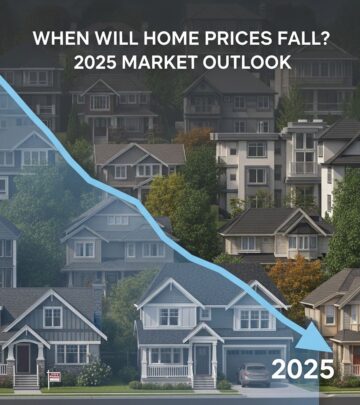
Nobody Is Buying Homes Right Now: 2025 Market Guide
U.S. home sales plummet despite rising inventory. Mortgage rates and affordability create buyer hesitation.

The U.S. housing market has entered a puzzling phase in 2025. Homeowners who locked in ultra-low mortgage rates during the pandemic are finally ready to sell their properties. However, despite a wave of new home listings flooding the market, American buyers are showing remarkable hesitation. The combination of staggering home prices and elevated interest rates has created an unexpected paradox: increased supply without corresponding demand. This disconnect is reshaping the real estate landscape and challenging conventional market wisdom.
The Record-Breaking Slowdown in Home Sales
Pending home sales in January 2025 reached a historic low, according to data from the real estate platform Redfin. This represented the lowest level on record since the company began tracking this metric in 2012, with the only comparable dip occurring in April 2020 when pandemic-era lockdowns brought the economy to a standstill. This dramatic decline underscores the severity of buyer reluctance currently gripping the housing market.
The drop in sales activity is particularly striking given that it occurred despite a substantial wave of new home listings entering the market. Sellers, emboldened by years of favorable conditions and motivated by changing life circumstances, are bringing properties to market at unprecedented rates. Yet this influx of inventory has failed to stimulate buyer enthusiasm, indicating that supply constraints are no longer the primary limiting factor in housing transactions.
Understanding the Lock-In Effect
The current surge in available homes can be traced directly to the phenomenon known as the “lock-in effect.” During the pandemic, mortgage rates plummeted to historically low levels of 3% to 4%, prompting millions of homeowners to either purchase properties or refinance existing mortgages at these exceptional rates. Many homeowners became emotionally and financially attached to their mortgages, reluctant to sell and lose access to rates that are now virtually unattainable.
However, as market conditions have stabilized and homeowners have adapted to the current environment, this lock-in effect is beginning to fade. Years of holding onto properties have caused many owners to reevaluate their situations, whether due to changing family circumstances, job relocations, or simply accepting that mortgage rates may not return to pandemic-era lows. This shift in seller psychology explains the recent uptick in home listings, reversing years of constrained supply that had kept home prices artificially elevated.
Why Homes Aren’t Selling Right Now
Mortgage Rates and Affordability Constraints
Normally, when a glut of houses comes onto the market, this would represent excellent news for prospective homebuyers. However, the current housing market environment defies this conventional logic. Mortgage rates remain stubbornly elevated, hovering around 7%, while the typical home sales price has climbed to over $418,000. This one-two punch of high borrowing costs and expensive properties is creating a formidable barrier for buyers, keeping many on the sidelines rather than engaging in transactions.
The affordability crisis has become particularly acute for middle-class and first-time homebuyers. According to data from Harvard’s Joint Center for Housing Studies, home prices have increased by 60% since 2019. Simultaneously, the average salary required to purchase a home has spiked by 70% in the past five years, far outpacing typical wage growth and creating an enormous gap between buyer expectations and financial capabilities.
Extended Time on Market
The impact of reduced buyer demand is evident in how long homes remain listed. According to Redfin data, homes are now sitting on the market for nearly two months, representing a five-year high. This extended period represents a dramatic reversal from the pandemic era, when homes sold within days and multiple offers were standard. The longer homes languish on the market, the greater the psychological impact on both sellers and the broader market perception of property values.
The January 2025 Sales Collapse
While colder months typically experience slower housing market activity, January 2025 proved particularly sluggish. Many buyers appeared to get cold feet and backed away from commitments, with Redfin estimating that approximately 41,000 home-purchase agreements fell through during the month. This figure represents over 14% of all sales contracts for January, marking the worst performance for the month since 2017.
This withdrawal of buyer commitment signals deeper concerns beyond typical seasonal factors. The convergence of affordability challenges, elevated mortgage rates, economic uncertainty, and buyer caution created a perfect storm that dampened purchase intentions across demographic groups and geographic regions.
Market Dynamics and Buyer Negotiating Power
Despite the gloomy sales data, not all developments have been negative for prospective buyers. For those willing to navigate the current market conditions, opportunities exist. With more homes hitting the market, buyers have regained a degree of negotiating power that has been absent for years.
Real estate experts note that buyers should recognize their improved position. Redfin data indicates that last month, buyers possessed more negotiating power than in any January over the previous five years. This shift represents a fundamental change from the pandemic era, when sellers dominated negotiations and buyers competed fiercely for limited inventory. This newfound leverage could enable willing buyers to negotiate better terms, including price reductions, seller concessions, or favorable contingencies.
Broader Market Context
Supply Levels and Market Balance
While inventory has improved from pandemic lows, housing supply remains significantly below pre-pandemic levels. Data shows that the housing supply is approximately 28% lower than the pre-2020 average for comparable time periods. The national housing market continues to face structural challenges, with an estimated shortage of between 1.6 million and 3.2 million homes, depending on how data is tracked and measured.
This persistent supply deficit means that despite recent improvements, the market has not achieved the six-month supply typically considered indicative of a healthy, balanced market. According to estimates, approximately 2 million potential buyers enter the market annually, while builders add only about 1.6 million homes—creating an annual deficit that perpetuates long-term supply challenges.
Geographic Variation in Market Conditions
The national market statistics mask significant geographic variation. In some metropolitan areas, conditions have shifted considerably in favor of buyers. Cities including New Orleans and Miami, along with approximately a dozen additional major metropolitan areas, have seen housing markets rebalance toward buyers. In these locations, available inventory has become sufficient to satisfy buyer demand without either party maintaining outsized advantage.
Conversely, many other parts of the country continue to favor sellers, with supply remaining constrained and prices elevated. This geographic disparity means that housing market experiences vary dramatically depending on location, with some buyers facing genuine opportunities while others encounter continued scarcity and affordability challenges.
Implications for the Future
The current market paradox—rising inventory amid falling sales—raises important questions about the trajectory of the housing market and future affordability. As the lock-in effect continues to fade and more homeowners bring properties to market, supply will likely improve further. However, for sales to rebound meaningfully, either mortgage rates must decline substantially or home prices must moderate, improving the affordability equation for buyers.
Market observers express cautious optimism about the medium-term outlook. As more inventory reaches the market and rate pressures potentially ease, the housing market may eventually rebalance. However, near-term conditions suggest that buyers will continue facing headwinds, and the current period of depressed sales activity may persist throughout 2025 unless significant economic or policy changes occur.
Key Takeaways for Buyers and Sellers
For Buyers: The improved negotiating position offers opportunities for those prepared to purchase. Buyers should recognize that the market has shifted in their favor compared to recent years, even as affordability challenges remain. Conducting thorough market research, getting pre-approved for mortgages, and being prepared to move quickly on suitable properties can enhance buyer success in this environment.
For Sellers: The fading lock-in effect means more competition among sellers than existed for years. Properties must be competitively priced and well-presented to attract limited buyer interest. Flexibility regarding terms and willingness to negotiate have become more important as the market transitions from a seller’s advantage toward greater balance.
Frequently Asked Questions
Q: Why are home sales declining when inventory is increasing?
A: The primary factors are elevated mortgage rates (around 7%) and high home prices (averaging over $418,000). Even with more homes available, the affordability equation remains challenging for most buyers, discouraging purchase activity despite improved inventory levels.
Q: What is the lock-in effect?
A: The lock-in effect describes the situation where homeowners who secured mortgages at historically low pandemic-era rates (3-4%) became reluctant to sell and exchange those favorable rates for current rates around 7%. As this effect fades, more homeowners are bringing properties to market.
Q: How long are homes sitting on the market currently?
A: According to Redfin, homes are currently sitting on the market for nearly two months on average, representing a five-year high and a dramatic change from the pandemic era when homes sold within days.
Q: Do buyers have any negotiating power in this market?
A: Yes. With increased inventory, buyers have regained negotiating leverage that has been absent for years. Real estate experts note that buyers currently have more negotiating power than in any January over the past five years, enabling better terms and conditions.
Q: What does the future hold for the housing market?
A: Market observers express cautious optimism about the medium-term outlook. As inventory continues to improve and if mortgage rates decline, the market may begin to rebalance. However, sustained affordability challenges may persist unless significant economic changes occur.
References
- Nobody Is Buying Homes Right Now — Money Group, LLC. 2025-01-24. https://money.com/nobody-is-buying-homes-right-now/
- Will 2025 Finally Be a Buyer’s Market in Housing? — Money Group, LLC. 2025-02-18. https://money.com/2025-buyers-market-for-housing/
- What’s Next for the Housing Market? 4 Key Trends to Watch — Money Group, LLC. 2025-06-15. https://money.com/housing-market-trends-2025/
- Will Home Prices Go Down in 2025? Here’s What Experts Predict — Money Group, LLC. 2024-12-20. https://money.com/home-price-predictions-2025/
- The State of the Nation’s Housing 2024 — Harvard University Joint Center for Housing Studies. 2024-06-27. https://www.jchs.harvard.edu/
Similar Articles








Read full bio of Sneha Tete