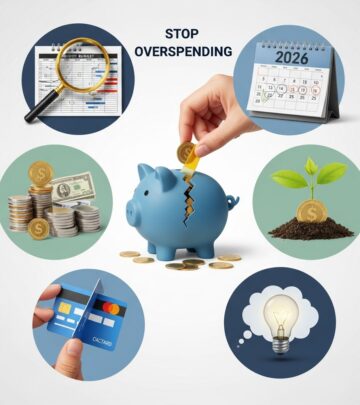
How to Save Money in 2026 With a No-Spend Challenge
Master your spending habits and boost savings with a strategic no-spend challenge in 2026.

Even with the best intentions and a carefully crafted budget, it’s remarkably easy to fall into the trap of unnecessary spending that gradually erodes your savings. Whether it’s impulse purchases, subscription services, or small daily expenses that add up, discretionary spending can quietly drain thousands of dollars from your bank account each year. Sometimes the most effective way to reset your relationship with money and break unproductive shopping habits is to implement a spending freeze. A no-spend challenge offers a powerful, time-limited approach to dramatically reduce your cash outflow while building sustainable financial habits that can transform your long-term financial health.
What Is a No-Spend Challenge?
Despite its straightforward name, a no-spend challenge doesn’t require you to stop spending money entirely or live an impossibly austere lifestyle. The reality is that you have essential bills to pay and necessary purchases that you genuinely cannot avoid. Instead, the fundamental concept of a no-spend challenge is to eliminate non-essential spending for a predetermined period, whether that spans a week, a month, or even an entire year.
The core objective is to drastically reduce your discretionary cash outflow, allowing your savings account to grow substantially during the challenge period. By consciously avoiding unnecessary purchases, you can observe firsthand how quickly money accumulates when you’re not spending on wants. This approach serves as both a practical savings strategy and an educational tool to help you understand your spending patterns and identify areas where you can make lasting changes to your financial behavior.
What You Do Spend Money on During a No-Spend Challenge
During your no-spend challenge, spending should be reserved exclusively for items that are absolutely essential and that you genuinely cannot live without. The critical distinction is between needs and wants—between groceries and a candy bar at the checkout line, between necessary medications and an impulse purchase of new shoes on sale.
It’s important to recognize that this challenge doesn’t mean jeopardizing your financial responsibilities or creating hardship for yourself. You should continue paying all bills that are due, including utilities, rent or mortgage, and insurance premiums. The goal is to eliminate frivolous spending, not to make your life unnecessarily difficult or create financial stress.
Acceptable Purchases During Your No-Spend Challenge
- Groceries and essential food items
- Toiletries and personal hygiene products
- Household essentials like lightbulbs and batteries
- Toilet paper, paper towels, and cleaning supplies
- Prescription and over-the-counter medications
- Doctor’s copays and necessary medical expenses
- Gasoline for your vehicle
- Tolls and parking fees
- Utility bills and other regular monthly expenses
- Insurance premiums and loan payments
These categories represent the boundary between essential spending and discretionary purchases. The key is to evaluate each potential purchase honestly: Do you absolutely need this item to maintain your health, home, and basic quality of life? If the answer is anything less than a definitive yes, it should wait until your challenge concludes.
Different Approaches to No-Spend Challenges
Ban Spending for a Set Amount of Time
This is the most traditional and straightforward approach to a no-spend challenge. It involves committing to ban all non-essential spending for an extended continuous period, typically an entire month, though the duration is entirely flexible based on your circumstances and confidence level.
If you’re new to no-spend challenges or uncertain about your ability to maintain such discipline, consider starting with a shorter timeframe. A no-spend weekend challenge or a no-spend week challenge allows you to test your resolve, identify your primary spending triggers, and build momentum for a longer challenge. Many people find that successfully completing a week-long challenge builds confidence for tackling a month-long commitment.
If you discover that a month-long no-spend challenge feels manageable, you can progressively extend your challenge to two or even three months. Each extension amplifies your savings and deepens the behavioral changes you’re making, potentially turning temporary habits into permanent lifestyle modifications.
Track No-Spend Days
For those who find a continuous spending ban too restrictive, an alternative approach involves establishing a specific number of no-spend days each month. Rather than eliminating all discretionary spending for an entire month, you commit to spending nothing on non-essential items on designated days throughout the month.
You might start conservatively with just five no-spend days each month and gradually increase the challenge to 10, 15, or more days as you develop stronger spending discipline. This flexible approach allows you to scatter these no-spend days throughout the month in whatever pattern feels most natural and sustainable for your lifestyle. You might designate weekdays as no-spend days while allowing yourself flexibility on weekends, or distribute them evenly across the entire month.
The advantage of this method is that you’re not imposing an unrelenting restriction on your spending for weeks at a time. The challenge is interspersed with regular days, making it feel less restrictive and easier to sustain long-term. The critical warning is to avoid overcompensating on your non-no-spend days by dramatically increasing your discretionary purchases. The goal is to reduce overall spending, not to shift it to different days.
Target Your Weaknesses
Everyone has particular spending weaknesses—the specific categories or retailers where your willpower crumbles and your budget suffers. For some people, it’s an inability to resist new clothing purchases. For others, it’s the habit of ordering takeout multiple times per week instead of cooking at home. Still others find themselves making excessive purchases on online retailers or spending more than intended at coffee shops.
Rather than implementing a broad no-spend challenge that restricts all discretionary purchases, this targeted approach focuses your challenge on your specific vulnerability. If your weakness is online shopping, you commit to not making any Amazon purchases for a month while allowing yourself other discretionary spending. If dining out is your financial achilles heel, you eliminate restaurant visits and takeout while continuing to make other non-essential purchases.
This approach is particularly effective because it directly addresses your biggest spending problem without requiring you to overhaul your entire relationship with money simultaneously. By solving your most significant spending challenge, you can achieve substantial savings while developing specific willpower and discipline in the area where you need it most.
Practical Strategies for Success
Shop at Home Before Shopping Elsewhere
Before you make any new purchases during your no-spend challenge, conduct a thorough inventory of what you already own. Many people are shocked to discover how much usable, forgotten merchandise is hiding in their homes.
Check your pantry and freezer for ingredients you can repurpose into complete meals. Review your closet carefully—you may realize that you own far more clothing options than you regularly wear and that those new shoes you wanted aren’t actually necessary. Explore drawers and storage areas for unopened items still bearing price tags, unused gifts, or products you purchased and forgot about.
This practice serves multiple purposes: it helps you make use of items you already paid for, it reduces waste, it saves money by preventing unnecessary purchases, and it often creates a surprising realization about how much you already have. This mental shift can be tremendously valuable in breaking the cycle of continuous consumption.
Keep a Wish List for Future Purchases
During your no-spend challenge, you’ll inevitably encounter items you want to purchase. Rather than immediately buying these items or white-knuckling your way through the desire to buy them, write them down on a wish list instead. Document the item, where you saw it, why you wanted it, and roughly how much it costs.
After your no-spend challenge concludes, review your entire wish list. You’ll likely discover something remarkable: many of the items that seemed absolutely essential a few weeks earlier no longer appeal to you. The intense desire to purchase them has faded. By allowing time to pass between the impulse to buy and the actual purchase, you filter out the items driven by emotional impulses rather than genuine needs or lasting wants.
For the items that still appeal to you after your challenge ends, you’ve had time to consider whether they truly align with your values and financial goals. This practice transforms impulsive buying into intentional purchasing, dramatically reducing both the frequency and the regret factor of your discretionary spending.
Making Your No-Spend Challenge Sustainable
While no-spend challenges are typically designed as temporary commitments, many people find that the behavioral changes and financial discipline they develop during the challenge continue long after it concludes. What begins as a one-month challenge can evolve into a permanent lifestyle modification that benefits your finances indefinitely.
The ideal outcome of your no-spend challenge is that it breaks counterproductive spending patterns. For example, you might discover that buying snacks from the vending machine at work is an expensive habit you can easily eliminate without suffering. However, it’s crucial to avoid swinging to the opposite extreme. Depriving yourself so severely during the challenge that you engage in binge spending when it concludes defeats the entire purpose of the exercise.
The goal is sustainable financial behavior change, not white-knuckle deprivation followed by explosive overspending. Consider building in a small allowance for yourself—perhaps $20-30 of guilt-free discretionary spending per week—to maintain balance and prevent the all-or-nothing thinking that sabotages long-term financial progress.
Real-World Results and Savings Potential
The financial impact of a no-spend challenge can be surprisingly substantial. Research indicates that Americans spend approximately $18,000 annually on non-essential items, which translates to roughly $1,500 per month on discretionary purchases like streaming services, impulse buys, and unnecessary clothing.
Individual results from no-spend challenges vary based on your baseline spending habits and the duration of your challenge. One person who completed a month-long no-spend challenge saved approximately $1,500 in that single month—enough to contribute substantially to an emergency fund or accelerated savings goal. Others report saving $400 per month simply by eliminating restaurant dining for a 30-day period.
Even more valuable than the immediate financial savings is the psychological shift that occurs. Participants often report increased awareness of their spending patterns, better understanding of the difference between wants and needs, and lasting changes in their purchasing behavior that continue generating savings long after the challenge ends.
Potential Challenges and How to Overcome Them
One common realization during a no-spend challenge is that you’re probably spending more than you realize. When all your purchases are consolidated on a credit card that earns rewards points, it’s easy to avoid thinking carefully about the accumulating balance until the bill arrives. Suddenly confronted with restricted spending, people often have a sobering moment of recognizing just how much money was flowing out for non-essential items.
Another important lesson is recognizing false economy. Avoiding the grocery store because you dislike spending large amounts upfront, then compensating with expensive takeout, doesn’t save money—it costs more. Similarly, delaying necessary purchases of important items until they’re completely depleted forces you to buy at premium prices rather than shopping strategically. Sometimes spending strategically during your budget planning is more economical than avoiding spending entirely.
Frequently Asked Questions
Q: Do I have to do a no-spend challenge for a full month?
A: No. You can customize the duration to match your comfort level. Start with a no-spend weekend or week if a full month feels overwhelming, then progress to longer challenges as you gain confidence.
Q: What if I need to make a necessary purchase during my no-spend challenge?
A: Essential purchases are absolutely allowed and encouraged. The challenge is about eliminating non-essential spending, not creating financial hardship or leaving yourself without necessary items.
Q: Can I combine multiple no-spend strategies?
A: Yes. Many people find success combining approaches—for example, doing a full no-spend month while also maintaining specific no-spend days beyond that period.
Q: What should I do with the money I save during the challenge?
A: Transfer your savings to a separate account designated for your financial goals. Whether you’re building an emergency fund, saving for a major purchase, or eliminating debt, having a clear destination for your saved money increases motivation.
Q: What happens after my no-spend challenge ends?
A: Use the insights you’ve gained to establish healthier spending patterns long-term. Review your wish list to identify items you genuinely want, then make thoughtful purchases rather than returning to old habits.
Is a No-Spend Challenge Right for You?
If you’re struggling with an out-of-control dining budget, a growing wardrobe that you’re continuously expanding despite already having plenty of clothes, or you simply need to save a significant amount of money quickly, a no-spend challenge can be a powerful tool. It’s not about deprivation or extreme frugality as a permanent lifestyle—it’s about hitting the reset button on your financial habits and proving to yourself that you have the discipline and control to change your relationship with money.
Whether you choose a time-based approach, a day-counting method, or a targeted strategy focused on your specific weakness, the key is committing to a defined period and tracking your progress. The combination of immediate savings, increased awareness of your spending patterns, and lasting behavioral changes makes no-spend challenges one of the most effective and accessible tools available for accelerating your financial goals in 2026.
References
- How to Save Money in 2026 With a No-Spend Challenge — The Penny Hoarder. Accessed 2025. https://www.thepennyhoarder.com/save-money/no-spend-challenge/
- I Tried a No Spend Challenge: Here’s What I Learned — The Penny Hoarder. Accessed 2025. https://www.thepennyhoarder.com/budgeting/no-spend-challenge-personal/
- How to Save Money: 25 Proven Tips That Actually Work — The Penny Hoarder. Accessed 2025. https://www.thepennyhoarder.com/save-money/how-to-save-money/
- I Survived No Spend November! Here’s How Much I Saved — The Penny Hoarder. Accessed 2025. https://www.thepennyhoarder.com/save-money/no-spend-november-savings/
- Want More Money This Time Next Year? Try a No-Spend Challenge — Money Talks News. 2025-03-07. https://www.moneytalksnews.com/slideshows/want-more-money-this-time-next-year-try-a-no-spend-challenge/
Similar Articles








Read full bio of Sneha Tete