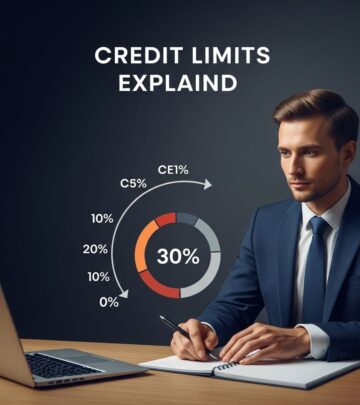
No Preset Spending Limit Cards Explained
Discover how cards without fixed limits offer dynamic spending power based on your financial habits and responsible usage.
Credit cards with no preset spending limit provide a unique approach to borrowing, where your available credit isn’t locked into a fixed dollar amount. Instead, your purchasing capacity fluctuates based on real-time evaluations of your financial behavior, offering adaptability for users who manage their finances well.
Understanding Flexible Spending Capacity
Traditional credit cards assign a static credit limit upon approval, which remains unchanged until you request an adjustment. In contrast, no preset spending limit (NPSL) cards, often known as charge cards, determine your spending power dynamically. This means the maximum amount you can spend adjusts periodically, influenced by factors like your payment timeliness, overall credit profile, recent spending patterns, and even income stability.
This system promotes a pay-in-full model, where balances are expected to be cleared each billing cycle, similar to charge cards from issuers like American Express. While it doesn’t equate to infinite spending, it allows responsible users to access higher amounts over time without formal limit increase requests.
How Issuers Determine Your Spending Power
Card issuers employ sophisticated algorithms to assess risk and set temporary spending thresholds. Key determinants include:
- Payment History: Consistent on-time payments, especially paying balances in full, signal reliability and can expand your capacity.
- Creditworthiness: Your credit score, debt-to-income ratio, and credit utilization across all accounts play a crucial role.
- Spending Patterns: Regular, predictable purchases build trust, whereas erratic high spending might trigger restrictions.
- Financial Profile: For business cards, cash flow from linked accounts or revenue data may factor in.
Unlike fixed-limit cards, where approval hinges solely on initial application data, NPSL evaluations are ongoing. This continuous monitoring can lead to automatic expansions during periods of strong financial health.
Key Advantages of NPSL Cards
These cards shine for individuals or businesses with variable or high spending needs. Here’s a breakdown of primary benefits:
| Benefit | Description |
|---|---|
| Dynamic Growth | Spending power can increase organically with good habits, eliminating the need for credit limit requests. |
| Large Purchase Flexibility | Ideal for unexpected big-ticket items, as limits adapt to your proven capacity. |
| Premium Rewards | Often paired with lucrative rewards programs, travel perks, and business tools. |
| No Over-Limit Fees | Issuers may allow temporary exceeds at their discretion, per terms. |
For frequent travelers or entrepreneurs, this flexibility translates to seamless handling of peak spending seasons without hitting rigid caps.
Potential Drawbacks and Risks
Despite the appeal, NPSL cards aren’t suitable for everyone. Common challenges include:
- Lack of Predictability: Without a visible limit, planning budgets becomes trickier, as approvals can decline unexpectedly.
- Full Payment Requirement: Carrying balances incurs high fees or isn’t permitted, demanding strong cash flow.
- Early Restrictions: New users often face conservative initial capacities that grow slowly.
- Impact on Credit Utilization: High spending without immediate payoff can temporarily elevate utilization ratios, affecting scores.
Business owners may find the opacity frustrating when tracking expenses against available funds.
Comparing NPSL Cards to Traditional Credit Cards
To illustrate differences, consider this comparison:
| Aspect | Traditional Credit Card | NPSL Card |
|---|---|---|
| Limit Structure | Fixed amount set at approval | Flexible, algorithm-driven |
| Adjustment Process | Manual request required | Automatic based on behavior |
| Payment Flexibility | Revolving balances with interest | Typically pay-in-full monthly |
| Best Suited For | Stable, predictable spending | High/variable spending with discipline |
| Transparency | High (known limit) | Lower (fluctuating) |
This table highlights why NPSL cards favor disciplined users over those needing certainty.
Who Should Consider an NPSL Card?
Ideal candidates exhibit:
- Excellent credit scores (typically 700+).
- History of paying balances fully and on time.
- Stable income or business revenue to support variable spending.
- Need for occasional large purchases without revolving debt.
Professionals like executives, freelancers with irregular but high income, or small business owners benefit most. Conversely, those building credit or preferring visible limits should stick to traditional options.
Strategies for Maximizing NPSL Benefits
To thrive with an NPSL card:
- Monitor Spending Power: Use issuer apps or tools like Amex’s Check Spending Power for pre-purchase checks.
- Maintain Low Utilization: Keep overall credit use under 30% across accounts.
- Pay Early and Often: Clearing balances mid-cycle can boost available power quickly.
- Diversify Payments: Ensure all credits are managed well to support your profile.
- Track via Statements: Review monthly summaries for patterns in approvals/declines.
These habits can lead to substantial limit growth over months.
Real-World Applications for Businesses
Business NPSL cards, like those from Brex, leverage company data for even higher capacities. They suit scaling startups needing funds for inventory or marketing surges without fixed constraints. However, integrating with accounting software is key for oversight.
Frequently Asked Questions (FAQs)
Does no preset spending limit mean unlimited spending?
No, spending is still capped dynamically based on your profile; it’s not infinite.
Can my spending power decrease suddenly?
Yes, poor payments or economic shifts can reduce it temporarily.
Are NPSL cards good for building credit?
They can help if managed well, but beginners may prefer fixed-limit cards for predictability.
How do I check my current spending power?
Most issuers provide online tools or customer service for estimates.
Do NPSL cards report to credit bureaus?
Yes, activity affects your credit file, emphasizing timely payments.
Final Thoughts on Choosing Wisely
No preset spending limit cards empower financially savvy users with adaptable credit, but demand discipline. Evaluate your habits against the pros and cons to decide if this flexible model aligns with your needs. Always review terms from issuers like Chase or Amex for specifics.
References
- What Is a No Preset Spending Limit Card? — Capital One. 2023-05-15. https://www.capitalone.com/learn-grow/business-resources/no-preset-spending-limit/
- What Does No Preset Spending Limit Mean for a Credit Card? — Experian. 2024-02-10. https://www.experian.com/blogs/ask-experian/what-does-no-preset-spending-limit-mean-for-credit-card/
- Top 5 No Preset Spending Limit Business Credit Cards — Brex. 2024-08-22. https://www.brex.com/spend-trends/corporate-credit-cards/no-preset-spending-limit-business-credit-cards
- What Does no Preset Spending Limit Mean — Chase Bank. 2023-11-01. https://www.chase.com/personal/credit-cards/education/basics/what-does-no-preset-spending-limit-mean
- Flexible Spending with No Preset Spending Limit — American Express. 2024-01-20. https://www.americanexpress.com/en-us/banking/lending/lending-options/no-preset-spending-limit.html
- No Preset Spending Limit — American Express. 2023-09-12. https://www.americanexpress.com/en-us/business/trends-and-insights/videos/no-preset-spending-limit-npsl/
Similar Articles








Read full bio of Sneha Tete