Why No-Income-Tax States Aren’t Always Affordable
Discover why states without income tax may have hidden costs through property taxes, insurance, and sales taxes.

Why States With No Income Tax Aren’t as Affordable as They Seem
When considering a move to a new state, the promise of no state income tax can be incredibly appealing. However, the absence of income tax doesn’t automatically translate to affordability or significant tax savings. States without income tax must generate revenue through alternative means, leading to substantially higher rates in other tax categories. Understanding the complete tax landscape is essential before making a relocation decision based solely on income tax elimination.
The financial reality of living in no-income-tax states often reveals a complex picture where residents trade one tax burden for another. Rising home insurance costs, increased property taxes, and elevated sales taxes create a cumulative effect that can exceed the savings from avoiding income tax entirely. Additionally, recent economic trends, particularly those driven by climate change and housing demand, have further strained the affordability of these states.
The Alternative Revenue Challenge
When a state eliminates income tax, it cannot simply accept lower revenues. Instead, governments must find alternative sources to fund schools, infrastructure, and public services. This fundamental economic principle explains why no-income-tax states consistently rank among the highest in other tax categories. Property taxes, sales taxes, excise taxes, and various licensing fees become the primary revenue generators.
This trade-off means that while workers keep more of their paychecks, they face increased costs in other areas of living expenses. Homeowners pay significantly higher property taxes, consumers encounter steeper sales tax rates at checkout, and vehicle owners confront elevated insurance requirements. The combined impact of these alternative taxes can substantially offset or even exceed the savings from avoiding state income tax.
Rising Home Insurance and Car Insurance Costs
One of the most dramatic recent developments affecting the affordability of no-income-tax states is the surge in insurance costs. Home insurance rates have skyrocketed due to climate change-related risks, natural disasters, and increased property valuations. Florida, one of the nation’s premier no-income-tax destinations, now has the highest homeowners insurance rates in the country, with average annual policies reaching $10,675 in 2025. This staggering cost far exceeds many families’ expectations and represents a significant annual expense.
Texas, another celebrated no-income-tax state, ranks fourth in the nation for home insurance costs, with average policies at $4,789 annually. These figures reflect the true cost of homeownership in these states and represent a substantial hidden expense for residents considering relocation.
Auto insurance costs have proven equally problematic. Average auto insurance prices nationwide have climbed to $2,324, representing an increase of nearly 30% over just two years. Several no-income-tax states dominate the rankings for highest auto insurance premiums: Nevada ranks sixth nationally with average full-coverage costs of $3,207, while Florida comes in eighth at $2,967 annually. These elevated insurance requirements effectively transfer substantial wealth from residents to insurance companies, creating an ongoing financial burden that many relocating families fail to anticipate.
Sales Tax Implications
Sales tax represents another critical area where no-income-tax states impose higher costs on residents. Three states without income tax rank among the top 10 for highest sales tax rates. Tennessee charges 9.56%, Nevada imposes 8.24%, while both Texas and Washington maintain rates of 8.20% and 9.43% respectively. These rates significantly exceed the national average and add up quickly across annual purchases.
Beyond standard sales taxes, several no-income-tax states impose sales taxes on items typically exempt in other jurisdictions. Tennessee, for example, charges sales tax on groceries—an essential expense that increases the overall tax burden on lower and middle-income families. Wyoming similarly taxes nontraditional items like diapers and feminine hygiene products, further increasing living costs for families with children.
Detailed Analysis of Major No-Income-Tax States
Florida: Paradise Pricing
Florida exemplifies the hidden costs associated with no-income-tax states. While residents enjoy no state income tax, they contend with a 6.95% sales tax rate and property taxes at 0.74% of assessed value. However, the real financial burden emerges through insurance costs and housing prices. Home values have surged 50% over the past five years, dramatically increasing property tax bills and insurance premiums. The average homeowners insurance policy costs $10,675 annually, while car insurance averages $2,967 per year. For residents relocating to Florida specifically for tax benefits, these additional costs frequently negate savings from the absence of income tax.
Texas: Oil Revenue and Hidden Costs
Texas generates significant state revenues from the oil industry, enabling its no-income-tax status. However, residents face an 8.20% sales tax rate and property taxes of 1.36%. Home insurance averages $4,789 annually, while car insurance runs $2,703 per year. The combination of these costs creates a substantial financial obligation for homeowners and vehicle owners, offsetting the benefit of income tax elimination.
Nevada: Gambling Revenue Model
Nevada relies on gambling revenues to offset the absence of income tax, yet residents still face an 8.24% sales tax—among the highest in the nation. Property taxes remain relatively low at 0.49%, but car insurance is extraordinarily expensive at $3,207 for full coverage, ranking sixth nationally. Home insurance averages $1,370 annually. The high auto insurance costs particularly burden residents and represent the state’s most significant hidden expense.
New Hampshire: The Utility Cost Problem
New Hampshire recently joined the no-income-tax club in 2025, having eliminated its state income tax while maintaining zero sales tax. However, the state faces a unique challenge: New Hampshire has among the highest average utility bills in the mainland United States, totaling approximately $4,500 annually. Property taxes are relatively high at 1.41%, while home and car insurance costs remain moderate at $1,226 and $966 respectively. For residents, utility expenses create an ongoing financial burden that effectively replaces income taxes as a major cost factor.
Tennessee: Sales Tax on Essentials
Tennessee imposes the nation’s highest sales tax rate at 9.56%, creating substantial costs for residents across all purchases. The state compounds this burden by charging sales tax on groceries and other typically exempt items, increasing expenses for lower-income families. Property taxes are minimal at 0.49%, but the elevated sales tax and insurance costs ($2,584 for homes and $1,652 for vehicles) create cumulative burdens.
Washington: Capital Gains Tax Twist
Washington presents a unique case among no-income-tax states. While maintaining no traditional income tax, Washington imposes a 7% tax on capital gains exceeding $250,000, effectively creating an income tax for wealthy investors. The state charges a 9.43% sales tax and 0.75% property taxes. Home insurance averages $1,470 and car insurance $2,038 annually.
Wyoming: Unexpected Product Taxation
Wyoming offers a 5.44% sales tax—the lowest among no-income-tax states—and 0.55% property taxes. However, the state uniquely taxes diapers and feminine hygiene products, increasing costs for families with children. Additionally, Wyoming has among the nation’s highest residential energy costs, creating substantial utility expenses. Car insurance averages $1,229 and home insurance $1,740 annually.
Beyond the Standard Tax Categories
When evaluating potential relocation to no-income-tax states, families should examine taxes beyond the standard categories. Capital gains taxes, dividend taxes, and Social Security benefits taxation vary significantly across states and can substantially impact retirement planning and investment returns. Some states without income tax still impose taxes on investment income or retirement benefits, reducing overall financial advantages for affluent relocators.
Utility costs represent another critical consideration often overlooked in tax discussions. States with extreme climates may require substantial heating or cooling expenses, effectively creating an annual tax-like burden on residents. Employment opportunities, educational quality, infrastructure, and climate should factor equally with tax considerations in relocation decisions.
Making an Informed Decision
Prospective residents considering moves to no-income-tax states should conduct comprehensive financial analysis before relocating. Calculate total tax burdens by estimating income taxes saved against property taxes, sales taxes, insurance costs, utility bills, and any specialized taxes specific to products or services. Consider personal circumstances including employment stability, family needs, retirement timing, and investment portfolios.
The true cost of living varies dramatically based on individual circumstances, property values, consumption patterns, and insurance needs. A high-income professional with significant investment income may benefit differently from a family with children or a retiree on fixed Social Security benefits. Thorough analysis of personal financial situations provides far more reliable guidance than generalized assumptions about tax-free states.
Key Considerations Before Moving
Before deciding to relocate to a no-income-tax state, evaluate:
Job Opportunities: Ensure robust employment markets and career advancement possibilities in your field. Income potential improvements might offset tax savings or necessitate relocating altogether.
Family Considerations: Schools, healthcare availability, and family support networks significantly impact quality of life and financial requirements beyond taxes.
Climate and Environment: Natural disaster risk, extreme weather, and climate-related insurance costs create substantial financial implications for residents in certain no-income-tax states.
Infrastructure and Services: Quality road conditions, public transportation, and public services affect daily living costs and lifestyle quality.
Local Taxes: Examine city and county taxes, which can vary dramatically within states and create additional burdens beyond state-level taxation.
Frequently Asked Questions
Q: Which states have absolutely no income tax?
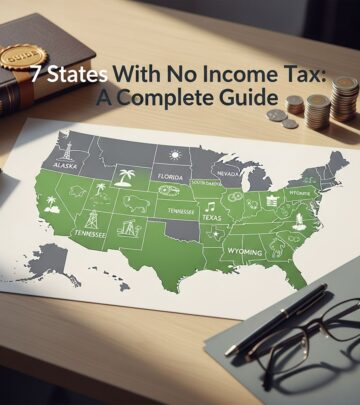
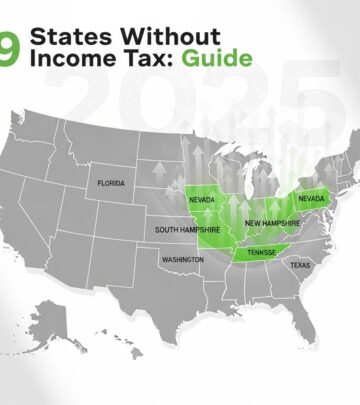
A: As of 2025, nine states have no state income tax: Alaska, Florida, Nevada, South Dakota, New Hampshire, Tennessee, Texas, Washington, and Wyoming. New Hampshire and Tennessee are recent additions, having repealed income taxes in 2025 and 2021 respectively.
Q: Do no-income-tax states really save residents money?
A: Not necessarily. While residents keep more income from paychecks, higher property taxes, sales taxes, and insurance costs often offset or exceed income tax savings. The actual savings depend on individual circumstances and spending patterns.
Q: Which no-income-tax state has the highest home insurance?
A: Florida has the nation’s highest homeowners insurance rates, averaging $10,675 annually in 2025. This exceptional cost primarily reflects climate-related risks and property damage exposure.
Q: Are no-income-tax states worth moving to?
A: The decision depends on individual circumstances. Carefully calculate total tax burdens, insurance costs, and living expenses specific to your situation. What saves money for one family may cost more for another.
Q: Which no-income-tax state has the lowest overall tax burden?
A: Wyoming generally offers the lowest combined tax burden among no-income-tax states, though high utility costs may offset sales tax advantages in certain circumstances.
References
- Why States With No Income Tax Aren’t as Affordable as They Seem — Money. 2025-11-29. https://money.com/no-income-tax-states-expensive/
- Which states have the highest and lowest income tax? — USAFacts. 2025. https://usafacts.org/articles/which-states-have-the-highest-and-lowest-income-tax/
- Income Tax by State: Which has the Highest and Lowest Taxes — TurboTax. 2025. https://turbotax.intuit.com/tax-tips/fun-facts/states-with-the-highest-and-lowest-taxes/
- States With No Income Tax in 2025: 9 Tax-Free States — Raisin. 2025. https://www.raisin.com/en-us/taxes/states-with-no-income-tax/
- Why States With No Income Tax Aren’t as Affordable as They Seem — NASDAQ. 2025. https://www.nasdaq.com/articles/why-states-no-income-tax-arent-affordable-they-seem
Similar Articles








Read full bio of medha deb