No-Haggle Car Buying: Complete Guide To Save Time And Stress
Discover how no-haggle car buying simplifies the process, eliminates negotiation stress, and helps you secure fair prices on new and used vehicles.
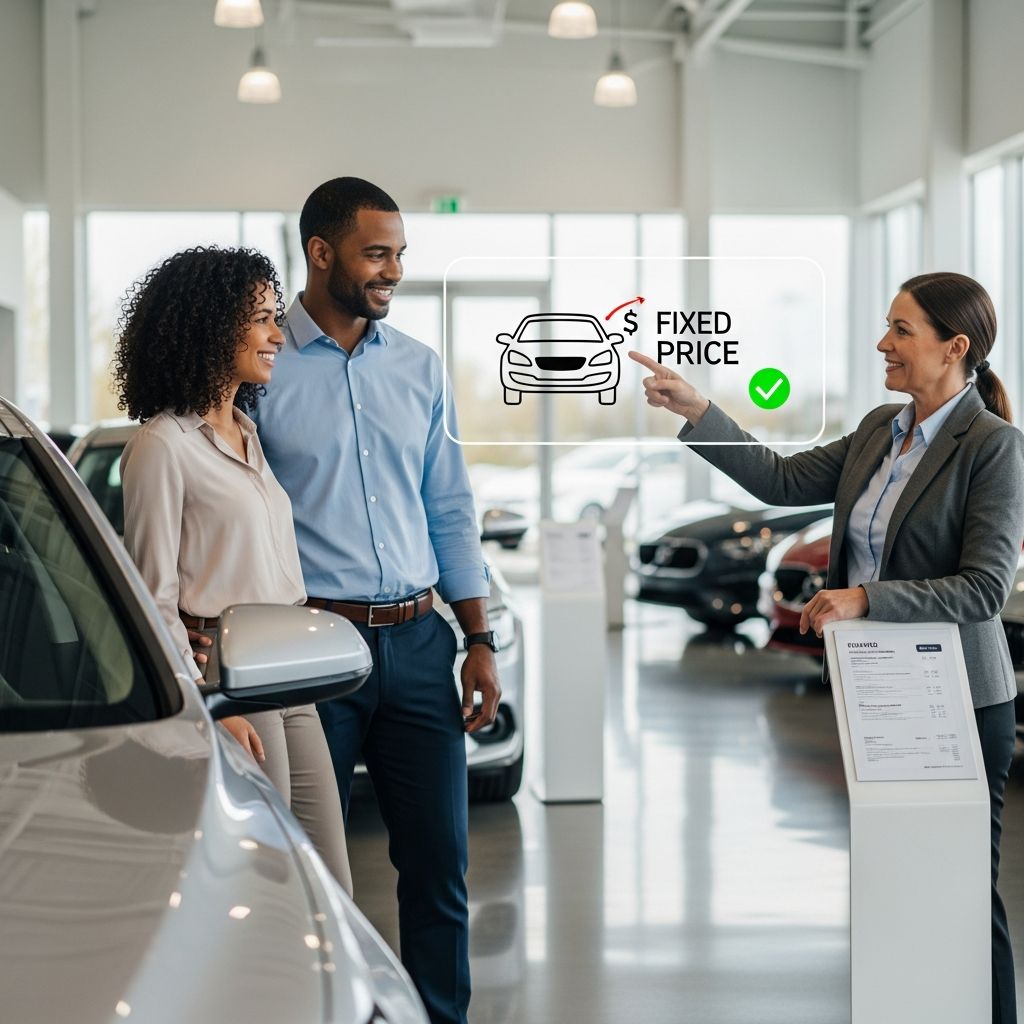
No-haggle car buying offers a straightforward approach to purchasing vehicles by setting a fixed price upfront, removing the need for back-and-forth bargaining at dealerships. This method appeals to buyers seeking transparency and reduced stress in the often intimidating car shopping experience.
Understanding the Basics of Fixed-Price Vehicle Sales
In traditional car sales, buyers and sellers engage in prolonged negotiations over the vehicle’s price, often leading to frustration and uncertainty. Fixed-price sales, commonly called no-haggle buying, flip this script by displaying a single, non-negotiable price for each vehicle. This price is typically determined through market analysis, ensuring competitiveness without requiring buyer input during the transaction.
The concept gained traction as consumers demanded more control and predictability. Sellers using this model often leverage data from industry tools to price vehicles below or at manufacturer suggested retail price (MSRP), providing a baseline for fair value.
- Fixed prices eliminate surprise markups.
- Buyers can compare offers across multiple sellers easily.
- Often applies to both new and pre-owned cars.
Key Advantages for Modern Car Shoppers
One primary benefit is the time savings. Without haggling, transactions can conclude in hours rather than days, ideal for busy individuals. Transparency builds trust, as the displayed price is final, fostering confidence in the deal.
Budgeting becomes simpler since buyers know exact costs upfront, excluding only taxes and fees. This predictability aids in securing financing and avoiding overextension. For those uncomfortable with negotiation, it levels the playing field against seasoned sales teams.
| Benefit | Description |
|---|---|
| Stress Reduction | No pressure from high-pressure sales tactics. |
| Price Comparison | Easy to shop around online or via apps. |
| Speed | Quicker purchase process from quote to drive-off. |
| Fairness | Prices based on market data, not individual leverage. |
Potential Downsides and Hidden Costs
While appealing, no-haggle isn’t flawless. Fixed prices might exceed what skilled negotiators could achieve through traditional bargaining, potentially costing hundreds or thousands more.
Taxes, registration, and dealer fees are typically excluded from the quoted price, adding unexpected expenses at checkout. Financing terms may still require discussion, as no-haggle often covers only the vehicle cost.
- Less flexibility for trade-ins or custom deals.
- Risk of inflated base prices to offset no negotiation.
- Limited options in low-inventory areas.
Major Players Offering No-Haggle Options
Several established names dominate this space. CarMax, a leader in used cars, provides fixed pricing with perks like extended test drives and home delivery, streamlining the process.
TrueCar connects buyers to dealers with pre-vetted quotes, while Costco Auto Program negotiates bulk rates for members. Online platforms like Carvana ship vehicles directly, maintaining strict no-negotiation policies.
Wholesale clubs such as Sam’s Club partner with local dealers for set prices, requiring a membership but offering volume-discounted rates.
How No-Haggle Works at Dealerships and Online
At physical no-haggle dealerships, prices appear on window stickers or websites. Buyers verify availability, test drive, and complete paperwork at the listed amount. Market-based pricing software ensures competitiveness by scanning regional listings.
Online services allow spec entry for instant quotes from partnered sellers. Brokers act as intermediaries, sourcing matches to buyer criteria for a fee, handling any subtle negotiations behind the scenes.
- Research desired model and fair market value.
- Obtain quotes from 3+ no-haggle sources.
- Schedule test drive or inspection.
- Finalize with independent financing if needed.
Strategies to Maximize Value Without Negotiating
Research is crucial. Use tools like Kelley Blue Book or Edmunds for benchmarks, then pit no-haggle quotes against each other. Timing purchases during end-of-month or model-year clearances can yield better fixed prices.
Secure pre-approval from banks or credit unions to counter dealership financing pitches. Scrutinize add-ons like rustproofing or extended warranties, often negotiable even in fixed-price setups.
For trade-ins, get independent appraisals to ensure fair valuation, as these aren’t always bundled seamlessly.
No-Haggle for New vs. Used Vehicles
New cars via no-haggle often hover near MSRP, suitable when demand is steady. Programs like those from manufacturer sites or clubs provide slight discounts without effort.
Used vehicles shine in this model due to variable values. Retailers like CarMax inspect rigorously, offering warranties and history reports for peace of mind.
| Aspect | New Cars | Used Cars |
|---|---|---|
| Price Range | Near MSRP | Market-driven discounts |
| Availability | High via networks | Extensive inventories |
| Extras | Factory warranties | Inspections & certifications |
Comparing No-Haggle to Traditional Haggling
Haggling demands preparation, confidence, and time but can yield superior deals, especially on high-demand models. No-haggle prioritizes convenience over potential savings, best for risk-averse buyers.
Hybrid approaches exist: use no-haggle baselines to inform negotiations elsewhere. Paying MSRP directly skips haggling but rarely optimizes value.
Frequently Asked Questions
Is no-haggle always cheaper?
Not necessarily; it depends on your negotiation skills and market conditions. Compare multiple quotes to confirm competitiveness.
Can I finance through no-haggle sellers?
Yes, but shop rates independently to avoid higher dealer loans.
Does no-haggle include fees?
Usually not; budget 8-10% extra for taxes and mandatory charges.
Are trade-ins fixed-priced too?
Often, but verify appraisals separately for accuracy.
Best for new or used cars?
Excels with used due to pricing variability and inspections.
Future Trends in Transparent Auto Sales
As digital tools advance, no-haggle will expand with AI-driven pricing and virtual showrooms. Blockchain for vehicle history could enhance trust further. Expect more hybrids blending fixed prices with customizable add-ons.
Consumer shift toward empowerment drives this evolution, with data transparency as the cornerstone. Buyers increasingly favor experiences mirroring online retail simplicity.
References
- No Haggle Car Pricing Buying Guide — Consumer Reports. 2012-12. https://www.consumerreports.org/cro/2012/12/no-haggle-prices/index.htm
- Is No-Haggle Car Buying a Good Idea? — LendingTree. N/A. https://www.lendingtree.com/auto/no-haggle-car-buying/
- What to Know About Buying From No-Haggle Car Dealerships — Capital One Auto Navigator. N/A. https://www.capitalone.com/cars/learn/managing-your-money-wisely/what-to-know-about-buying-from-nohaggle-car-dealerships/2478
- No-Haggle Pricing — Cassill Motors. N/A. https://www.cassillmotors.com/no-haggle-price-transparency-with-no-surprises
- No-Hassle Car Buying Guide — Auto Fanatics. N/A. https://www.autofanaticsusa.com/blog/no-hassle-car-buying
- The Shift Towards No-Haggle Car Buying — Covideo. N/A. https://www.covideo.com/resources/blog/no-haggle-car-buying/
Similar Articles








Read full bio of Sneha Tete