5 Amazing Facts About the Nickel’s 150th Anniversary
Discover fascinating facts about the U.S. nickel coin's 150-year history and evolution.
On May 16, 1866, Congress authorized the creation of a revolutionary five-cent coin composed of copper and nickel, marking a pivotal moment in American monetary history. This year celebrates 150 years of the nickel, one of America’s most enduring and underappreciated coins. Despite its ubiquity in our pockets and purses, most Americans know surprisingly little about this distinctive currency. The story of the nickel is intertwined with American economics, innovation, and cultural history. From its surprising origins during the Civil War to its role in establishing iconic brands, the nickel’s journey reveals much about the nation’s financial evolution and practical ingenuity.
Understanding the Nickel’s Historical Significance
The creation of the nickel was not merely a monetary whim but a practical solution to a genuine economic crisis. During the American Civil War, economic uncertainty led citizens to hoard precious metal coins, creating a severe shortage of circulating currency. The U.S. Treasury faced a genuine dilemma: the nation needed a viable alternative to maintain economic stability and keep commerce flowing. Rather than simply increasing production of existing coins, Treasury officials recognized an opportunity to innovate. The resulting five-cent piece, crafted from less valuable metals, became a cornerstone of American currency and a testament to problem-solving during turbulent times.
Five Fascinating Facts About the Nickel
1. The First Nickels Weren’t Worth a Nickel
One of the most paradoxical aspects of nickel history involves the coins that preceded the official nickel. Because Americans hoarded silver coins during the Civil War, creating a genuine shortage of circulating currency, the U.S. Treasury experimented with alternative denominations. In 1865, the government attempted to issue paper money in denominations as low as three cents. However, this proved impractical and cumbersome for merchants and consumers alike. The solution came in 1866 when Congress authorized the creation of three-cent pieces made from nickel and copper—the first coins to bear the “nickel” designation. These coins initially served the same function as the later five-cent nickels, establishing the precedent for using less valuable metals in American coinage. The following year, Congress expanded this concept by authorizing a five-cent nickel, which eventually became the standard.
2. The Nickel Wasn’t Our First Five-Cent Coin
Many Americans assume the nickel was the original American five-cent piece, but this assumption is incorrect. The silver half dime, also called the half-disme, had circulated throughout the United States since the 1790s, serving as the nation’s original five-cent coin. These silver coins were elegant and valuable, struck from precious metal and bearing distinctive designs that reflected American artistic aspirations. However, as silver hoarding increased during the Civil War, half dimes became increasingly scarce. The new nickel represented not a replacement by elimination but rather a coexistence with its predecessor. In 1873, nearly a decade after the nickel’s introduction, Congress finally discontinued the silver half dime, recognizing that the copper-nickel alloy had proven its utility and public acceptance. This transition marked a significant shift in American monetary policy toward base metal coinage.
3. A Coke Cost a Nickel for Generations
Perhaps no consumer product became more synonymous with the nickel than Coca-Cola. For decades, a standard bottle of Coke sold for exactly five cents—the price of one nickel. This relationship profoundly shaped American consumer culture and the nickel’s practical utility in everyday commerce. The Coca-Cola Company’s commitment to maintaining this five-cent price point was legendary and strategic. One significant reason for the company’s unwavering devotion to this price was purely mechanical: their vending machines accepted only nickels. Raising the price from one nickel to two—a 100 percent increase—seemed commercially unthinkable. This mechanical limitation actually reinforced consumer behavior and normalized nickel usage. Competitor Pepsi-Cola recognized an opportunity in this pricing strategy. Rather than matching Coca-Cola’s price exactly, Pepsi positioned itself as superior value by offering 12-ounce bottles “twice as much for a nickel” compared to Coke’s standard serving. Their memorable jingle became an earworm that persisted for generations. While the claim of exactly twice the volume was slightly exaggerated, in the less litigious era of early twentieth-century advertising, such claims escaped serious challenge. This competition actually elevated the nickel’s cultural prominence and established it as the benchmark price point for a generation of American consumers.
4. The Shield Nickel’s Controversial Design
The first nickels, known as “shield nickels,” featured distinctive imagery that proved controversial among numismatists and the public alike. The design displayed a large number “5” surrounded by stars on one obverse side and an elaborate, intricately striped shield on the reverse. The ray design surrounding the shield created significant production challenges, causing premature die wear and quality issues during striking. The American Journal of Numismatics famously described the Shield nickel as “the ugliest of all known coins,” a criticism that reflected both artistic and practical concerns. In response to ongoing production problems and public confusion, Mint officials eliminated the rays from the reverse design in 1867, hoping this modification would reduce technical difficulties. However, the design change inadvertently created new problems. Many confused Americans assumed that one design or the other must be counterfeit, generating widespread distrust. The Mint briefly considered abandoning the shield design entirely, demonstrating how public perception could influence monetary policy. Despite these challenges, the design persisted, and the Mint eventually produced sufficient quantities to meet commercial needs. By late 1869, enough nickels had been struck to satisfy commerce, and production decreased in subsequent years.
5. Massive Production Numbers Reflected Economic Need
The scale of nickel production during its early years demonstrated the genuine economic need for this new currency. In 1866 alone, the government minted an extraordinary 15 million five-cent nickels. This production volume exceeded previous coinage records and represented more than 100 times the number of silver half-dimes minted during the previous year. Such massive production reflected both the severity of the currency shortage and public acceptance of the new coin. This unprecedented scale of coinage meant that nickels rapidly became ubiquitous in American commerce, establishing their legitimacy and utility almost instantaneously. The rapid adoption of nickels into everyday transactions demonstrated that Americans readily accepted base metal coinage when presented with a practical necessity. This acceptance ultimately paved the way for wider use of non-precious-metal coins throughout the twentieth century.
The Evolution of Nickel Design and Composition
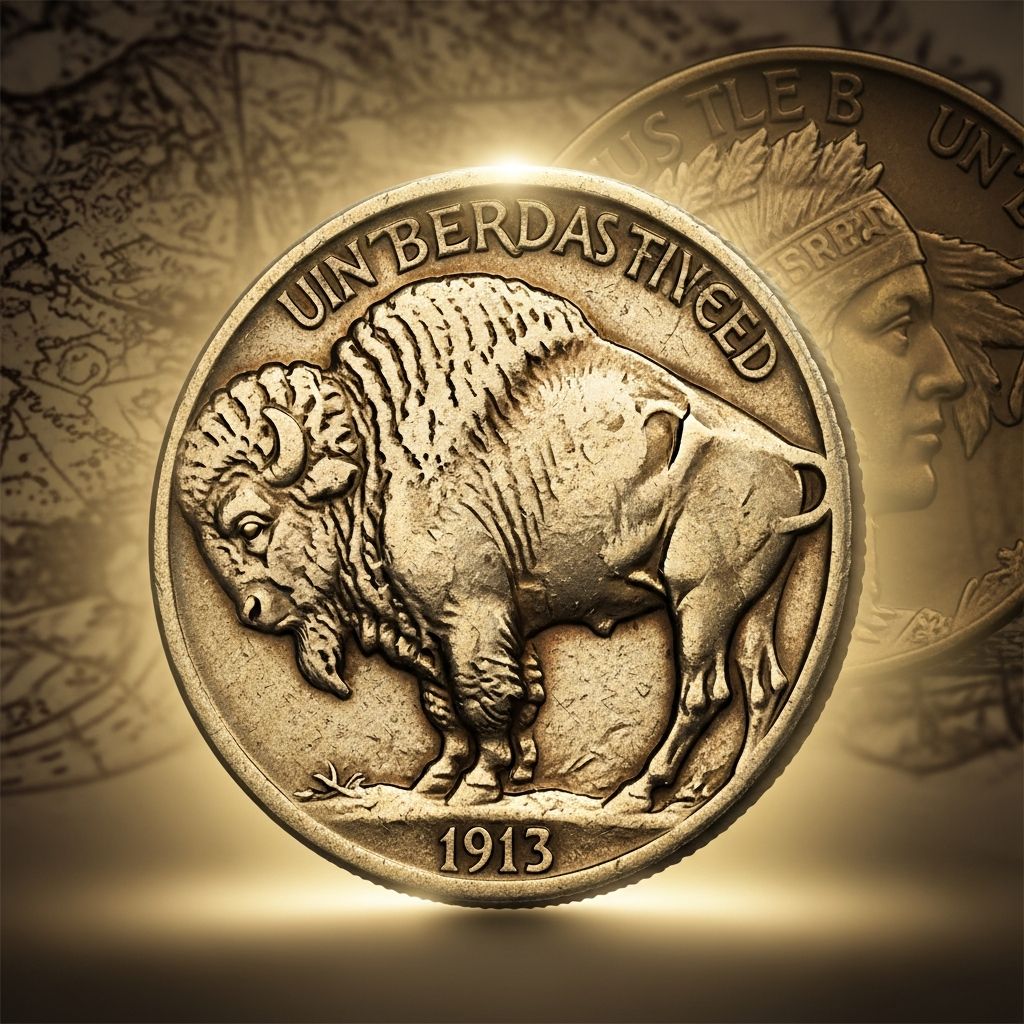
Beyond the Shield nickel, the five-cent piece underwent substantial design evolution. In 1883, Charles Barber created the Liberty Head nickel, featuring a classical depiction of Liberty with specific design requirements mandated by statutory law. The design incorporated wheat, cotton, and corn in a wreath on the reverse, surrounding a Roman numeral “V” for five. This design remained relatively stable until 1913, when sculptor James Earle Fraser introduced the iconic Buffalo nickel, featuring an American bison on the reverse and a Native American profile on the obverse. The Buffalo nickel, also known as the Indian Head nickel, has become among the most beloved and collected American coins, despite initial production problems. In 1938, the Mint held a design competition for yet another new nickel, with the winner receiving a $1,000 prize. The competition anticipated Thomas Jefferson’s 1943 bicentennial and called for his portrait on the obverse and depiction of his Monticello estate on the reverse. This Jefferson nickel design has endured for over 75 years, making it one of the longest-serving designs in American coinage history. The persistence of the Jefferson design speaks to both its artistic merit and the challenges involved in changing established currency designs.
Wartime Modifications and Material Innovation
During World War II, the nickel underwent extraordinary modifications reflecting wartime resource constraints. Traditional nickel composition became impractical when the metal was diverted to military production. The Mint developed an innovative alloy containing 56 percent copper, 35 percent silver, and 9 percent manganese that satisfied vending machine counterfeit detection while avoiding nickel entirely. This “war nickel” composition proved effective and was produced from October 1942 through 1945. These coins were struck with distinctive large mint marks appearing above Monticello, enabling easy identification and eventual withdrawal from circulation after the war. This wartime innovation demonstrated American industrial adaptability and the Mint’s engineering sophistication.
Cultural and Economic Impact
The nickel’s 150-year history reflects broader patterns in American monetary policy, consumer culture, and industrial development. The coin served as the standard price point for countless consumer goods throughout the twentieth century, from subway fare to candy bars to the aforementioned beverages. This standardization shaped consumer expectations and facilitated commercial transactions. The nickel’s composition, design evolution, and production history provide a fascinating window into American history, engineering, and aesthetics. Each design modification, production challenge, and material innovation tells a story about the nation’s priorities, challenges, and creative solutions.
Frequently Asked Questions About the Nickel
Q: Why is the five-cent coin called a “nickel”?
A: The coin is named after the metal it contains. Congress authorized the creation of five-cent coins composed of copper and nickel in 1866, establishing the naming convention that distinguishes nickels from other U.S. currency denominations.
Q: How many nickels were minted in the first year?
A: The U.S. Mint produced 15 million nickels in 1866, more than 100 times the number of silver half-dimes minted in 1865, reflecting the urgent need for five-cent coins in circulation.
Q: When did the silver half dime cease production?
A: The silver half dime was discontinued in 1873, nearly a decade after the nickel’s introduction, as the copper-nickel coin proved its utility and gained public acceptance.
Q: What is the composition of modern nickels?
A: Modern nickels contain 75 percent copper and 25 percent nickel, maintaining consistency with the original 1866 composition specifications established by Congress.
Q: Why did Coca-Cola price its product at exactly one nickel?
A: Coca-Cola maintained the five-cent price point for generations because their vending machines accepted only nickels, and raising the price to two nickels would represent a 100 percent increase that seemed commercially infeasible.
Q: What makes Buffalo nickels valuable to collectors?
A: Buffalo nickels, minted from 1913 to 1938, are beloved by collectors for their distinctive design featuring an American bison and Native American profile, making them among the most popular coins in numismatic collections.
The Lasting Legacy of the Nickel
As the nickel celebrates 150 years of continuous production, it stands as a testament to American monetary ingenuity and practical engineering. From its origins as an emergency solution to Civil War currency shortages, the nickel became an essential component of American commerce and culture. The coin’s evolution through multiple designs, material innovations, and production challenges reflects the nation’s adaptability and commitment to maintaining stable currency systems. Whether remembered for its association with Coca-Cola, its artistic designs, or its fundamental role in everyday transactions, the nickel remains a modest but significant piece of American history, worth far more in historical and cultural value than its five-cent monetary denomination.
References
- The Surprisingly Fascinating Reason the U.S. Has Nickel Coins — TIME. 2016-05-16. https://time.com/4326564/nickel-anniversary-150/
- Nickel (United States coin) — Wikipedia. Accessed 2025. https://en.wikipedia.org/wiki/Nickel_(United_States_coin)
- 5 Pretty Amazing Facts About the Nickel on Its 150th Anniversary — Money.com. 2016. https://money.com/nickel-150-anniversary-coin-facts/
- A Brief History of the Nickel — Smithsonian Magazine. https://www.smithsonianmag.com/history/brief-history-nickel-180958941/
- United States Mint Official Historical Records — U.S. Mint. https://www.usmint.gov/
Similar Articles








Read full bio of medha deb