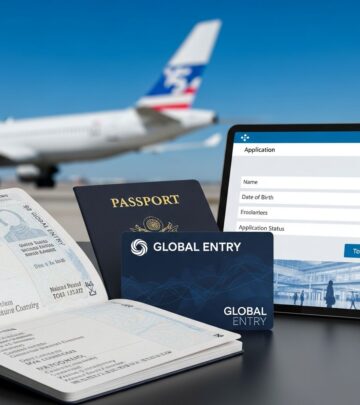
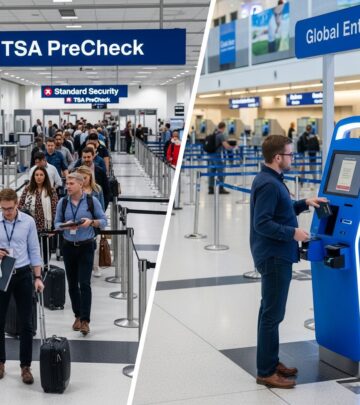
NEXUS vs Global Entry: Trusted Traveler Guide
Discover which U.S.-Canada border program saves you time: NEXUS for land crossings or Global Entry for air travel, with credit card perks.
Trusted Traveler Programs like
NEXUS
andGlobal Entry
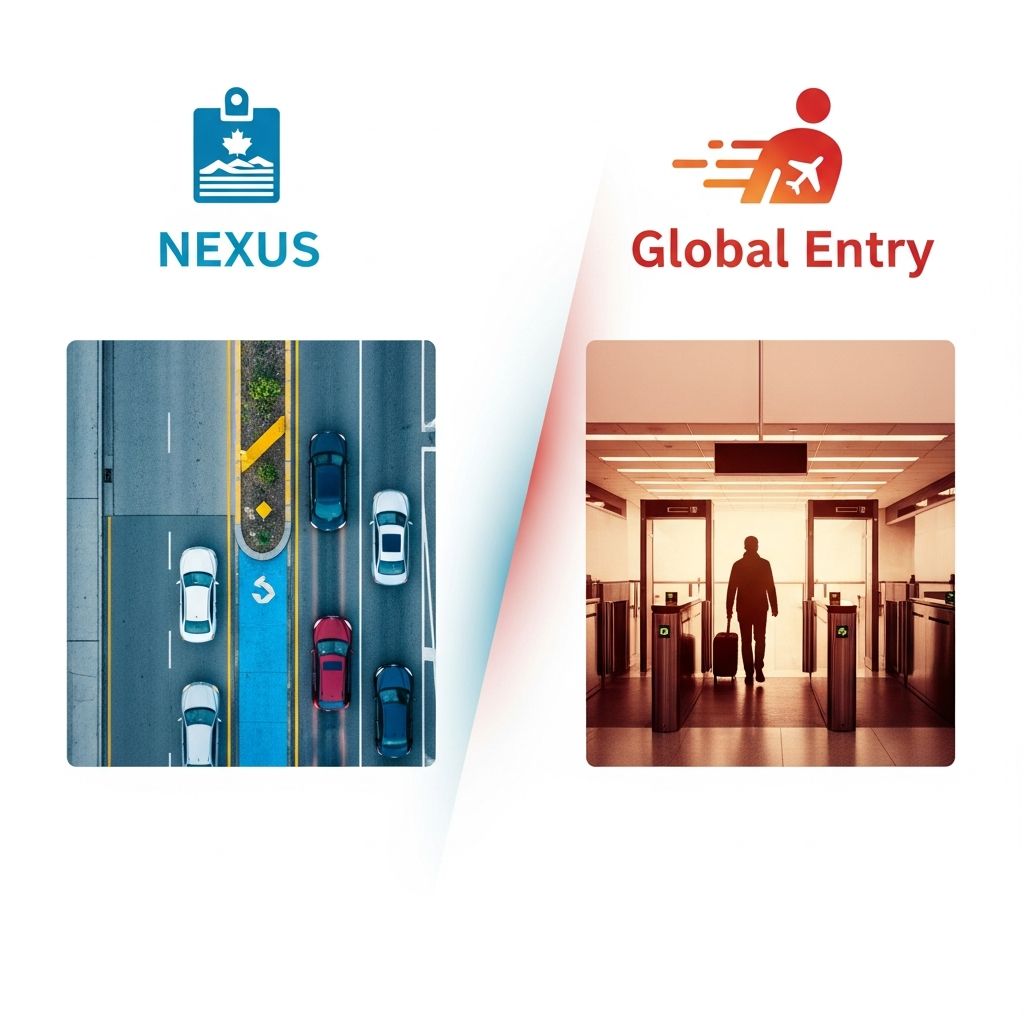
streamline border processes for frequent travelers, offering expedited clearance at airports, land borders, and marine ports. NEXUS focuses on U.S.-Canada crossings, while Global Entry targets international air arrivals, both administered by U.S. Customs and Border Protection (CBP) with key differences in scope and access.Understanding Trusted Traveler Programs
These initiatives allow pre-approved, low-risk individuals to bypass standard lines, reducing wait times significantly. NEXUS, a joint U.S.-Canada program, facilitates movement across their shared border via land, air, or sea. Global Entry, primarily for air travelers, speeds up U.S. re-entry after international flights and includes TSA PreCheck for domestic security.
Both require background checks, biometric enrollment, and conditional approval before final interviews, ensuring secure yet efficient travel. Memberships last five years, with renewal options available.
Core Features of NEXUS
**NEXUS** targets cross-border commuters and vacationers between the U.S. and Canada. Members use dedicated lanes at land ports like Detroit-Windsor or Peace Bridge, avoiding lengthy vehicle inspections.
- Dedicated lanes at select land borders and marine reporting sites.
- Expedited air processing at participating Canadian and U.S. preclearance airports.
- No need for routine customs declarations via phone or app for pre-approved trips.
- Access to TSA PreCheck when flying domestically in the U.S.
Ideal for those driving or boating frequently between the two countries, NEXUS cuts average wait times from hours to minutes during peak seasons.
Core Features of Global Entry
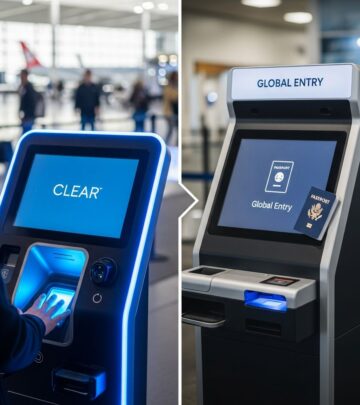
**Global Entry** empowers international flyers with kiosk-based entry upon U.S. arrival. After scanning passports and fingerprints at automated stations, members print receipts for quick officer verification, skipping traditional lines.
- Automated kiosks at over 70 U.S. airports and some international preclearance sites.
- Inclusion of TSA PreCheck for faster domestic security screening.
- Reciprocal benefits in partner countries like the Netherlands or South Korea.
- Paperless customs declarations via the Mobile Passport Control app integration.
This program shines for transatlantic or transpacific returnees, often halving re-entry times.
Eligibility Requirements Compared
Both programs demand U.S. citizens, permanent residents, or citizens of select nations meet strict criteria, including no criminal convictions and lawful travel history.
| Aspect | NEXUS | Global Entry |
|---|---|---|
| Citizenship | U.S./Canadian citizens, permanent residents; some Mexican citizens | U.S. citizens, permanent residents; citizens of 20+ countries (e.g., UK, Germany, India) |
| Age | 18+; minors with parental consent | 18+; under 18 free with parent/guardian member |
| Residency | Must reside in U.S. or Canada | No strict residency, but U.S.-focused |
| Travel History | Clean record; Canada-specific checks | Clean record; global background vetting |
NEXUS requires dual-country approval, adding Canada Border Services Agency (CBSA) review, while Global Entry is CBP-led with international partnerships.
Costs and Membership Details
Application fees are non-refundable, but many credit cards reimburse them fully or partially after approval.
| Program | Fee | Duration | Credit Card Reimbursement |
|---|---|---|---|
| NEXUS | $50 USD | 5 years | Yes, via cards like Chase Sapphire Reserve |
| Global Entry | $120 USD | 5 years | Yes, via cards like Capital One Venture |
NEXUS offers better value for Canada-focused travelers, while Global Entry’s higher fee bundles broader perks.
Application Process Breakdown
Steps for NEXUS
- Create a Trusted Traveler Programs (TTP) account online.
- Submit application with personal details and travel history.
- Await conditional approval (weeks to months).
- Schedule interview at joint CBP-CBSA centers or via Enrollment on Arrival for air travelers.
- Provide biometrics and pay fee upon approval.
Steps for Global Entry
- TTP account creation and application submission.
- Conditional approval notification.
- Book interview at enrollment centers or use Enrollment on Arrival at eligible airports.
- Biometrics, photo, and fee payment.
Processing times vary; Global Entry can take 4-6 months, NEXUS slightly less due to regional focus.
Pros and Cons Analysis
NEXUS Advantages
- Low cost for frequent U.S.-Canada road trips.
- Land border priority lanes unmatched by Global Entry.
- TSA PreCheck inclusion for U.S. flights.
Drawbacks: Limited to North America; fewer air locations.
Global Entry Advantages
- Worldwide airport coverage.
- TSA PreCheck plus customs acceleration.
- Family options for minors at no extra cost.
Drawbacks: Higher price; no land border lanes.
Which Program Fits Your Travel Style?
Opt for
NEXUS
if you cross into Canada by car or boat more than a few times yearly—its dedicated lanes save hours during holidays. ChooseGlobal Entry
for international flights beyond North America, gaining dual benefits without overlap costs. Frequent both? Global Entry covers air, but pair with NEXUS for land if needed.Hybrid travelers might calculate trips: four-plus international flights favor Global Entry; routine border hops suit NEXUS exclusively.
Credit Cards That Cover Enrollment Fees
Premium travel rewards cards offset costs, turning programs into free perks.
- Chase Sapphire Preferred/Reserves: Up to $100 Global Entry/NEXUS credit every 4 years.
- Capital One Venture Rewards: $120 statement credit post-approval.
- American Express Platinum: Full $120 Global Entry/NEXUS reimbursement.
Pay fees with the card and retain receipts for automatic credits.
Frequently Asked Questions
Does NEXUS work for air travel?
Yes, at select preclearance airports like Toronto or Vancouver, NEXUS members use expedited lanes, including TSA PreCheck domestically.
Can families apply together?
Global Entry allows minors under 18 free with a parent’s membership; NEXUS requires individual teen applications but parental consent.
How long until approval?
Expect 2-12 months; Enrollment on Arrival speeds interviews for arrivals.
Can I switch programs?
No direct transfer; apply separately, but prior approvals may expedite background checks.
Are there SENTRI or other alternatives?
SENTRI suits U.S.-Mexico land crossings; all Trusted Programs share TSA PreCheck.
Real Traveler Scenarios
Business commuter from Buffalo to Toronto: NEXUS lanes slash daily drive times. Leisure flyer from New York to Europe: Global Entry kiosk beats customs queues. Snowbird retirees boating Lake Ontario: NEXUS marine access simplifies reporting.
These programs enhance safety through vetting while rewarding loyalty—enroll via CBP’s TTP site to start.
References
- TSA PreCheck vs. Global Entry: What’s the Difference? — Experian. 2023-10-15. https://www.experian.com/blogs/ask-experian/what-is-the-difference-between-tsa-precheck-and-global-entry/
- Global Entry vs. TSA PreCheck®: Which is better? — Capital One. 2024-05-20. https://www.capitalone.com/learn-grow/money-management/tsa-precheck-global-entry-credit/
- Get Through Airport Security: TSA Pre-Check vs. Global Entry — Travel Bash. 2023-08-12. https://www.travel-bash.com/blog/tsa-pre-check-vs-global-entry
- TSA PreCheck vs. Global Entry: Which Is Better? — NerdWallet. 2024-02-28. https://www.nerdwallet.com/travel/learn/tsa-precheck-global-entry-explained
- What is the difference between TSA PreCheck and the other Trusted Traveler Programs? — U.S. Customs and Border Protection (CBP). 2025-01-10. https://www.help.cbp.gov/s/article/Article1848
Similar Articles








Read full bio of medha deb