News Trader: Definition, Types, and Trading Strategies
Master news trading strategies and capitalize on market volatility from economic announcements.

What Is a News Trader?
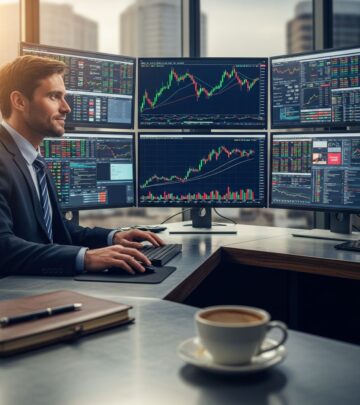
A news trader is an investor or trader who makes investment decisions primarily by following notable news announcements and economic reports. These market participants use market sentiment to their advantage by staying informed about significant developments that could impact financial markets. Rather than relying on technical analysis or fundamental research alone, news traders focus on identifying opportunities created by sudden market reactions to new information.
News traders typically enter and exit positions within the same trading day, making them a subset of day traders. They strategically position themselves during periods of high market reactivity, which often occurs immediately following major announcements or during the buildup to anticipated economic reports. The key to successful news trading lies in timing—understanding when to enter a position and when to capitalize on price movements as market enthusiasm builds and fades.
Understanding News Trading Fundamentals
At its core, news trading revolves around the principle that markets react to new information. When significant news breaks, investors and traders scramble to adjust their positions, creating substantial price volatility. News traders exploit this volatility by anticipating market movements and positioning themselves to profit from the price action that follows announcements.
The effectiveness of news trading depends on several critical factors. First, news traders must maintain continuous awareness of their trading markets and the types of announcements that typically move prices. Second, they need to understand the historical relationship between specific news events and market reactions. Finally, they must possess the discipline and speed to execute trades at optimal moments when volatility is highest.
Market Sentiment and Price Action
Market sentiment—the collective attitude of investors and traders toward a particular security or market—plays a crucial role in news trading. When positive news is announced, market enthusiasm can drive prices higher. Conversely, negative news can trigger sell-offs. News traders capitalize on these predictable sentiment shifts by positioning themselves ahead of anticipated reactions and closing positions as momentum begins to fade.
Types of News in Trading Markets
Not all news affects markets equally, and understanding different categories of news helps traders make informed decisions about which announcements warrant attention.
Unexpected News
Unexpected or sudden news events are inherently unpredictable and can create significant market disruptions. Examples include natural disasters, terrorist attacks, major financial crises, or surprising geopolitical developments. While these events cannot be precisely anticipated, experienced news traders prepare contingency strategies and remain alert to potential opportunities created by sudden price movements. The challenge with unexpected news lies in its inability to be predicted, yet astute traders can still position themselves to benefit from the resulting volatility by making informed assumptions about likely market direction.
Recurring News Announcements
Recurring news events follow predictable schedules and are often announced in advance. These include quarterly earnings reports, monthly employment statistics, inflation data releases, interest rate announcements by central banks, and other regularly scheduled economic indicators. Because the timing of these announcements is known, news traders can prepare strategies in advance and position themselves to capitalize on expected market reactions. Many traders set up alerts and reminders for these regular announcements to ensure they don’t miss important trading opportunities.
Common News Sources for Traders
Successful news traders monitor multiple sources of information to identify tradable opportunities. Key announcements and data releases that frequently move markets include Federal Reserve policy decisions and interest rate changes, employment reports and unemployment statistics, inflation and consumer price index data, earnings announcements from major corporations, merger and acquisition news, commodity price reports, geopolitical events affecting international markets, and regulatory announcements from financial authorities. By tracking these and similar developments, news traders can anticipate market reactions and execute timely trades.
How News Traders Make Decisions
News traders employ a methodical approach to market analysis and decision-making. They begin by studying their respective markets thoroughly, examining historical price data, identifying trends, and understanding how specific announcements have affected prices in the past. This foundational research enables them to make educated predictions about how future announcements might impact the market.
Market Familiarization and Research
Professional news traders invest considerable time in understanding the nuances of their trading markets. They analyze historical data to identify patterns in how markets respond to different types of announcements. For example, a trader might observe that positive earnings surprises typically drive stocks higher by 2-3% on average, or that stronger-than-expected employment reports tend to strengthen currency values. By identifying these relationships, traders develop intuition about likely market directions following specific announcements.
Timing and Positioning
Timing represents perhaps the most critical element of successful news trading. Traders must determine not only whether prices will move in a particular direction but also precisely when to enter and exit positions to maximize profits. Many traders position themselves in the minutes leading up to an announcement, anticipating the direction the market will move. Others wait for confirmation of the initial price movement before entering, sacrificing some profit potential in exchange for greater certainty about market direction.
Key News Trading Strategies
Several proven strategies have emerged within the news trading community, each with distinct risk-reward profiles and application scenarios.
The Fade Strategy
Fading represents one of the most popular news trading strategies among experienced traders. This approach involves trading against the predominant trend as market enthusiasm begins to diminish. Consider a scenario where a company announces exceptional earnings results before market opening. Anticipation of this positive news drives the stock sharply higher at the open. Rather than chasing this initial surge, a news trader practicing the fade strategy waits for the stock to peak amid enthusiasm. As optimism naturally begins to fade and profit-taking accelerates, the trader sells the stock, capturing gains from both the upside move and the subsequent pullback.
The fade strategy acknowledges a fundamental market truth: initial reactions to news are often exaggerated. Market participants frequently overreact to positive or negative information, creating opportunities for contrarian traders who recognize when sentiment has become excessive. By selling into strength or buying into weakness as initial enthusiasm fades, traders can capture profits from the normalization of prices.
Anticipatory Positioning
Some news traders employ anticipatory strategies by positioning themselves ahead of announced news releases. These traders make educated guesses about the likely content and market impact of forthcoming announcements, then position accordingly. If a trader believes an employment report will exceed expectations and boost stock prices, they might purchase shares or call options before the announcement. If the data disappoints, the trader exits the position at a small loss. If the data exceeds expectations, the trader profits from the price appreciation.
Volatility-Based Strategies
News announcements create temporary but intense volatility spikes that some traders exploit regardless of price direction. These traders focus on the magnitude of price movement rather than its direction, using options strategies or other volatility plays to profit from increased price swings. Such strategies can generate profits whether prices ultimately move higher or lower, provided the magnitude of movement exceeds trader expectations.
Advantages and Challenges of News Trading
Advantages
News trading offers several compelling advantages. First, the source of opportunity is transparent and observable by all market participants simultaneously, eliminating certain informational asymmetries. Second, the timing of many significant announcements is known in advance, allowing traders to prepare and position strategically. Third, the volatility created by news announcements often exceeds that of regular trading days, offering larger profit potential. Finally, news trading can be applied across multiple asset classes including stocks, bonds, currencies, and commodities.
Challenges and Risks
Despite its potential, news trading presents substantial challenges. First, unexpected news events cannot be reliably predicted, introducing randomness into trading outcomes. Second, even when timing is known in advance, the actual content and market impact of announcements can surprise traders. Third, news trading requires constant vigilance and rapid decision-making, creating psychological stress and potential for emotional mistakes. Fourth, transaction costs and spreads can be wider during volatile periods, reducing net profitability. Finally, regulatory concerns about front-running and market manipulation require traders to understand legal boundaries.
Staying Informed as a News Trader
Successful news traders maintain disciplined information-gathering routines. Setting up alerts for important announcements ensures traders never miss significant developments. Many traders subscribe to financial news services, economic calendars, and company earnings announcement databases. They follow statements and communications from major institutions like the Federal Reserve, recognizing that even policy signals have become tradable events as markets parse language for hints about future policy direction.
The evolution of communication by major agencies reflects how central banks and institutions attempt to manage market reactions to announcements. Rather than surprising markets with sudden policy changes, agencies increasingly signal shifts in advance. However, this communication itself has become a tradable opportunity as market participants attempt to interpret policy intentions from nuanced language and forward guidance.
Frequently Asked Questions
Q: What distinguishes a news trader from a fundamental analyst?
A: While fundamental analysts research company finances and economic conditions to determine fair value, news traders focus on short-term price reactions to announcements. News traders capitalize on immediate market sentiment shifts rather than long-term value assessments.
Q: Can news traders profit from unexpected events?
A: Yes, though with greater difficulty. While unexpected events cannot be predicted, experienced traders can position themselves based on educated assumptions about likely market directions and execute trades rapidly once events occur.
Q: What skills are most important for successful news trading?
A: Quick decision-making, emotional discipline, market knowledge, and timing ability represent the most critical skills. News traders must remain calm under pressure and execute trades decisively when opportunities arise.
Q: How much capital is required to start news trading?
A: Minimum capital requirements vary by market and brokerage, but day trading regulations require at least $25,000 for stock trading in the United States. However, traders should maintain larger capital reserves to manage risk effectively.
Q: Which news announcements create the most trading opportunities?
A: Federal Reserve decisions, employment reports, earnings announcements, and economic data releases typically generate the most significant and tradable market reactions.
Conclusion
News trading represents a specialized approach to market participation that requires substantial skill, discipline, and preparation. Rather than relying on traditional fundamental or technical analysis, news traders exploit the predictable volatility and sentiment shifts that follow significant announcements and economic developments. Success in this arena demands thorough market knowledge, rapid execution capabilities, and the psychological resilience to remain calm during high-volatility periods.
While news trading offers genuine profit potential, it also carries substantial risks. Unexpected announcements, surprisingly rapid market movements, and the pressure of split-second decision-making create challenges that separate successful traders from those who lose money. Those considering news trading should approach it with realistic expectations, proper risk management frameworks, and a commitment to continuous learning about their target markets.
References
- News Trader – Overview, Types of News, and Strategies — Corporate Finance Institute. 2025. https://corporatefinanceinstitute.com/resources/career-map/sell-side/capital-markets/news-trader/
- Federal Reserve Monetary Policy Decisions and Press Releases — Board of Governors of the Federal Reserve System. 2025. https://www.federalreserve.gov/newsevents.htm
- Employment Situation Summary — U.S. Bureau of Labor Statistics. 2025. https://www.bls.gov/news.release/empsit.htm
- Consumer Price Index – Average Energy Prices — U.S. Bureau of Labor Statistics. 2025. https://www.bls.gov/webapps/legacy/cpi_tables.htm
Similar Articles








Read full bio of medha deb