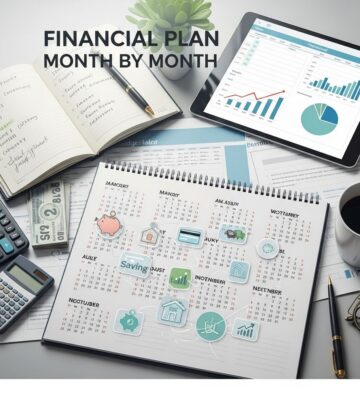
New Month New Goals: 1–3 Practical Ideas For Each Month
Use the fresh start of each month to build better money habits, improve your health, and strengthen your relationships.

Each new month is a built-in reset button. It is a natural checkpoint to review where you are, refine what matters, and choose specific goals that move you toward the life you want. Instead of waiting for a new year, you can use a new month, new goals mindset to make consistent progress all year long.
Psychology research shows that breaking big goals into smaller, manageable steps increases your chances of success and helps maintain motivation over time.1 Monthly goals are ideal for this: they are long enough to see progress, but short enough to feel urgent and achievable.
In this guide, you will learn practical monthly goal ideas for your finances, health, mindset, and relationships, plus strategies to stay organized and follow through. Use these ideas as a menu—choose what fits your current season of life and leave the rest.
Why “New Month, New Goals” Works
Many people think change requires a huge dramatic restart, but in reality, change thrives on small, repeated actions. The start of a new month is a powerful mental cue—a moment to pause, reset, and recommit.
- Clear time frame: A month gives you 4–5 weeks to test new habits without feeling locked in forever.
- Built-in review point: Each month-end becomes an automatic time to reflect and adjust.
- Less pressure than yearly resolutions: If one month doesn’t go as planned, another chance is only a few weeks away.
Behavioral science also suggests that people are more likely to start working toward goals following meaningful time markers—such as the beginning of a week, month, or year—sometimes called the “fresh start effect.”2
New Month New Goals: Your Finances
Your financial life affects nearly every other part of your well-being. Using each month to focus on a specific money goal can reduce stress, increase security, and give you more options in the future. Authoritative surveys repeatedly link financial stress with overall mental and physical health concerns, which makes proactive planning even more important.3
Below is a sample of monthly financial goals you can rotate through over the year.
| Month | Primary Money Focus | Example Monthly Goal |
|---|---|---|
| Month 1 | Debt | Create a complete debt payoff plan with due dates and extra payment targets. |
| Month 2 | Emergency Fund | Save your first $500 or one week of living expenses. |
| Month 3 | Spending Awareness | Track every expense and identify three categories to cut back. |
| Month 4 | Fun Savings | Open a separate account for travel or a big experience and set up automatic transfers. |
Get Out of Debt
Debt can drain your income, your energy, and your peace of mind. Using a new month as a starting point, you can map out a realistic path to becoming debt-free.
For your next month, try setting one focused debt goal such as:
- List every debt (credit cards, loans, lines of credit) with balances, interest rates, and minimum payments.
- Choose a payoff method (for example, the debt snowball or the debt avalanche) and decide which balance you will attack first.
- Commit to a specific extra payment amount this month—however small—and schedule it right after payday.
You can then repeat this pattern month after month, increasing your extra payment as your cash flow improves. Breaking the process into monthly steps keeps it from feeling overwhelming.
Build Your Emergency Fund
An emergency fund is your financial safety net. It protects you from unexpected events—like car repairs, medical bills, or a sudden loss of income—and helps you avoid relying on high-interest debt during a crisis.4
Personal finance experts often recommend saving at least three months of essential expenses, and up to six months or more for added security, especially if your income is irregular.4
Monthly goals to grow your emergency fund might include:
- Calculate your baseline emergency fund target (for example, three months of rent, groceries, and utilities).
- Open a dedicated high-yield savings account for emergencies only.
- Set up an automatic transfer every payday, even if it starts at a small amount.
- Challenge yourself to transfer any unexpected income—refunds, bonuses, small windfalls—into your emergency fund.
Save for Something Fun
Financial planning is not only about protection and obligations. It should also include joy. Deliberately saving for something fun makes it easier to stay disciplined in other areas because you know there is a reward in sight.
Use one month to start a fun-focused savings goal, such as:
- A weekend getaway or bigger vacation.
- A special celebration (birthday, anniversary, graduation).
- A memorable experience, like a concert, class, or adventure.
Estimate the total cost, divide it by the number of months until your target date, and set a monthly transfer amount. Consider keeping this in its own “fun fund” account so you can track progress easily.
New Month New Goals: Your Health
Your health underpins every other goal. Yet health changes rarely come from one huge decision; they develop through small habits practiced consistently. Monthly health goals let you experiment, course-correct, and build routines that last.
Good health includes more than just food and exercise—it also involves sleep, stress management, and preventive care. Research consistently connects healthy lifestyles with lower risk of chronic diseases and greater longevity.5
Assess Your Eating Habits
A new month is an ideal time to honestly evaluate how you are fueling your body. Instead of chasing extreme diets, aim for sustainable improvements that fit your budget and lifestyle.
Ideas for a one-month eating goal include:
- Keep a simple food log for 7–14 days to notice patterns—skipped meals, late-night snacking, or low fruit and vegetable intake.
- Add at least one serving of vegetables or fruit to two meals per day.
- Plan three or four budget-friendly, nutrient-dense meals and rotate them during the month.
- Limit sugary drinks and replace them with water or unsweetened alternatives most days of the week.
Learn About a New Eating Plan
If you decide you want to try a new way of eating—such as reducing added sugar, exploring a more plant-forward diet, or understanding how to balance your meals—dedicate a month to learning before dramatically changing your habits.
During that month, you can:
- Read a reputable book or guide written by registered dietitians or evidence-based organizations.
- Listen to podcasts or watch lectures from credible health professionals.
- Discuss potential changes with a healthcare provider, especially if you have existing conditions.
- Test a few recipes that match the eating style you are considering, focusing on affordability and taste.
This research-driven approach helps you avoid unsustainable fads and choose a plan that is safe, practical, and enjoyable for you.
Move More, Month by Month
Physical activity does not have to mean intense workouts or expensive equipment. Public health guidelines recommend at least 150 minutes of moderate-intensity aerobic activity each week, plus muscle-strengthening activities on two or more days.6 You can build toward this gradually with monthly goals.
Example monthly movement goals:
- Month 1: Walk for 10–15 minutes a day, five days a week.
- Month 2: Use a step tracker and aim to increase your average daily steps by 1,000.
- Month 3: Try one new form of exercise (like a dance class, online yoga, or strength training).
- Month 4: Schedule two active social outings, such as hikes or group fitness sessions.
New Month New Goals: Your Relationships & Character
Money and health matter, but so do the quality of your relationships and the kind of person you are becoming. Monthly goals around friendliness, open-mindedness, honesty, and emotional resilience can transform both your life and the lives of people around you.
Friendliness
Being intentional about kindness and connection can help you build a stronger support network and feel more rooted in your community. Even small gestures of friendliness create a more positive environment.
In one month, you might decide to:
- Introduce yourself to a neighbor you have not met yet.
- Invite someone from work, the gym, or a class to coffee.
- Send a message each week to check in on a friend or family member.
- Practice small acts of kindness—holding doors, offering sincere compliments, or writing a thank-you note.
Open-Mindedness
Open-mindedness helps you learn, grow, and better understand people who are different from you. A new month is an excellent time to choose one area where you want to broaden your perspective.
Monthly goals to build open-mindedness could include:
- Read a book or article written by someone from a different background than your own.
- Watch a documentary about another culture, belief system, or historical period.
- Attend a community event or cultural celebration you have never experienced before.
- Have a curious, respectful conversation with someone whose views differ from yours, focusing on listening more than debating.
Improve Your Response to Frustrations and Setbacks
Everyone encounters setbacks. The difference lies in how you respond. Developing emotional resilience is a long-term project, but you can practice it in small monthly experiments.
For example, you could set a monthly goal to:
- Pause and take three deep breaths before responding when you feel angry or irritated.
- Keep a brief journal of difficult moments and what you learned from them.
- Choose one recurring frustration (like traffic, delays, or long lines) and practice reframing it as built-in time to think or relax.
Over time, these practices can help you respond more thoughtfully instead of reacting on impulse.
Honesty—with Yourself and Others
Honesty is not only about telling the truth to others; it is also about being clear and sincere with yourself. Taking one month to focus on honesty can clarify what you want and improve your relationships.
Practical honesty goals might include:
- Writing down what you truly want in one area of your life—money, career, health, or relationships—without judging or minimizing your desires.
- Having a gentle but honest conversation with someone about a lingering issue or hurt.
- Reviewing your commitments and admitting where you have overpromised, then adjusting expectations.
Organize Your Schedule to Support Your Goals
Even the best goals can fail without a clear plan for when and how they will happen. Organizing your schedule turns good intentions into concrete actions. Many productivity experts emphasize that planning your time in advance increases your chances of following through.
Use a Planner to Track Your “New Month New Goals”
Whether you prefer digital tools or paper, a planner can help you translate monthly goals into weekly and daily tasks. The key is to keep it simple and consistent.
To use a planner effectively this month:
- Start by writing your 1–3 main goals for the month at the top of the first page.
- Break each monthly goal into weekly milestones (for example, “save $50 each week” or “prepare three healthy dinners”).
- Schedule specific times for goal-related tasks in your calendar, just like appointments.
- Review your planner briefly each morning and evening to stay on track.
The goal is not to create a perfectly filled calendar, but to give your priorities a visible place in your daily life.
Leverage the “New Month New Goals” Mantra to Improve Your Life
Using a new month, new goals mindset does not mean you must reinvent your life every 30 days. Instead, it means approaching each month as a focused chapter in a longer story. You can rotate through themes—finance, health, relationships, mindset—or dedicate several months in a row to the same area if it needs extra attention.
To put this into practice:
- Choose one main theme for the month (for example, “Money Reset” or “Move More”).
- Set 1–3 specific, measurable goals under that theme.
- Block time in your schedule and use simple tools (like checklists or habit trackers) to monitor your progress.
- At the end of the month, review what worked, what did not, and what you want to carry into the next month.
Over time, these monthly experiments compound into meaningful change. You gain financial stability, better health, stronger connections, and a clearer sense of who you are becoming.
Frequently Asked Questions (FAQs)
Q: How many goals should I set each month?
A: Aim for 1–3 meaningful goals per month. Fewer, well-chosen goals are easier to track and complete than a long list that overwhelms you.
Q: Should I focus on only one life area each month?
A: You can, but you do not have to. Many people choose one primary theme, like finances or health, and then include one small supporting goal in another area, such as relationships or mindset.
Q: What if I do not reach my monthly goal?
A: Treat the month as feedback, not failure. Review what got in the way, adjust the goal or your strategy, and decide whether to repeat, simplify, or replace the goal for the next month.
Q: How can I stay motivated all month long?
A: Break each monthly goal into weekly or even daily actions, track your progress visually, and celebrate small wins. Consider sharing your goals with a friend or accountability partner for added support.
Q: Is it better to set money goals or health goals first?
A: Both matter, and they often influence each other. If financial stress is affecting your daily life, starting with money may give you quick relief. If low energy or health issues are holding you back, focus first on simple health habits while maintaining basic financial responsibilities.
References
- Locke, E.A., & Latham, G.P. Building a practically useful theory of goal setting and task motivation. — American Psychologist. 2002-09-01. https://doi.org/10.1037/0003-066X.57.9.705
- Dai, H., Milkman, K.L., & Riis, J. The fresh start effect: Temporal landmarks motivate aspirational behavior. — Management Science. 2014-12-01. https://doi.org/10.1287/mnsc.2014.1901
- Financial Stress and Mental Health. — American Psychological Association. 2022-03-01. https://www.apa.org/news/press/releases/stress/2022/march-financial-stress
- Emergency savings: How much is enough? — Consumer Financial Protection Bureau (CFPB). 2021-08-01. https://www.consumerfinance.gov/consumer-tools/educator-tools/resources-for-older-adults/financial-security/emergency-savings/
- Healthy diet. — World Health Organization. 2020-04-29. https://www.who.int/news-room/fact-sheets/detail/healthy-diet
- Physical Activity Guidelines for Americans, 2nd edition. — U.S. Department of Health and Human Services. 2018-11-01. https://health.gov/sites/default/files/2019-09/Physical_Activity_Guidelines_2nd_edition.pdf
Similar Articles








Read full bio of Sneha Tete