New HVAC System Costs 2026: Complete Homeowner Breakdown
Discover 2026 pricing for HVAC replacements, from budget options to premium setups, plus tips to cut expenses and boost efficiency.
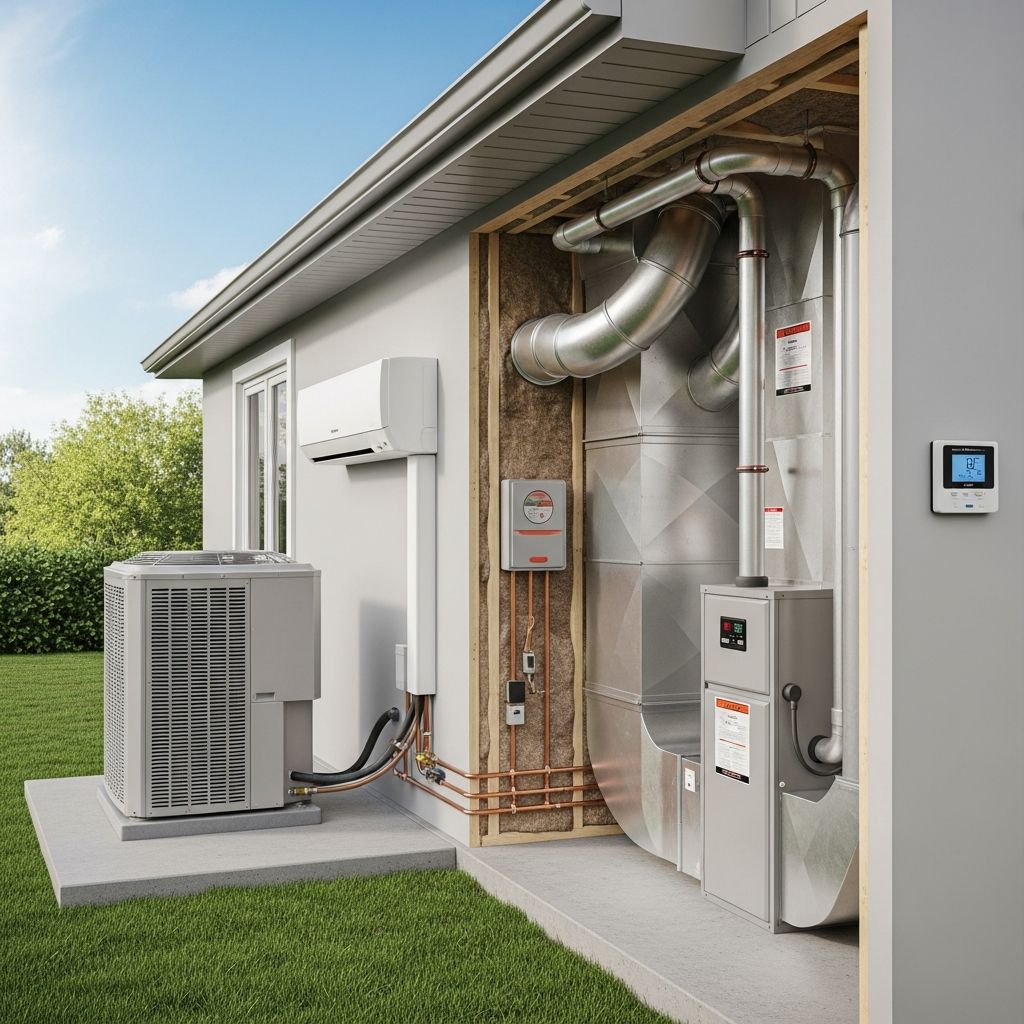
Replacing your home’s heating, ventilation, and air conditioning (HVAC) system is a major investment that ensures year-round comfort and energy savings. In 2026, expect to pay between $5,000 and $20,000 for a full setup, depending on home size, system type, and regional factors. This guide breaks down pricing, influences on costs, popular options, and ways to optimize your purchase for long-term value.
Understanding Average Pricing for Full HVAC Replacements
The typical cost for a complete HVAC replacement in a standard 2,000-2,500 square foot home falls around $11,590 to $14,100, based on data from thousands of recent projects. For combined furnace and central air conditioning units, homeowners often spend about $14,000, reflecting equipment, labor, and basic setup. Smaller homes under 1,500 square feet might see prices starting at $5,000 in low-cost areas, while larger properties over 3,000 square feet can exceed $20,000.
These figures include both heating and cooling components plus installation, but exclude extras like new ductwork, which adds $2,100 to $4,000 for a mid-sized home. Prices have stabilized in 2026 due to steady material costs and competition among manufacturers, though inflation in labor markets can push totals higher in urban zones.
Key Factors Driving HVAC Installation Expenses
Several variables determine your final bill beyond the base unit price. Home size directly correlates with capacity needs: a 1,000 square foot space requires less tonnage, keeping costs at $5,000-$7,000, whereas bigger homes demand robust units. System efficiency ratings, measured by SEER2 for cooling and AFUE for heating, elevate prices—high-efficiency models cost 20-50% more upfront but recoup via utility savings.
Geographic location matters too; coastal or extreme climates necessitate specialized equipment, inflating quotes by 10-30%. Labor typically accounts for 30-50% of the total, or $2,000-$5,000, covering removal of old units, wiring, and testing. Existing infrastructure plays a role—if ducts are absent or damaged, add thousands. Finally, brand choice ranges from economical to premium, with top-tier options like geothermal systems hitting $20,000-$100,000 for superior performance.
Popular HVAC System Types and Their Price Ranges
Choosing the right configuration balances upfront spend with operational efficiency. Central systems dominate for whole-home coverage, while alternatives suit specific needs like zoning or retrofits.
| System Type | Average Cost Range | Best For |
|---|---|---|
| Central Air Conditioner + Gas Furnace | $10,000-$20,000 | Large homes with ducts |
| Ductless Mini-Split | $2,000-$14,500 | Add-ons or no-duct homes |
| Heat Pump (Air Source) | $4,200-$8,000 | Mild climates, dual heating/cooling |
| Electric Furnace | $5,000-$7,000 | Budget electric heating |
| Geothermal Heat Pump | $20,000-$100,000 | Long-term efficiency seekers |
| Hybrid Dual-Fuel | $2,500-$10,000 | Cold regions with gas backup |
Central air conditioners alone run $6,465-$11,877, ideal for ducted setups. Ductless mini-splits offer flexibility at $2,142-$3,936 per zone, perfect for apartments or extensions. Heat pumps, increasingly popular, provide both heating and cooling for $4,200-$7,600, excelling in moderate weather. Geothermal options, though pricey, tap earth’s stable temperatures for unmatched efficiency, often with rebates offsetting the high entry cost.
Breaking Down Costs by Home Size
- Under 1,500 sq ft: $5,000-$12,000. Compact units suffice, minimizing materials and labor. Ideal for condos or starter homes where simplicity rules.
- 2,000-2,500 sq ft: $10,000-$15,000. The sweet spot for most families, balancing capacity and affordability around $13,430-$14,000.
- Over 3,000 sq ft: $15,000-$22,000+. Multi-zone or zoned systems prevent overworking single units, with duct upgrades common.
For a precise 2,000 square foot central air install, budget $8,000-$15,000 including tonnage matching (typically 3-4 tons). Proper sizing via Manual J calculations avoids short-cycling and inefficiency.
Extra Costs to Anticipate in Your Quote
Beyond the unit, watch for add-ons. New ductwork fabrication runs $2,100-$4,000; electrical upgrades for modern systems add $500-$2,000. Smart thermostats ($500-$1,000) and air purifiers ($300-$2,000) enhance control and quality. Permits average $100-$500, while old unit disposal costs $200-$500. In total, these can tack on 20-40% to base prices.
Upgrading to variable-speed compressors or high-SEER units (20+ rating) boosts costs by $1,000-$3,000 but slashes energy use by 30-50% annually. Financing spreads payments, often at 0% promo rates from manufacturers.
Strategies to Lower Your HVAC Investment
Timing purchases for off-season (fall/winter) yields 10-20% discounts. Multiple contractor bids—aim for three—reveal competitive pricing; negotiate using local averages. Energy Star certifications qualify for federal tax credits up to $2,000 via the Inflation Reduction Act (verify 2026 extensions). Local utility rebates, sometimes $500-$1,500, target efficient models.
Home warranties cap repair costs pre-replacement, potentially saving thousands if breakdown hits. DIY prep like clearing access saves labor fees. Long-term, proper maintenance (annual tune-ups at $100-$200) extends life to 15-20 years, delaying full swaps.
When to Repair vs. Replace Your Current Setup
The $5,000 rule guides decisions: if repairs exceed this threshold or your unit nears 10-15 years, opt for replacement. Age 15+ signals inefficiency; check for frequent breakdowns, uneven temps, or bills spiking 30%+. New systems boast 16-20 SEER vs. old 10 SEER, paying back in 5-7 years via savings.
Selecting the Ideal System for Your Lifestyle
Assess climate: heat pumps shine in swings above 40°F; furnaces for harsh winters. Zoned ductless suit multi-level homes. Prioritize AFUE 95%+ for gas, HSPF 9+ for pumps. Consult NATE-certified pros for load calcs ensuring no oversizing.
Frequently Asked Questions (FAQs)
How much is a new HVAC for a 2,000 sq ft home?
Around $13,430-$14,000 for central AC and furnace, varying by efficiency and location.
Does ductwork replacement add much to the bill?
Yes, $2,100-$4,000 extra for 2,000 sq ft, only if existing ducts fail inspection.
Are heat pumps cheaper long-term?
Often yes, with $4,200-$7,600 install and lower ops in mild areas, plus rebates.
What’s the cheapest full HVAC option?
Electric furnace combos at $5,000-$7,000 for small homes, though less efficient.
Can I finance a new system?
Yes, many contractors offer 0% plans; check utility loans too.
Next Steps for Your HVAC Project
Start with a professional energy audit ($200-$500) to pinpoint needs. Gather bids, verify warranties (10-12 years standard), and apply incentives. A well-planned replacement enhances comfort, cuts bills by 20-40%, and boosts resale value by 5-10%.
References
- How Much Does a New HVAC System Cost in 2025? — Jack Lehr. 2025. https://www.jacklehr.com/blog/air-conditioning-service/new-hvac-system-cost-2025/
- New HVAC System Cost Calculator: Get a Custom Estimate in 2026 — Modernize. 2026. https://modernize.com/hvac/cost-calculator
- How Much Does HVAC Replacement Cost? [2026 Data] — Angi. 2026. https://www.angi.com/articles/insider-s-price-guide-new-heating-and-cooling-system.htm
- Understanding the Cost of a New HVAC System — AC Direct. N/A. https://www.acdirect.com/blog/understanding-the-cost-of-a-new-hvac-system
- HVAC Replacement Costs: A Homeowner’s Guide — American Home Shield. N/A. https://www.ahs.com/home-matters/cost-savers/hvac-replacement-costs/
Similar Articles








Read full bio of Sneha Tete