New Credit Cards for Holiday Shopping: Benefits and Risks
Explore the advantages and disadvantages of opening a new credit card during the holiday season.

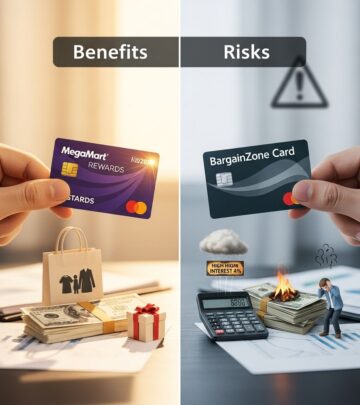
The holiday season brings increased spending opportunities and promotional offers designed to encourage consumers to apply for new credit cards. While these financial products can provide genuine benefits such as rewards points and introductory interest rates, they also carry significant risks that warrant careful consideration. Understanding both the advantages and disadvantages of opening a new credit card during the holidays can help you make an informed decision aligned with your financial situation and goals.
Understanding the Appeal of New Holiday Credit Cards
Retailers and financial institutions actively promote credit card offerings during the holiday season, recognizing that consumers are primed to spend significantly during this period. The promotional materials emphasize attractive incentives, but it’s essential to look beyond the marketing language and evaluate whether these cards genuinely serve your financial interests.
New credit cards often come with promotional periods and special features designed to appeal to holiday shoppers. These cards typically target consumers who plan to make substantial purchases between November and December, when holiday gift-giving and year-end entertaining are at their peak. The financial institutions behind these cards understand consumer psychology and design their offers accordingly.
Examining the Rewards and Benefits Structure
One of the most compelling reasons to consider opening a new credit card is the opportunity to earn rewards on holiday purchases. Many cards offer point systems, cash back programs, or airline miles that accumulate with each transaction. For someone planning to spend several thousand dollars on gifts and holiday-related expenses, the potential rewards can be substantial.
Beyond standard rewards, many new credit cards feature introductory offers that provide additional value:
- Introductory 0% APR periods that extend financing options without interest charges
- First-purchase discounts ranging from 10% to 40% off initial transactions
- Bonus rewards points for spending during the promotional period
- Shopping protections including purchase protection and fraud liability coverage
- Extended return periods that go beyond the standard retailer policies
Rewards cards with cash back percentages can be particularly valuable during high-spending periods. A card offering 5% cash back at select retailers can generate meaningful returns when used for holiday shopping, especially when combined with additional promotional codes or coupons.
The Critical Issue of Interest Rates and Fees
While the promotional benefits of new credit cards are attractive, the underlying cost structure frequently undermines these advantages. This represents perhaps the most significant drawback that consumers overlook when seduced by attractive opening offers.
Standard credit cards carry average annual percentage rates of approximately 20%. Retail-specific credit cards, which retailers actively push during the holidays, typically charge even higher rates. These store cards frequently feature APRs ranging from 20% to 28%, substantially higher than traditional cards. In some cases, store credit cards can exceed 25% interest.
The mathematical reality becomes apparent when you consider the long-term cost. If you purchase $1,000 in holiday gifts using a store credit card with a 25% APR and carry the balance for six months, you would incur approximately $125 in interest charges. This interest often exceeds the initial discount you received for opening the account, eliminating any financial advantage gained through promotional offers.
Additionally, some new cards may include annual fees, foreign transaction fees, or balance transfer fees that add to the overall cost structure. Before applying, carefully review the complete fee schedule.
The Credit Score Impact: A Frequently Underestimated Consequence
Opening a new credit card triggers specific changes to your credit profile that can negatively impact your credit score. Understanding these mechanisms is crucial, as credit scores influence interest rates on mortgages, auto loans, and other borrowing.
Each credit card application generates a hard inquiry on your credit report. While a single inquiry typically reduces your score by 5-10 points temporarily, opening multiple store cards in a short period—a common behavior during the holidays—compounds this damage. Multiple hard inquiries in rapid succession signal to lenders that you may be a high-risk borrower seeking excessive new credit.
The more damaging impact comes from credit utilization, which represents the percentage of your total available credit that you are actively using. Credit utilization accounts for approximately 30% of your FICO credit score calculation, making it the second most important factor after payment history. If you spend $1,000 on a new card with a $2,000 limit, you’ve utilized 50% of available credit, which can lower your score. Financial experts recommend keeping utilization below 30% to maintain optimal credit scores.
New accounts also reduce your average account age, which comprises 15% of your credit score. Opening multiple new accounts simultaneously can significantly lower this metric.
Strategies to Prevent Overspending and Debt Accumulation
The ease and convenience of credit card transactions during the holiday season creates psychological conditions that encourage overspending. Research consistently shows that consumers spend more when using credit compared to cash transactions. Implementing deliberate strategies can counteract these tendencies.
Consider these protective measures before and during your holiday shopping:
- Establish a detailed budget that reflects your actual financial capacity, not aspirational spending levels
- Create a comprehensive gift list before shopping to eliminate impulse purchases
- Use budget tracking apps that alert you when approaching spending limits
- Set a spending cap for individual credit cards and commit to not exceeding it
- Avoid applying for multiple cards in a short timeframe
- Calculate the actual cost of carrying a balance before making major purchases
- Distinguish between wants and needs, restricting credit card use to essential items
The principle underlying successful credit card use during holidays is fundamental: only charge what you can afford to pay off within the promotional period. If you cannot afford an item with cash, charging it to a credit card does not make it affordable—it merely defers the cost while potentially adding interest charges.
Comparing Store-Specific Cards to General Rewards Cards
When considering which type of new credit card to open, the choice between store-specific cards and general rewards cards significantly impacts your financial outcome.
| Feature | Store Credit Cards | General Rewards Cards |
|---|---|---|
| Initial Discount | 10-40% off first purchase | Typically none |
| Interest Rate (APR) | 20-28% range | 13-20% typical range |
| Rewards Structure | Often limited to specific retailer | Broader applicability (5% categories, 1-2% general) |
| Usability Outside Store | Limited or restricted | Accepted everywhere |
| Long-term Value | High if paid immediately; negative if carried | Consistently positive with responsible use |
This comparison reveals that while store cards offer impressive immediate discounts, general rewards cards frequently provide better long-term value. A rewards card earning 2% cash back on all purchases and carrying a lower interest rate will typically outperform a store card after the initial promotional period ends.
Alternative Approaches to Managing Holiday Spending
Opening a new credit card is not the only mechanism for managing holiday spending effectively. Several alternatives deserve consideration depending on your financial circumstances and objectives.
Personal loans may offer competitive interest rates for qualified borrowers, particularly those with strong credit scores. These fixed-term, fixed-rate loans eliminate the temptation of continuous charging and provide a clear repayment endpoint.
Existing rewards cards you already possess may provide sufficient rewards and benefits without incurring the credit score damage of a new account. If you have an established card with favorable terms and strong rewards structures, maximizing that card’s benefits may outweigh opening a new account.
Deferred purchase plans offered by some retailers allow you to spread payments over time without credit card involvement, though careful attention to terms is necessary to avoid unexpected fees.
Cash and debit payments force spending discipline and eliminate interest charges entirely, though they sacrifice rewards opportunities.
Evaluating Your Personal Financial Situation
The decision to open a new credit card must account for your individual financial circumstances. Not every strategy works for every person. Consider these personal factors:
- Your current credit score and credit history
- Your ability to pay off the entire balance before the promotional period expires
- Your existing credit utilization and total available credit
- Your spending discipline and tendency toward impulse purchases
- Your anticipated holiday spending amount and timeline
- Your long-term financial goals and whether a new account aligns with them
Consumers with excellent credit scores, demonstrated payment discipline, and plans to completely pay off holiday purchases during promotional periods stand to benefit most from new credit cards. Conversely, those with challenged credit scores, history of carrying balances, or tendency toward impulse spending should exercise significant caution.
The Bottom Line: Making an Informed Decision
Opening a new credit card for holiday shopping can be advantageous under specific circumstances. The combination of rewards, introductory 0% APR periods, and purchase protections creates genuine financial benefits for well-prepared, disciplined consumers.
However, these benefits materialize only when certain conditions are met. You must commit to paying the entire balance before promotional periods end, maintain spending within a pre-established budget, and avoid opening multiple cards simultaneously. You should also resist the psychological triggers that encourage overspending during the holiday season.
For many consumers, the risks—particularly interest rate exposure, credit score impact, and overspending temptation—outweigh the promotional benefits. These individuals should either maximize existing credit cards or explore alternative financing methods.
The key question to ask yourself is straightforward: Do the benefits of opening this card specifically align with my financial situation and ability to execute the required discipline? If the answer is unequivocally yes, proceed cautiously. If doubt exists, the safer approach is to use established financial products and payment methods you already understand and manage successfully.
Frequently Asked Questions
How much does a new credit card application impact my credit score?
A single hard inquiry typically reduces your score by 5-10 points temporarily. The impact diminishes over time, but multiple applications within a short period create compounding damage that can lower your score by 25-50 points or more.
Can I use a new card’s 0% APR offer indefinitely?
No. Introductory 0% APR periods are temporary promotional offers, typically lasting 6-21 months. After this period ends, the regular APR applies to any remaining balance. You must plan to pay off the balance before the promotion expires.
Is a store credit card worth the discount if I pay the balance immediately?
Yes, potentially. If you secure a 20% discount on a significant purchase and pay the balance during the first billing cycle before any interest accrues, you’ve realized the savings without cost. The risk emerges when you carry a balance into subsequent months.
What is a healthy credit utilization ratio?
Financial experts recommend keeping credit utilization below 30%. This means if you have $10,000 in total available credit across all cards, you should use no more than $3,000 at any time. New holiday spending can easily push utilization above this threshold, damaging your score.
Should I close a new credit card after the holidays?
Closing new accounts can further damage your credit score by reducing total available credit and decreasing average account age. If you open a card, it’s generally better to keep it open and unused rather than closing it, assuming there are no annual fees.
References
- AbbyBank — AbbyBank. 2024. Should I Use a Credit Card for Holiday Shopping?
- Holiday Shopping with Credit Cards Do’s and Don’ts — SCCU. 2024. Holiday Shopping with Credit Cards Do’s and Don’ts
- Pros and Cons of Retail Credit Cards for Holiday Shopping — SmartAsset. 2024. Pros and Cons of Retail Credit Cards for Holiday Shopping
- Do’s and Don’ts of Using Credit Cards During the Holidays — AZ Central Credit Union. 2024. Do’s and Don’ts of Using Credit Cards During the Holidays
- Pros and Cons of Using Credit Cards for Holiday Purchases — Wheelhouse Credit Union. 2022. Pros and Cons of Using Credit Cards for Holiday Purchases
- Should I Open a New Credit Card for Holiday Shopping? — Experian. 2024. Should I Open a New Credit Card for Holiday Shopping?
- How Holiday Shopping Can Impact Your Credit Score — Guardian Credit Union. 2024. How Holiday Shopping Can Impact Your Credit Score
Similar Articles








Read full bio of medha deb