Netflix Password Sharing Crackdown: 6 Ways To Save
Netflix's crackdown on password sharing is boosting subscribers and profits—here's what it means for your wallet and how to adapt.
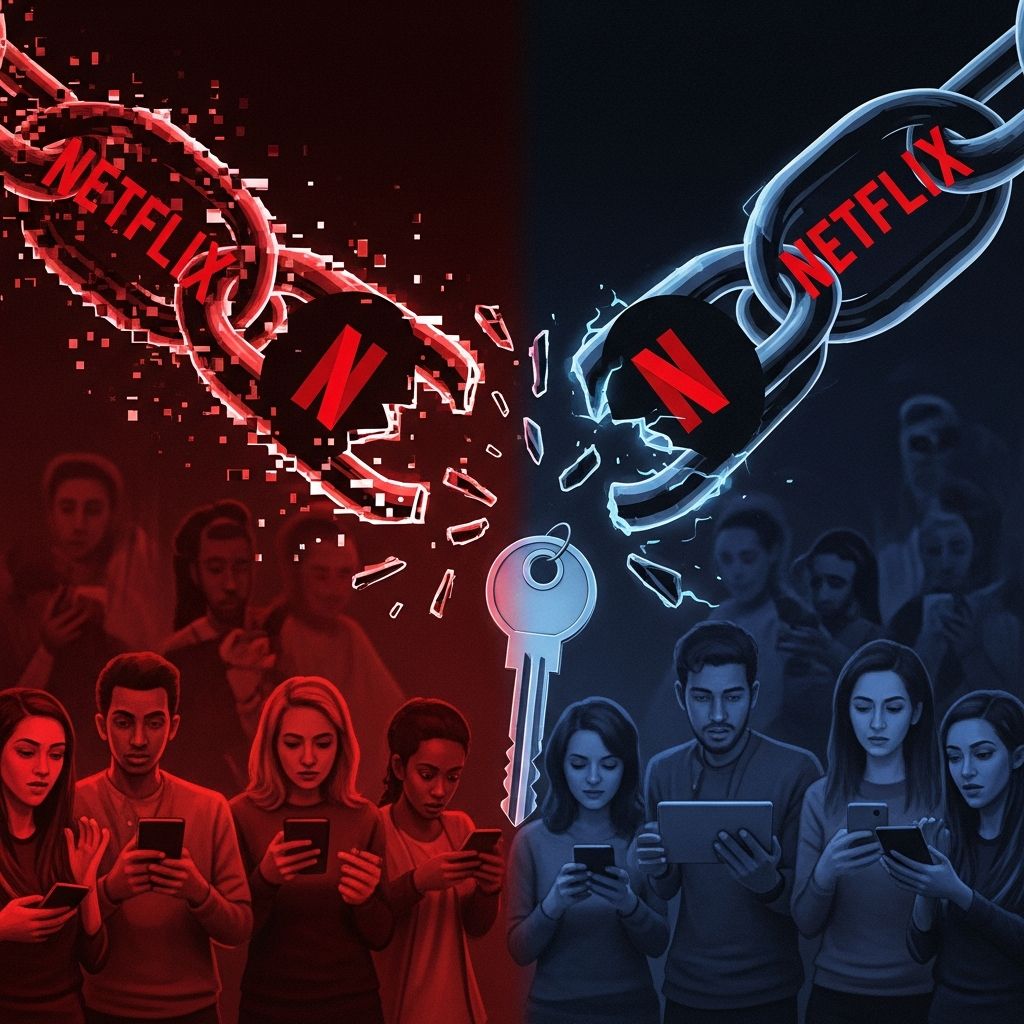
Netflix’s aggressive crackdown on password sharing outside households has transformed its business model, converting millions of freeloading users into paying subscribers and fueling record growth. Launched in phases starting in 2022 and fully rolled out in the U.S. by May 2023, the policy defines a
household
as devices connected to the primary location’s IP address, blocking extra-home logins unless verified or paid for. This shift added over 5.9 million subscribers in nine months ending 2023, pushing totals past 238 million globally, with sharing rates dropping from 15-16% to about 10% in U.S. households per self-reported surveys.While controversial, the crackdown prioritizes revenue amid rising content costs for hits like Stranger Things. Netflix now offers
paid sharing
for extra members at $7.99/month—cheaper than full plans—and profile transfers. As of 2026, rumors of reversing the policy remain unfounded, with no official announcements reversing household-only sharing. This guide breaks down the rules, detection tactics, costs, workarounds, alternatives, and FAQs to help you navigate and minimize expenses.Why Netflix Cracked Down on Password Sharing
Password sharing was rampant pre-2023, with Netflix estimating 100 million households worldwide piggybacking on others’ accounts—about 25% of UK users or 4 million homes. In the U.S., sharing hovered at 14-16% from 2018-2022 before plummeting post-crackdown. What was once tacitly allowed grew unsustainable as competition intensified from Disney+, Max, and others, and licensing/production expenses soared.
Streamers faced pressure for profitability; Netflix’s move pressured rivals too—Disney+ and Max announced similar crackdowns. Results? Profits soared, with password enforcement and ad-tier intros driving surges. By mid-2024, the strategy proved its worth, converting sharers via prompts for verification codes, extra-member adds, or full accounts.
- Timeline: Pilots in Latin America/Canada (2022), U.S./100+ countries (May 2023).
- Impact: 238M+ subscribers by end-2023; sustained growth into 2026.
- Business Win: Reduced ‘free riders,’ boosted revenue without losing popularity.
How Netflix Detects Password Sharing
Netflix leverages viewing data,
IP addresses
,device IDs
, and login patterns to flag sharing. If logins occur frequently outside the primary household IP (set during account setup), users see a verification screen requiring a code texted to the account owner. Household is dynamically updated via periodic home Wi-Fi connections—once a month minimum for extras.New tools include a
Manage Access and Devices
page for revoking logins and setting primary locations. No VPNs officially supported; they risk content blocks or suboptimal libraries. Self-reports confirm efficacy: U.S. sharing fell sharply post-2023.| Detection Method | How It Works | Consequence |
|---|---|---|
| IP Address Tracking | Compares logins to primary household IP | Verification prompt or block |
| Device IDs | Monitors unique hardware fingerprints | Flags multi-location use |
| Viewing Patterns | Analyzes watch history anomalies | Triggers re-authentication |
| Login Frequency | Requires monthly home Wi-Fi check-in | Extra member upsell or logout |
What Happens If You’re Caught Sharing?
Caught users face a popup: re-authenticate with a code, add an extra member ($7.99/mo), transfer profile to a new account, or subscribe separately. No immediate bans, but repeated flags lead to locks. Account owners manage via app: approve/deny devices, kick profiles.
For families split across locations (e.g., college students), paid sharing creates sub-accounts with personalized logins, limited to two extras per standard/premium plan. Transfers preserve watch history.
Netflix Plan Costs and Paid Sharing Options (2026 Pricing)
Plans tier by streams, quality, extras. Crackdown nudged upgraders; extras discount vs. full subs.
| Plan | Price/Mo | Streams | Quality | Extras Allowed |
|---|---|---|---|---|
| Standard with Ads | $6.99 | 2 | 1080p | 0 |
| Basic | $9.99 | 1 | 720p | 1 |
| Standard | $15.49 | 2 | 1080p | 1 |
| Premium | $22.99 | 4 | 4K | 2 |
Extra Member: $7.99/mo each, own login/profile, no ad-tier eligibility. Cheaper than duplicating ($15.49+ savings). Downgrade if solo post-split.
Ways to Get Around the Crackdown (Legit and Workarounds)
Netflix pushes compliance, but options exist:
- Verify Quickly: Share codes promptly for occasional use.
- Monthly Check-In: Connect to home Wi-Fi once/month.
- Paid Sharing: Ideal for family; sub-accounts maintain separation.
- Profile Transfer: Move history to recipient’s new paid account.
- VPN Caution: Masks IP but risks geo-blocks, wrong content; Netflix detects many.
- Downgrade + Bundle: Switch to ads tier, bundle with Hulu/Disney+ for multi-service value.
Family dilemmas persist—e.g., approving one relative may redefine household, prompting others’ flags. Prioritize or split subs.
Alternatives to Netflix for Budget-Conscious Viewers
Cut costs with rivals cracking down similarly but offering bundles/deals:
- Disney+ Bundle: Hulu + ESPN+ from $9.99/mo; laxer sharing historically.
- Max: $9.99 ads tier; upcoming crackdown.
- Amazon Prime Video: $8.99 bundled; household sharing looser.
- Free Tiers: Tubi, Pluto TV ads-supported, no subs.
- Library Apps: Kanopy/Hoopla free with card.
Rotate services, cancel post-binge—churn saves 50%+ yearly.
Netflix Password Sharing FAQs
What is Netflix’s household definition?
A collection of devices signed into the same internet connection (primary location IP). Updates via periodic home logins; multi-homes possible with verification.
Can I still share with family in another state?
Yes, via paid extra member ($7.99/mo, up to 2 on premium). Own login, profile.
Does VPN bypass the crackdown?
Theoretically masks IP, but Netflix blocks VPNs, serves wrong libraries, and may close loopholes.
How do I add/remove extra members?
Via Manage Access page: invite email, they get sub-account. Revoke anytime.
Is password sharing returning in 2026?
No confirmed plans; policy remains household-only.
What’s cheaper: extra member or new account?
Extra ($7.99) beats basic ($9.99+); ideal for 1-2 users.
Can I transfer my profile?
Yes, moves history/recommendations to new account free.
This crackdown reshaped streaming economics, forcing choices but unlocking discounts. Track via app; bundle for max savings. (Word count: 1678)
References
- Netflix’s password sharing crackdown is delivering — NewsCast Studio. 2024-03-22. https://www.newscaststudio.com/2024/03/22/netflix-password-sharing-effects/
- Netflix password sharing crackdown: what to do about it — Stuff.tv. 2023 (approx.). https://www.stuff.tv/features/netflix-password-sharing-what-to-do-about-the-steaming-services-crackdown/
- Netflix’s Password-Sharing Crackdown Pays Off — Biz New Orleans. 2024-07-18. https://bizneworleans.com/netflixs-password-sharing-crackdown-pays-off/
- Is Netflix Password Sharing Back In 2026? Full Details Inside — IMDb News. 2026 (approx.). https://www.imdb.com/news/ni65648383/
Similar Articles








Read full bio of medha deb