Net Margin: Definition, Formula, and Calculation
Understanding net margin: The essential profitability metric for evaluating company performance.

What Is Net Margin?
Net margin, also known as net profit margin or net profit ratio, is a financial metric that measures how much profit a company generates from every dollar of revenue it receives. It represents the percentage of sales that remains as profit after a company has paid all its expenses, including operating costs, interest payments, taxes, and other obligations. Net margin is one of the most important profitability ratios used by investors, analysts, and business owners to evaluate a company’s financial health and operational efficiency.
In essence, net margin answers a fundamental question: what percentage of each sales dollar does a company keep as actual profit? A higher net margin indicates that a company is more efficient at converting revenue into profit, while a lower net margin suggests that a larger portion of revenue is consumed by expenses. This metric provides valuable insight into a company’s ability to manage costs and generate earnings from its core business operations.
Understanding Net Margin
Net margin is crucial for understanding a company’s true profitability because it accounts for all expenses, not just operating costs. Unlike gross margin, which only considers the cost of goods sold, or operating margin, which excludes taxes and interest, net margin provides a complete picture of profitability by factoring in every expense category.
Investors use net margin to compare the financial performance of different companies, particularly within the same industry. A company with a 20% net margin keeps 20 cents of every dollar in revenue as profit, while a company with a 5% net margin keeps only 5 cents. This difference can be significant when evaluating which companies are more efficient at managing their finances and delivering shareholder value.
Net margin is also influenced by factors beyond operational efficiency, such as capital structure (how much debt a company uses), tax rates, and one-time gains or losses. Therefore, understanding the components that make up net margin is essential for conducting thorough financial analysis.
Net Margin Formula and Calculation
The formula for calculating net margin is straightforward:
Net Margin = (Net Income / Total Revenue) × 100
Where:
- Net Income = Total Revenue minus all expenses (cost of goods sold, operating expenses, interest, taxes, and other costs)
- Total Revenue = All sales and income generated by the company during a specific period
To calculate net margin, you divide a company’s net income (also called net profit or the bottom line) by its total revenue and multiply by 100 to express it as a percentage. This calculation can be performed using data from a company’s income statement, which is typically found in quarterly or annual financial reports.
Example of Net Margin Calculation
Consider two retail companies with different financial results:
Ed’s Carpets: Total Revenue = $1,000,000; Net Income = $200,000
Net Margin = ($200,000 / $1,000,000) × 100 = 20%
Albert’s Flooring: Total Revenue = $2,000,000; Net Income = $300,000
Net Margin = ($300,000 / $2,000,000) × 100 = 15%
In this example, even though Albert’s Flooring has higher absolute revenue and net income, Ed’s Carpets has a superior net margin of 20% compared to 15%. This means Ed’s Carpets is more efficient at converting each sales dollar into profit. Ed’s keeps 20 cents of every dollar in revenue, while Albert’s keeps only 15 cents.
Types of Profit Margins
Understanding the different types of profit margins helps investors and analysts gain a more comprehensive view of a company’s financial performance at different stages of the income statement:
Gross Profit Margin
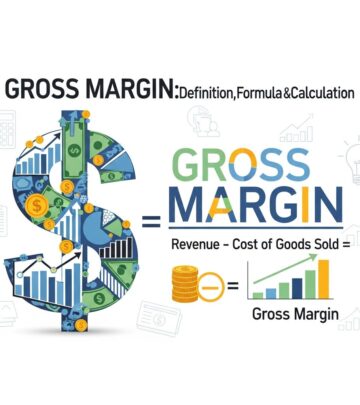
Gross profit margin measures the percentage of revenue remaining after subtracting the cost of goods sold. It reflects how efficiently a company produces or purchases its products. The formula is (Gross Profit / Revenue) × 100. This metric is particularly useful for manufacturing and retail companies.
Operating Profit Margin
Operating profit margin, also called EBIT margin, measures the percentage of revenue remaining after paying operating expenses. It excludes interest and taxes but includes all operating costs such as salaries, rent, and utilities. This metric shows how profitable a company’s core operations are, independent of its financing structure.
Net Profit Margin
Net profit margin, the focus of this article, represents the bottom-line profitability after all expenses, including taxes and interest. It provides the most comprehensive view of profitability and is often considered the most important metric for investors evaluating overall company performance.
Why Net Margin Matters
Net margin is an essential metric for several key reasons:
- Profitability Assessment: Net margin directly measures how much profit a company generates, making it fundamental to evaluating financial health and success.
- Comparative Analysis: Investors can compare net margins across companies in the same industry to identify which firms operate most efficiently.
- Trend Analysis: Tracking changes in net margin over time helps investors identify whether a company’s profitability is improving or deteriorating.
- Investment Decisions: A company’s net margin influences investment attractiveness and potential returns for shareholders.
- Management Evaluation: Net margin reflects management’s effectiveness at controlling costs and generating profits from sales.
Factors Affecting Net Margin
Multiple factors can influence a company’s net margin, and understanding these drivers is crucial for comprehensive financial analysis:
Cost of Goods Sold
The cost of producing or acquiring products directly impacts net margin. Companies that negotiate better supplier contracts or improve manufacturing efficiency can reduce COGS and improve margins.
Operating Expenses
Sales, general, and administrative expenses, along with research and development costs, affect net margin. Companies that achieve economies of scale or operate efficiently can maintain lower operating expenses relative to revenue.
Interest Expense
Companies with significant debt must pay interest expense, which reduces net income and net margin. The capital structure and financing decisions directly impact this line item.
Tax Rate
Corporate tax rates vary by jurisdiction and affect net margin. Companies operating in low-tax regions may have higher net margins, though this doesn’t necessarily indicate superior operational performance.
One-Time Gains or Losses
Asset sales, legal settlements, or restructuring charges can temporarily boost or reduce net income, causing net margin to fluctuate even if core operations remain stable.
Net Margin by Industry
Net margin varies significantly across industries due to different business models, competitive dynamics, and capital requirements:
| Industry | Typical Net Margin Range | Key Characteristics |
|---|---|---|
| Software/SaaS | 15-25% | High scalability, lower cost of goods sold |
| Retail | 2-8% | High volume, competitive pricing, thin margins |
| Pharmaceuticals | 10-20% | High R&D costs, patent protection benefits |
| Utilities | 8-15% | Regulated industries, stable but lower margins |
| Financial Services | 20-35% | Asset-light model, high profitability potential |
How to Improve Net Margin
Companies seeking to enhance profitability can pursue several strategies to improve net margin:
- Increase Revenue: Growing sales without proportionally increasing expenses leverages fixed costs and improves margin percentage.
- Reduce Operating Costs: Improving efficiency, automating processes, and eliminating waste directly boost profitability.
- Optimize Pricing Strategy: Strategic price increases or improved product mix can enhance revenue per unit sold.
- Improve Supply Chain: Better supplier relationships and inventory management reduce cost of goods sold.
- Reduce Debt: Lower interest expense by paying down debt or refinancing at better rates improves net income.
- Tax Optimization: Legal tax planning strategies can reduce effective tax rates, though must comply with regulations.
Limitations of Net Margin
While net margin is a valuable metric, it has several limitations that investors should understand:
Industry Variations: Net margin comparisons are only meaningful within the same industry. A 5% net margin is acceptable for retail but poor for software companies, making cross-industry comparisons misleading.
Temporary Fluctuations: One-time events like asset sales or restructuring charges can distort net margin, making it difficult to assess underlying operational performance.
Scale Differences: Companies with significantly different revenue scales may have different margin structures, making percentage comparisons less meaningful without considering absolute profitability.
Accounting Methods: Different depreciation policies, revenue recognition practices, or accounting standards can affect reported net income and net margin.
Incomplete Picture: Net margin doesn’t account for cash flow, return on invested capital, or other important financial metrics necessary for comprehensive analysis.
Net Margin vs. Gross Margin vs. Operating Margin
| Metric | Formula | What It Measures | Best Use |
|---|---|---|---|
| Gross Margin | (Revenue – COGS) / Revenue | Profitability after production costs | Manufacturing efficiency, pricing strategy |
| Operating Margin | Operating Income / Revenue | Profitability from core operations | Operational efficiency, management performance |
| Net Margin | Net Income / Revenue | Bottom-line profitability after all expenses | Overall financial health, investment decisions |
Frequently Asked Questions
What is a good net margin?
A good net margin depends on the industry. Technology and financial services companies typically have margins of 15-25%, while retail companies might target 2-8%. Generally, margins above 10% are considered healthy, but industry context is essential.
How does net margin differ from gross margin?
Gross margin only subtracts cost of goods sold from revenue, while net margin subtracts all expenses including operating costs, interest, and taxes. Net margin provides a more complete profitability picture.
Can net margin be negative?
Yes, net margin can be negative when a company’s expenses exceed its revenue, resulting in a net loss. This indicates the company is unprofitable and losing money on its operations.
How often should I check net margin?
Net margin should be reviewed quarterly (every three months) when companies report earnings. Long-term trend analysis requires comparing net margins over multiple years to identify patterns and improvements.
Which is more important: high revenue or high net margin?
Both matter, but net margin is often more important for profitability. A company with lower revenue but higher margins may be more profitable and financially healthy than one with high revenue and thin margins.
How do taxes affect net margin?
Taxes are deducted from operating income to calculate net income, directly reducing net margin. Companies in higher tax jurisdictions will have lower net margins all else being equal.
References
- Understanding Profit Margin — Investopedia. November 18, 2010. https://www.youtube.com/watch?v=eP_UwR54kT8
- Net Profit Margin — Investopedia. https://www.investopedia.com/terms/n/net_margin.asp
- Financial Ratios and Analysis — U.S. Securities and Exchange Commission (SEC). https://www.sec.gov
- Profitability Ratios: Understanding Financial Performance — Corporate Finance Institute. https://corporatefinanceinstitute.com
Similar Articles








Read full bio of medha deb