Neoliberalism: Definition, History, and Economic Impact
Explore neoliberalism: the political and economic ideology reshaping global markets and policy.

What Is Neoliberalism?
Neoliberalism is a political and economic ideology that advocates for free-market capitalism and has become dominant in policy-making from the late twentieth century onward. The term encompasses both political and economic dimensions, seeking to transfer control of economic factors from the public sector to the private sector. It represents a shift in thinking about how economies should be organized and how governments should interact with markets and society.
The concept of neoliberalism is characterized by several core principles that distinguish it from classical liberalism and other economic philosophies. While the term is often used pejoratively in public discourse, scholars employ it to describe a comprehensive transformation of societal structures based on market-oriented principles. Neoliberalism is not merely an economic doctrine but rather a holistic worldview that extends into social, political, and cultural spheres.
Key Principles of Neoliberalism
Neoliberalism is fundamentally built on the belief that markets are superior mechanisms for organizing economic activity. According to this ideology, the free market operates as the greatest information processor, superior to any centralized planning or human decision-making. This creates a framework where market mechanisms are positioned as the arbiters of truth and value in society.
The core principles of neoliberalism include:
- Privatization of public economic sectors and services
- Deregulation of private corporations and industries
- Reduction of government spending and budget deficits
- Elimination of price controls and barriers to trade
- Labor market flexibilization and reduced worker protections
- Economic globalization and free trade policies
- Monetarism as the preferred monetary policy approach
- Austerity measures to limit public expenditure
- Consumer choice as a driving force in market dynamics
- Individual responsibility and minimal government interference
Historical Origins and Development
Neoliberalism originated among European liberal scholars during the 1930s as a response to the perceived decline of classical liberalism. The Great Depression had demonstrated the volatility and failures of strict laissez-faire economic systems, leading intellectuals to reconsider how markets should function. Rather than abandoning liberalism entirely, these thinkers sought to develop a revised form that could address market failures while maintaining the core liberal commitment to individual freedom and economic liberty.
A pivotal moment in neoliberalism’s formal development was the 1938 Colloque Walter Lippmann, where the term “neoliberalism” was proposed among other alternatives and ultimately selected to describe a specific set of economic beliefs. The colloquium defined neoliberalism as involving “the priority of the price mechanism, free enterprise, the system of competition, and a strong and impartial state.” This definition represented a middle ground between unregulated capitalism and interventionist approaches.
The neoliberal project was fundamentally oriented toward developing a philosophical alternative to both the collapsed laissez-faire consensus of the pre-Depression era and the New Deal liberalism and British social democracy that many neoliberals viewed as threats to individual freedom. Prominent thinkers like Friedrich Hayek, Milton Friedman, and James Buchanan articulated neoliberal philosophy by emphasizing individual freedom and the rights of small social groups, particularly families, against what they termed “coercive power.”
Neoliberalism Versus Classical Liberalism
A critical distinction exists between neoliberalism and classical liberalism, despite their shared intellectual heritage. Classical liberalism advocates for laissez-faire economics, where governments maintain minimal involvement in economic affairs. Neoliberalism, by contrast, is highly constructivist and advocates for a strong state role in establishing and maintaining market-like reforms across every aspect of society.
This paradox is central to understanding neoliberalism: while it emphasizes free markets and limited government, it actually requires substantial state intervention to establish and sustain global market systems. Anthropologist Jason Hickel emphasizes that the spread of neoliberalism required considerable state action to create the institutional framework necessary for “free markets” to function globally. The state’s role transforms from directly managing the economy to creating the legal, regulatory, and institutional conditions that enable competitive markets.
Core Policy Components
Neoliberal policy frameworks typically revolve around three main pillars, as identified by observers of the movement. Understanding these components provides insight into how neoliberal ideology translates into concrete policy measures that reshape economies and societies.
Privatization of the Public Sphere
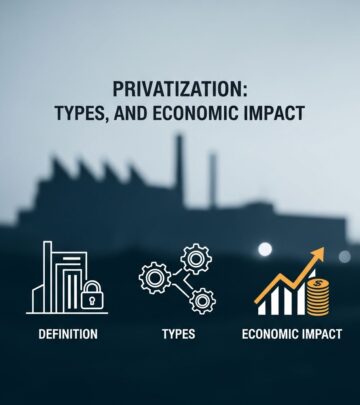
Privatization represents a fundamental neoliberal policy objective, involving the transfer of publicly-owned enterprises, services, and assets to private sector control. This extends beyond traditional state-owned industries to include social services, utilities, transportation, healthcare provision, and educational services. The rationale underlying privatization is that private firms operating under competitive pressure will deliver services more efficiently and effectively than government bureaucracies.
Deregulation of the Corporate Sector
Deregulation involves removing or reducing government regulations that constrain private business activities. Neoliberals argue that excessive regulation creates inefficiencies, increases costs, and stifles innovation. By eliminating restrictions on capital markets, labor practices, environmental standards, and consumer protections, neoliberals believe markets will self-correct through competitive forces and consumer choice.
Reduction of Government Spending and Taxation
Austerity and reduced government expenditure are central to neoliberal policy. This involves cutting budgets for public works, social welfare programs, healthcare, education, and other government services while simultaneously reducing income and corporate taxes. The logic suggests that reduced government spending stimulates private investment and economic growth while minimizing the public debt burden.
Ideological Dimensions
Beyond its economic components, neoliberalism functions as a comprehensive ideology with philosophical and moral dimensions. Economist Adam Kotsko describes neoliberalism as “political theology,” noting that it transcends being merely a formula for economic policy and instead infuses economic arrangements with a moral ethos that “aspires to be a complete way of life and a holistic worldview, in a way that previous models of capitalism did not.”
Under neoliberal ideology, competition becomes the defining characteristic of human relations, and citizens are reframed as consumers making choices in markets rather than as political subjects participating in democratic governance. This represents a fundamental reconceptualization of human nature, social relations, and the purpose of society itself. The ideology emphasizes that individuals should focus on economic prosperity and self-improvement rather than collective welfare or political participation.
Neoliberalism as Development Model
As a development model for emerging economies, neoliberalism represents a rejection of structuralist economics in favor of the Washington Consensus. This approach recommends that developing nations adopt market-oriented reforms including trade liberalization, capital market deregulation, privatization of state enterprises, and fiscal austerity. International financial institutions like the International Monetary Fund and World Bank have promoted these policies as prerequisites for economic development and debt relief.
However, this development model has proven controversial, with critics arguing that it has increased inequality, weakened domestic industries, and failed to deliver promised prosperity in many nations that adopted neoliberal reforms.
Global Implementation and Notable Advocates
Neoliberal policies gained prominence during the 1980s and 1990s through implementation by influential political leaders. Margaret Thatcher’s government in the United Kingdom and Ronald Reagan’s administration in the United States are most commonly associated with neoliberal policy implementation. Their governments pursued aggressive privatization, deregulation, tax reduction, and welfare state retrenchment that became models for neoliberal reform globally.
These administrations dismantled many post-World War II social democratic arrangements and reoriented economies toward market mechanisms and private sector leadership. Their success in implementing neoliberal reforms at the national level, combined with the influence of the United States and United Kingdom in international institutions, facilitated the global spread of neoliberal ideology.
Criticisms and Counterarguments
Neoliberalism has generated substantial criticism from economists, social scientists, and political commentators across the ideological spectrum. Critics argue that neoliberal policies have increased economic inequality, weakened labor protections, undermined social safety nets, and created financial instability through deregulation of capital markets.
The 2008 financial crisis, triggered in part by deregulation of financial markets, demonstrated to many observers the dangers of unrestrained market mechanisms. The crisis revealed that neoliberal assumptions about market self-correction and rational actors were flawed, leading to renewed debate about the proper balance between markets and government regulation.
Labor advocates contend that neoliberalism removes protections for workers, dramatically amplifying the power of capital over labor. Environmental critics argue that deregulation has permitted ecological degradation as firms externalize environmental costs rather than incorporating them into production decisions.
Neoliberalism as Contested Concept
The term “neoliberalism” itself remains contested among scholars, with multiple competing definitions and interpretations. In academic discourse, the term is often left undefined or employed to describe diverse phenomena, making scholarly communication challenging. Some scholars use neoliberalism narrowly to describe specific economic policies, while others employ it broadly to encompass an entire framework for understanding contemporary capitalism and governance.
This definitional ambiguity reflects genuine disagreement about what constitutes neoliberalism and whether it represents a coherent ideology or merely a collection of market-oriented policies. Nonetheless, most scholars recognize that neoliberalism involves a fundamental reorientation of state-market relations, with increased emphasis on private sector activity and reduced government involvement in direct economic management and social provision.
Neoliberalism and Individual Freedom
Neoliberals justify their policy prescriptions through an appeal to individual freedom and economic liberty. According to neoliberal thinkers, government restrictions on markets impose “coercive power” that violates individual rights. By limiting government to maintaining legal structures that enable voluntary market exchange, neoliberals argue they are maximizing human freedom.
This conception of freedom, however, differs fundamentally from alternative definitions that emphasize freedom from want, freedom to access essential services, or freedom to participate in collective decision-making. Critics argue that neoliberal freedom is formal rather than substantive—that is, freedom from government coercion without corresponding freedoms to meet basic needs or exercise meaningful political power.
The State’s Evolving Role
Rather than withdrawing entirely from economic life, neoliberal states transform their functions. The state remains powerful but reorients its activities toward creating market conditions, enforcing property rights, protecting capital, and reducing its direct provision of services and social welfare. This represents a shift from the post-World War II welfare state model that actively managed demand, provided comprehensive social insurance, and maintained public enterprises across sectors.
The neoliberal state concentrates on legal and constitutive functions while outsourcing provision of goods and services to private markets. This transformation requires substantial state capacity and power, contradicting simplistic characterizations of neoliberalism as advocating minimal government.
Frequently Asked Questions
Q: How does neoliberalism differ from classical liberalism?
A: While classical liberalism advocates for laissez-faire economics with minimal government intervention, neoliberalism is highly constructivist. Neoliberalism requires strong state action to establish and maintain market mechanisms across all sectors of society, whereas classical liberalism assumes markets function naturally with minimal oversight.
Q: Which countries have most prominently adopted neoliberal policies?
A: The United Kingdom under Margaret Thatcher and the United States under Ronald Reagan are most commonly associated with comprehensive neoliberal policy implementation during the 1980s. These policies subsequently spread globally through influence over international institutions and other governments.
Q: What are the main criticisms of neoliberalism?
A: Critics argue neoliberalism has increased inequality, weakened labor protections, undermined social safety nets, enabled environmental degradation, and contributed to financial instability through excessive deregulation. The 2008 financial crisis illustrated these concerns for many observers.
Q: Is neoliberalism the same as capitalism?
A: No. Neoliberalism is a specific ideological approach to capitalism that emphasizes markets, privatization, and deregulation. Other forms of capitalism, such as social market economies or coordinated market economies, balance market mechanisms with stronger government roles in social provision and economic regulation.
Q: What does privatization mean in neoliberal policy?
A: Privatization involves transferring publicly-owned enterprises, services, and assets to private sector control. Under neoliberalism, this extends from traditional industries to include healthcare, education, utilities, transportation, and other services previously provided by government.
References
- Neoliberalism — Wikipedia. Accessed November 2025. https://en.wikipedia.org/wiki/Neoliberalism
- Neoliberalism — EBSCO Research Starters. Accessed November 2025. https://www.ebsco.com/research-starters/diplomacy-and-international-relations/neoliberalism
- Neoliberalism — Stanford Encyclopedia of Philosophy. Published June 9, 2021. https://plato.stanford.edu/entries/neoliberalism/
Similar Articles








Read full bio of medha deb